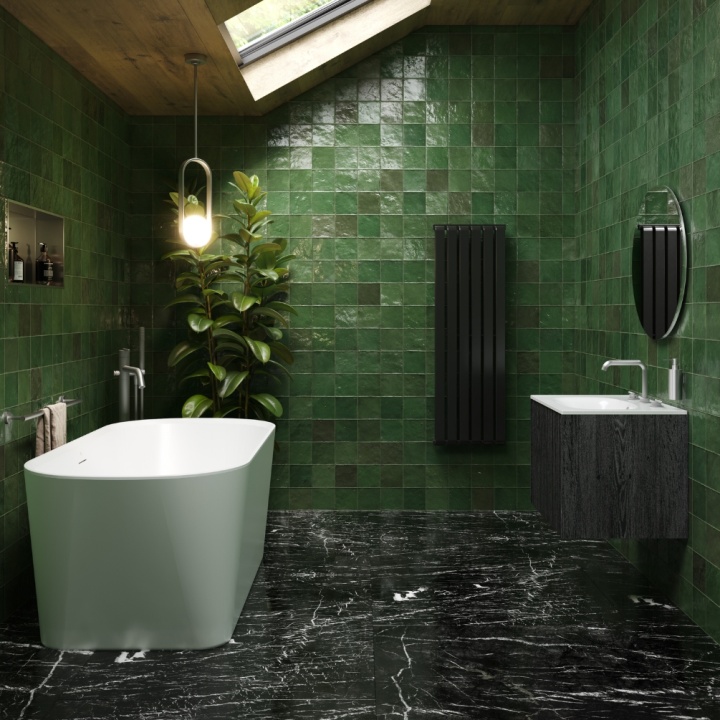
Throughout history, humans have thrived beneath a canopy of trees and open skies. This intimate bond with nature is part of us, and it’s something that many still yearn for. This is evident in the houseplants on our windowsills and in the sea views we'll happily pay a premium for. Thankfully, biophilic design unlocks the door to bringing nature into our modern lives, especially in the bathroom.
So, what is biophilic design? How can it transform your bathroom into a serene sanctuary that invites nature indoors? This style guide provides the key details to achieve the look.
What Is Biophilic Design?
Rooted in the belief that humans thrive in nature, biophilic design is a creative approach to architecture and interiors that weaves natural elements into our homes. It’s a style that bridges the gap between us and the great outdoors by integrating diverse natural materials, greenery, light, and organic forms.
The term itself is derived from Greek roots, meaning ‘love of life’. Yet, it was biologist Edward O. Wilson who breathed life into this concept. His 1984 book Biophilia explored our inherent fascination with nature and living systems. In the realm of design, biophilic interiors manifest this philosophy, constructing environments that feel tranquil, organic, and vibrantly alive.
However, it’s not just a design style; it’s a refreshing mindset. Over recent decades, this approach has blossomed into a robust, evidence-driven field, reshaping how we perceive our surroundings.
Why Is Biophilic Design Important?
Outside of aesthetics, biophilic design matters for various interrelated reasons, with benefits that encompass human physical and mental health, productivity, and the ability to address the challenges of modern urban life.
Research estimates that people in developed countries now spend up to 90% of their time indoors, surrounded by artificial light, synthetic materials, and screens. In the workplace and at home, these can have negative effects on the human body and mind. Biophilic design attempts to combat this by introducing natural stimuli that the body still expects.
The benefits are all borne out by a growing body of research. Studies have repeatedly linked nature-rich environments to the following benefits:
Mental Health & Stress Reduction
A 2025 peer-reviewed study published in PLOS ONE found significant positive effects of exposure to biophilic design on self-reported psychological states, including inspiration and mood, whereas designs lacking biophilic qualities tended to worsen these states.
Cognitive Function, Focus & Productivity
Multiple research projects support meaningful productivity gains in biophilically designed spaces. One such example is a 2023 study published in the Journal of Biophilic Design, which reported a 200% increase in wellbeing and environmental value in biophilic workplaces compared to standard offices. A bathroom obviously isn't an office, but the reason those spaces work has nothing to do with desks or deadlines - it's that natural surroundings lower stress and help the mind settle. That holds true wherever you are and arguably matters most in the one room you actually retreat to for a bit of quiet.
Physical Health & Circadian Regulation
Natural light is a primary cue for circadian entrainment - the alignment of the body's internal clock with the external environment. According to Biophilic Innovations, circadian-aligned lighting in biophilic spaces is associated with improved sleep quality, enhanced alertness, and better mood regulation.
Key Elements of Biophilic Design
But what exactly should you be seeing in a biophilic interior? Biophilic interiors use a range of principles, but are best grouped into the following categories:
- Real nature: This is direct exposure to nature, including plants, natural light, fresh air, water, and views of green spaces.
- Nature in the details: These are elements that remind us of nature, such as natural materials like wood, stone, and clay; patterns and textures found in nature; earthy colours; and shapes similar to those found in nature.
- Space and sanctuary: This refers to layouts and spatial arrangements that balance open views with cosy, sheltered areas, tapping into our instinct to feel safe and comfortable, part of the prospect-refuge theory.
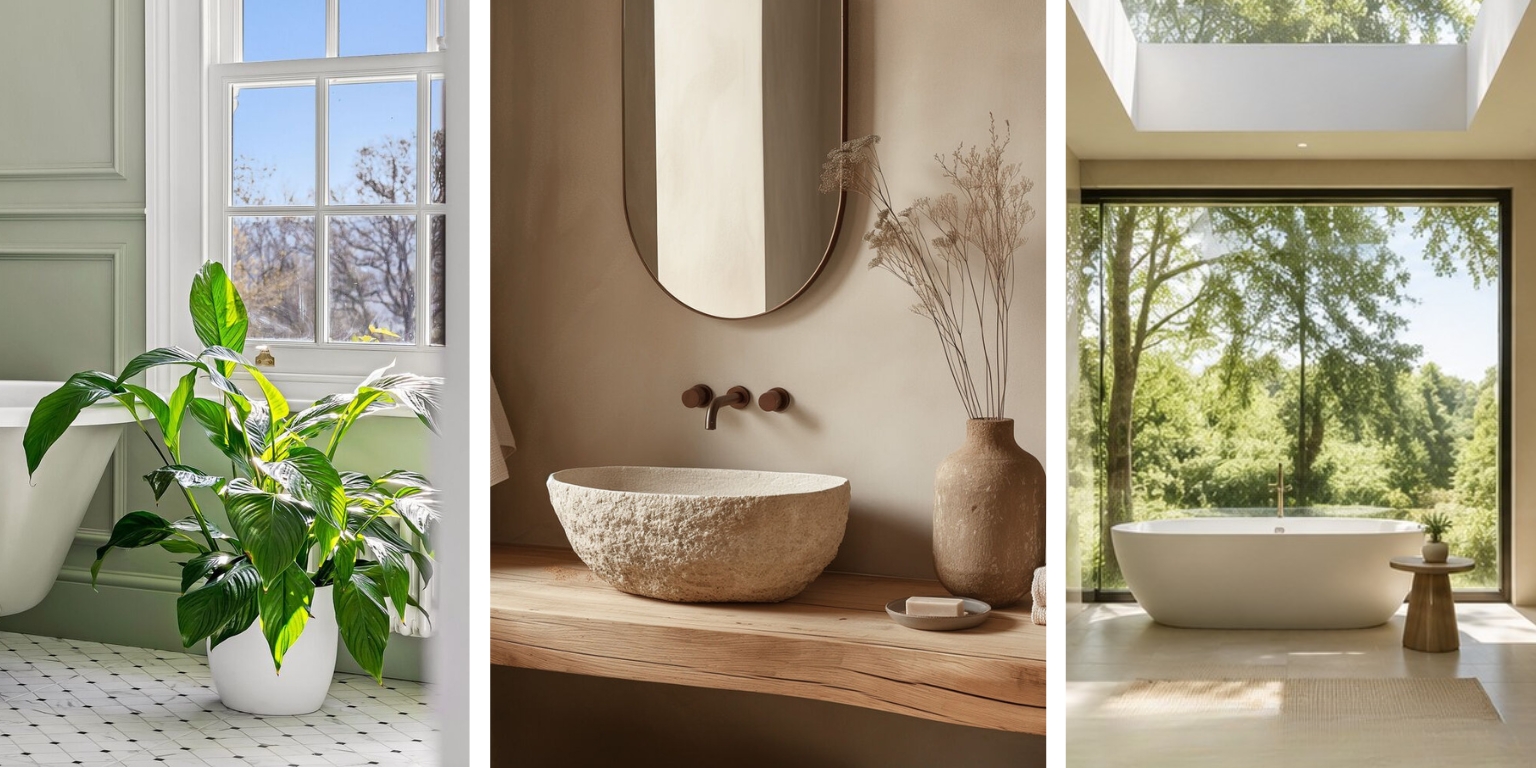
How to Integrate Biophilic Design in a Bathroom
The bathroom lends itself perfectly to biophilic design. As one of the most personal, self-contained spaces in the home, it's a place where you can put all three key elements into practice and really feel their effects and benefits.
It's no passing fad, either - biophilic design has been one of the biggest talking points in bathroom design for years now, and it remains a standout in our roundup of 2026 bathroom trends.
You don't have to completely renovate your bathroom to incorporate biophilic design. It's a flexible approach that can work just as well with small changes as with a full overhaul. The tips below are built around those three key elements - bringing in real nature, layering in natural detail, and arranging the space to feel open yet sheltered - so working through them will help you weave a little of each into your own bathroom.
1. Incorporate Natural Materials
If there's one area to start when creating a biophilic bathroom, it's the choice of materials. Nothing signals nature more immediately than the textures we recognise from the outdoors, and the bathroom is the ideal canvas for them. Prioritise stone and wood; they work well in wet spaces and capture the best of nature's beauty.
Stone brings an instant sense of calm, largely due to its permanence. It reads as solid, enduring, unhurried and quietly reassuring. The details matter too: marble, travertine, slate, and limestone all carry the subtle veining, tonal variation and imperfections that the eye finds soothing. This natural complexity is something man-made surfaces can't match, making a space feel alive, which is key for biophilic design.
Where stone grounds a room, wood warms it. This material introduces a softness that prevents a biophilic scheme from feeling cold. You can choose from walnut, teak, ash, or reclaimed timber, each offering character and rustic charm.
Use both materials in bathroom furniture, floor tiles, and wall panels. Bathroom accessories can also benefit from them, showcasing their handmade, organic quality, tying the whole look together.
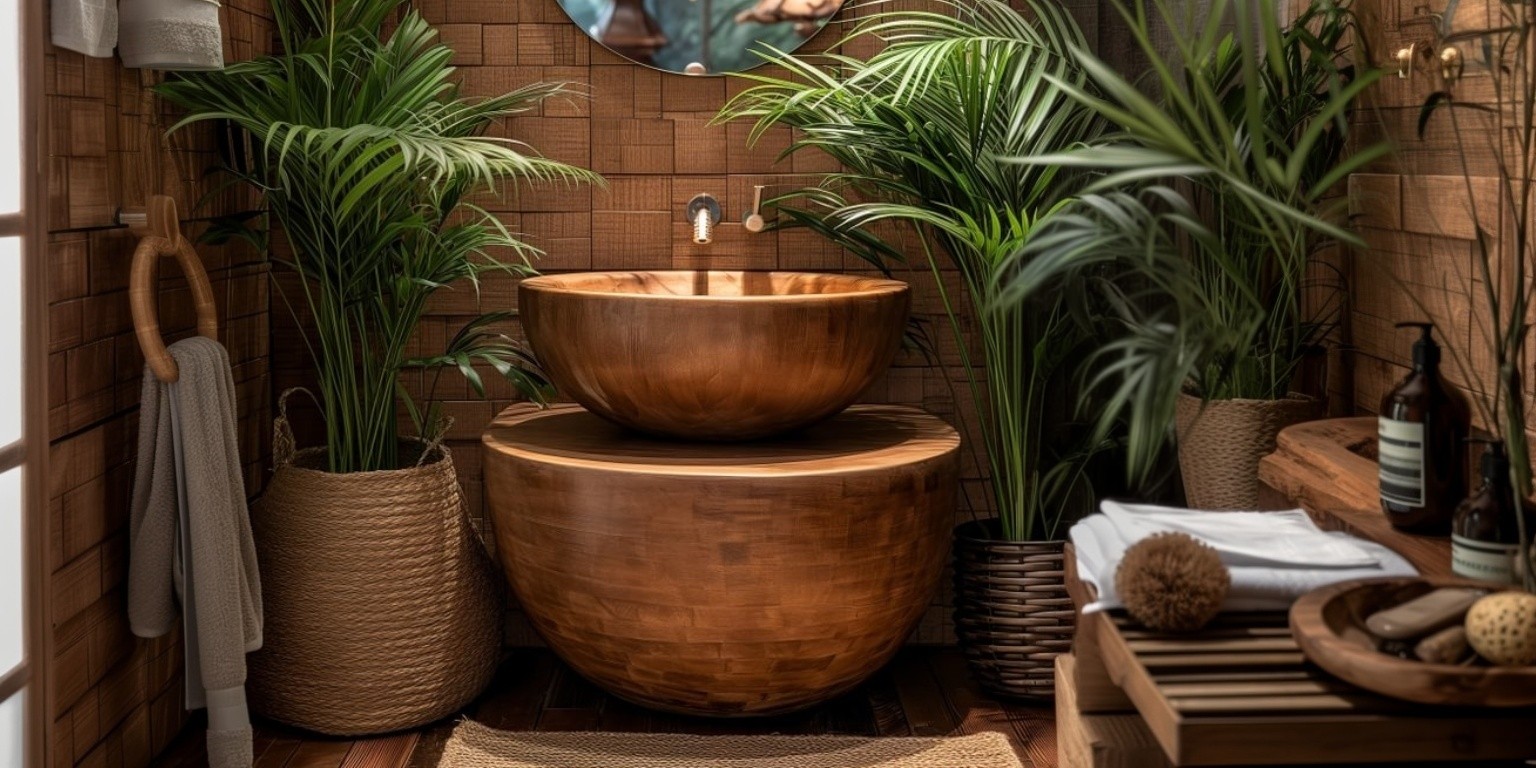
2. Add Some Greenery
For all the stone, timber and natural texture you can bring into a bathroom, plants are the only part of it that's genuinely alive. They soften a space in a way fixed surfaces never quite manage, which makes them the quickest and most rewarding way to bring a little nature in. Even one or two can change the whole feel of a room. But for a biophilic scheme, more is certainly better.
Bathrooms are actually a great place for plants because the warmth and moisture suit many types, including ferns, peace lilies, snake plants, and orchids. Rather than run through the whole lot here, we've pulled it all together in our complete guide to the 10 best bathroom plants.
The way you place plants in a bathroom is half the fun. A trailing plant like pothos looks great flowing from a high shelf, while a group of small pots on a windowsill catches the light and frames the view. Hanging planters are a good idea in smaller rooms as they free up surface space, and a single, striking plant in a corner can make a big impact on its own.
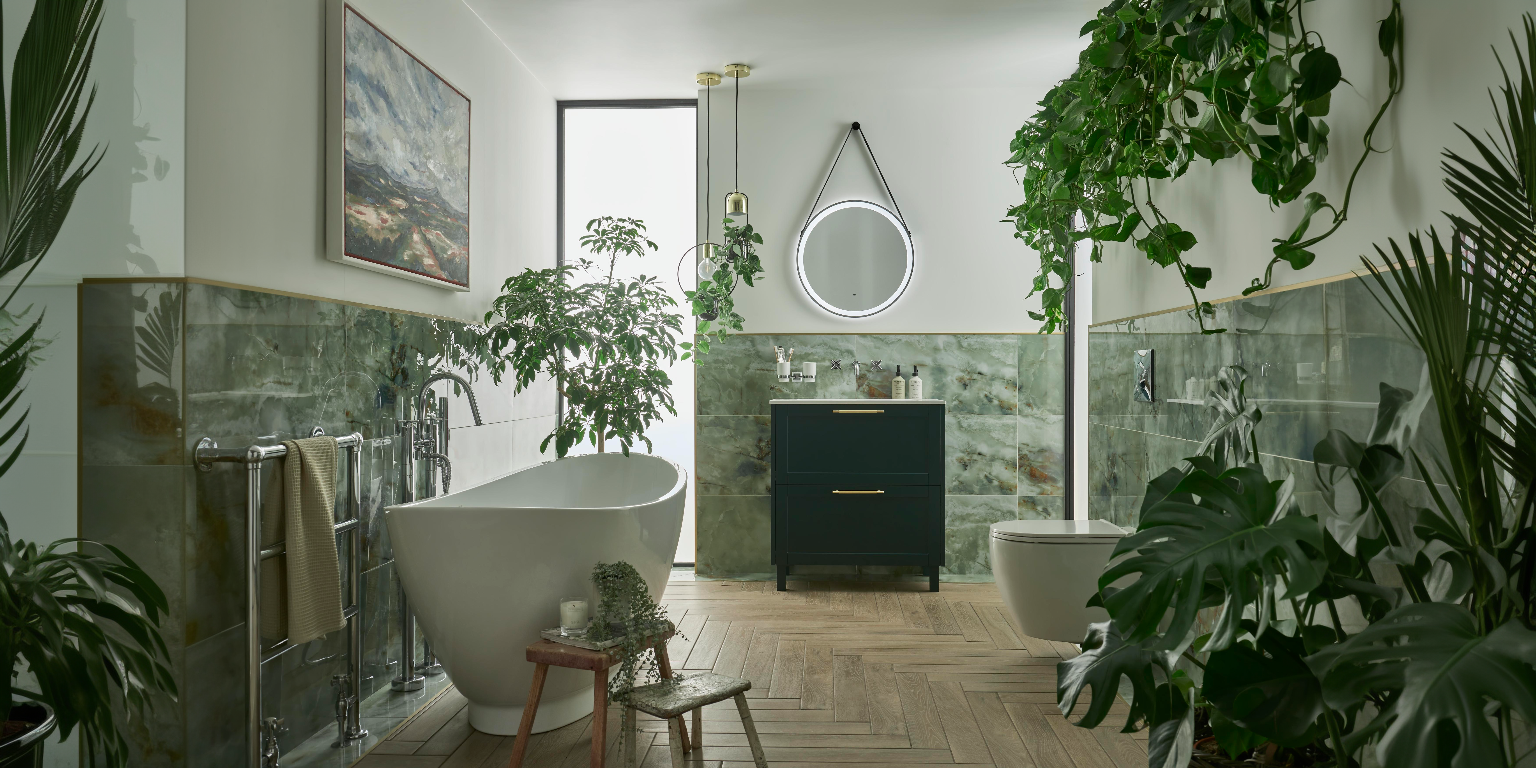
3. Build Around Earthy Colour Palettes
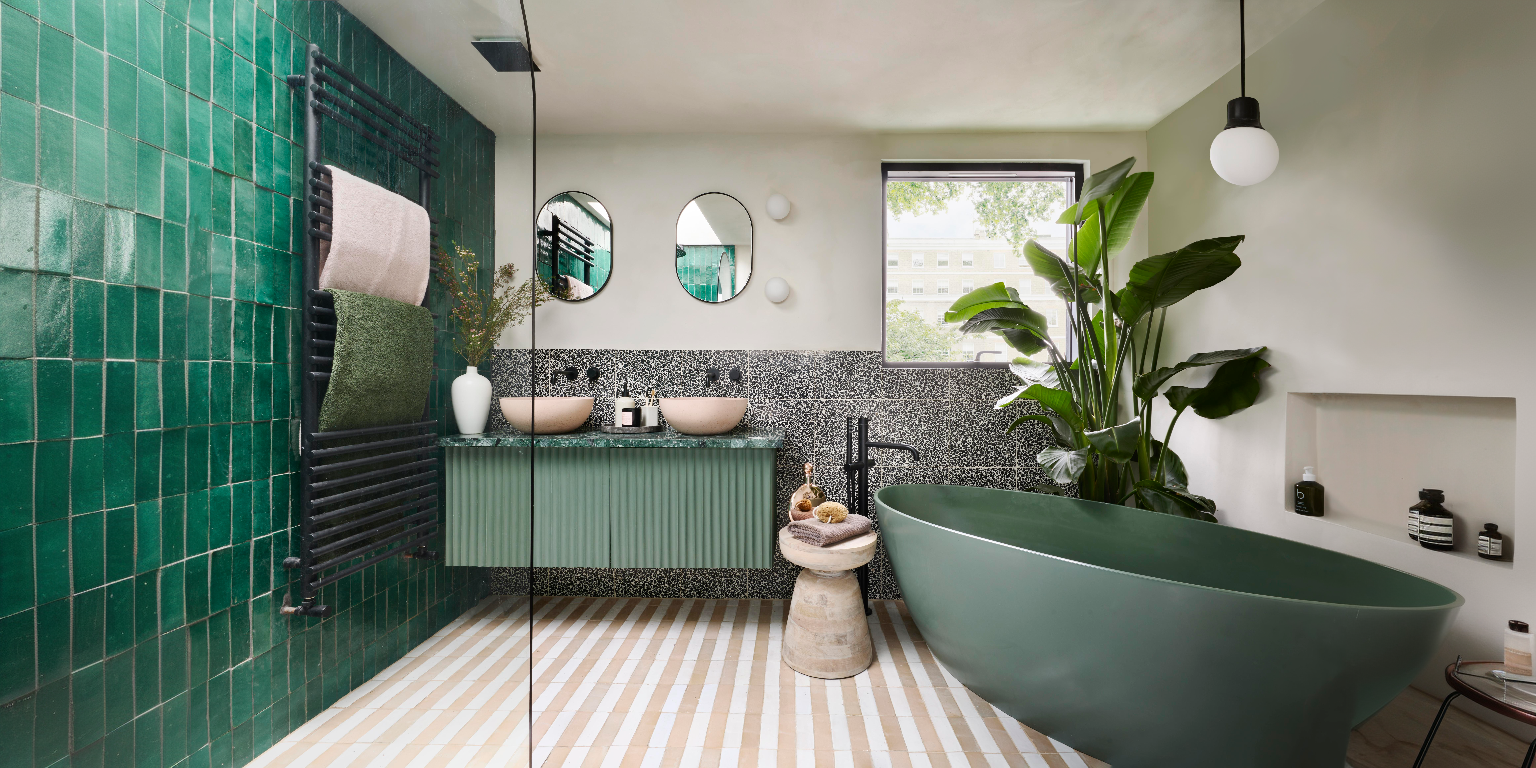
A certain colour scheme is where a biophilic bathroom really finds its mood. Reach for the colours you’d find outdoors, in the trees, the landscape, and the stone underfoot. We’re talking soft sages and forest greens, warm terracottas, sandy neutrals, clay and even the gentle greys of natural stone. All these tones and all their many shades are inherently restful and make a beautiful backdrop when paired with stone, wood, and greenery alike.
How you put those colours to work matters just as much. For the most immersive feel, colour drenching is hard to beat. This technique takes a single colour across the walls, ceiling and furniture, wrapping the whole room in one enveloping shade. If that feels like a big leap, keep the scheme grounded by using one of the aforementioned colours, then pick furniture and brassware in tones and finish types that sit harmoniously alongside it.
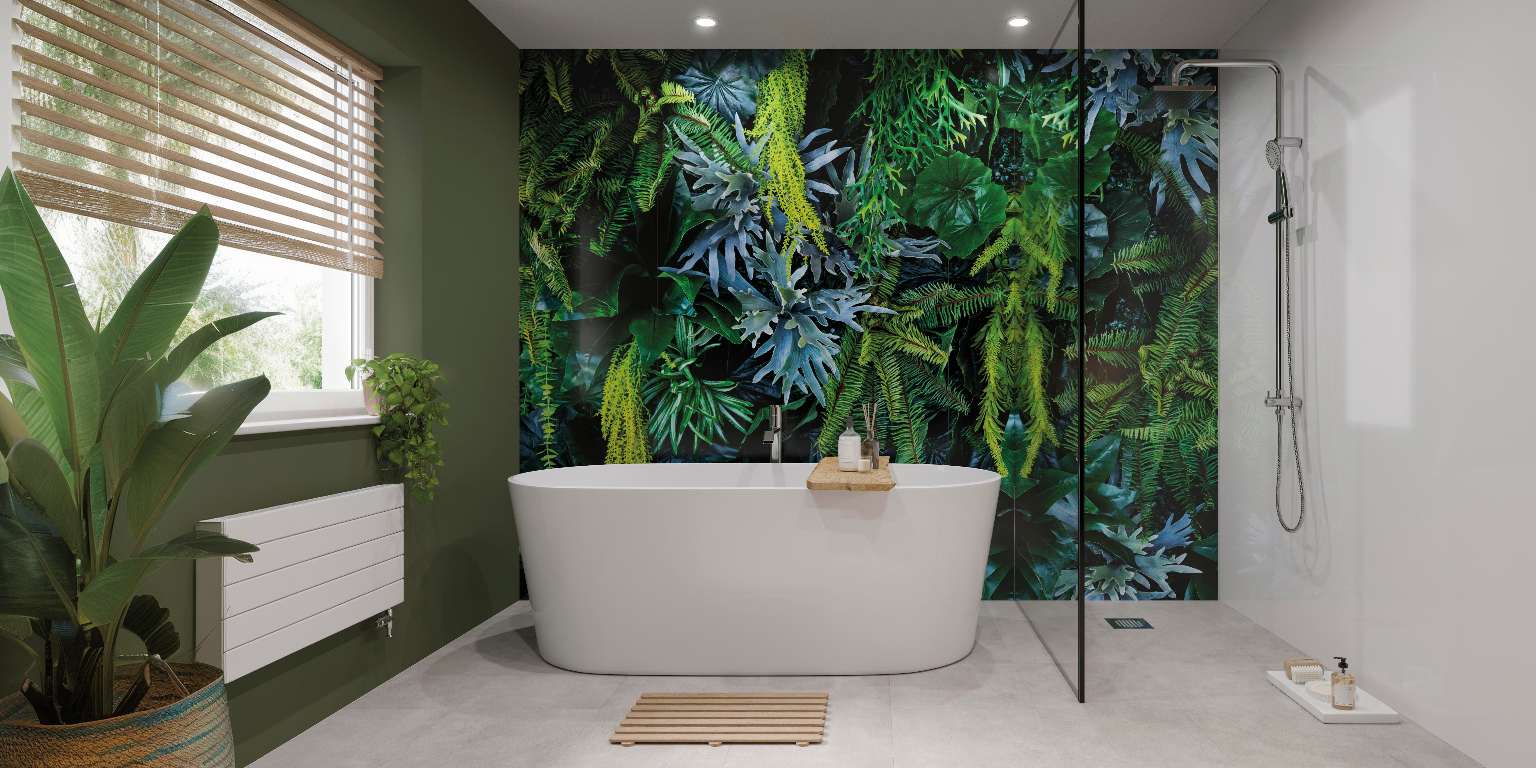
For a bolder statement, bathroom wall panels from reputable brands like Showerwall are among the most effective ways to bring the best of nature indoors. These panels, often resembling lush forests and serene oceans, or stone and wood, can add a touch of wilderness to even the most mundane bathroom setting.
4. Utilise Organic and Flowing Fixtures
Nature rarely deals in straight lines. Think of the meander of a river, the curl of a wave or the spiral of a shell. The most convincing biophilic bathrooms take their cue from these features, with soft curves, rounded edges and flowing silhouettes that feel calmer and more organic than hard geometry. It's one of the easiest ways to bring a sense of nature into the very shape of your fittings.
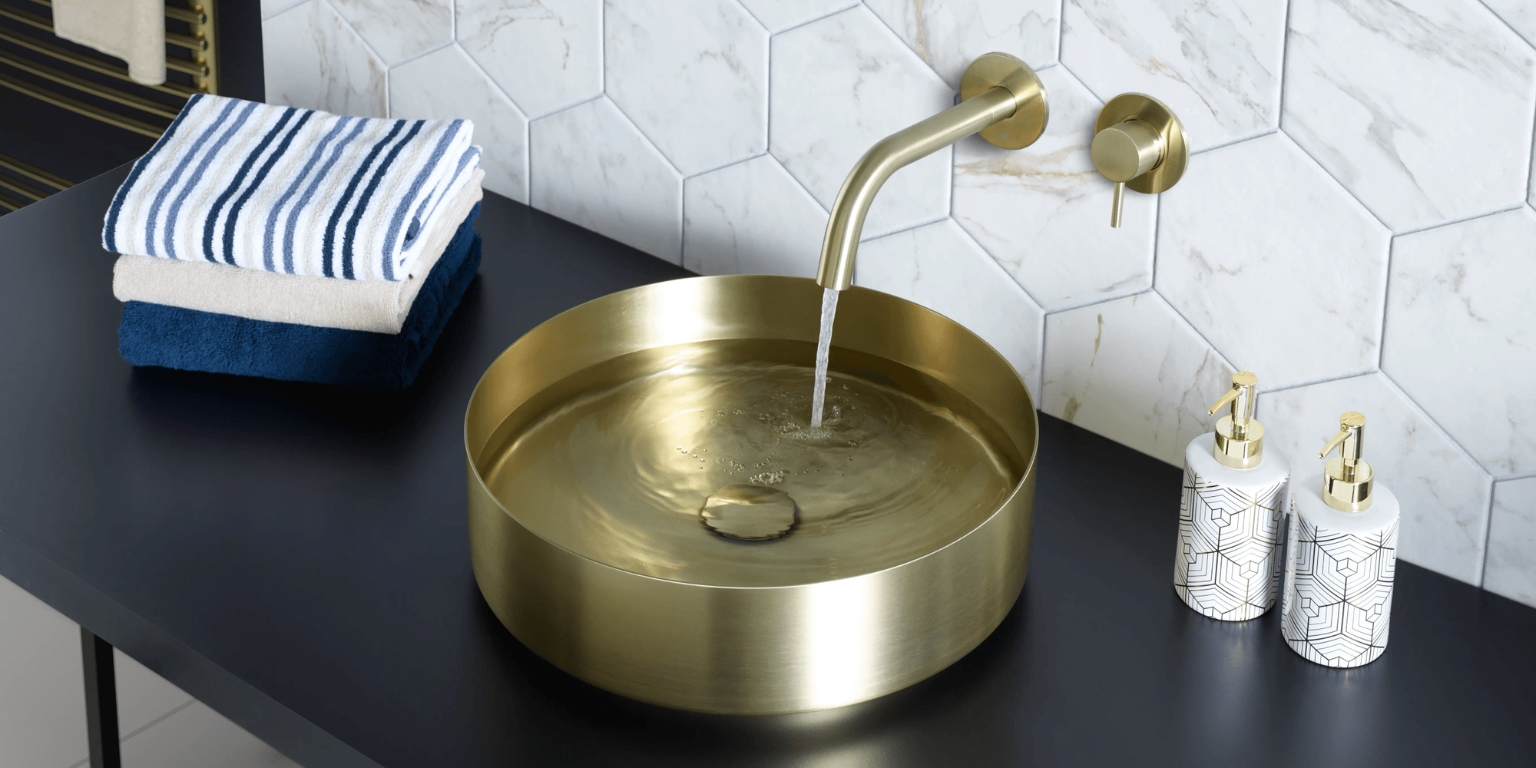
Freestanding baths are a great example of this. Their sculptural form, with smooth curves like natural rocks, provides a luxurious visual anchor. To carry this theme through, use a curved or organically shaped basin, such as a countertop or wall-hung model, along with softened brassware and gently rounded mirrors. This will make the space feel more serene than one with sharp corners.
5. Work with Space, Layout and Flow
Biophilic design isn't only about what you put in a room; it's about how the space itself is arranged. The prospect-and-refuge theory plays a part in this, which is about balancing open views with sheltered areas. This theory reflects the environments humans evolved in, creating a sense of psychological safety. In a bathroom, it translates simply enough: keep clear sightlines and plenty of light for that sense of openness, then balance it with a more enclosed, sheltered space to settle into.
Nature is busy but never chaotic, so the goal is to create a room that feels rich and layered with elements like plants, varied materials, and sanitaryware, without becoming cluttered. Using wall-hung units and keeping a clear stretch of floor can make even a busy bathroom feel calmer. Adding a bath tucked away in a corner or a screened-off walk-in shower can create a sheltered, restful area that the eye is naturally drawn to.
6. Maximise Natural Light
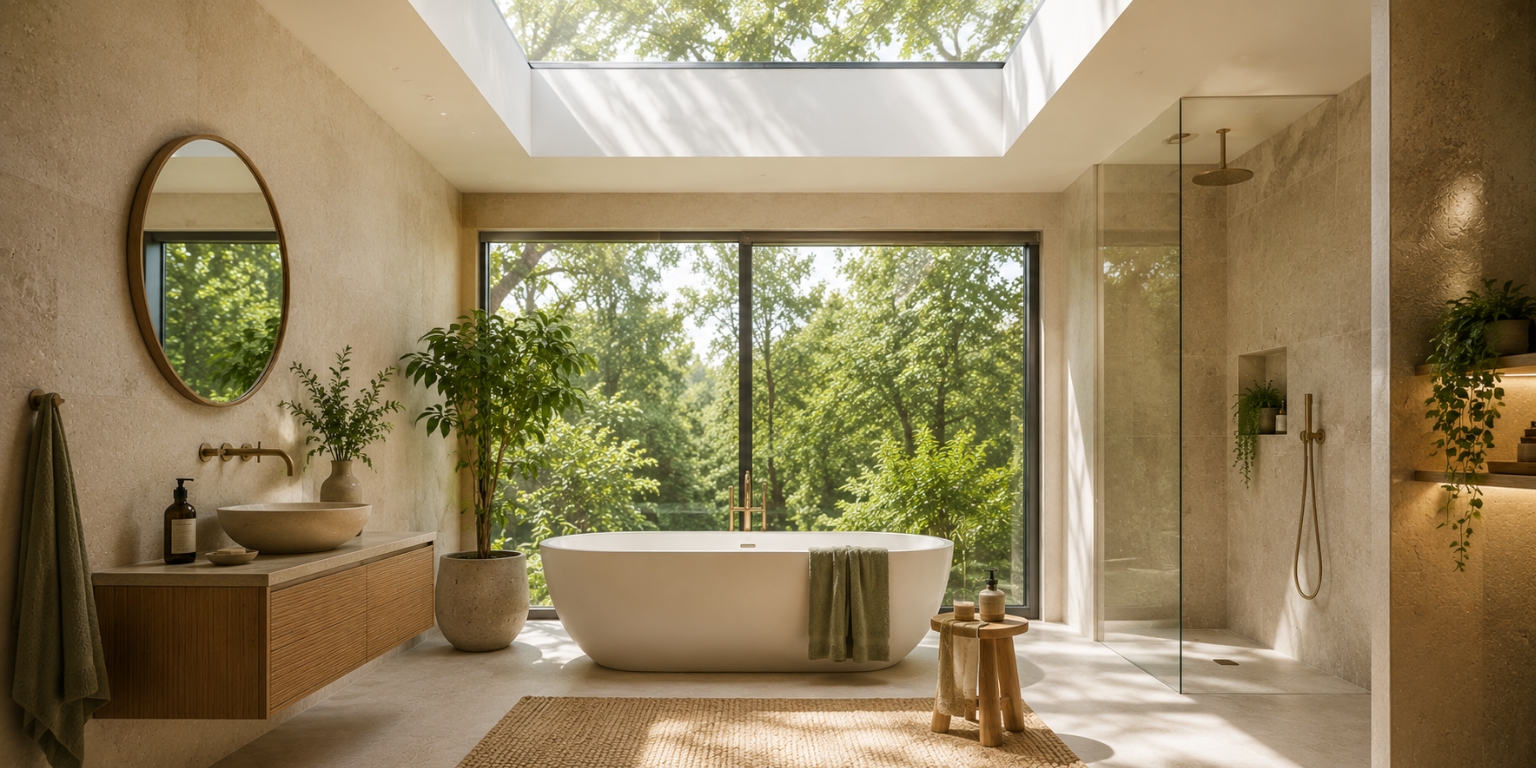
Another key element of using real nature is natural light. Daylight brings everything to life - it warms the timber, highlights the veining in stone, and keeps plants happy. It also helps our bodies by supporting the circadian rhythm, which leads to sharper mornings and steadier moods.
Where possible, keep windows simple and uncluttered, using frosted glass or sheer curtains instead of heavy blinds. This helps protect privacy without blocking the light. If budget and space allow, consider a skylight to fill the room with light, reducing the need for overhead lighting. If natural light is scarce, use warm, layered bathroom lighting that mimics the softness of daylight. Getting the colour temperature right matters here, too. A warmer tone keeps things soft and inviting, whereas a cool, bright one tips into the harsh, clinical glare that can leave a room feeling cold.
7. Accessories and Finishing Touches
Many don’t always have the luxury of a bathroom renovation that includes retiling or replacing fixtures; this is where accessories come into their own. They’re the simplest and least permanent way to bring that little piece of nature into a bathroom.
The main trick is to cut back on plastic, replacing it with natural alternatives wherever you can. Consider using materials such as wood, stone, ceramic, glass, rattan, and linen for items like bath caddies, soap dishes, soap dispensers, towels, and even more niche pieces like stools and baskets.
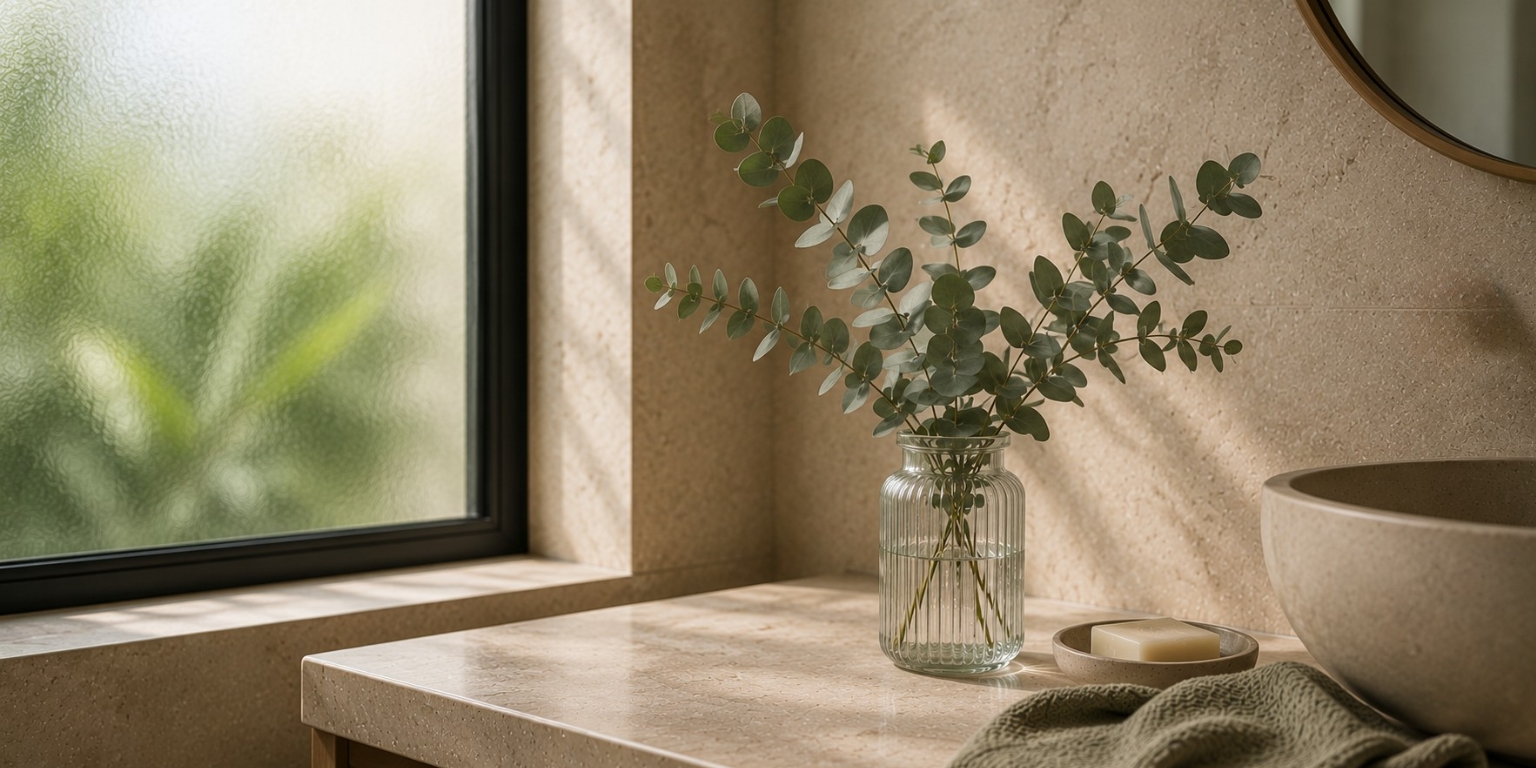
The smaller decorative touches go a long way, too. A simple vase of dried grasses or eucalyptus, a smooth pebble or two and a natural-bristle brush left on show are all small, tactile things that hint at the outdoors without shouting about it. Keep it sparing, though: a handful of well-chosen pieces does far more for the scheme than a shelf crammed with bits and bobs.
Bringing the Look Together
There's a quiet logic to all this. We're drawn to nature because some part of us still reads it as home, and a biophilic bathroom simply gives that instinct somewhere to land. What actually makes it work is restraint: a few natural materials, a bit of green and decent light, all working together rather than competing for attention.
When you're ready to start building yours, we've got everything you need to bring the look to life, from sculptural freestanding baths and curved basins to warm timber vanities, softened brassware and nature-inspired wall panels. And if you'd like a hand along the way, get in touch. Our team is always happy to help.


