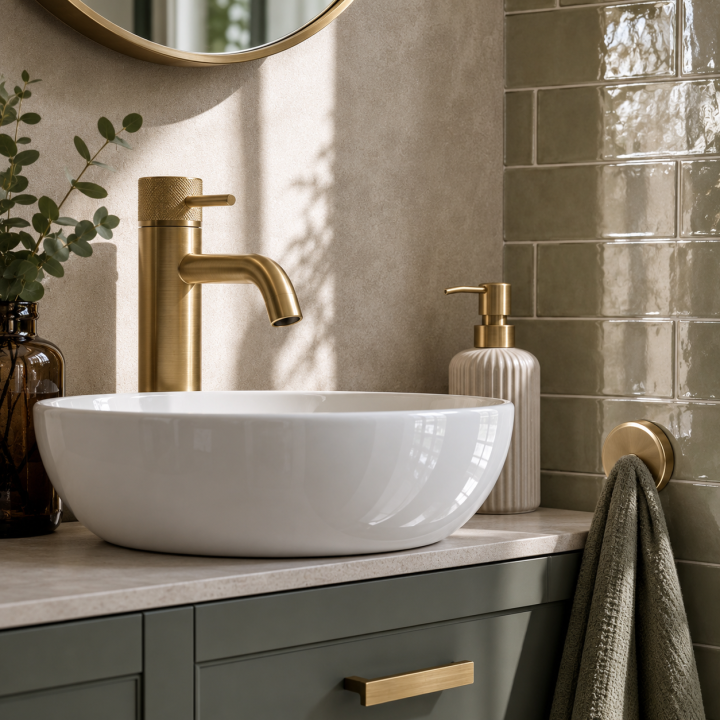
Two bathrooms can share the same layout - same bath, same basin, same toilet - and still read as two completely different rooms. What sets them apart is the finish. You clock it the moment you walk in, even if you couldn't put your finger on why; the soft chalkiness of a matt surface, the warm glow of brushed brass, the crisp bounce of gloss, all registering long before you take in the layout or the fittings themselves.
This guide walks through seven of the key and most common finishes you will find when shopping for bathroom products, where each one works best, the mood it creates, and a few practical notes worth knowing before you commit.
What is a Bathroom Finish?
In interior design, a “finish” is the outermost surface layer, treatment, or coating applied to a component. It’s essentially the last step that gives a surface its final appearance and/or improves its functionality. Because it's the visible layer, the finish decides both how a surface looks and how it handles water, marks, and everyday cleaning.
In a bathroom, that can be the top coat on a vanity unit, the face of a wall panel, the sheen on a basin tap, the glaze on a floor tile. You'll find finishes across all of these surfaces, but they arguably earn their keep most on brassware, where the finish is what a tap, shower, or valve is really judged on - shaping both the look and how well it resists tarnishing and wear.
What are the Different Types of Bathroom Finishes?
There’s a whole spectrum of bathroom finishes available, from bright and reflective to soft and understated. Below, we’ve broken down the seven you’re most likely to come across in the choice of brassware, sanitaryware, bathroom heating, bathroom furniture, and bathroom accessories.
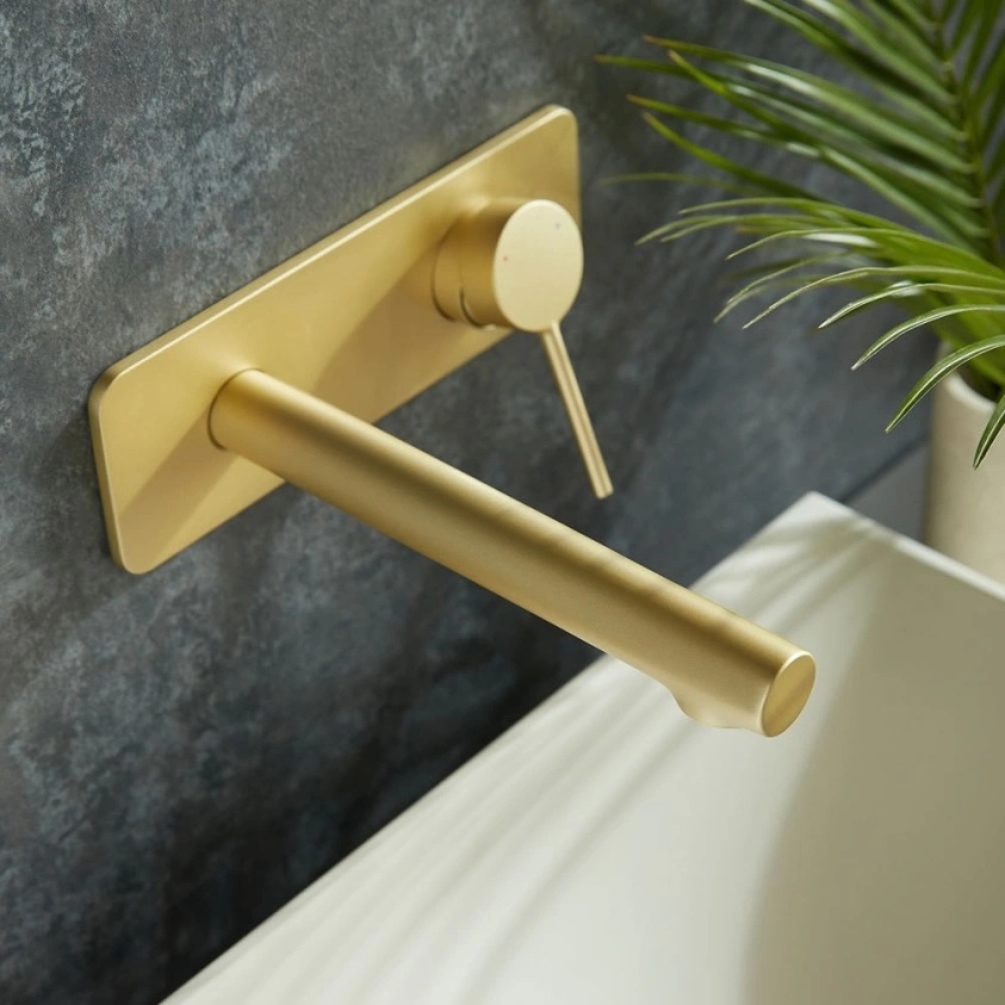
Brushed
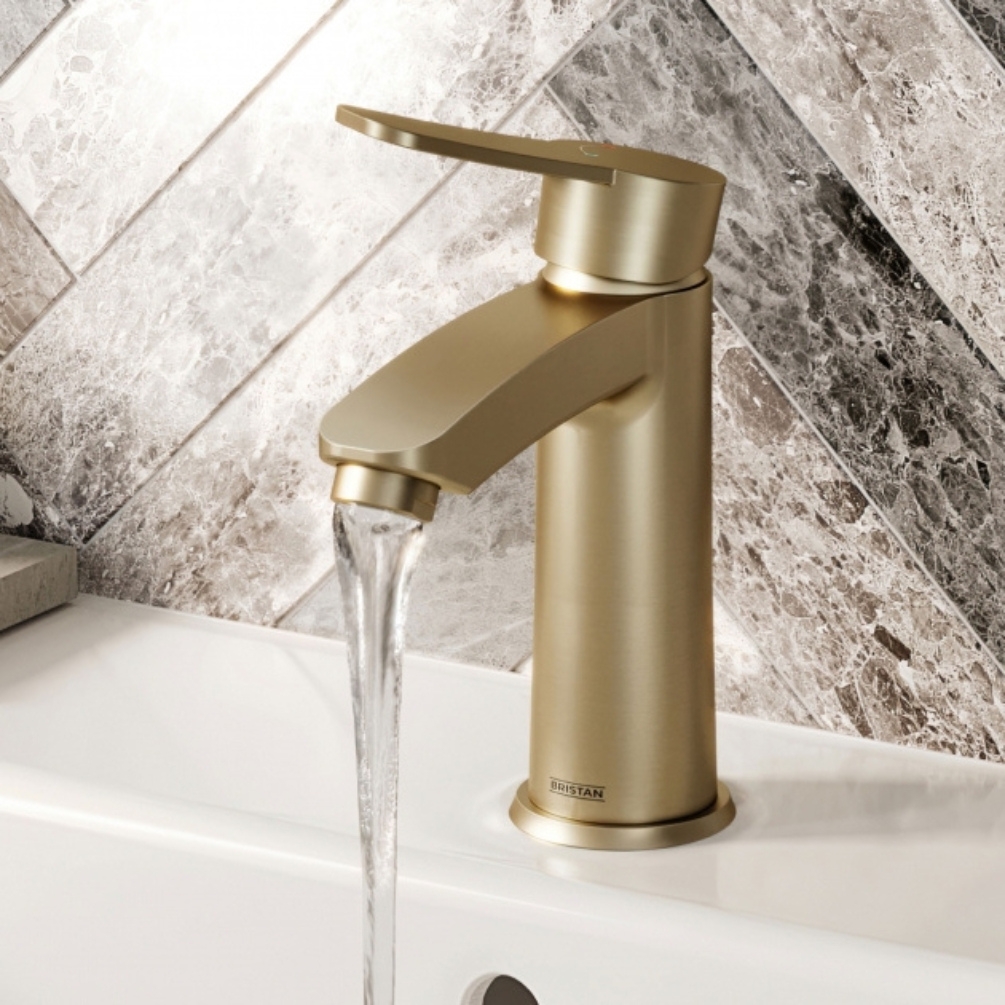
Brushed is the finish you’ll encounter most often on metal-based products. In the bathroom, this equates to brassware, but also accessories, and heating.
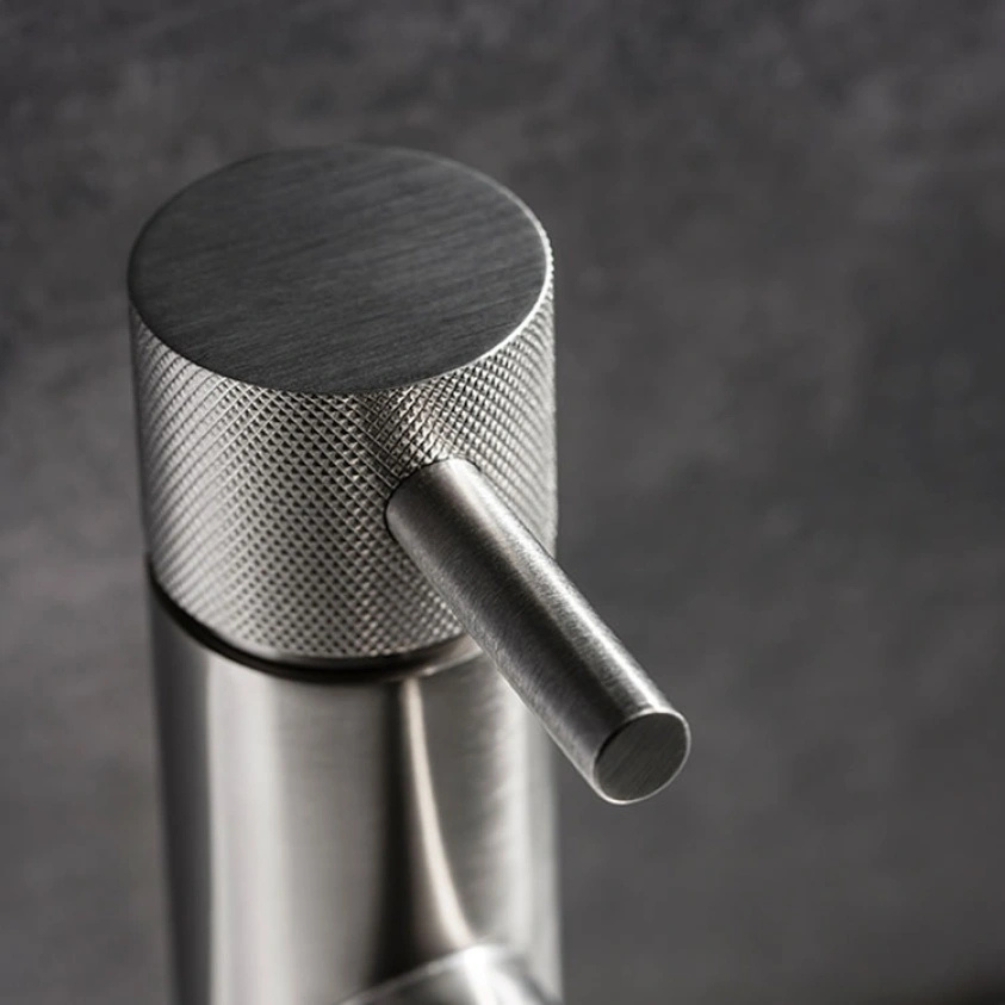
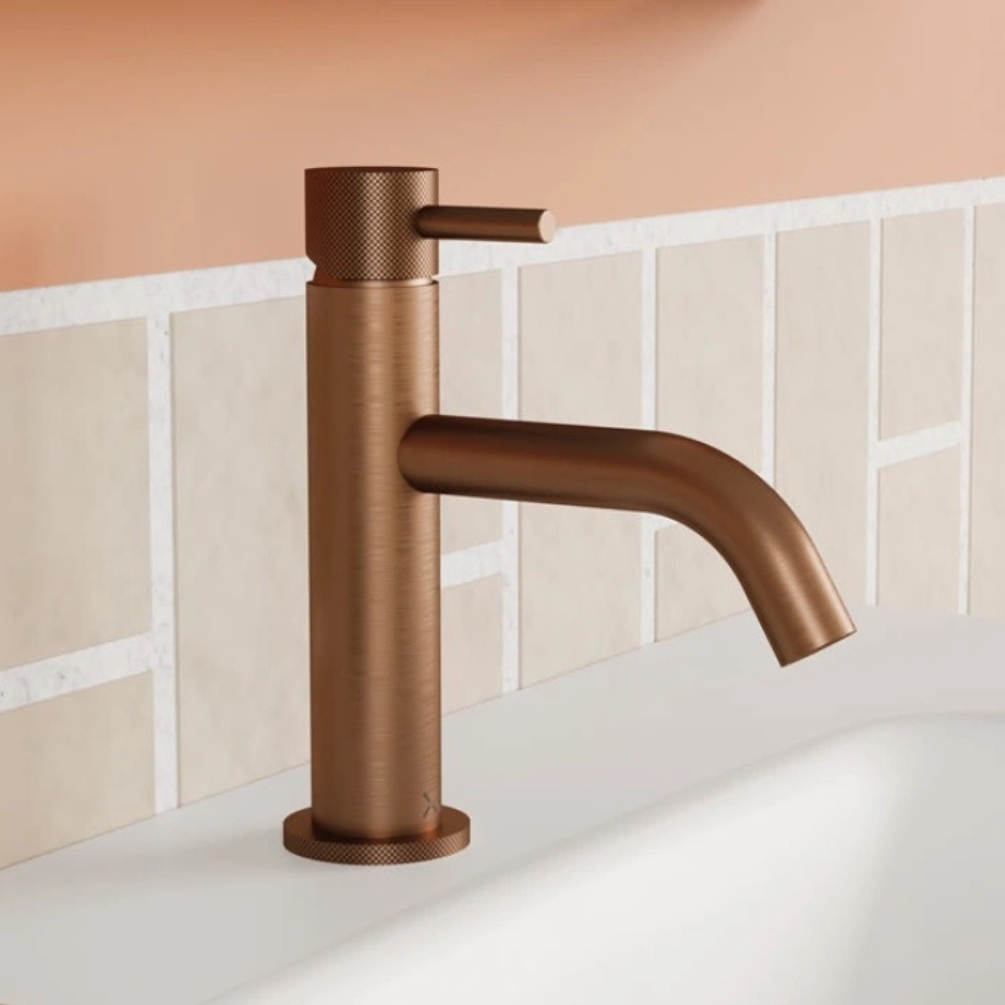
A brushed finish is created by running a fine directional grain across the surface, which softens the shine into a warm, low-glare glow. Beyond the good looks, there’s a genuinely practical payoff. That fine texture hides fingerprints and water marks far better than any polished finish, so brushed fixtures stay looking clean with less maintenance.
You’ll most commonly find brushed finishes with the following three types of colours: brass, nickel, and bronze. Each offers a certain warmth where others feel cold, and it pairs beautifully with natural textures. If you love the look of metal but not the smudges, brushed is the sensible - and very current – choice.
Gloss
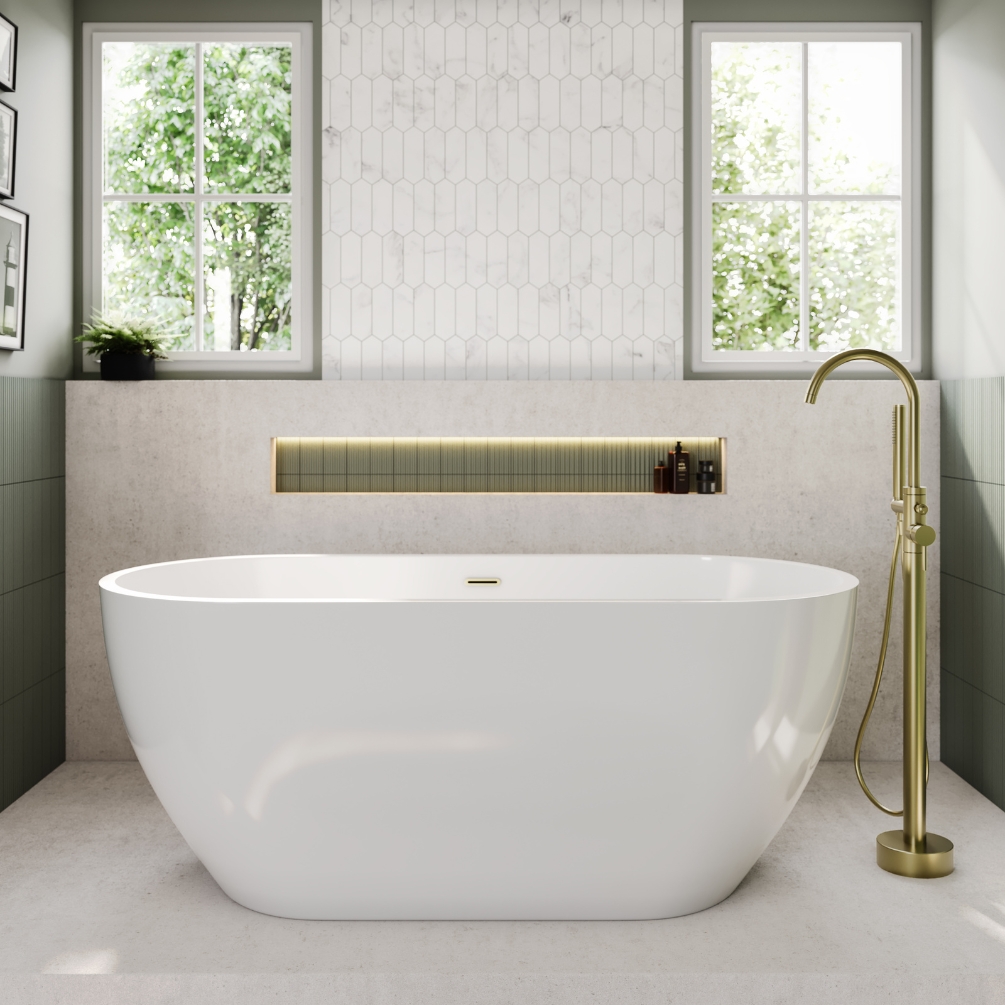
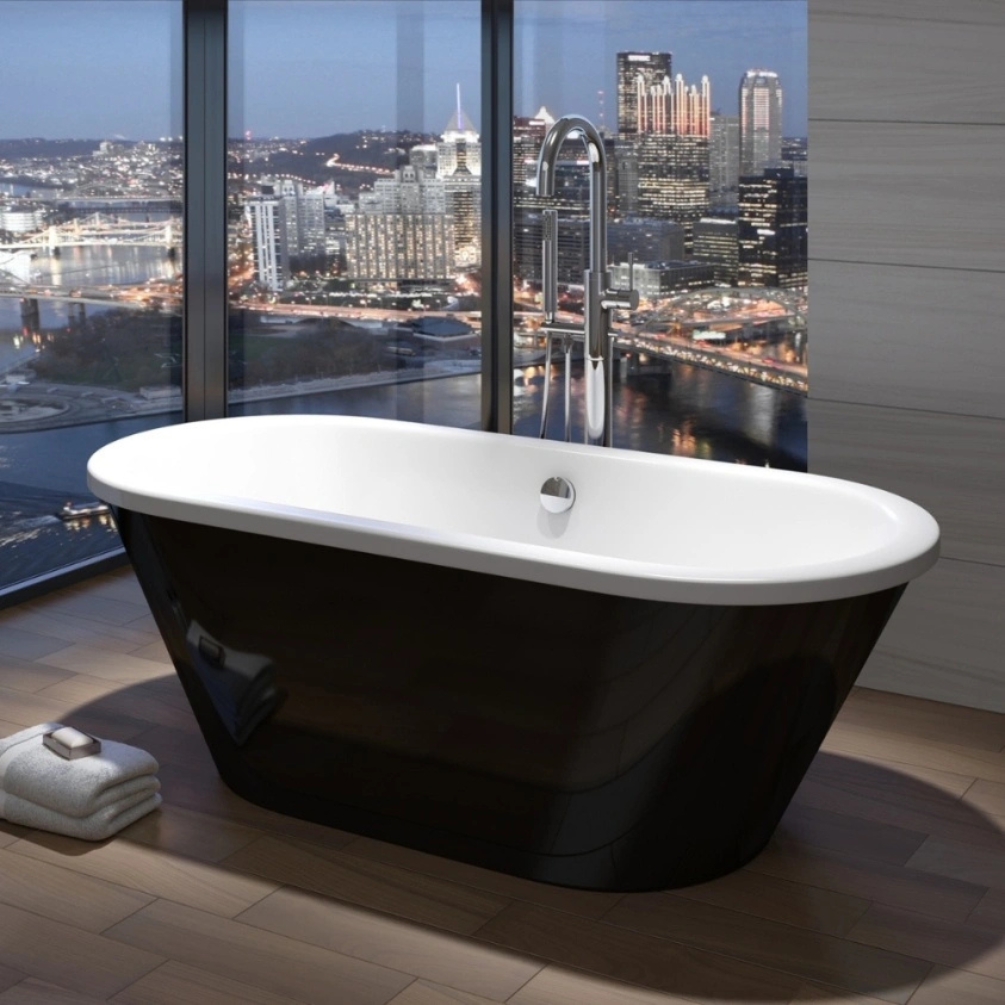
Gloss is the show-off of the group. It's bright, reflective, and bounces light off the surface. That light-bouncing quality is exactly why gloss - along with polished finishes - is the go-to for a small or dark bathroom. It's most commonly white - especially on sanitaryware, where gloss white is a classic choice - and while you'll spot the odd black, chrome, or bolder variant, white is far and away the most common, and beneficial.
The look is crisp, clean and unmistakably contemporary. The trade-off is honesty: because the surface is smooth and sealed, gloss is quick to wipe clean, but it also shows every fingerprint, splash, and water spot. Gloss stays looking its best with regular wiping rather than being truly low maintenance.
While found most often on sanitaryware like basins and bathtubs, it works just as well on the composite wood of bathroom furniture units such as vanities and cabinets.
Matt
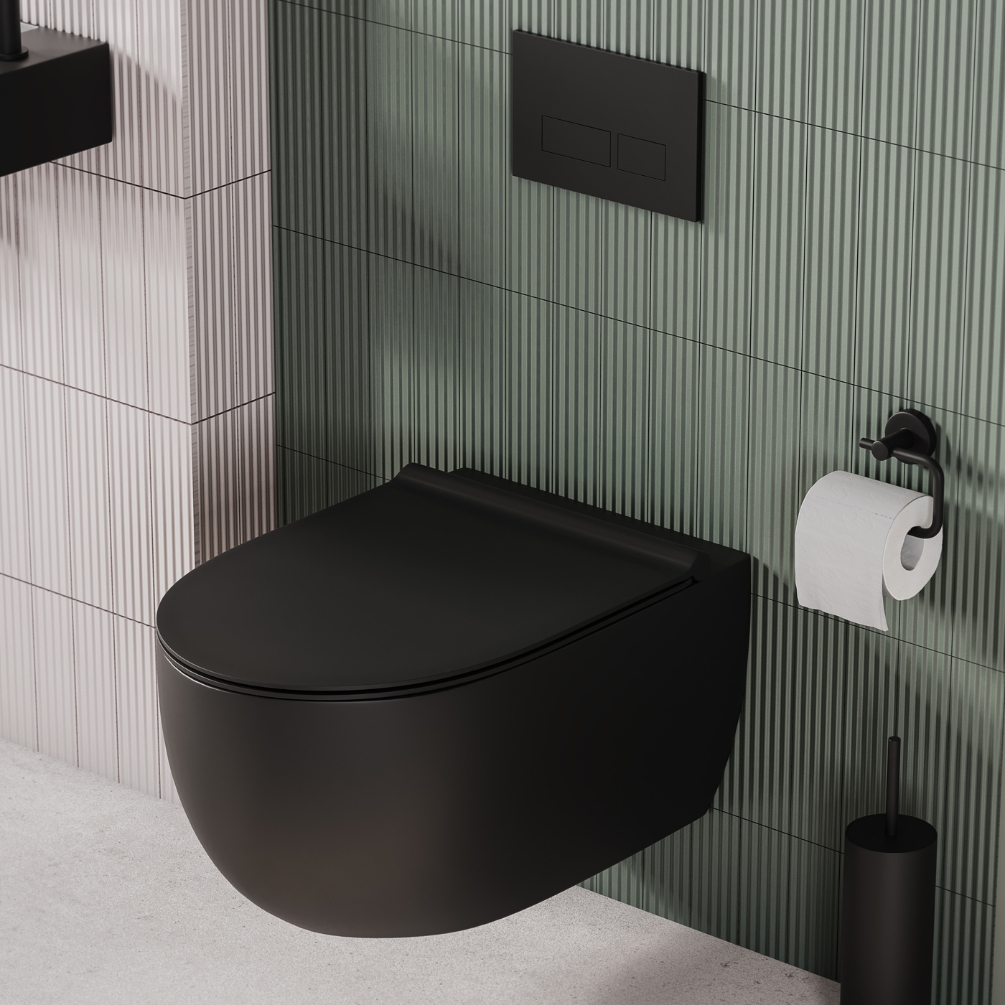
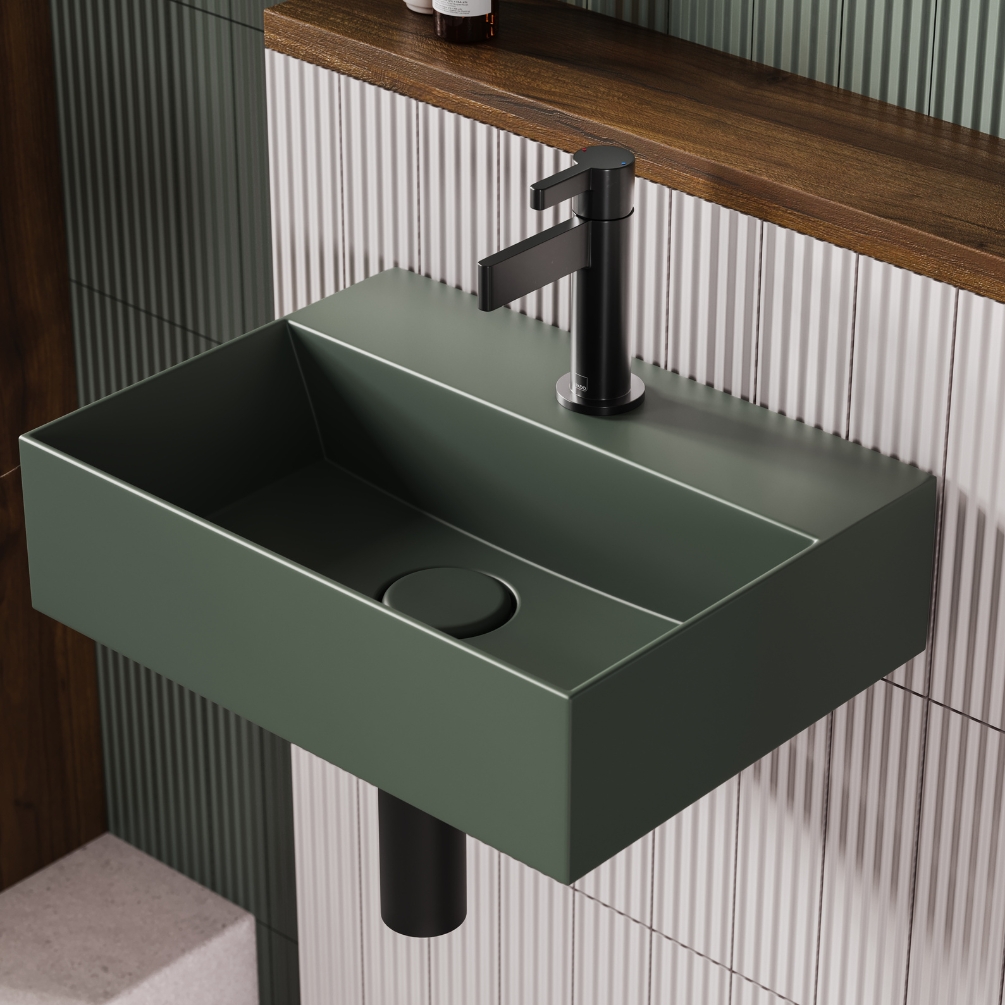
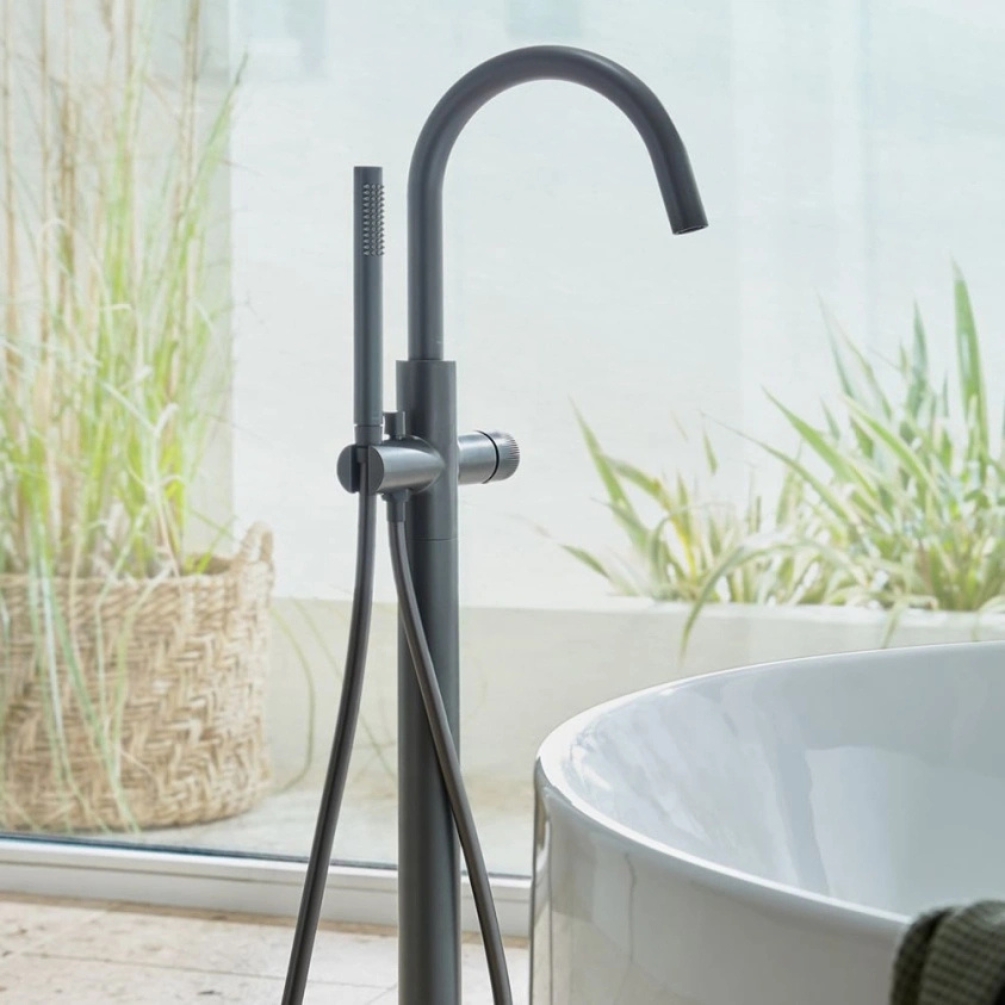
Matt is gloss’s opposite number: flat, non-reflective, and soft to the eye. It has become the defining look of most modern, understated bathrooms, and for good reason. It reads calm, tactile, and grounded, with none of the shine that can come across as clinical.
It’s frequently present in white and black, but black is far and away the most popular, and matt black has become a modern staple of bathrooms. However, matt is also becoming strongly linked with the softer, nature-inspired palettes of sage and olive greens, terracotta, taupe, and stone, because of its chalky yet calming quality – a key element of biophilic bathroom design.
In practice, matt is brilliant at hiding fingerprints and small imperfections, and it cuts glare in a bright room. The one thing to keep in mind is upkeep: a matt surface is more absorbent than sealed gloss or satin, so it can show water spots and prefers gentle, bathroom-formulated cleaners rather than anything abrasive; wipe up standing water, and it looks its best. Matt also loves light, so it comes into its own in larger or well-lit rooms where you don't need a surface to do the reflecting for you.
A matt finish turns up right across several types of bathroom fixtures and fittings. This can include brassware, furniture, sanitaryware, heating, and accessories. This cohesion means it’s easy to carry the matt look across an entire bathroom suite.
Polished
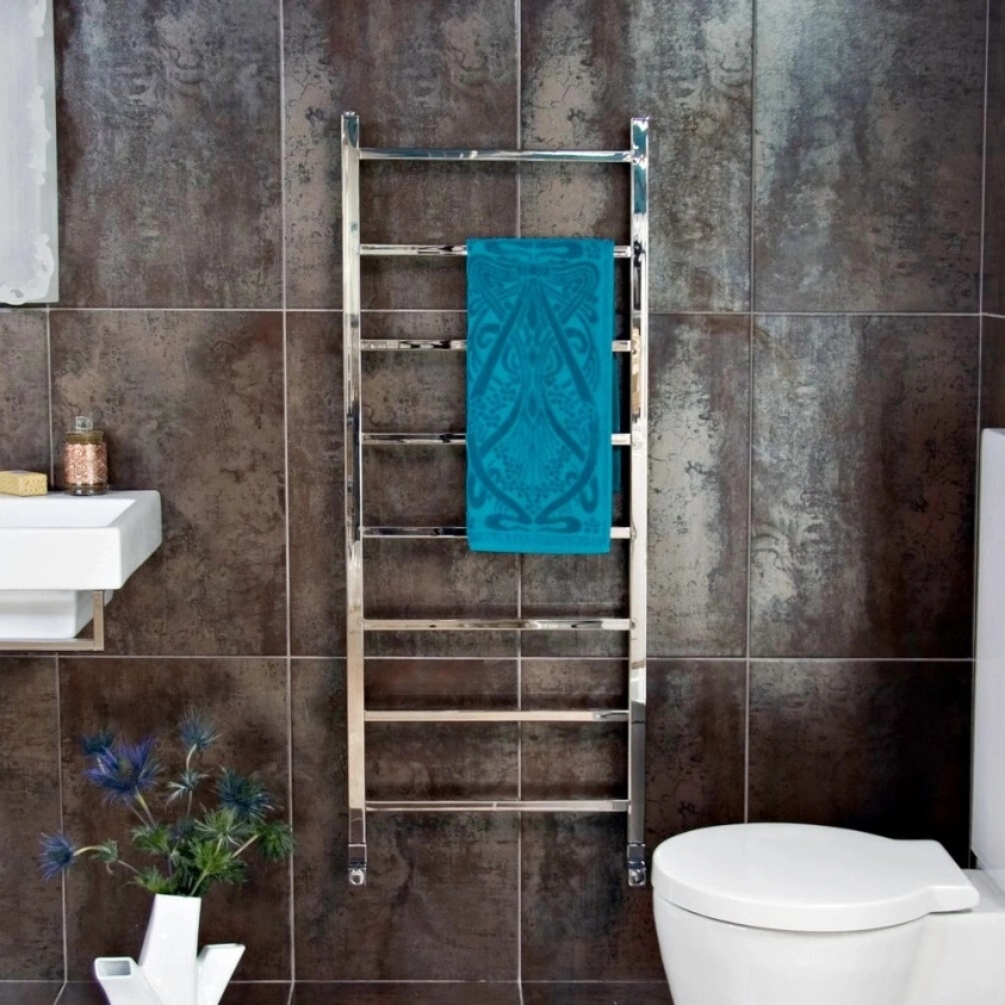
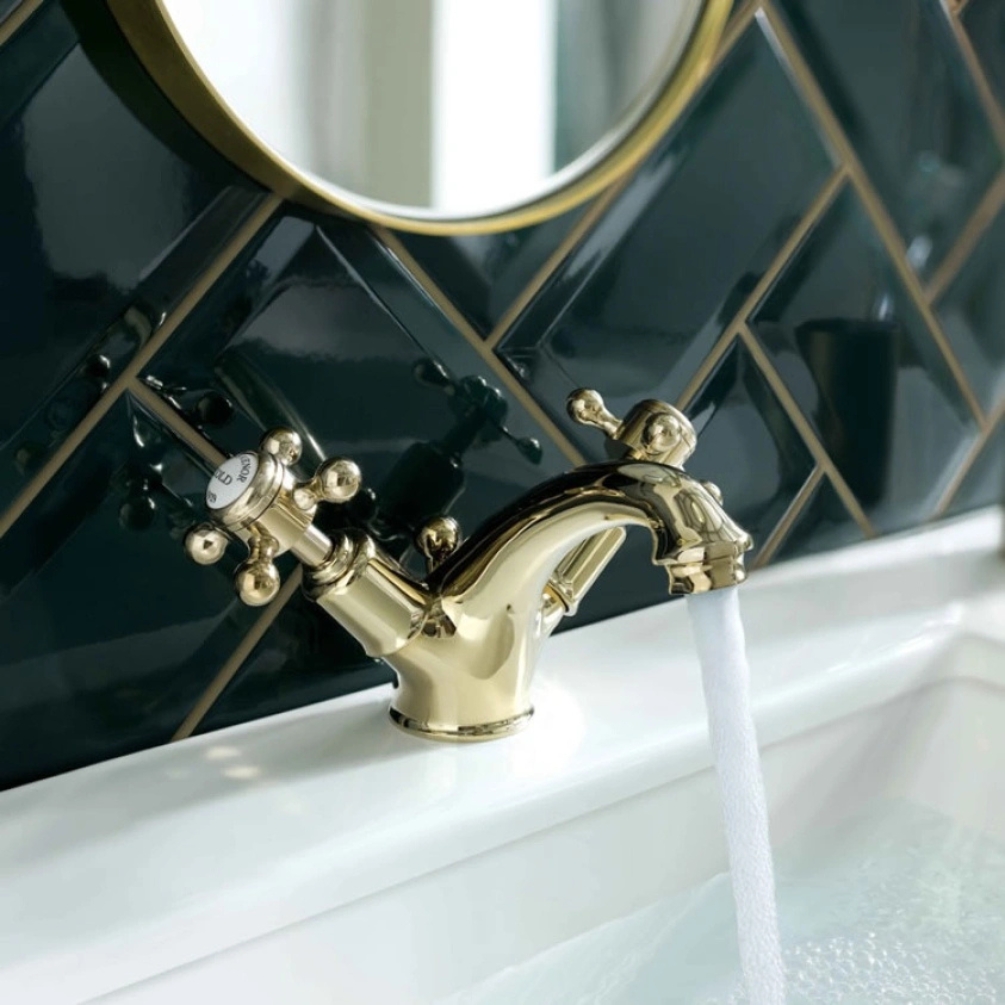
Polished is exactly what it says on the tin: it’s glassy and highly reflective, a high-shine option for metal fixtures. Where brushed diffuses light, polished throws it straight back, which gives a room a formal, luxurious, almost hotel-like quality. And, like gloss, it reflects light well enough to help a small or dark bathroom feel bigger.
You'll sometimes see gloss and polished used interchangeably, and it's easy to see why; both are bright, mirror-like, and show water spots in the same way. The simplest way to tell them apart is by what they're on: polished refers to the shine worked into a metal surface, so it's the term for brassware and fixtures like taps and showers, while gloss is the equivalent high-shine finish applied as a coating or glaze over non-metal surfaces such as furniture, sanitaryware, and tiles. Same idea, different material.
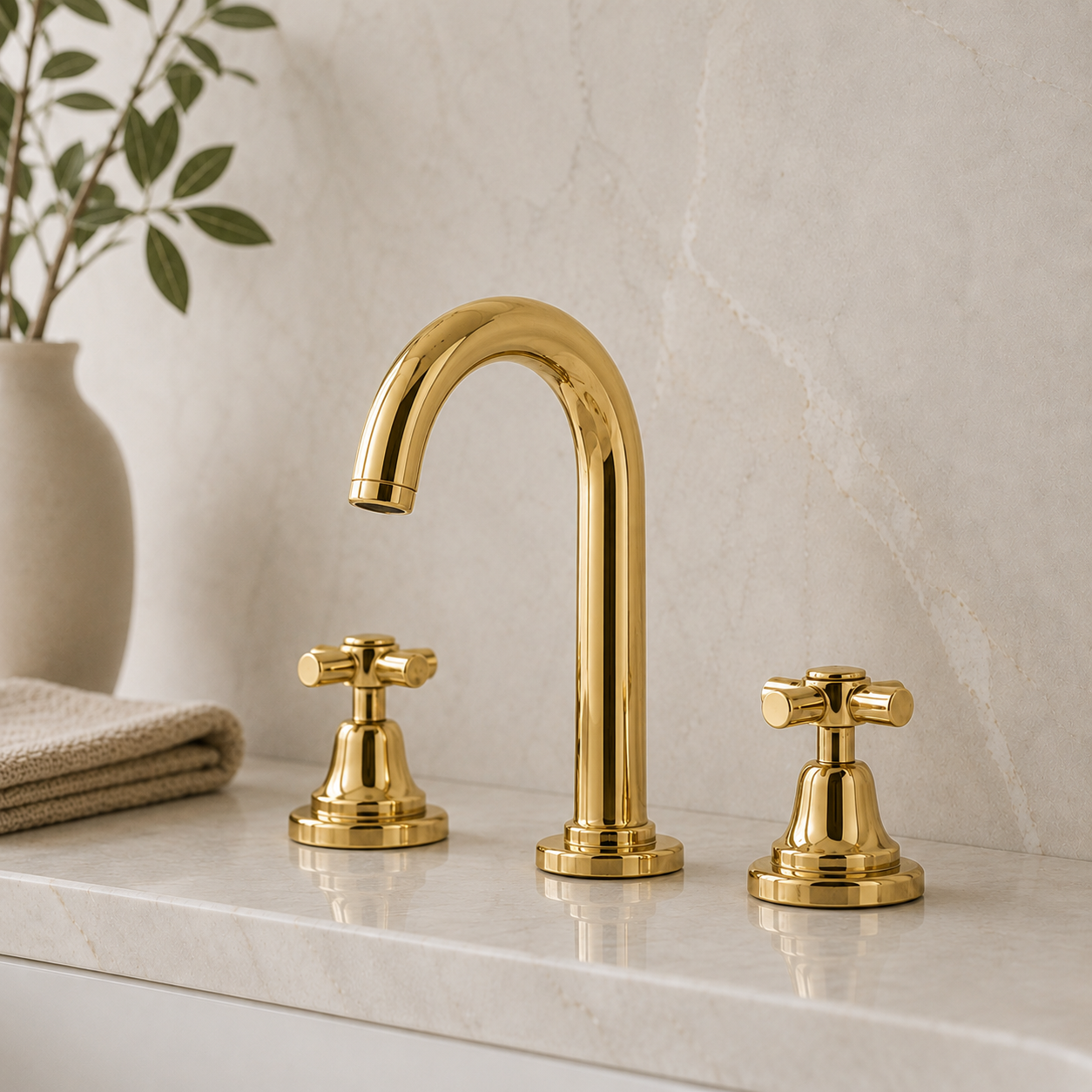
The catch is much the same as gloss: all that shine shows marks, water spots, and dust, so it rewards a household that doesn't mind keeping on top of the cleaning. If you've got light to spare and you want the room to read polished and grand, it delivers; just go in with your eyes open about the upkeep. You'll most commonly find it as polished stainless steel, though it works just as well in polished chrome, or polished gold for a more luxurious look.
Satin
Satin sits in the middle of the sheen scale, and that's its whole appeal. It has a soft, pearly lustre - a gentle glow rather than a mirror-shine - so you get some of the brightness of gloss without the glare or the constant wiping.
It's the diplomat of bathroom finishes, and arguably the best all-rounder for easy upkeep: more forgiving of marks than gloss, yet more wipeable and moisture-resistant than matt, so it stays looking clean without showing every fingerprint. That balance makes it a favourite for anyone who wants a happy medium rather than a strong statement in either direction.
On furniture and brassware, it reads calm and quietly premium. If you're torn between the drama of gloss and the softness of matt, satin is very often the answer.
Lacquered and Unlacquered
Lacquered and unlacquered sit together because they're two sides of the same decision - and it's less an aesthetic one than a performance one. The choice isn't really about how a surface looks, but about whether the metal is sealed to stay exactly as it is or left raw to age naturally. And while both are most associated with brassware, you'll find the same choice on furniture and wood too, from a sealed, lacquered vanity to timber left to weather and mellow.
Lacquered means a fine, clear protective coat sealed over the surface to lock in its colour and shine. It's the low-maintenance option: the sealed surface means grime sits on top rather than sinking in, so a quick wipe keeps it looking exactly as it did on day one. The only thing to know is that the coating is doing the protecting, so steer clear of abrasive cleaners that could wear through it. If you want your finish to look the same tomorrow as it does today, lacquered is the safe bet.
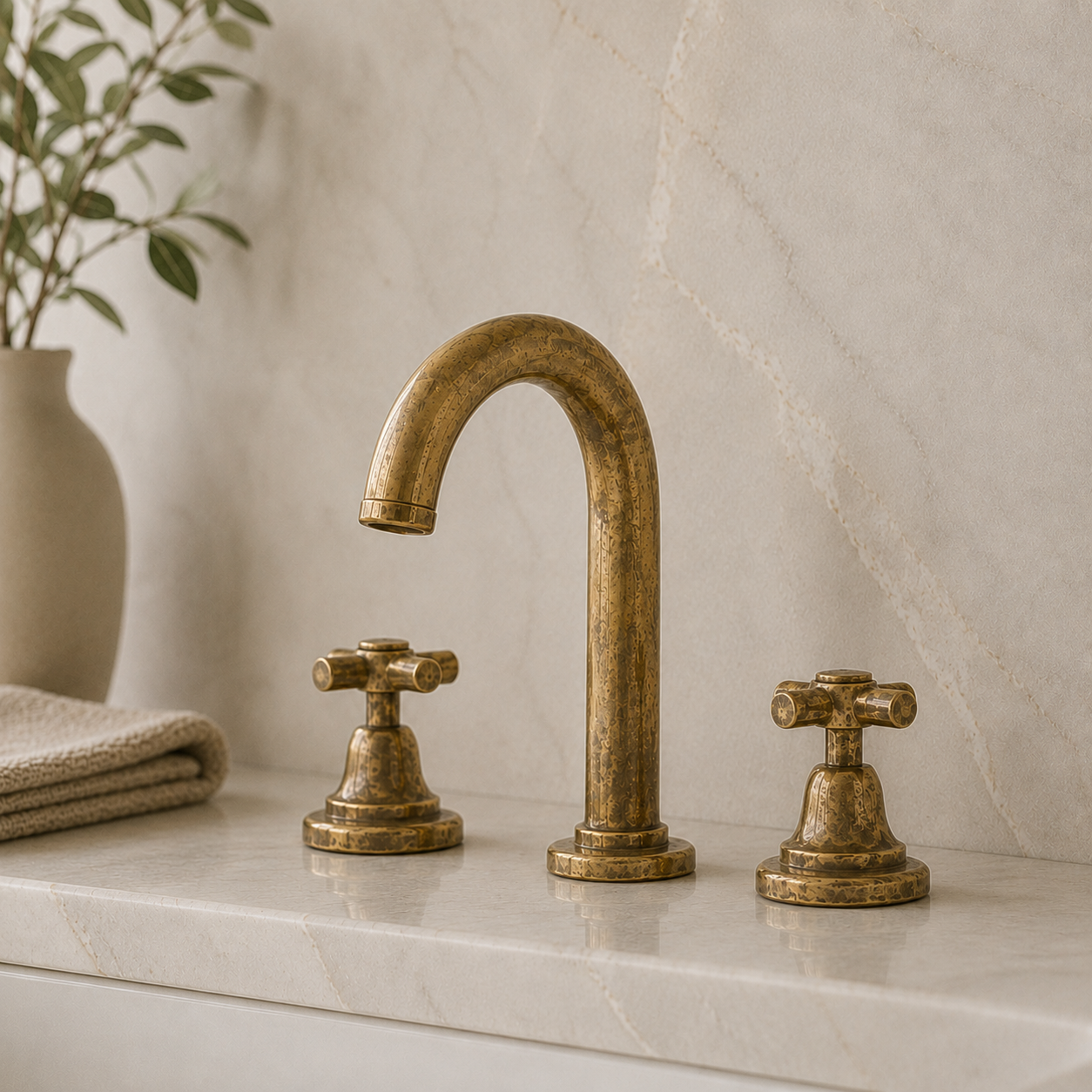
Unlacquered brassware - often called a living finish - is the other side of the coin: it skips the protective coat entirely and leaves the raw metal open to the air. Over time it reacts to water, the oils from your hands, and everyday use, gradually taking on a softer, warmer patina, and no two unlacquered taps ever age quite the same way. This is the choice for anyone who loves the look of aged, characterful brass - think heritage and country bathrooms, where a little natural weathering adds soul rather than reading as wear and tear. It does ask more of you: keep it bright with the occasional polish, or leave it be and let it develop. Either way, it's less about upkeep and more about which version of the finish you fall for.
How Durable are Bathroom Finishes?
Durability varies more than looks alone would suggest, and it comes down to how the finish is applied rather than its colour. For coloured and metal finishes, PVD is the clear winner. Standard electroplated finishes look identical on day one and wear well for the first few years, but over time the thinner layer can pit or crack at high-use points, which is why a quality PVD or well-plated finish over solid brass is the longer-term bet.
For everyday marks rather than wear, texture is what protects the look. Brushed and matt finishes scatter light, so they hide fingerprints, smudges, and water spots far better than the high-shine options, meaning they stay looking pristine with less effort. Polished and gloss are the most durable underlying surfaces but show every mark, so their enemy is water spotting, not wearing out. Unlacquered brass is the deliberate exception: it isn't trying to resist change at all, but instead ages into a patina by design.
What is PVD Coating?
PVD stands for Physical Vapour Deposition; it’s a high-tech coating process that gives the metal used in brassware a coloured finish that’s far more durable than electroplating. It works by molecularly bonding coloured metals to the fixture, rather than layering them on top. This makes the fixture highly corrosion- and tarnish-resistant, standing up well to water, cleaning products, and limescale, and holding its colour for years without peeling or flaking. In short, PVD is the mark of a premium, longer-lasting finish, which is why it tends to appear on higher-end ranges.
How to Choose the Right Finish for Your Bathroom
With seven finishes on the table, the choice comes down to three questions: how big and bright is the room, what look are you going for, and how much upkeep does your household actually want to take on?
1. Start with size and light.
Small, dark, or north-facing rooms benefit from gloss and polished finishes that bounce light around and open the space up. Larger or well-lit rooms give you the freedom to go matt, because you're not relying on the surface to do the reflecting.
2. Then think about bathroom style.
A minimalist room leans matt and satin with clean lacquered brassware. Heritage and country looks love unlacquered brass and softer, warm matt tones. A traditional, formal room reaches for polished chrome and high-shine gloss. Contemporary rooms happily mix gloss with a warm brushed accent.
3. Be honest about maintenance.
If easy cleaning is your priority, the sealed finishes win: gloss, polished, and lacquered surfaces all wipe clean in seconds, with satin the standout all-rounder because it stays wipeable while hiding marks better than the high-shine options. A busy family bathroom is happier with forgiving matt and satin furniture, brushed fittings, and lacquered brassware that keeps its looks with a quick wipe; a low-traffic ensuite can carry high-shine gloss, polished surfaces, or unlacquered brass that ages and asks for a little more attention. And here's the key idea to carry into the next section: you don't have to pick one finish for the whole room.
Can You Mix and Match Finishes?
Yes, arguably, the best bathrooms rarely use a single finish everywhere, but they don’t mix wildly either. The approach that works nearly every time is simple: pick one finish for your brassware and keep it consistent, then choose a second finish for your furniture and sanitaryware that sits happily alongside it. The same coordinated thinking applies to colour drenched bathrooms, where a bathroom is designed around a single colour palette
The mistake to avoid is giving every surface its own finish, because that's when a room starts to look busy and restless. Keep the brassware speaking with one voice, pick a furniture-and-sanitaryware finish that complements it, and the whole room pulls together - two finishes that agree with each other, rather than a handful competing.
The Finish That Sets the Tone
Finishes are one of those details that are easy to leave until last, behind the layout and the big-ticket pieces - yet they're what your eye lands on and your hand meets every single day. Get them right and a fairly ordinary bathroom can look properly high-end; get them wrong and even expensive fittings can end up looking a little off.
If you’d like a hand pairing finishes across brassware, sanitaryware, and furniture, please contact us or book a free 3D design appointment; we’re always happy to help you picture it in your own space.


