Mirror Colour Temperature Guide with Chart
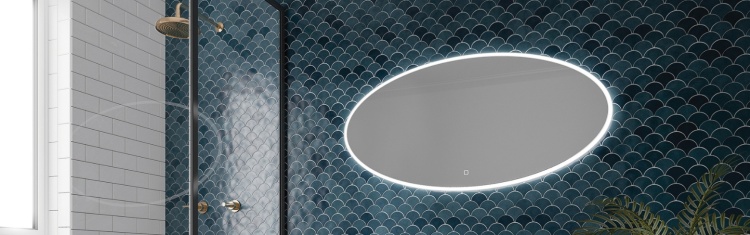
Mirror, mirror on the wall, which is the greatest colour temperature of them all? The answer is.... it depends on personal preference to create the most idyllic ambience for you. However, the time of day and colour chosen can have an effect on everything from mood to how alert you are as well.
Below is a complete guide to colour temperature of lighting, in particular illuminated and LED bathroom mirrors, a handy chart showing the different temperatures with explanations of each, and why and how this can benefit you and your household.
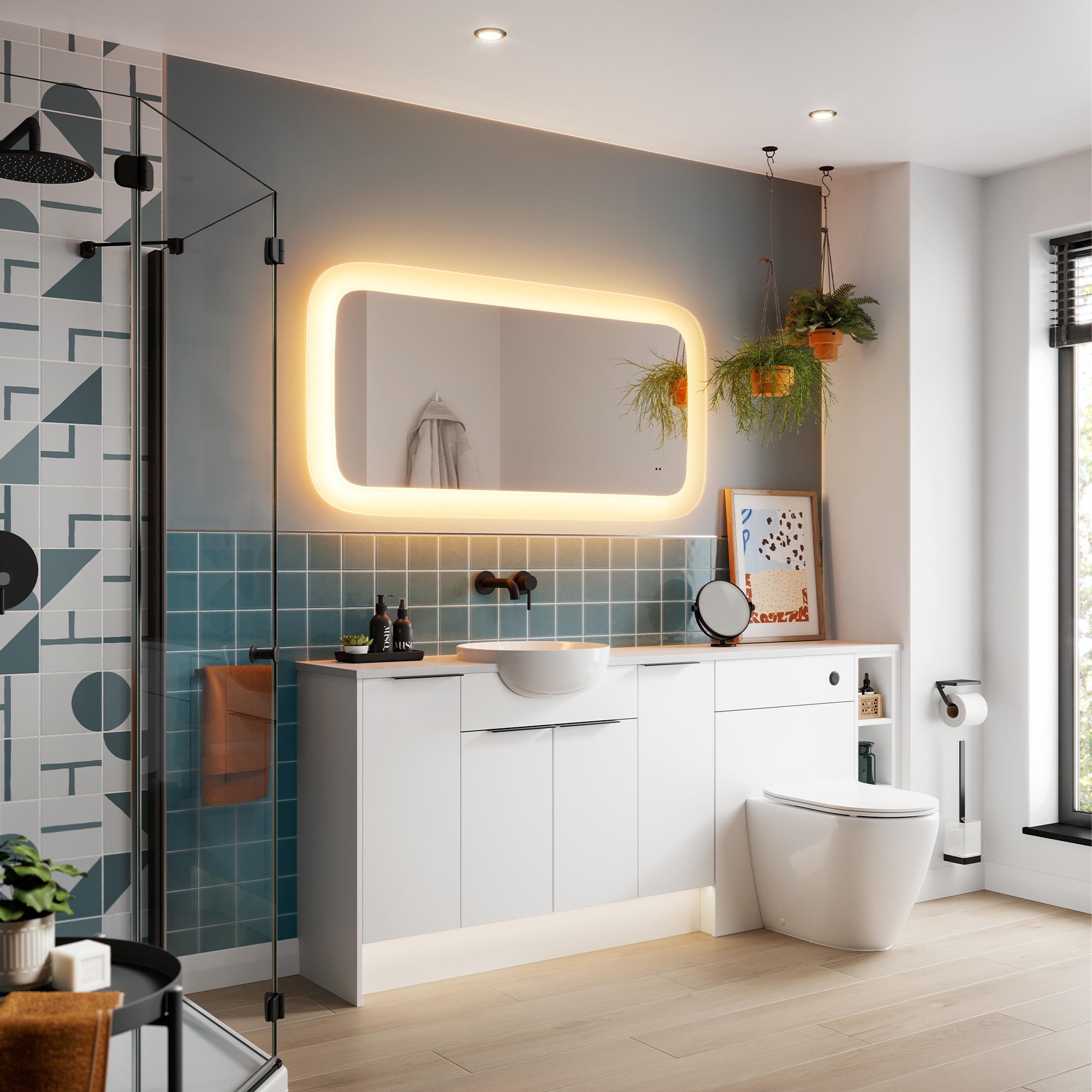
What is Colour Temperature?
Colour temperature is a numerical value that measures and describes the hue of a light source based on its perceived 'warmth’ or ‘coolness’ to the human eye. Bathroom mirrors, like lighting, can come with either a fixed colour temperature in a specific hue or have the ability to be adjusted to suit personal preference. It is worth noting that colour temperature and brightness are two separate things, so if altering how bright the lighting on a mirror is something that you are keen on, look for one with dimmable features.
What is Colour Temperature Measured In?
Colour temperature is measured in Kelvins (K), named after the British scientist, Lord Kelvin, who first developed the idea of creating a scale which measured colour warmth in the 19th Century. This research was formally established as a unit to measure colour temperature from light sources in 1954, which was further modified in 2019 to include more modern innovations such as LED lighting. As mentioned previously, this differs from brightness, which is measured in lumens or watts.
What is Kelvin?
In contrast to the Celsius and Fahrenheit scales, which were originally designed to measure the heat or ‘degree’ of water at its freezing and boiling points, Kelvin follows an absolute zero scale to represent the complete absence of thermal energy.
The closer to zero and higher up on the Kelvin scale, the more thermal excitations resulting in warmer and redder emitted tones. Conversely, the lower down on the scale, fewer thermal excitations occur, leading to cooler and bluer tones. The Kelvin Scale begins at 0K, which is a state where no light or thermal energy is emitted. In respect of colour temperature, different levels change the colour of the hue. For example, at around 2000K the hue is orange-yellow, and as you move upwards through the scale the warmth becomes cooler into light yellow, then plain and neutral white light, and, finally, light blues by 6000K.
Can Kelvins be Converted to Celsius and Lumens?
Kelvins and lumens cannot convert with each other, as they measure completely different physical properties. Lumens measure luminous flux, which is the total quantity of visible light emitted by a source. Celsius on the other hand is entirely possible since both Kelvin and Celsius are two scales in which temperature is measured. It was calculated by Lord Kelvin that 0K in light temperature on his scale was the same as -273°C in thermal temperature, making the two scales easy to convert by simply adding or subtracting 273.
To convert Celsius to Kelvins, add 273. e.g. 25°C + 273 = 298K
To convert Kelvins to Celsius, subtract 273. e.g. 300K – 273 = 27°C
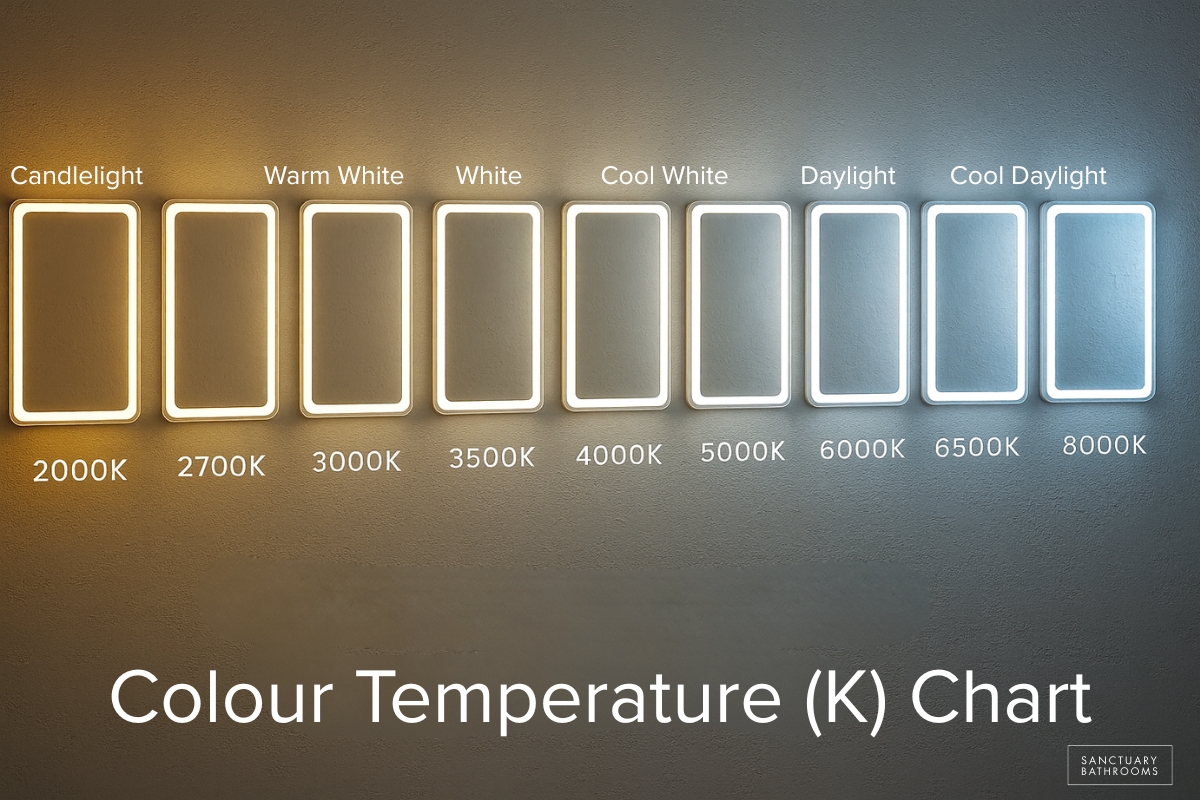
The Colour Temperature Chart: What Are The Different Colour Temperatures?
Using the settings on your LED mirror, you can adjust the lights to different colours along the Kelvin scale to create an ambience or complete an important bathroom task. Typically, most LED mirrors will have a colour temperature somewhere between 2700K and 6500K with colours reflecting the various stages of sunlight and daylight.
Here is a breakdown of the various colour temperatures on the Kelvin scale that you will typically find in illuminated bathroom mirrors. Each temperature brings its own unique characteristics and advantages, aiming to elevate your bathroom experience.
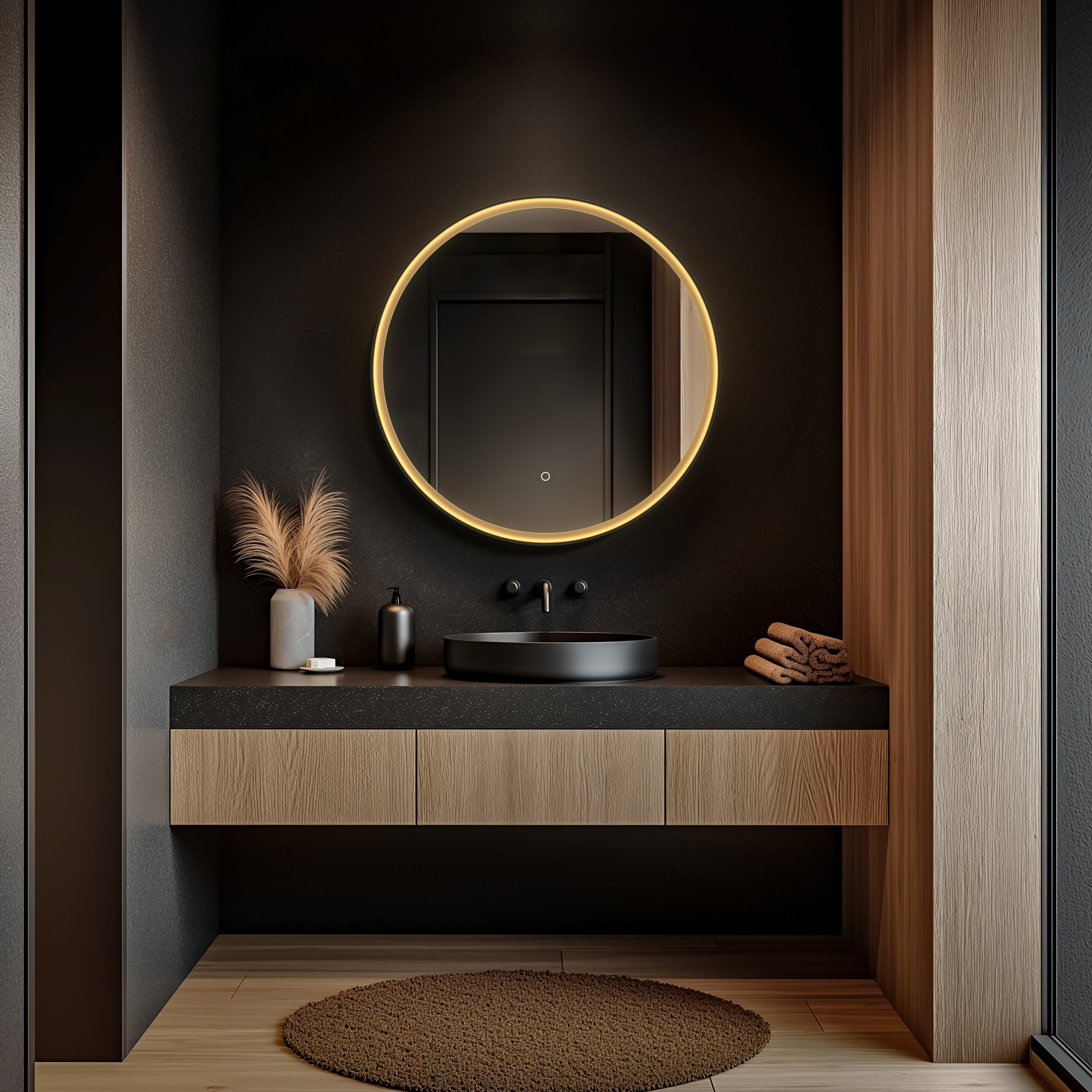
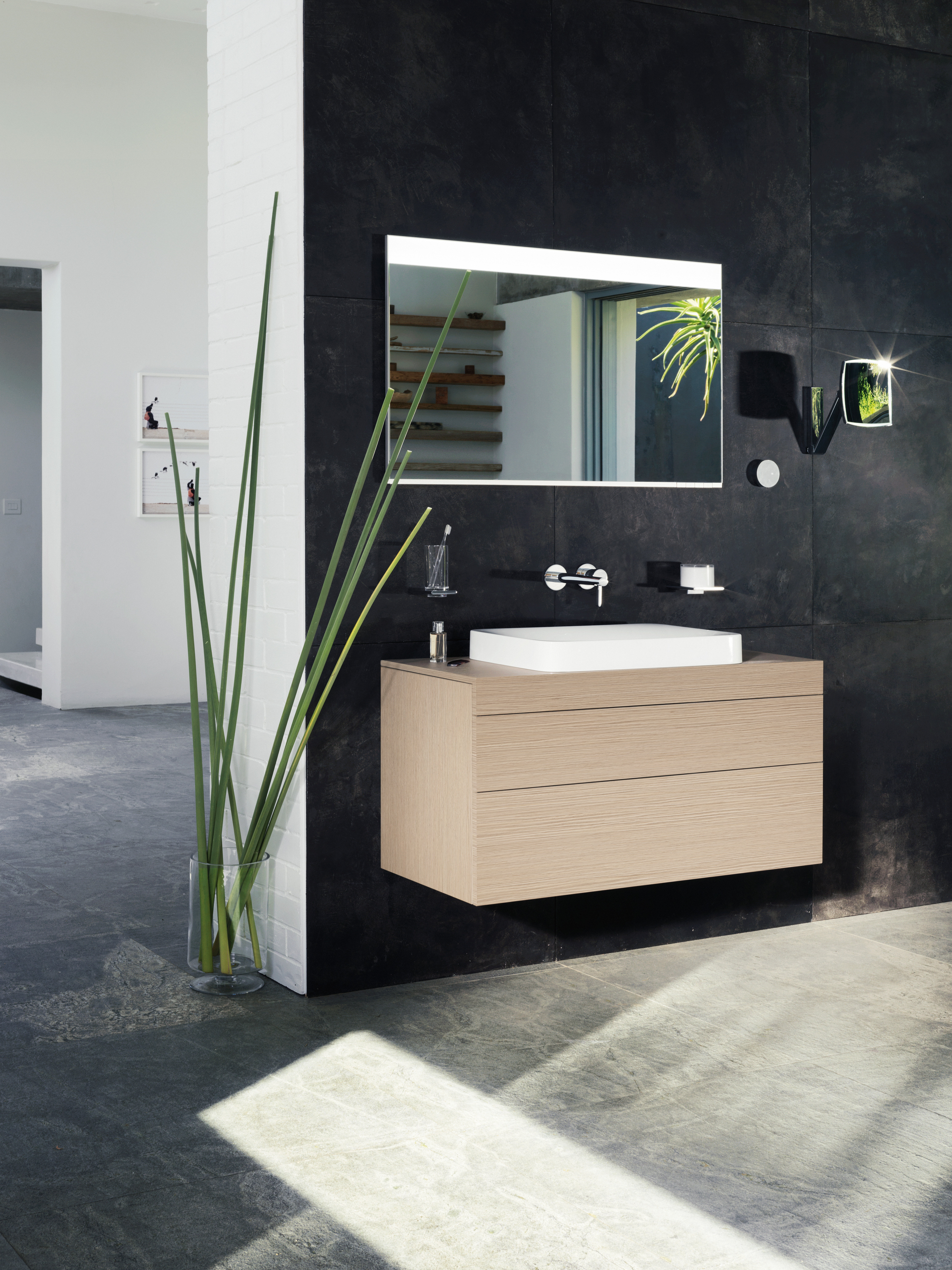
2700K-3000K Warm White
This has an orange-yellow tint but still retains a relaxing vibe and is perfectly suited for those that want to create a warmer ambience in their bathroom. This shade is also gentle on the eyes, aiding sleep and relaxation. This tone works well in larger bathrooms for a more intimate and diffused look, offsetting any natural daylight which comes through the window to help you relax in a soft glow. Warm white is better for relaxing than the next colour, cool white and is easier on the eyes.
4000K Cool White
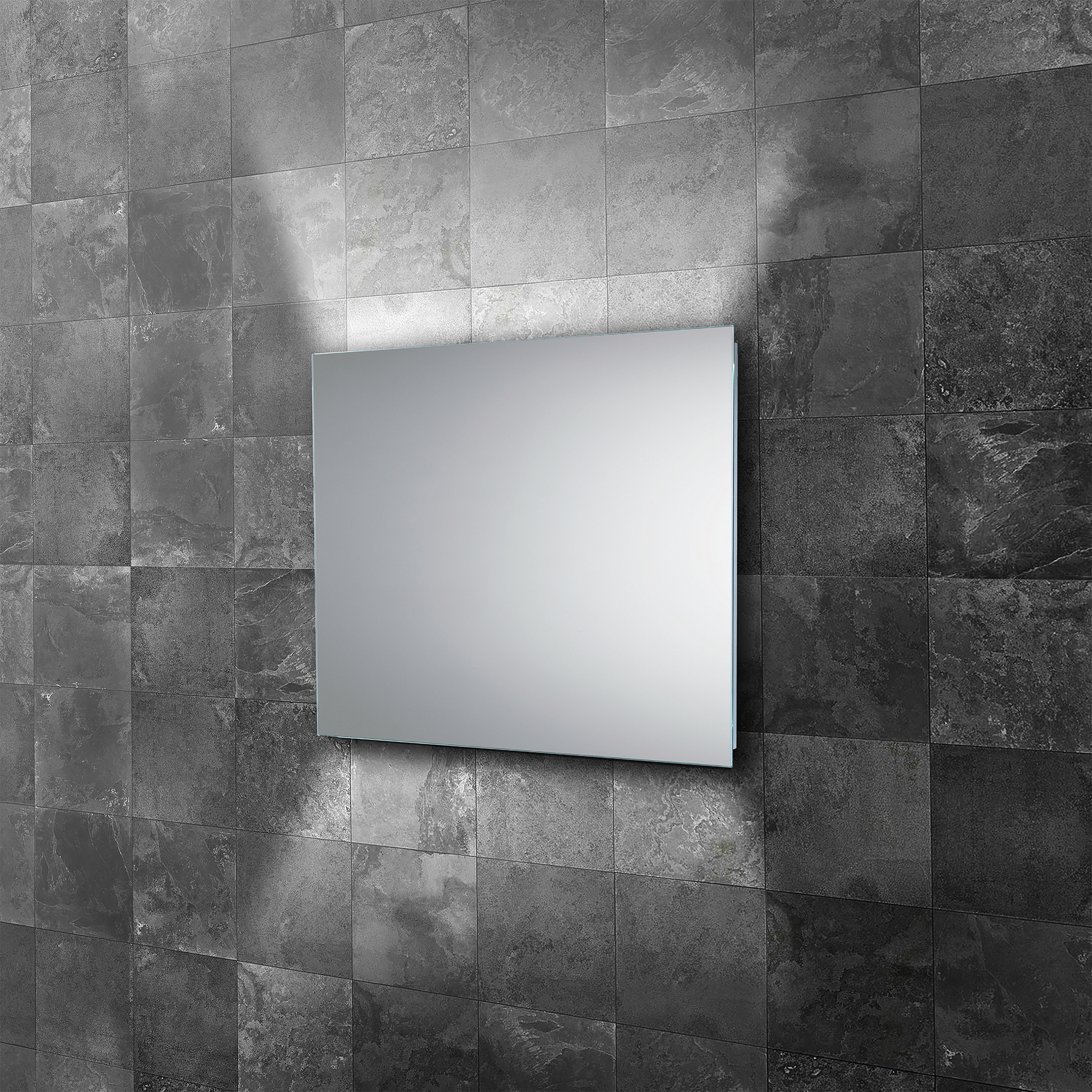
The crisper light of this colour tone makes it easier to see details and perform more close-up tasks such as shaving and showering, providing a clearer light than its predecessor, warm white. Cool white works well in smaller bathrooms where natural light may be limited.
5000K Daylight
This neutral white glow of 5000K has added light blue hues to mimic daylight. The daylight blue colour tone improves focus and concentration, making it ideal for tasks which need to be done with greater precision, such as applying make-up, styling hair or brushing teeth. The lighter colours gives the appearance of it being brighter.
6000K+ Cool Daylight
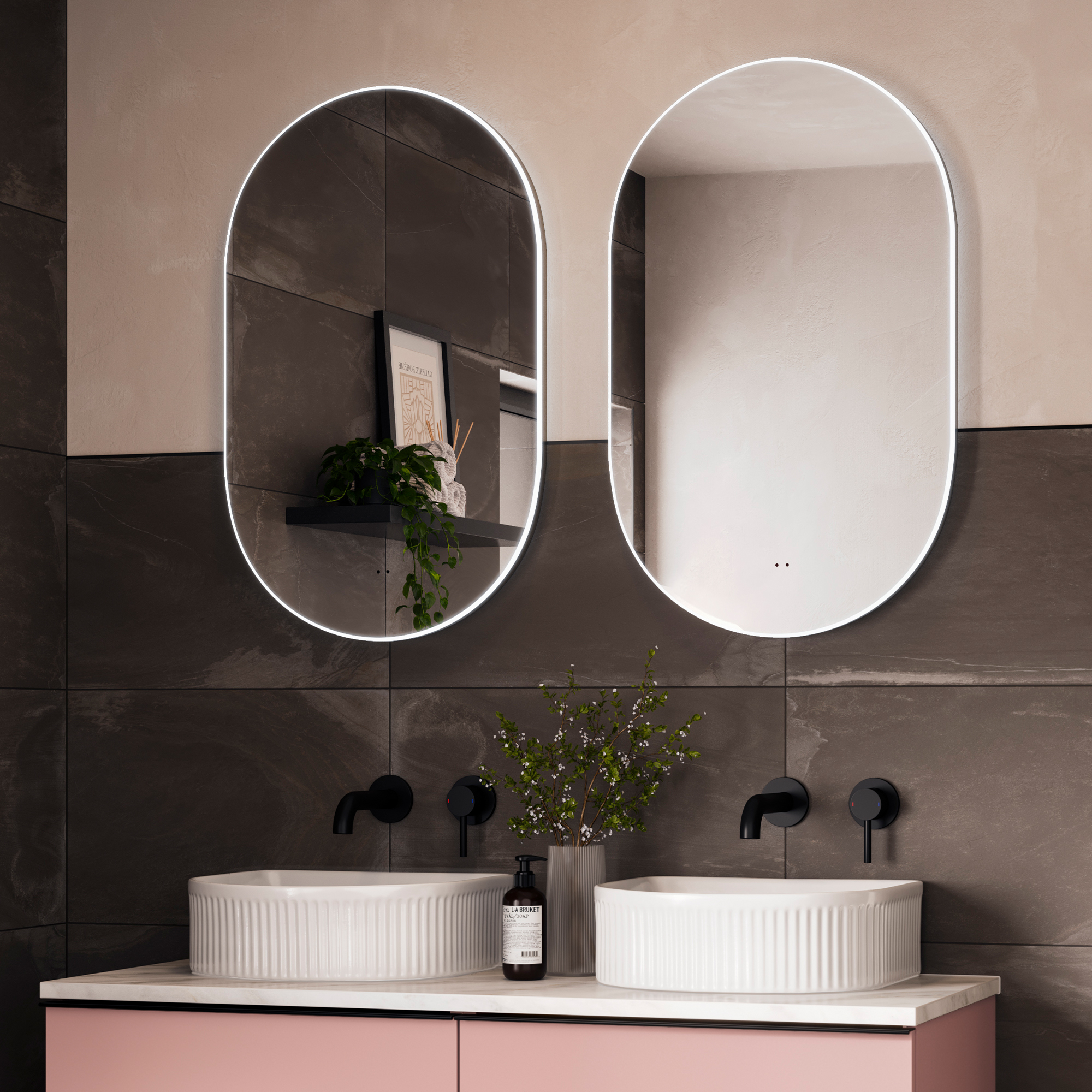
The brightest colour tone on the list, cool daylight, makes your bathroom look cleaner and lighter, giving your bathroom a more vibrant atmosphere. Cool daylight lighting is believed to boost productivity, memory and reduce anxiety. It is perfect for morning bathroom routines and setting you up for the day ahead.
2000K vs 6000K: Which Colour Temperature is Best For You, Your Mood And Eyes?
One question that may be asked is which colour temperature is best, not only generally in terms of popularity, but also in terms of how it can affect personal wellbeing both mentally and physically. Whilst it is worth noting that different temperatures work for people in different ways, according to the Sleep Foundation, warmer colour temperatures, such as hues ranging from reds, oranges and warm yellows, tell our brains to wind down for sleep, and are more effective in the evening. Therefore, if you are looking for something to relax with whilst you enjoy an invigorating evening soak, a warmer colour temperature is likely to be the one to go for. Higher colour temperatures on the Kelvin scale, such as cool blue, trigger hormones which make us feel more alert, so these are most effective in the morning, especially when preparing for the day ahead.
The best colour temperature for eyesight is between 2700 – 3000 Kelvins, which corresponds to warm daylight. Like with mobile phones, the effect of blue light can have on our eyes can have an effect on everything from how strained our eyes can get and even impact quality of sleep.
Can You Mix Different Colour Temperatures?
Warm white and cool white lighting can be mixed or layered to create the perfect ambience for your bathroom. They can be used to light different areas of your bathroom, depending on what tasks you wish to do. Cooler lighting may be used near your basin where daily tasks will be done, such as shaving and styling hair. Warmer lighting can be used for areas of relaxation, such as the bathtub and shower areas at the same time.
Do Different Bathroom Sizes Work Better With Specific Colour Temperatures?
The size, shape, colour and décor in your bathroom all have an impact on choosing the right colour temperature emitting from your LED mirror.
In smaller bathrooms, higher colour temperatures, such as cool white and daylight blue, can make it look larger than it is, working well with any natural daylight that already exists to maximise space. Conversely, larger bathroom suites can benefit from lower colour temperatures, such as warm white, to make them look cosier and more intimate.
That concludes our dive into the world of colour temperatures. You will never look at your LED mirror the same way again, seeing it as just a practical accessory with lighting. See what effects the different colour tones along the Kelvin scale have on your bathroom space and decide which ones work best for you and your household. There is no "greatest colour of them all," as all the colour temperatures on the Kelvin scale have a role to play in enhancing your bathroom experience. Make choosing the correct light tone on your LED mirror an important part of your daily bathroom routine.

