Toilet Terminology: A Glossary of Toilet Parts and Types
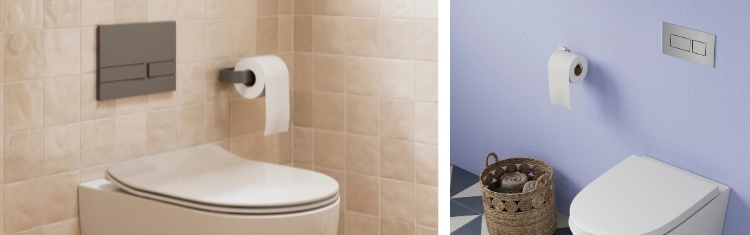
The toilet is perhaps the most essential fixture in your home, so it needs to be just right. Yet choosing one involves more than the pan's design and the seat's comfort. Behind every toilet sits a network of parts and features that affect how well it performs and how reliable it will be for years to come. Choose on looks alone, and you could end up with a toilet that doesn't suit your needs.
To help you find the right toilet for you, we've created this glossary of toilet terminology, complete with illustrations, so you can make informed choices with confidence.
- Common Toilet Parts
- Common Toilet Cistern Parts
- Other Toilet Terms
- Toilet Types and Their Parts
- Other Important Toilet Jargon
- Expert Guidance for Your Toilet Selection
Common Toilet Parts
Knowing the parts of a toilet helps when you're choosing a new one, fixing a problem, or talking to a plumber about installation or repairs.
With this list and the accompanying diagrams, you'll be able to specify exactly what you need, identify faulty parts when something goes wrong, and recognise the features that make a toilet more hygienic and easier to use.
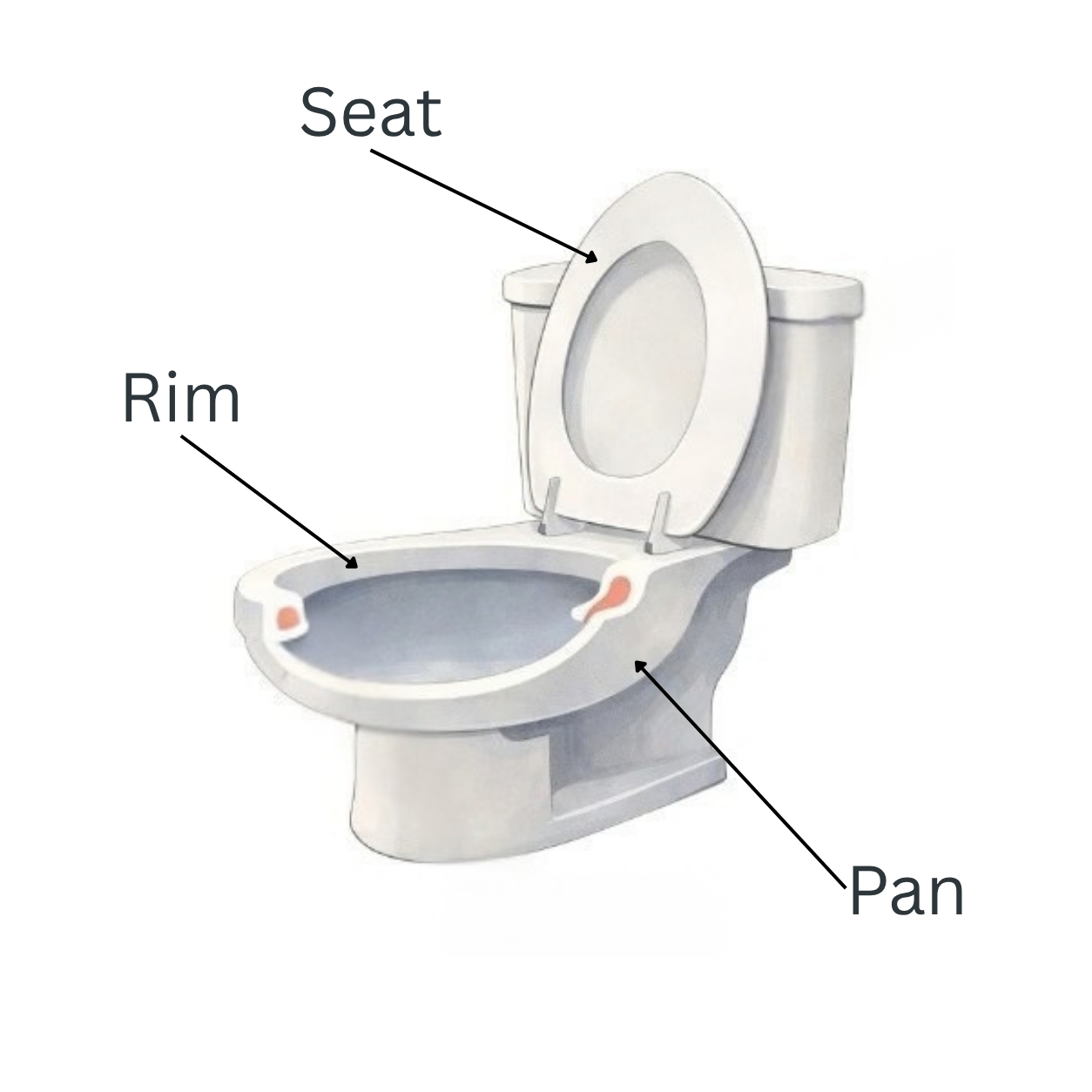
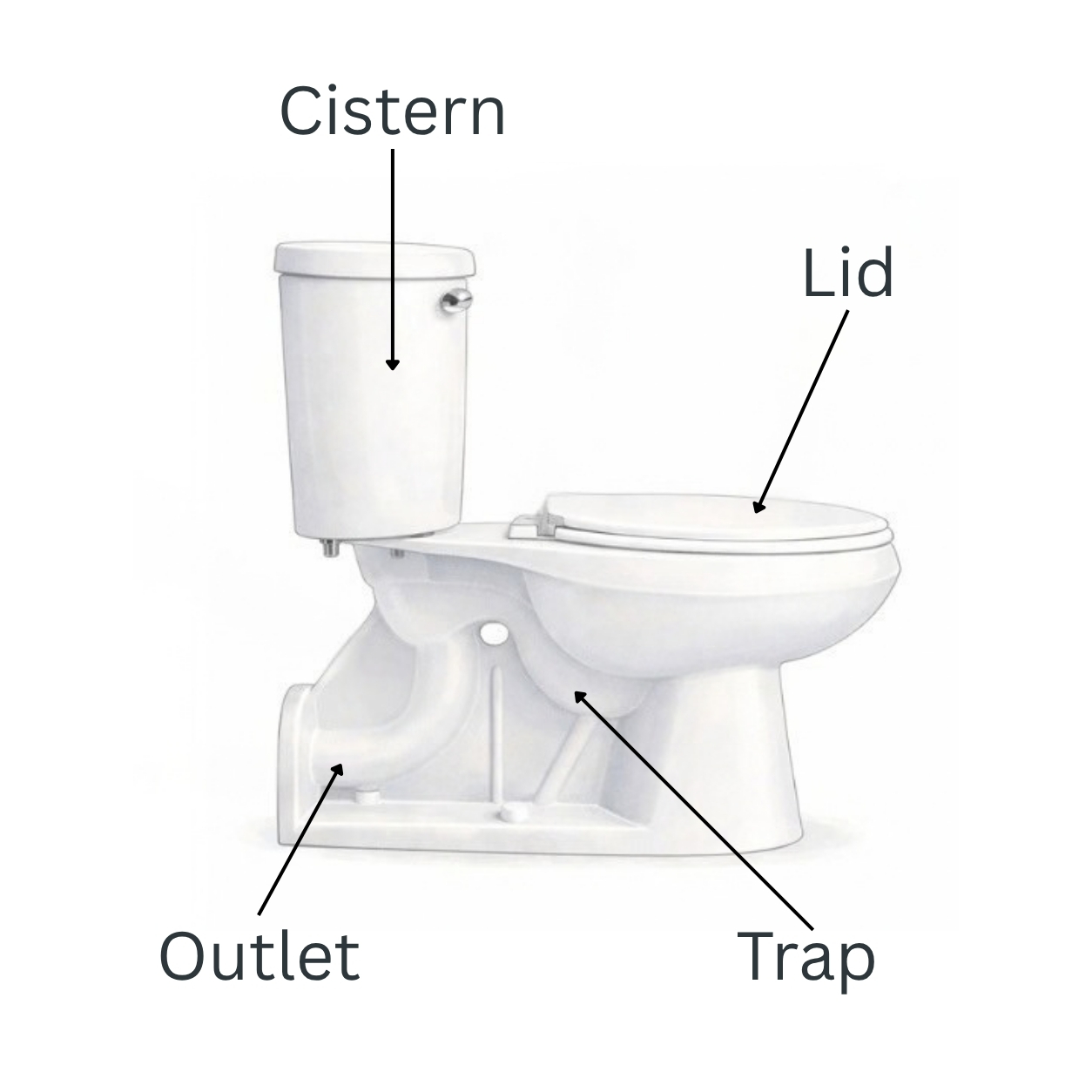
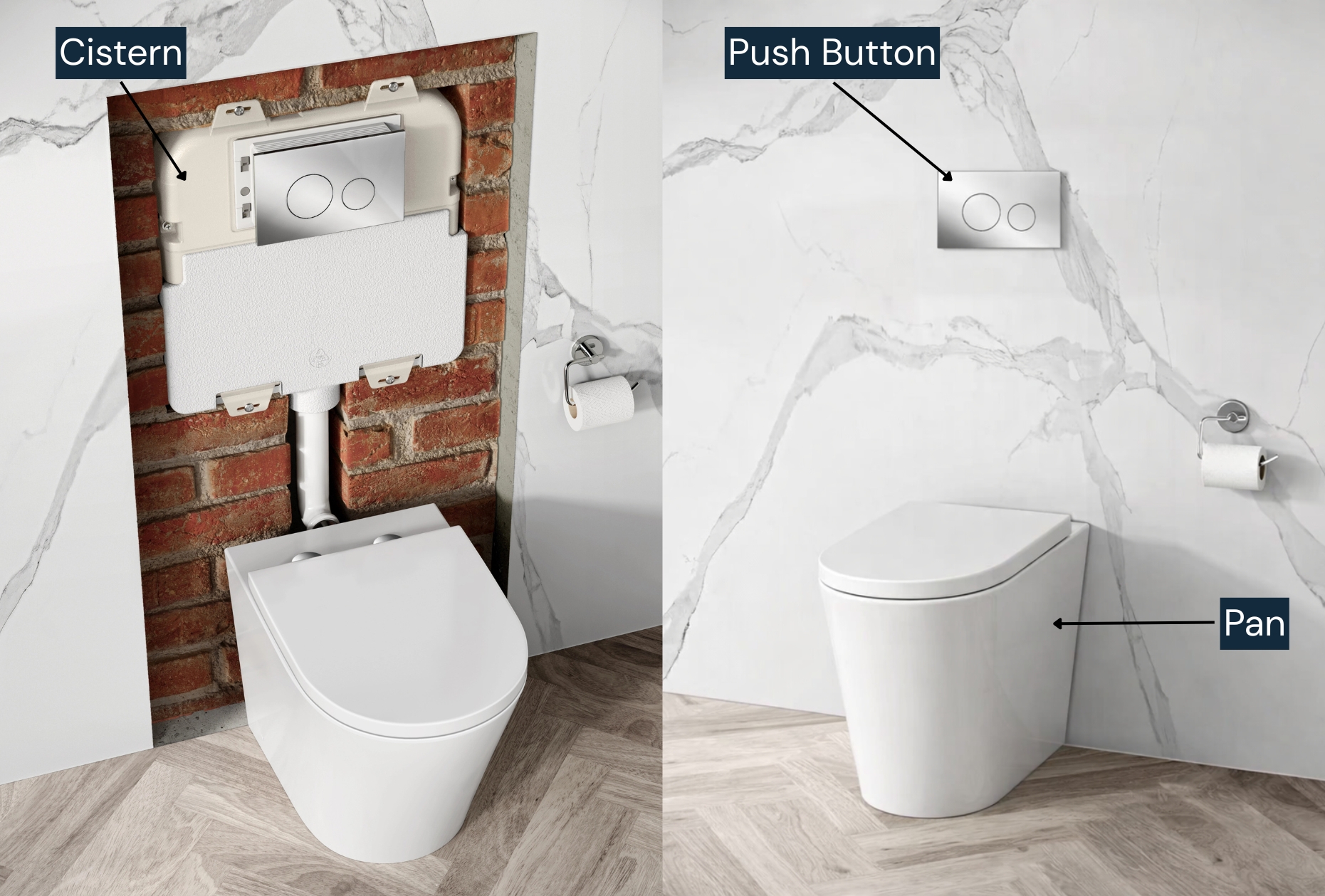
Cistern
The water storage unit that holds the water used for each flush, then refills itself ready for the next use. A cistern usually sits directly on the back of the pan, above it on the wall, or concealed behind a wall or unit. Inside, it houses the parts that control the storage and release of water – mainly the fill valve and the flush valve or syphon.
Pan
Also known as the toilet bowl, the pan is the ceramic base of the toilet that the seat fixes to. It receives waste and carries it away through the trap, which on most UK toilets is moulded into the pan itself, and out through the waste outlet.
Rim
The upper edge of the toilet pan. On a rimmed toilet, the rim curls over to form a channel with holes underneath, which distributes flush water around the bowl. This comes in two forms: an open rim, where the underside of the channel is exposed, and a boxed rim, where it's fully enclosed.
A rimless toilet does away with this channel altogether, directing water around the bowl from a shaped inlet instead. With no hidden recess for bacteria and limescale to build up in, rimless pans are much easier to keep clean and have a cleaner, more modern look.
Seat
The hinged ring, usually paired with a matching lid, that fixes to the top of the pan to provide a comfortable, hygienic surface to sit on.
Toilet seats come in various shapes, and the shape should always match your pan:
- D-Shaped - Shaped like a capital "D", with a flat rear edge and a rounded front.
- Round - A softly curved profile that widens out from the hinge points into a rounded front edge.
- Square - Straight sides that meet at, or close to, right angles for a crisp, geometric look.
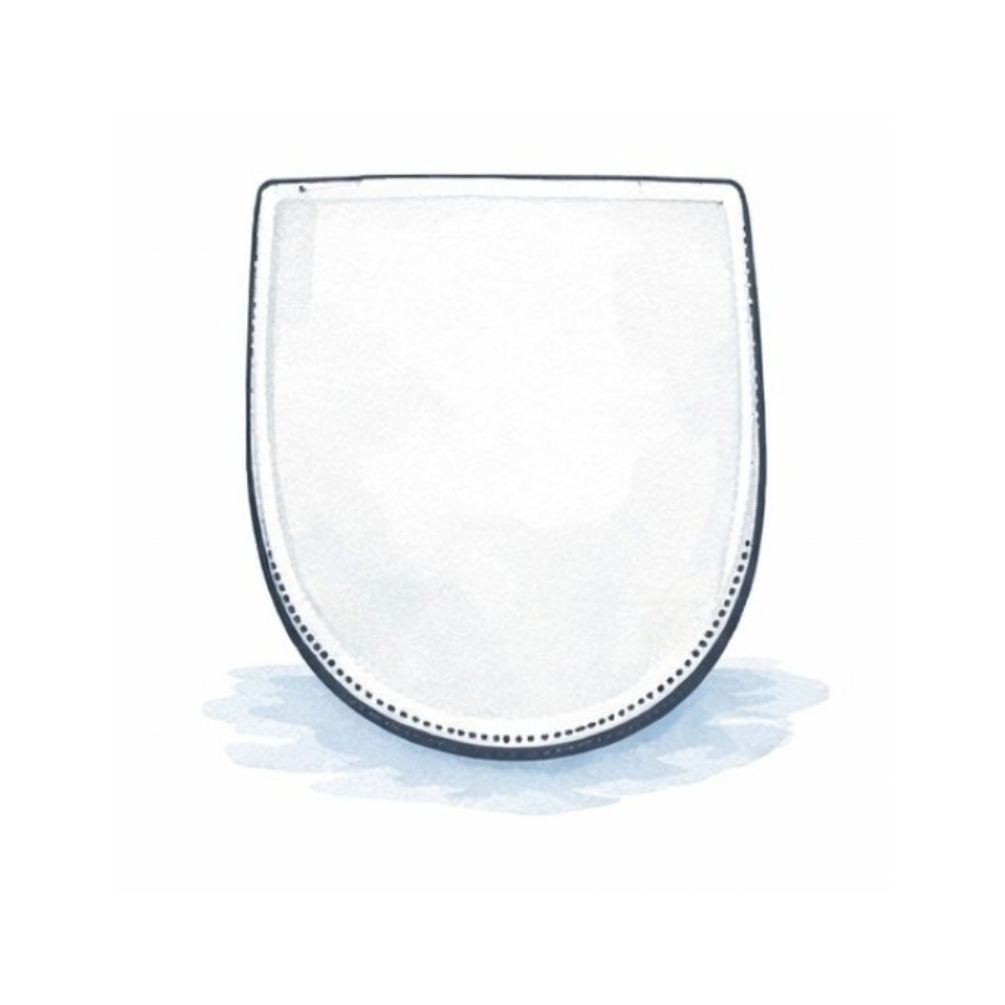
D-Shaped Seat
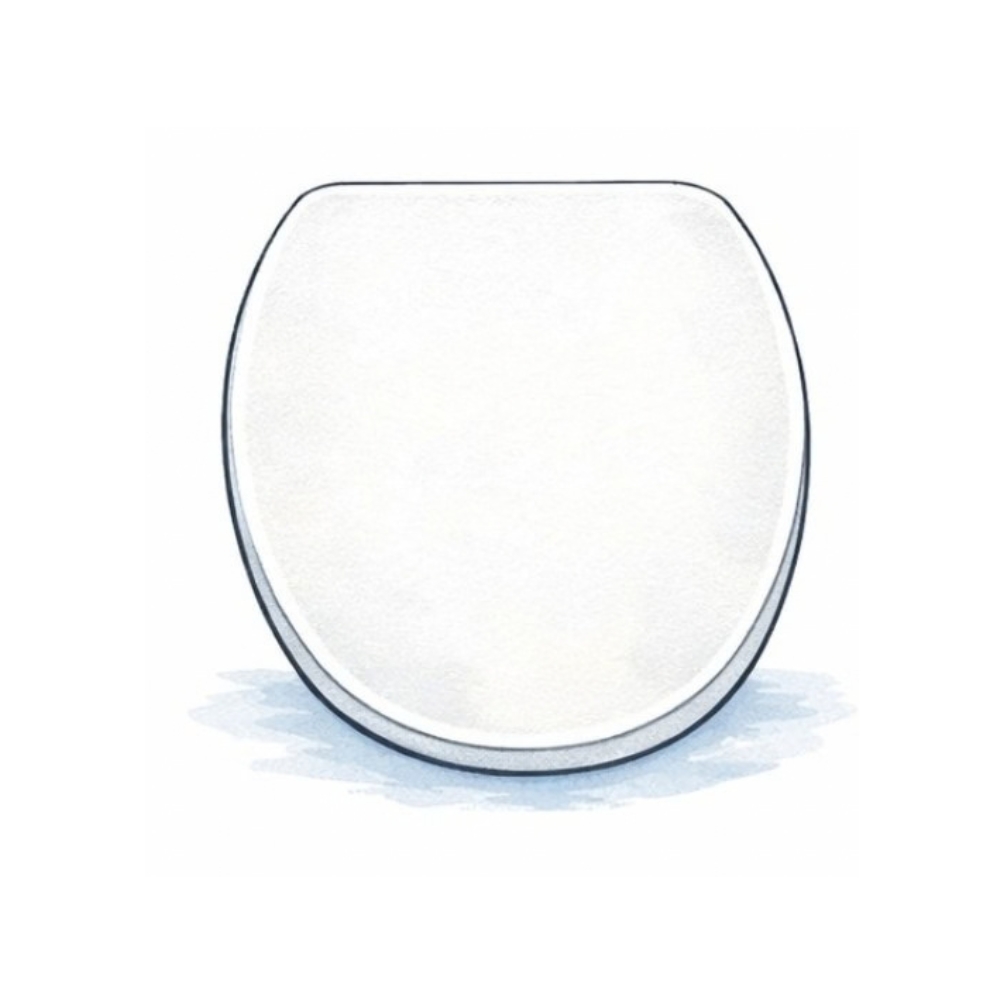
Round Seat

Square Seat
Seats also come in different profiles and seat-and-lid combinations:
- Slimline Seat - A thin, low-profile seat and lid for a streamlined, modern appearance.
- Sandwich Seat - The lid and seat ring are the same size, so when closed, the lid sits neatly on top of the ring with both edges visible, creating a layered 'sandwich' look.
- Wrapover Seat - The lid is slightly larger than the seat ring, so when closed it overlaps and hides the ring completely.
For help measuring your pan and choosing the right shape, style and fixings, read our guide to toilet seat sizes, shapes and fixings.
Lid
The hinged cover that lowers over the seat to close off the pan. It keeps the toilet looking neat when not in use, helps contain odours, and stops objects from falling into the pan.
Hinges
The small mechanical fittings at the back of the pan that attach the seat and lid, allowing them to pivot up and down while staying securely aligned. Hinges are either top-fix, which fit from above and are ideal for wall-hung and back-to-wall pans where there's no access underneath, or bottom-fix, which are tightened from below.
Many seats also feature hinge mechanisms that improve hygiene and ease of use:
- Soft-Close Seat - Dampers built into the hinges slow the seat and lid as they close, stopping them from slamming.
- Quick-Release - Allows the seat to be lifted off the pan without tools, making it easier to clean the seat, hinges and pan thoroughly.
Trap
The curved channel moulded inside the pan that holds a small amount of water after every flush. This water seal stops unpleasant odours rising from the soil pipe while still letting waste pass through.
A toilet trap typically comes in two shapes: a "P-Trap" and an "S-Trap". The P-trap is the modern standard to connect to horizontal waste outlets, while the S-trap drains vertically into the floor.
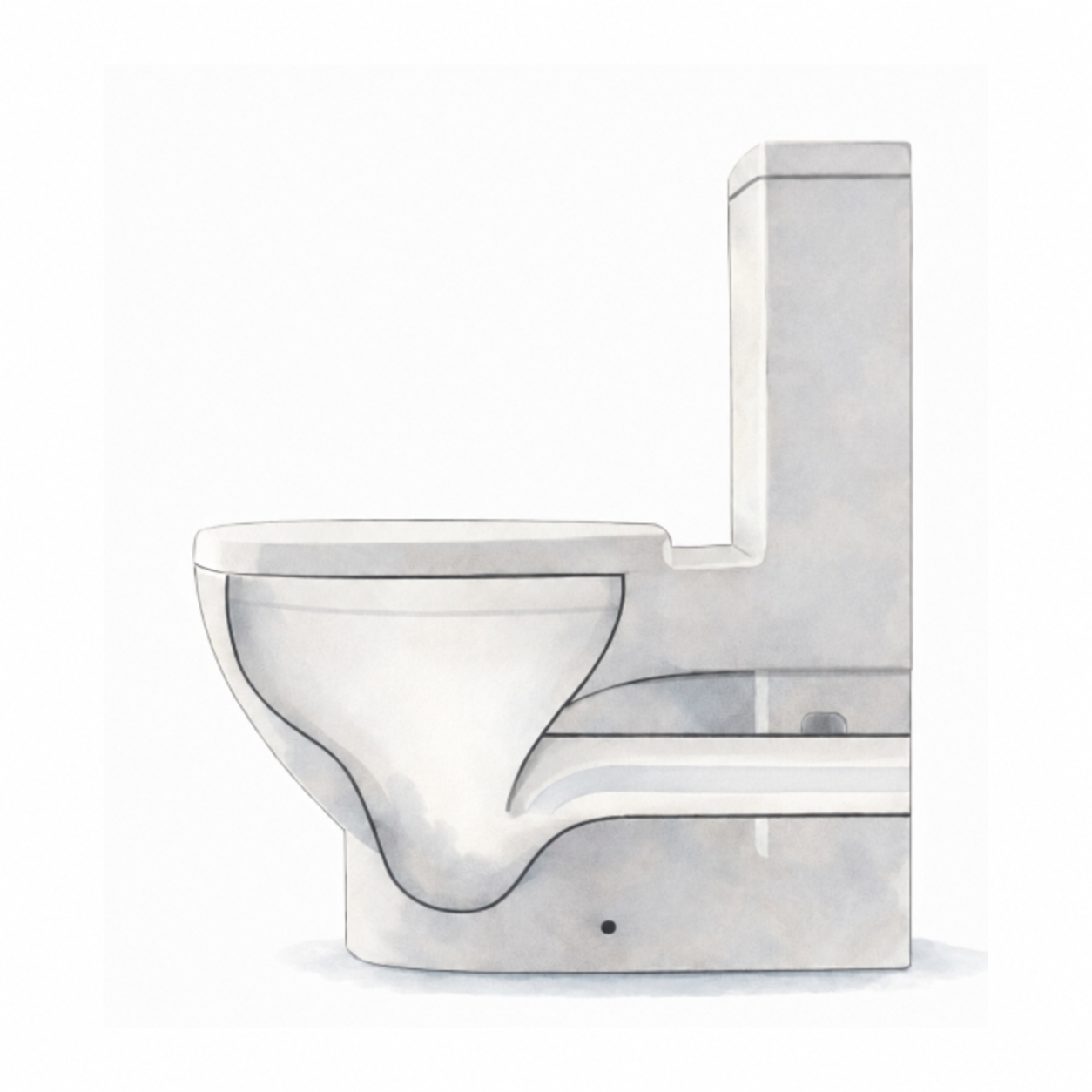
P-Trap
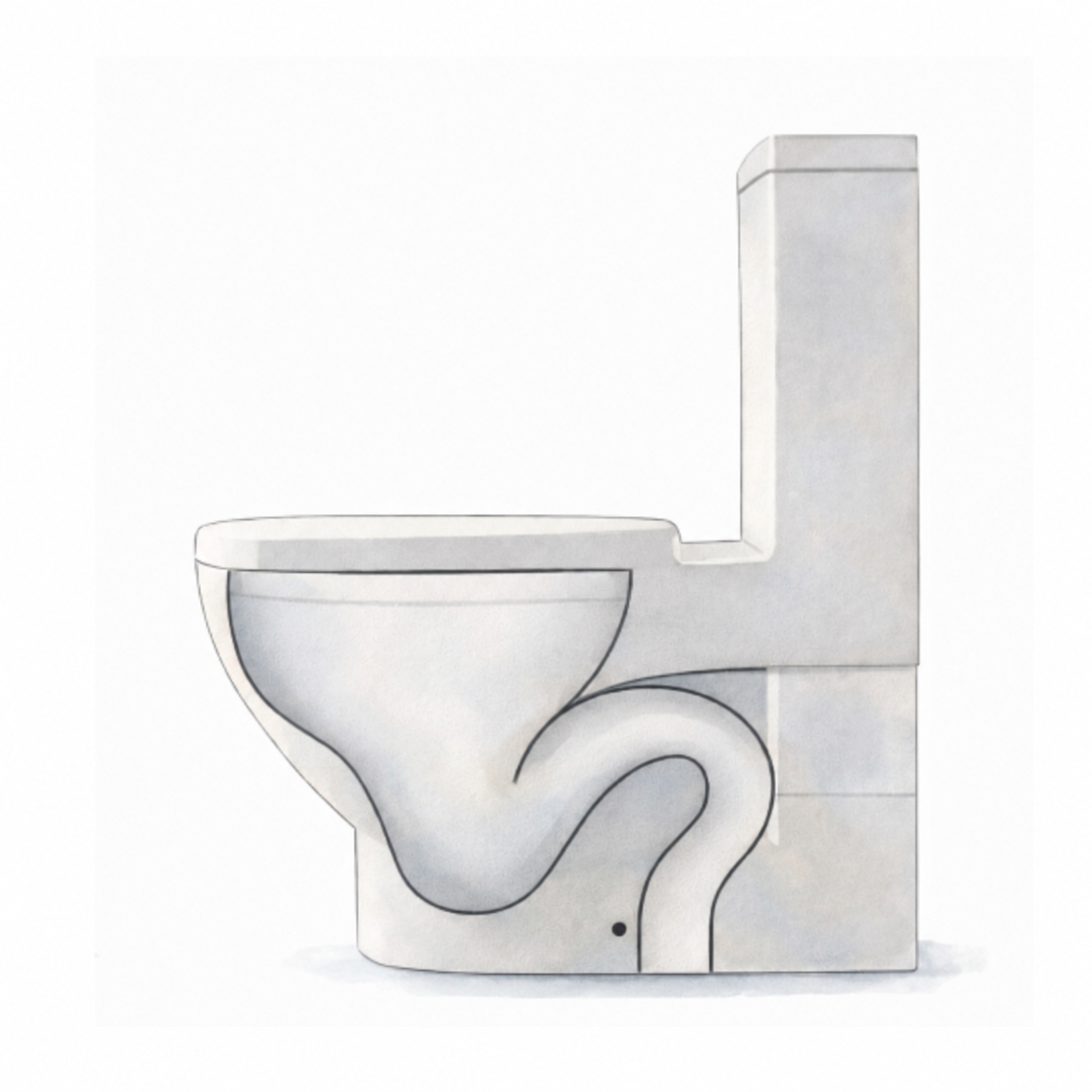
S-Trap
Waste Outlet
The opening where used water and waste leave a toilet and enter the connected waste or soil pipe. A toilet's waste outlet typically comes in two forms: horizontal (P-trap) and vertical (S-trap).
Inlet
The connection where the water supply enters the cistern and feeds the fill valve, allowing it to refill after every flush. Depending on the cistern design, the inlet may be positioned at the bottom, side, back or top – so it's important to check it matches the position of your supply pipe.
Common Toilet Cistern Parts
While cisterns operate silently behind the scenes - whether concealed within walls or visible atop close-coupled pans - their internal mechanisms determine flush performance, water efficiency, and long-term reliability. Understanding these components proves invaluable when diagnosing issues like continuous running water, weak flushes, or failed refilling.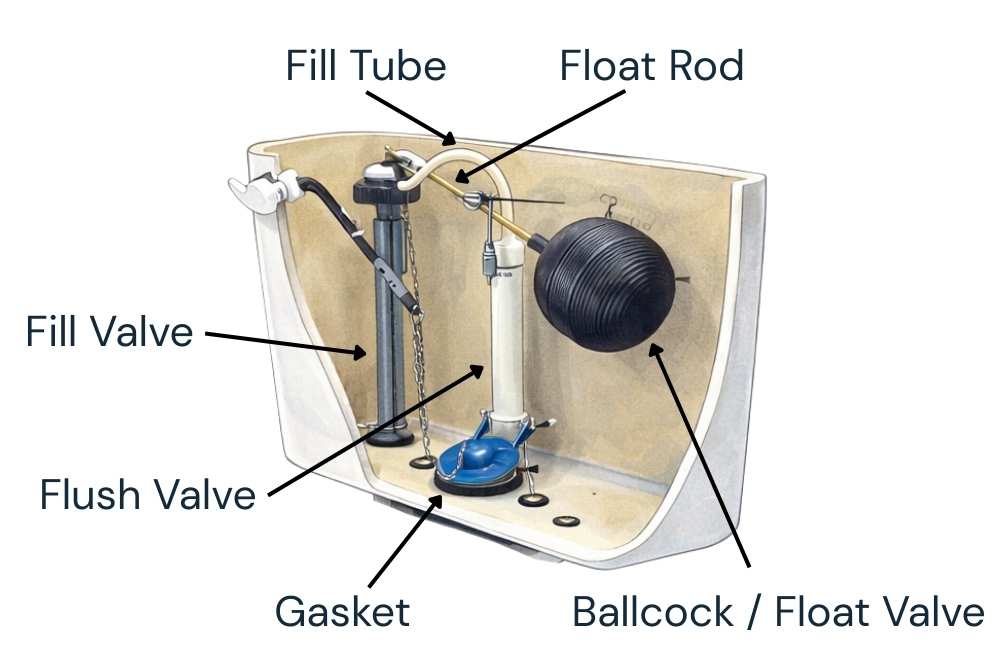
Ballcock / Float Valve
Also called a float valve or toilet fill valve, the ballcock is a mechanically operated valve that automatically controls the inflow of water into a cistern or tank using a floating device attached to it. After the tank is emptied, the float drops, opening the valve to let water in; as the water level rises, the float rises and eventually closes the valve at a set level, stopping the fill and preventing overflow.
In a typical toilet cistern, the float is either a hollow ball on the end of a metal or plastic arm (traditional ballcock) or a sliding float cup or similar mechanism integrated into a modern fill valve. All serve the same purpose: maintaining a constant, safe water level.
Fill Tube
Often called a refill tube, the fill tube in a toilet cistern is a small, flexible tube that carries a portion of the water from the fill valve to the overflow pipe after a flush. Its job is to refill the toilet bowl to the correct level by directing water down the overflow pipe and into the bowl while the main tank refills.
Fill Valve
The vertical valve assembly in a toilet cistern that controls how fresh water enters the tank after each flush. When the water level drops, the fill valve opens to let water in; as the tank refills and the ballcock rises, it automatically closes at a set level, stopping the flow and preventing overfilling.
Float Rod
The rigid bar that connects the ballcock to the fill valve mechanism inside a toilet cistern. A float rod transmits the up‑and‑down movement of the float as the water level changes, so that when the float rises, it pushes or pulls on the valve to shut the water off, and when it drops, it allows the valve to open and refill the tank.
Flush Valve
The mechanism inside a toilet cistern that releases stored water from the tank into the bowl when you operate the flush handle or button. The flush valve opens a large outlet at the bottom of the tank, allowing water to rush into the bowl, then closes again to refill the tank and prepare for the next flush.
Other Toilet Terms
Alongside the parts that make up a toilet, specifications often refer to functional mechanisms and design characteristics that influence how a toilet performs and how easy it is to use.
Actuation
The mechanisms that initiate and control flushing in toilets, converting user input into water release.
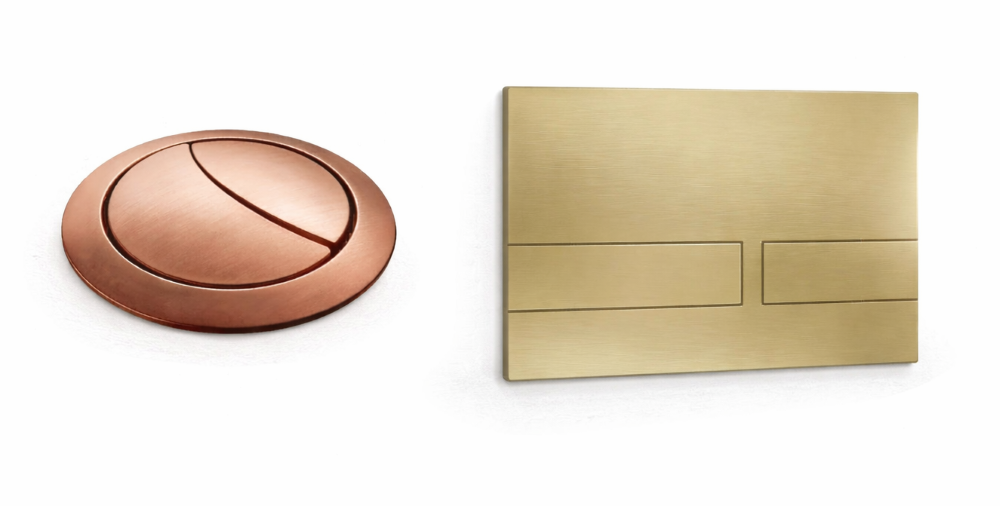
Dual Flush
A toilet mechanism that offers two flush options using a dual flush button or plate: a smaller volume for liquid waste, and a full flush for solids.
Flush Volume
The amount of water released per single toilet flush, measured in litres.
Gravity Flush
The standard flushing system in UK homes, where water stored in the cistern is released and falls into the pan under its own weight. The force of the falling water rinses the bowl and pushes waste through the trap.
Pressure-Assisted Flush
A flushing system that uses a sealed pressure vessel inside the cistern. As the cistern refills, the incoming mains water pressure compresses the air inside the vessel. When you flush, that compressed air forces the water into the pan at speed, giving a more powerful flush than gravity alone.
To compare gravity and pressure-assisted flush in greater detail, we've created a dedicated guide on the different toilet flush systems.
Mechanical Flush
A flush operated by mechanical parts, such as rods, chains, or cables, to lift the flush valve.
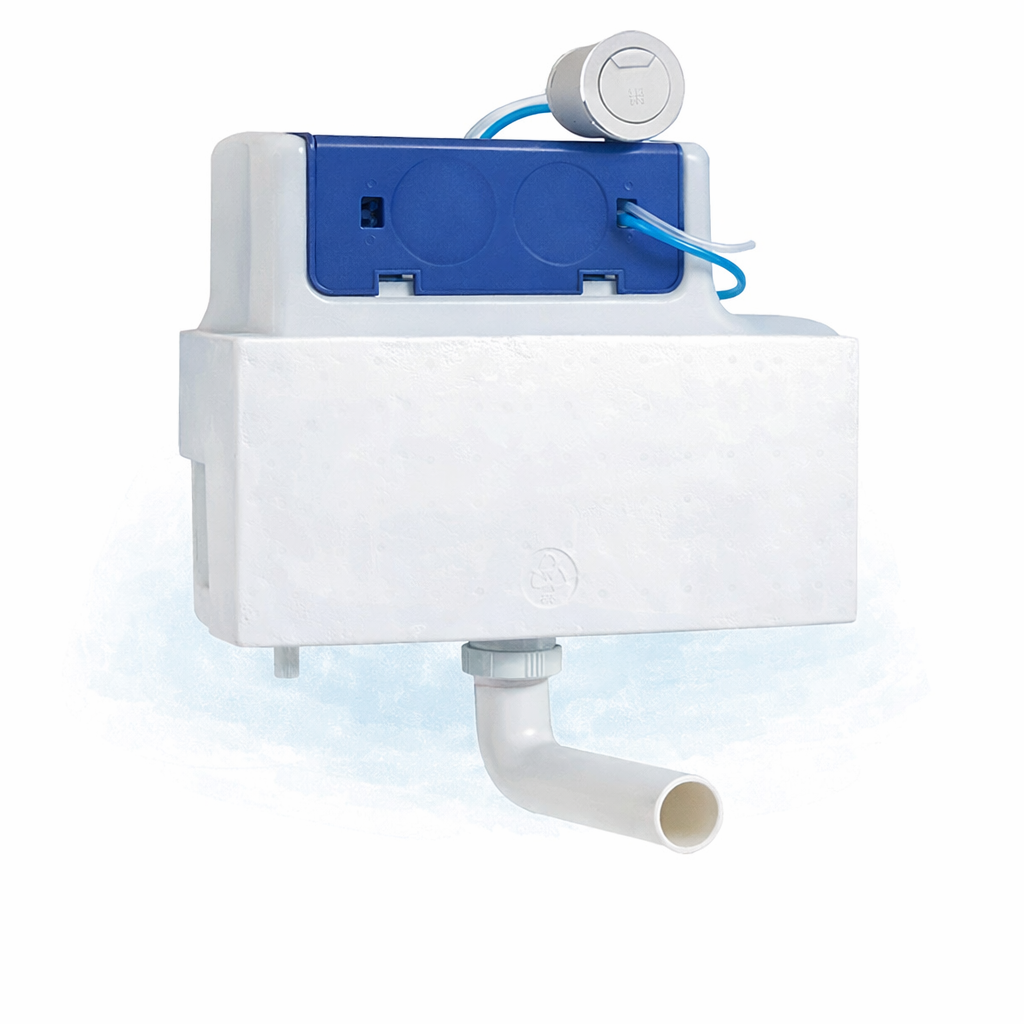
Pneumatic Flush
A flush operated by air pressure. Pressing the button sends a pulse of air through a thin tube to lift the flush valve, allowing buttons to be positioned remotely from the cistern.
To compare mechanical and pneumatic flush in greater detail, we've created a dedicated guide on pneumatic vs mechanical cisterns.
Single Flush
A toilet mechanism that offers one flush option at a fixed volume.
Syphon
The mechanism inside a toilet cistern that creates suction to flush water into the toilet bowl.
Washdown
A toilet pan design in which water flows directly from the cistern into the pan.
Front Access Cistern
A concealed cistern that can be serviced from the front through the flush plate opening, so internal parts can be reached without removing the wall or boxing.
WC (Water Closet)
A standard UK term for a toilet or lavatory fixture, encompassing a pan, cistern and seat.
Toilet Types and Their Parts
There are three main types of toilet available on the market, each defined by how the cistern is positioned and whether it's concealed. While our toilet buying guide explains how they differ, this section covers the parts associated with each, from design details to installation and plumbing. All three share many of the common parts above, with a few key differences depending on the style you choose.
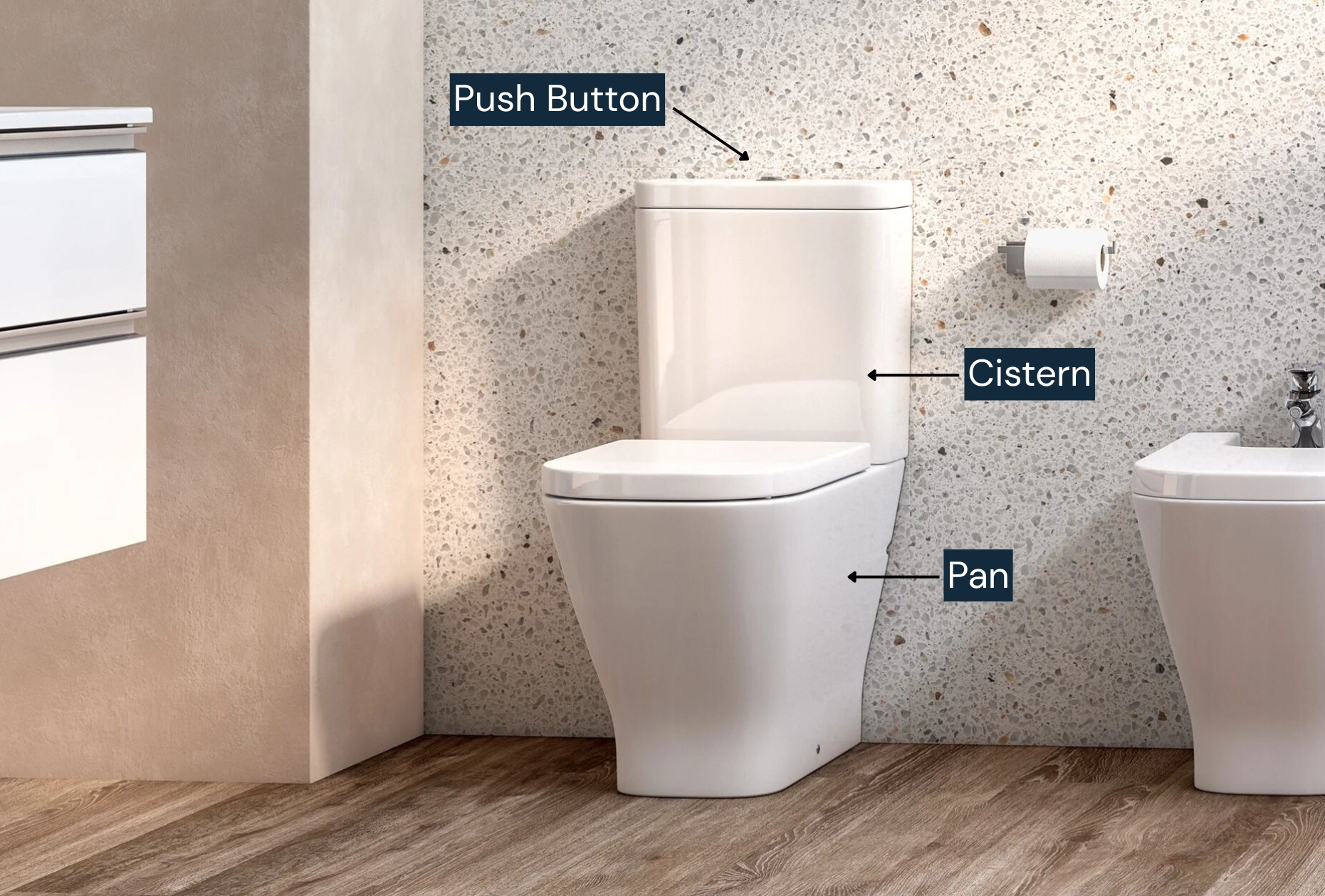
Parts of a Close-Coupled Toilet
The close-coupled toilet is the most common toilet configuration in UK homes. Its exposed cistern sits directly on the back of the floorstanding pan, joined with a close-coupling kit and a rubber 'doughnut' washer that seals the connection between the two. Modern close-coupled toilets tend to have a push button on top of the cistern, while traditional close-coupled designs feature a lever handle on the front or side.
Key parts: close-coupling kit, doughnut washer, exposed cistern, push button or lever handle.
As everything is on show, all internal parts are easy to reach for maintenance and repairs.
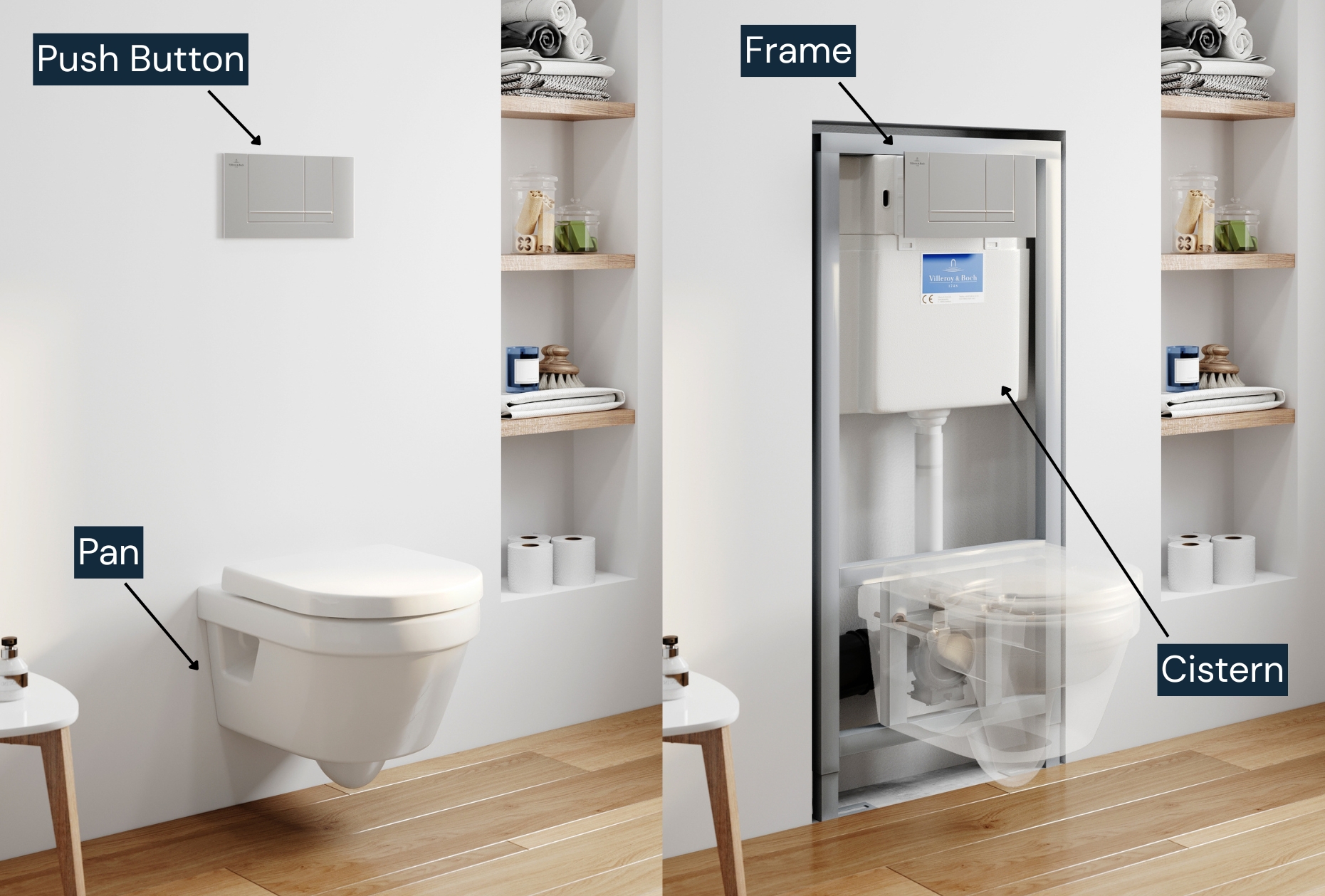
Parts of a Wall-Hung Toilet
The wall-hung toilet is fixed to the wall with no contact with the floor, creating a floating look that makes the room feel more spacious and makes cleaning the floor effortless. The pan bolts to a concealed toilet frame hidden within the wall, with the cistern built into the frame and accessed through the flush plate.
Key parts: WC frame, concealed cistern, flush plate, pan fixing bolts.
A frame is always required - either wall-mounted on a solid wall or free-standing for stud walls - which makes wall-hung toilets best suited to new builds or major renovations.
Parts of a Back-to-Wall Toilet
The back-to-wall toilet combines the practicality of a floorstanding toilet with the sleek look of a wall-hung design. The pan sits flush against the wall, while the cistern is concealed behind it - within a WC unit, a stud wall or custom boxing. As the pan rests on the floor, no frame or wall reinforcement is needed.
Key parts: concealed cistern, flush plate or button, pan connector.
Check the height of your unit or boxing before you buy, as it will determine whether you need a standard or taller concealed cistern.
Don't confuse these with back-to-wall close-coupled toilets – these also sit flush against the wall, but the cistern is visible and sits directly on the pan.
Other Important Toilet Jargon
Here is a list of common labels or jargon you may come across for toilets that you need to know.
Open Back
A toilet with an open back features a rear design in which a deliberate gap separates the pan from the wall, with an exposed waste pipe connecting to the wall or floor.
Closed Back/Shrouded
A toilet with a closed back, also known as a shrouded pan, has ceramic sides that extend down to the floor, fully enclosing the trap and waste connection for a cleaner look that's easier to wipe down.
Comfort Height/Regal Height
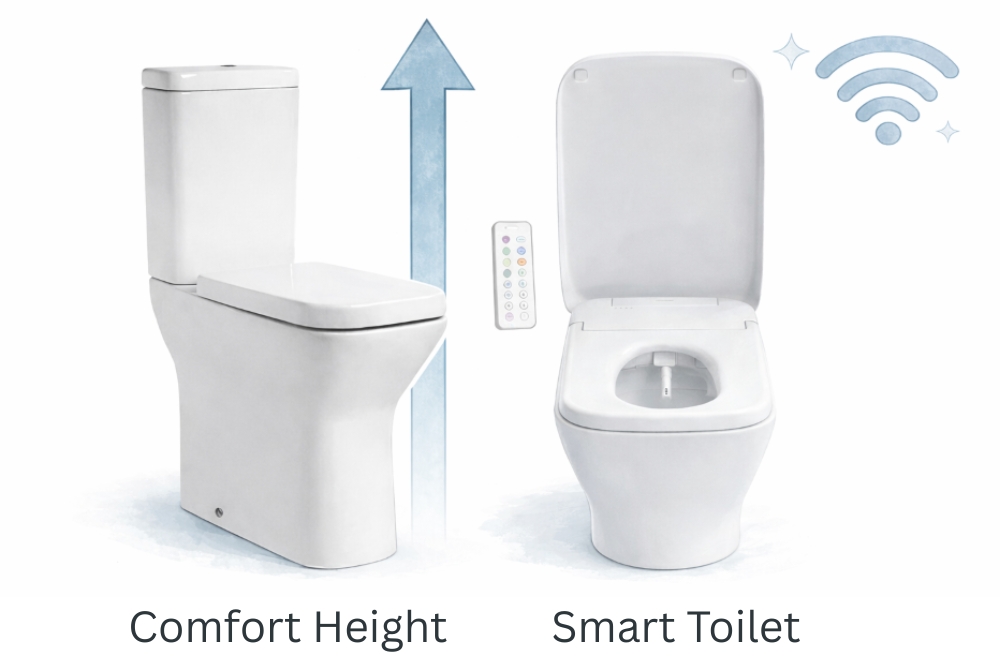
Some brands offer pans that are taller in height for additional comfort, and to help those who may need help standing or sitting. These are often labelled as 'comfort height' toilets or 'regal height', explicitly highlighting the height difference from standard-sized pans.
Smart Toilet
Integrated with advanced electronics, features, and offering hands-free operation, smart toilets, also known by a variety of other names such as shower toilets and bidet toilets, are designed to elevate comfort and hygiene.
Short Projection
Also known as a compact toilet, toilets that have a 'short projection' utilise a reduced depth in terms of the pan from the wall to the front rim to minimise floor space, ideal for ensuite bathrooms.
Expert Guidance for Your Toilet Selection
Now you’re clued up on the what’s what of toilets, explore our toilet collection - spanning classic close-coupled configurations, modern wall-hung options, and sleek back-to-wall designs from prestigious brands including TOTO, Roca, and Heritage.
If you still have questions about cistern placement, projection or flush technology, we're here to help. For over four decades, Sanctuary Bathrooms has guided homeowners and design professionals through these same decisions. Contact us to speak to one of our in-house specialists, or visit our Leeds showroom to see toilet sizes and styles in person. Our team will translate the technical details - from cistern configurations and flush volumes to fitting methods - into clear, straightforward advice, so you can choose a toilet that looks right and performs just as well.

