Toilet Seat Sizes, Shapes, and Fixings: A Complete Buying Guide
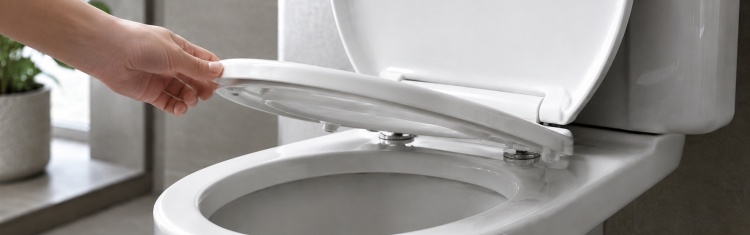
Changing your toilet seat should be a simple job, right? You measure the old one, order a replacement, and everything fits together seamlessly. Well, not quite. As the very existence of this guide demonstrates, it’s not always as easy as you might hope. Toilet seats vary from pan to pan, and one that looks right online can turn out too wide, sit off-centre, wobble haphazardly, or simply not mesh with your bathroom’s overall scheme.
Fortunately, if you do need a replacement toilet seat, this guide has you covered. We’ll take you through every shape, size, material, and hinge-fixing type available. By the end, you’ll be able to measure your toilet accurately and identify the seat you actually need before you buy.
- Does Your Toilet Seat Actually Matter?
- Are Toilet Seats a Standard Size?
- What Size Toilet Seat Do I Need?
- Toilet Seat Shapes
- Types of Toilet Seats
- Types of Toilet Seat Hinges
- What Are Toilet Seats Made Of?
- How Much Do Toilet Seats Cost?
- Which Toilet Seat Do I Need?
- Finding the Right Toilet Seat
Does Your Toilet Seat Actually Matter?
It's easy to treat your toilet seat as an afterthought. After all, it seems almost insignificant in comparison to the pan, cistern, support frame, plumbing, etc. However, aside from the flush button, it's actually the part you interact with most. You sit on it, lift it, close it and (hopefully) clean it every single day. A bad fit might rock, pinch or refuse to stay up, while poor-quality material chips easily or discolours over time. Beyond basic function, the seat should also look good, serving as a natural part of the toilet that ties the whole fixture and your bathroom together - and swapping one out is one of the quickest wins if you're looking for a budget bathroom refresh.
Are Toilet Seats a Standard Size?
Toilet seats don't have a single standard size. Toilet pans vary in shape, width, length and fixing-hole spacing, so different pans require different seat dimensions and fixing arrangements. Not all toilet seats are the same size even within a single manufacturer's range, and two seats sold under the same shape name can still differ in size.
Despite this, cloakroom toilets often have a smaller depth, comfort-height models can differ in hinge position, and traditional-style pans sit outside modern sizing conventions entirely. The honest answer is that there are common and less-common sizes, rather than any single standardised build. Even a seat described as “universal” will not necessarily fit every toilet. This usually just means the seat is designed to suit a broad range of standard pans, often through adjustable hinges or fixings.
Just a general example, a UK close-coupled toilet seat typically measures between 350mm to 400mm in width and 400mm to 460mm in length. In this case, width is taken across the pan's outside edges, while length is measured from the fixing holes to the front rim.
What Size Toilet Seat Do I Need?
Since there’s no standard toilet seat size, you'll need a tape measure to figure that one out. Three measurement checks determine whether a toilet seat will fit your pan. When understanding toilet seat sizes, be sure to measure the toilet pan itself (not the old seat!) and compare with the product specification before buying. Remove your toilet seat before measuring for the most accurate numbers.
Toilet seats are measured using the three following reference points:
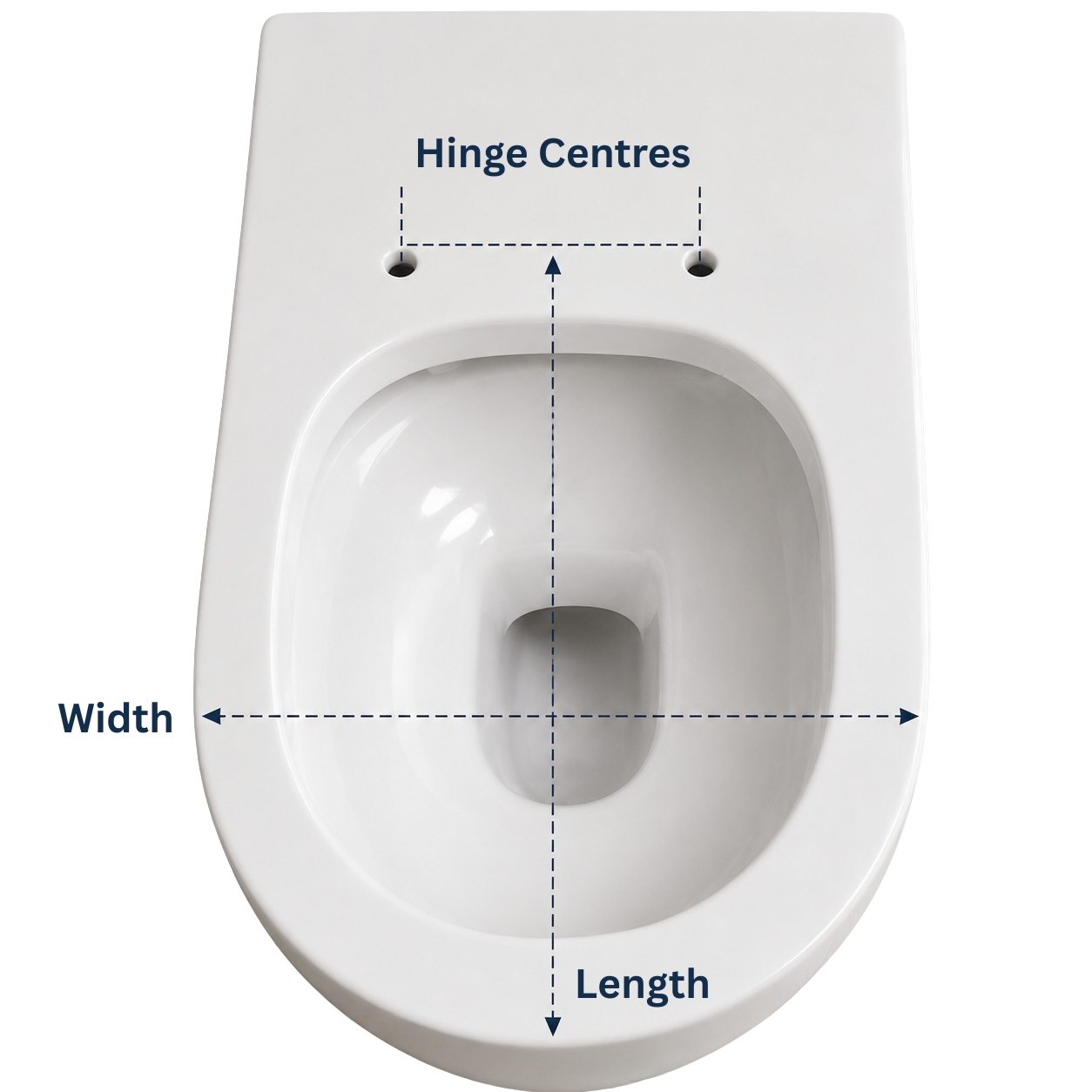
Hinge Centres
Hinge centres determine whether the replacement seat will physically connect to the toilet pan or not. Measure centre-to-centre between the two fixing holes so the bolts or top-fixing anchors line up correctly with the holes. If the hinge is poorly aligned, the seat can shift, loosen, or fail to close properly against the pan.
Length
Length tells you whether the seat reaches from the hinge line to the front of the pan correctly. Measure from the midpoint of the two fixing holes in a straight line to the furthest front edge of the pan. This relates the seat’s rear fixing position to the pan’s front projection. The correct length helps ensure the seat rests on the pan as intended, preventing an unfortunate ‘overbite/underbite’ situation.
Width
Width checks whether the seat matches the pan from side to side, particularly around its broadest section. Measure across the outside edges of the ceramic at the pan’s widest point. A seat that's too wide can overhang the pan or even sit off-centre.
Toilet Seat Shapes
Shape comes next, because a seat designed for a round pan will not sit correctly on a square pan, no matter how closely the measurements compare. Use the visual identifier to establish your pan's shape before confirming dimensions. The three shapes of toilet seats most common on the UK market are:
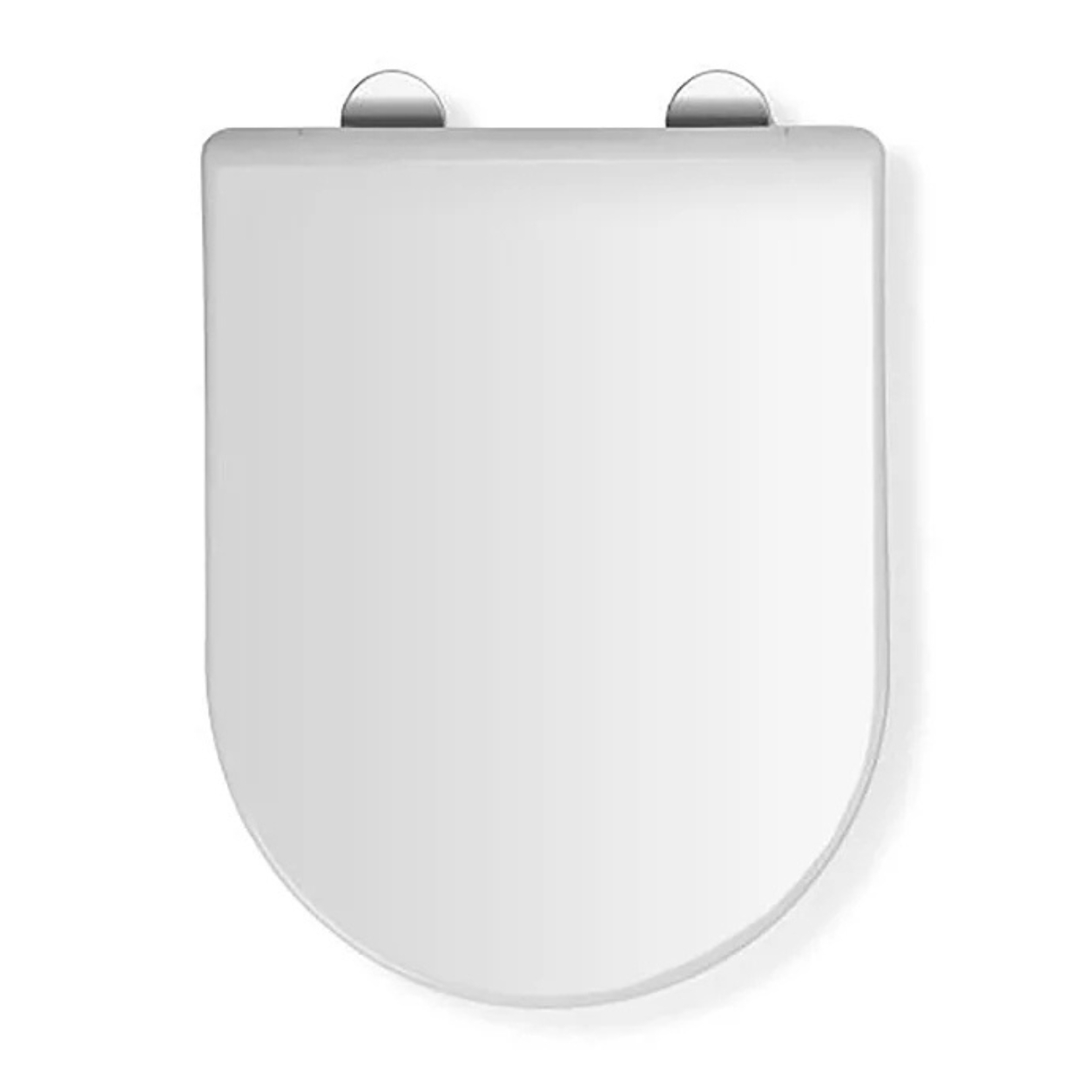
D-Shaped
A D-shaped toilet seat has a flat rear edge at the hinge end and a rounded front, giving it the outline of a capital “D” when viewed from above. Depending on the precise design, the sides may be fairly straight or gently curved, rather than forming one continuous inward curve from the hinge points.
This is by far the most common shape on the modern UK market, found in close-coupled, back-to-wall and wall-hung models. If your toilet dates from the last fifteen years and has a contemporary look, it's almost certainly D-shaped.
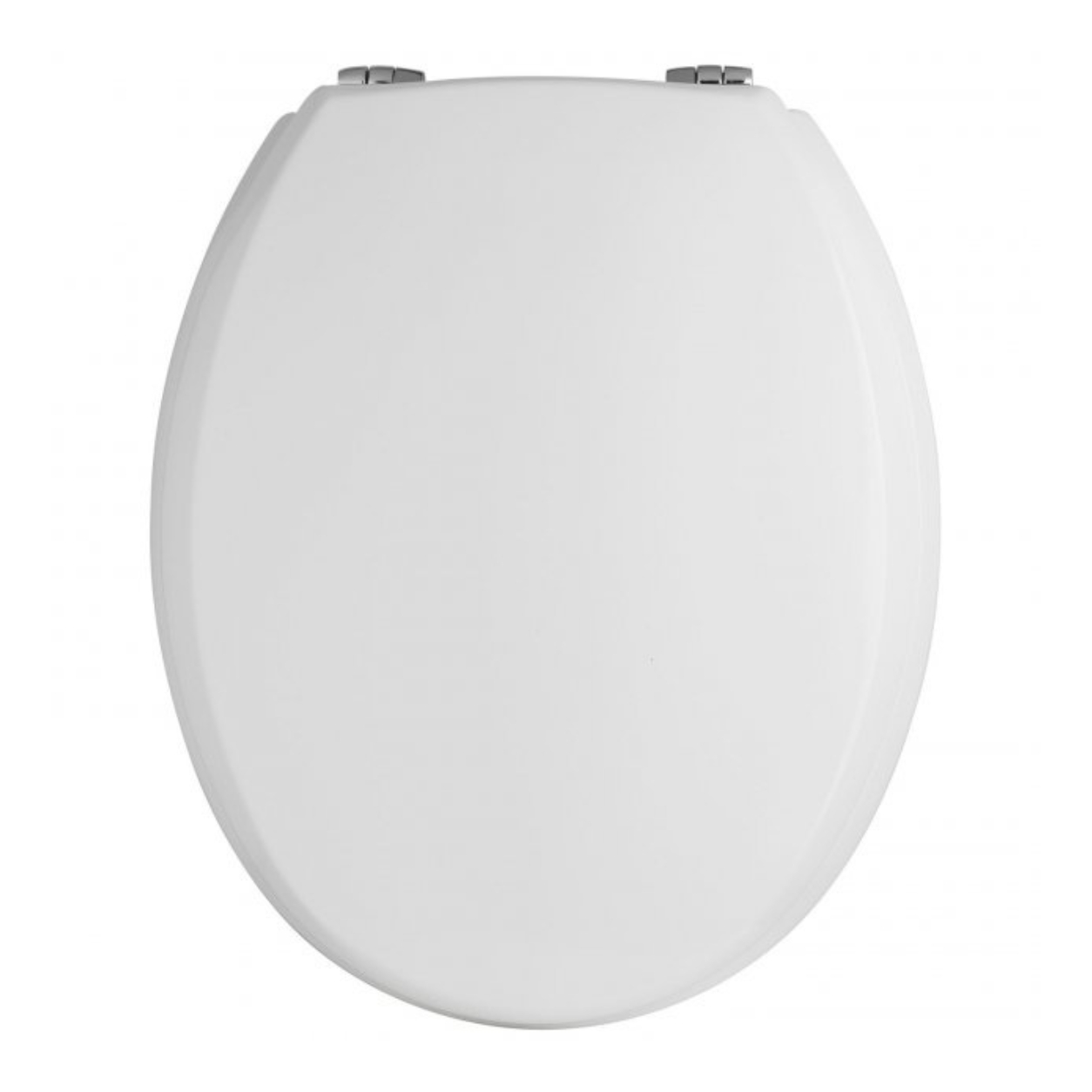
Round
A round toilet seat curves outwards from the hinge points before coming back into a circular, near-circular or oval-tipped front edge. This shape is common on older toilets and takes inspiration from Victorian-influenced and Edwardian-style bathrooms and their iconic formats of WCs. Round seats are generally a bit shorter in depth than D-shaped seats on pans of similar width.
Square
Square toilet seats have straight sides that meet at right angles or with very slight curves, creating a rectilinear silhouette. They are arguably the most modern-looking of the three seats, popular in minimalist and contemporary bathrooms. Over the past decade, square seats have become increasingly common across mid-market and premium ranges.
D-Shaped Seat
Round Seat
Square Seat
How to Tell What Shape Your Toilet Seat Is
The easiest way is to look at your pan from directly above. A flat rear edge with a rounded front is D-shape. A curve that bows outward from the hinges before rounding off at the front is round. Straight sides meeting at corners is square. If you're still unsure, the manufacturer's spec sheet or the supplier you purchased it from will confirm the shape.
Types of Toilet Seats
The seat type you choose affects your toilet's look more than you might expect, especially once the lid is down. Here's what's available:
Sandwich
The classic sandwich seat remains the most commonly available design. It consists of a separate seat ring and lid that hinge together at the back. When closed, the lid sits on top of the seat ring to conceal the pan and create two visible layers, hence the “sandwich” name.
While often found in traditional toilet design, slimmer sandwich seats are also available for contemporary bathrooms. If you’re replacing a like-for-like seat on a close-coupled toilet, a sandwich seat is almost certainly what you need.
Slimline
A slimline toilet seat has a lower profile lid and seat ring than a conventional design, creating a sleeker, more minimal appearance. Dimensions vary considerably between manufacturers, but products marketed as slimline will generally measure in at around 18–54mm in thickness.
Slimline seats are popular with contemporary bathroom suites and are commonly supplied with soft-close hinges, preventing the thing seat and lid from slamming and being damaged.
Wrapover
A wrapover toilet seat has a lid that extends over the outer edge of the seat ring, concealing it when closed. Unlike a sandwich seat, where the lid and ring remain visibly layered when closed, a wrap-over lid overlaps the ring to create a more streamlined profile.
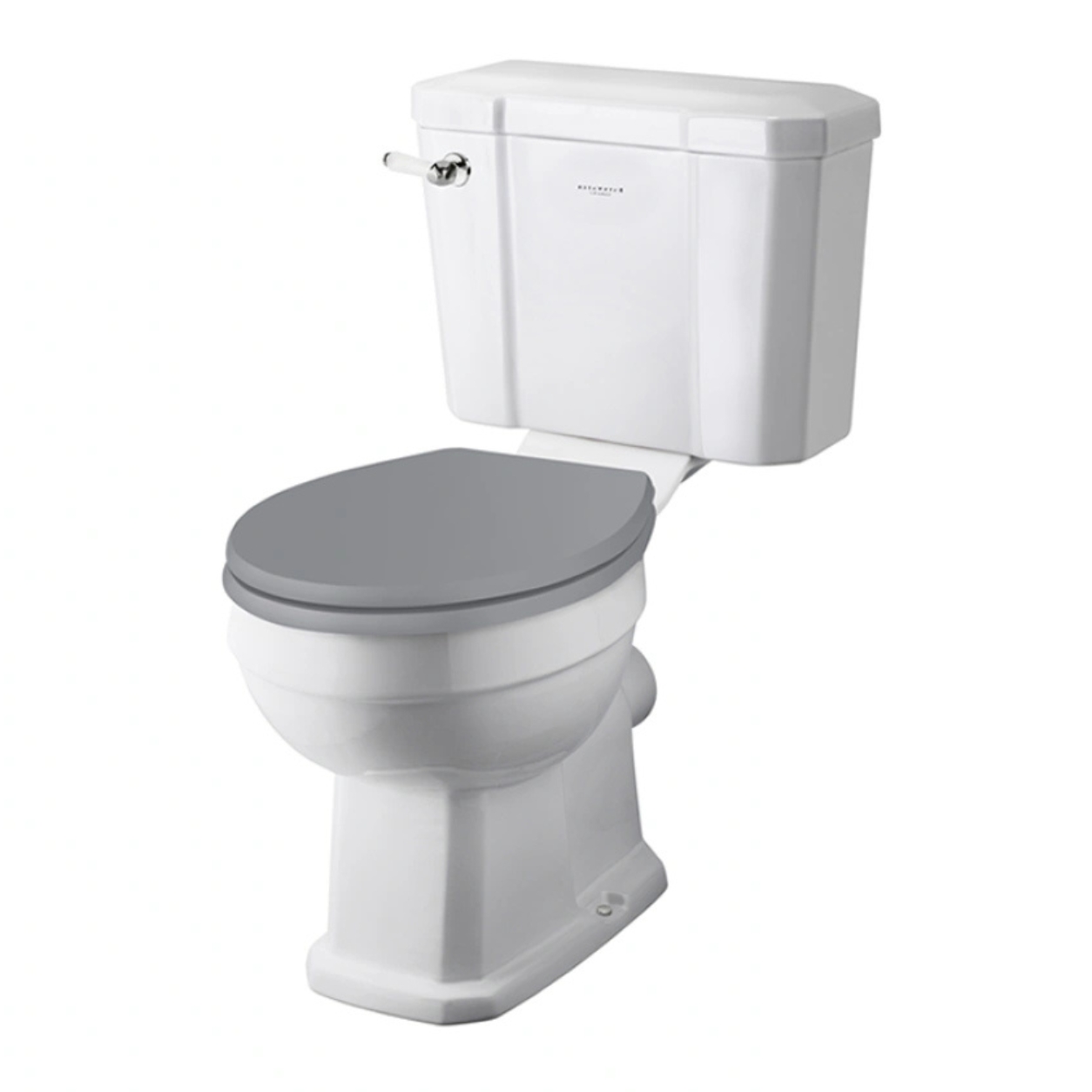
Sandwich Seat
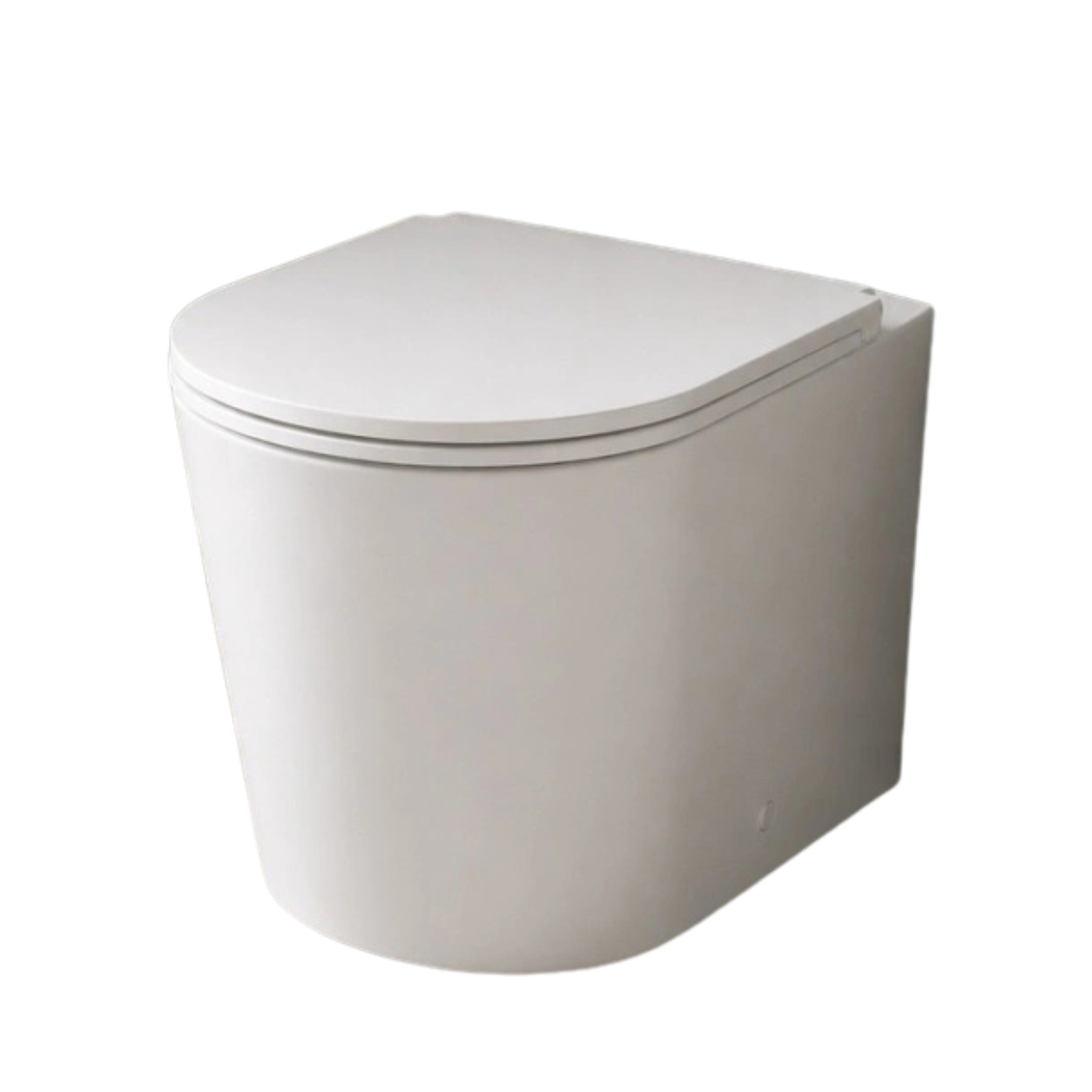
Slimline Seat
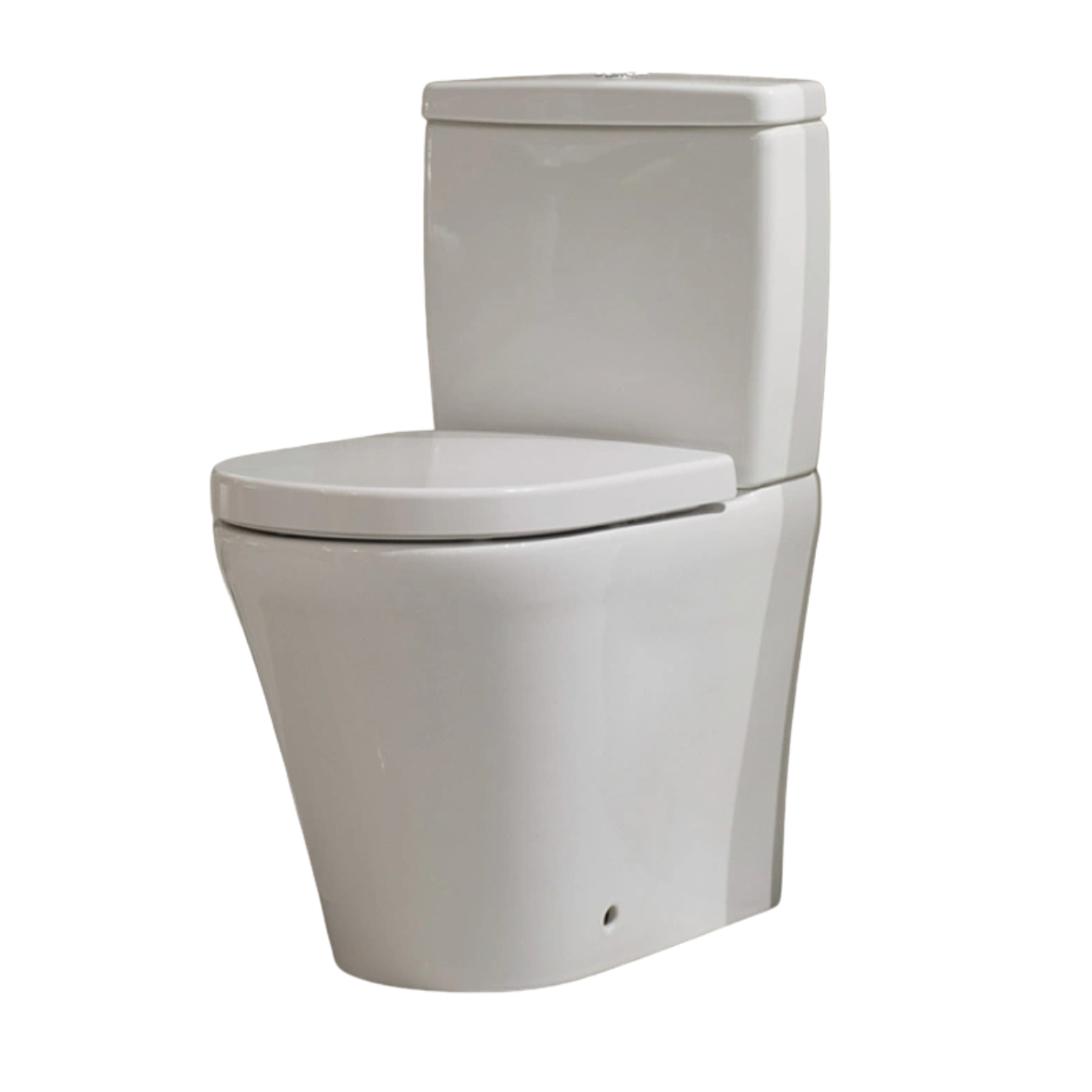
Wrapover Seat
Types of Toilet Seat Hinges
In almost every case, hinges are supplied along with your toilet seat when purchased. Pay close attention to the manufacturer’s description, as the type of hinges affects how the seat closes, how easy it is to clean and even how long it lasts. Hinges are a common source of toilet seat problems. Wobbling, misalignment and failing mechanisms are usually hinge-related issues. If the seat itself is still in good condition, a replacement hinge or fixing kit is often all you need to fix the problem.
Standard-Close
Standard-close hinges are the simplest and least expensive option. However, with no dampening mechanism in place, the seat and lid can close quickly and may slam if dropped – something we’re all familiar with.
Soft-Close
Soft-close hinges use a built-in damping mechanism to slow the seat and lid as they close, preventing slamming and reducing noise. They cost more than standard-close versions, although the price difference varies by material, hinge quality and seat shape.
The one rule here is to never force a soft-close hinge. Pushing the seat down rather than releasing it puts the damper under load in the wrong direction, which wears it out quickly. Simply let it go from the top, and it'll lower itself just fine.
Quick-Release
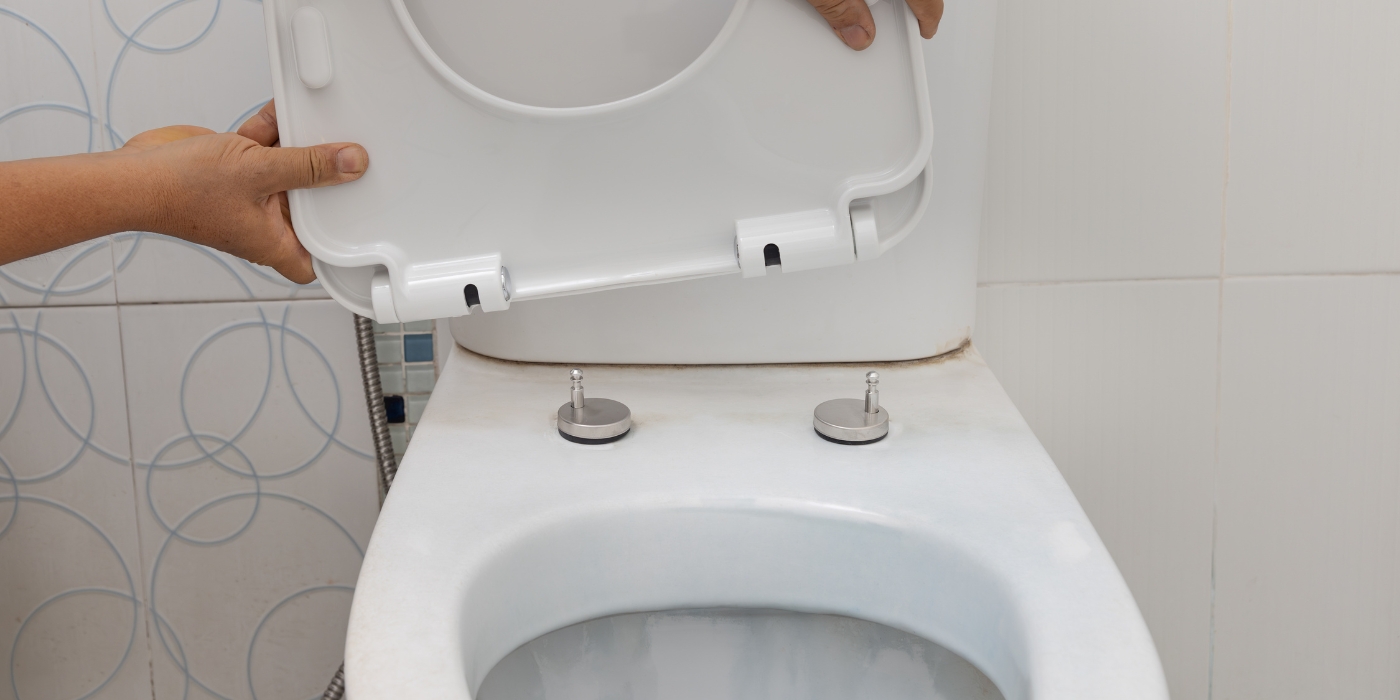
A quick-release hinge lets you lift the toilet seat and lid off the fixed hinge posts without any tools, usually by pressing a button, lifting a catch or pulling the seat forward. To refit the seat, align it with the hinge posts and press or slide it back into place until secure. This gives clear access to the rear of the pan and around the hinge area, making routine cleaning much easier.
A small premium is typically added to the price of a seat with quick-release, but it's genuinely useful if you want to clean thoroughly around the fixings and rear rim without repeatedly undoing bolts.
What About Top-Fix and Bottom-Fix?
Toilet seat hinges differ in how they fix the seat to the pan. Choosing the wrong fixing type can mean you cannot install or tighten the seat properly, no matter how well its shape and dimensions match. The main choice is usually top-fix or bottom-fix.
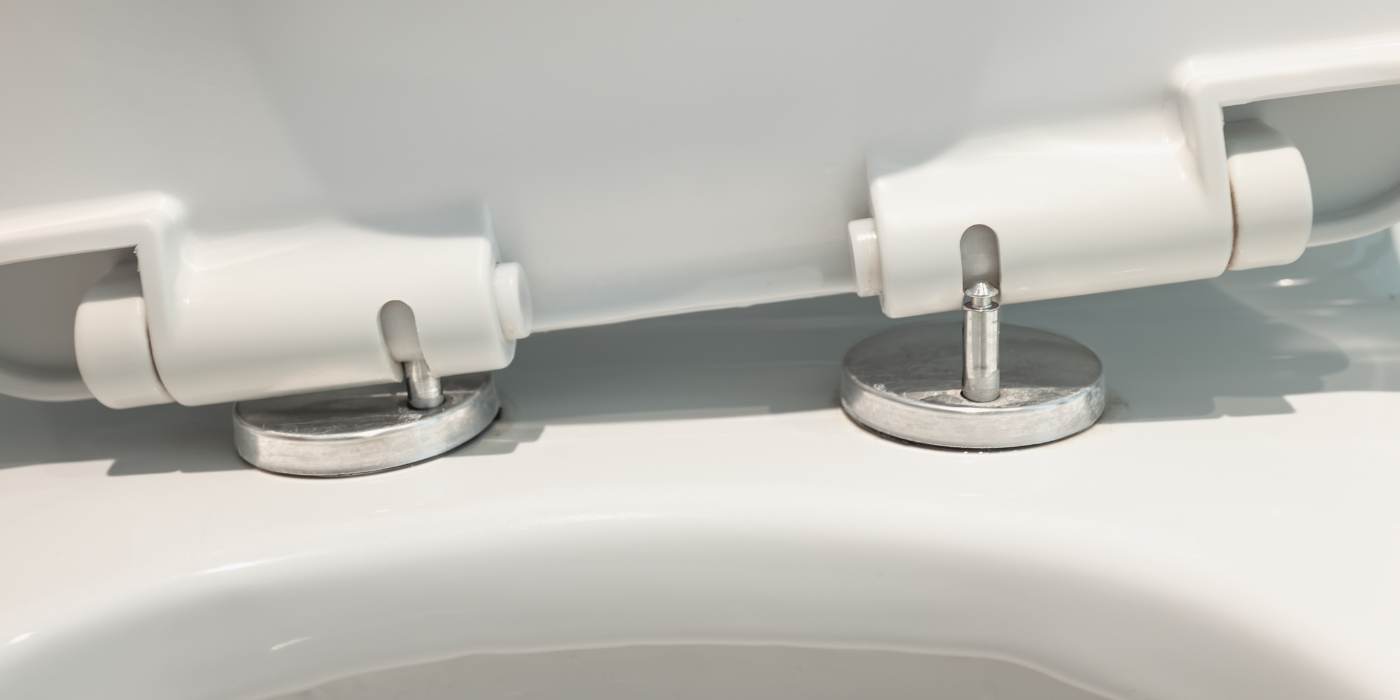
Top-fixing toilet seat hinges use bolts that tighten from above the pan. With bottom-fixing, bolts drop down through holes in the back of the pan and are secured underneath with a wingnut.
To find your fitting type, look or reach under the rear fixing holes of the pan. If you can access a bolt and nut underneath, it’s a bottom fix. If there’s nothing there, it’s top fix only.
What Are Toilet Seats Made Of?
Toilet seats are most commonly made from plastic or wood, though they come in several types of finishes and materials. The choice affects more than appearance; it influences the seat's weight, how warm it feels to sit on, how well it resists moisture and scratches, and how easy it is to clean.
Material | Also Sold As | Feel and Look | Durability | Best For |
|---|---|---|---|---|
Polypropylene | Plastic | Lightweight, relatively warm to the touch | More likely to flex, scratch or discolour over time | Budget replacements and lightly used cloakrooms/ensuites |
Thermoset | Duroplast, urea-formaldehyde | Dense, glossy and ceramic-like, with a cooler feel | Usually rigid and more resistant to scratching than polypropylene | Family bathrooms and frequent everyday use |
MDF / Moulded Wood | Engineered wood | Warm and solid, commonly painted or veneered | Durable if its coating remains intact; may swell or deteriorate if moisture reaches damaged edges or the core | Traditional-looking suites on a budget |
Solid Wood | Oak, walnut, mahogany, or pine | Naturally warm, substantial and visibly grained | Varies with timber species, joinery and quality of the protective finish | Period-inspired and heritage bathroom schemes |
How Much Do Toilet Seats Cost?
Plastic toilet seats are generally the more affordable option. Basic models are available from around £10–£20, and many soft-close or quick-release designs fall roughly within the £20–£50 range. More specialised shapes, thermoset materials and branded designs can cost more.
Wooden seats sit at a higher price point, particularly where you choose solid timber, a traditional finish or premium hinges. Basic moulded-wood or MDF-style seats can still be competitively priced, but solid oak, walnut, mahogany and heritage-style designs commonly cost more than comparable plastic alternatives. As a rough guide, expect to pay from around £20–£30 for an entry-level wooden seat, rising to £80–£120 or more for solid-wood and premium branded options.
Which Toilet Seat Do I Need?
By this point you'll have a good sense of the different shapes, types, hinges, and materials on the market. Ultimately, narrowing down the right seat for your toilet comes down to the following:
- Check your fixing type by looking beneath the rear fixing holes of the pan. If you can reach a bolt and nut, it's bottom-fix; if there's nothing there, it's top-fix only.
- Match the pan shape by looking directly down at the pan rather than relying on the age or style of the toilet. Refer to the manufacturer's spec sheet or supplier's listing for a second reference.
- Measure the pan, not just the old seat. Take the three essential measurements (hinge centres, length, and width) before comparing new seats.
- Choose your seat type based on how you want the toilet to look.
- Consider your hinge type based on how you want the toilet to close and whether you want simplified cleaning/maintenance access.
- Consider the material based on how you want the seat to look, feel, clean and last.
Finding the Right Toilet Seat
If you're still not sure where to start, our full range of toilet seats lets you filter by shape, fixing type and material. However, if you require assistance, contact our team, they're always on hand to help if you'd like to talk it through. Alternatively, you can even visit our Leeds showroom to inspect some toilet seats in person, alongside the suites they're designed to complement.

