Toilet Buying Guide: Types, Sizes & How to Choose
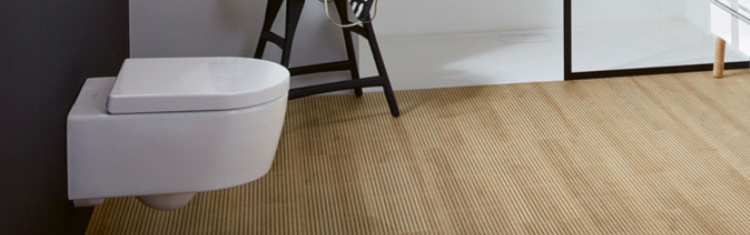
In the market for a new toilet? Buying a new WC or replacing an old one can seem like a simple decision until you are standing in front of near-identical white pans, wondering what separates them. The differences are real - in shape, in dimensions, in how they fix, flush, and clean - and understanding them can save you from costly mistakes and plenty of frustration.
This guide walks you through the three main types of toilets, specialist designs, shapes and styles, rimless versus rimmed pans, and what to expect during installation. By the end, you'll know exactly what to look for before buying your new toilet.
- Key Considerations Before Choosing A Toilet
- What Are The Different Types of Toilets?
- Specialist Toilet Types: Traditional, Comfort Height, Short Projection, and Smart Toilets
- Toilet Style, Shape, and Finish
- Single Flush vs Dual Flush
- Rimmed Toilets vs Rimless Toilets
- Installation: What to Expect
- When To Buy A Toilet
- Maintenance Tips
- Need More Help?
Key Considerations Before Choosing a Toilet
The best place to start when buying a new toilet isn't the showroom or online - it's your bathroom. Addressing these three considerations can help you avoid costly plumbing changes and find the toilet that fits your space.
1) Where Your Soil Pipe Is and How the Toilet Connects
The first crucial factor is the soil pipe location, as it may limit where you can position the toilet. The soil pipe is where wastewater from the toilet exits, so the two should be located close together. Generally, you can install toilets up to 6 metres from the soil pipe; however, it is highly recommended to keep them closer.
The soil pipe is usually located outside the house as an exposed pipe that runs the full length of the house, with a vent at the top. If it isn’t visible, it's likely concealed, with the vent in the roof or above the attic. Most pipework will be ‘boxed in’ within your bathroom or hidden behind furniture for a tidy finished appearance; however, it should be largely apparent where it is located from some simple observation. We recommend getting expert help from a fitter or plumber before purchasing any items to check compatibility and the impact on budget of any required plumbing changes.
It is also important to understand the connection from the toilet to the soil pipe and the type of outlet installed. These are broken into:
- Horizontal outlet: This pipe runs parallel to the ground, with a slight decline to ensure waste can move along the pipe.
- Vertical outlet: This pipe runs vertically behind the toilet.
- Left- or right-facing outlet: Fairly self-explanatory; this pipe runs to the left or right of the base of the toilet.
2) Whether the Toilet Fixes to the Floor or the Wall
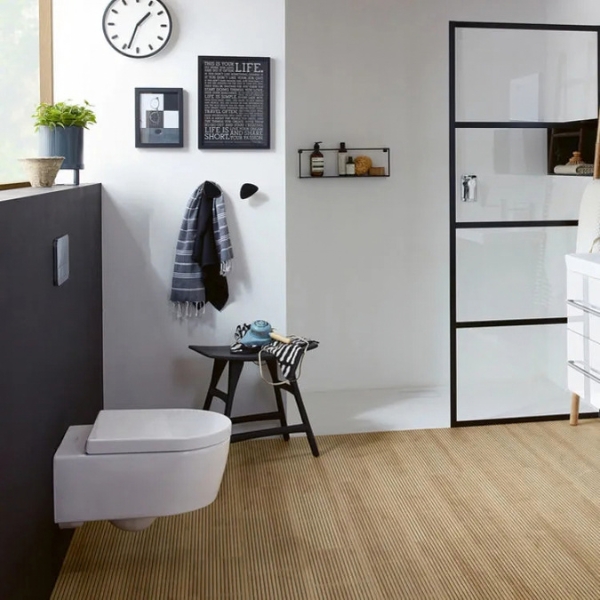
The second thing to decide is whether the toilet fixes to the floor or the wall. Floorstanding toilets, such as back to wall toilets and close coupled toilets, send all their weight through the bottom of the pan, so they don't need a strong frame or wall to support them.
A wall-hung toilet is a different matter. Here, the wall must carry the weight of both the toilet and the user, and any wall that isn't up to the job could lead to serious damage and injury. As such, the pan must be mounted on a wall hung frame with a concealed cistern that is anchored to the structure - not simply screwed to plasterboard. The frame is usually built into a stud wall or a purpose-built false wall, which takes up around 150-200mm of room depth, so budget for the frame and the boxing-in work, not just the pan.
3) How Much Space You Need
Last is space requirements and toilet dimensions. Projection varies more than most people expect. A standard close-coupled toilet typically sticks out 600-800mm from the wall because the cistern sits behind the pan. Conversely, standard back-to-wall and wall-hung designs are naturally shallower at around 450-600mm, since the cistern is hidden. These measurements matter for space concerns. A toilet needs enough clear space in front of the pan to allow space for sitting and standing, comfort, and easy access to other fixtures.
UK Building Regulations set a 750mm clear access zone in front of the WC, with 450mm minimum to each side and 500mm preferred. Those apply to newly built homes and homes undergoing material alteration, but they're a sound guide for any bathroom - below roughly 600mm in front of the pan, a toilet starts to feel cramped, whatever the regulations say.
If you have an existing toilet, it should give a good indication of the right size and any leeway in width or depth. Alternatively, if you're starting from scratch, creating a floorplan and using a 3D Bathroom Design Service can help you visualise how your bathroom may look and help to identify any problems early on.
What are the Different Types of Toilets?
Once you've taken on board the practicalities, it is time to choose the design and toilet that best suits your taste or the room's theme. Three main types of toilet are sold in the UK: close-coupled, wall-hung, and back-to-wall. The differences, ultimately, come down to where the cistern sits and how the pan is supported. Here is each one, what it is best for, and - because no design is perfect - the trade-off you are accepting.
Close-Coupled Toilets
Probably the staple of the British family bathroom, and the toilet most will be familiar with.
What is a Close-Coupled Toilet?
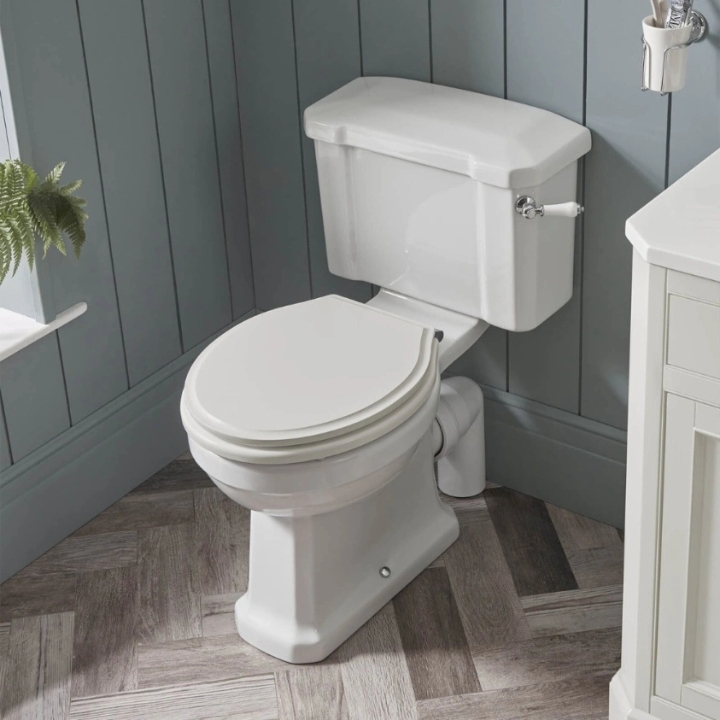
A close-coupled toilet features a floorstanding pan that is sealed in, and comes with an exposed cistern that is bolted or joined directly to the pan itself. Modern close coupled toilets tend to come with push buttons, while more traditional designs tend to feature lever handles, although this is not always the rule.
- Pros: Simple to fit as a straightforward replacement, usually the most affordable type, and everything stays exposed and accessible for maintenance.
- Cons: The exposed cistern makes it the bulkiest option visually, which matters under windows and in low-ceilinged cloakrooms.
But close-coupled toilets don't just stop there. Depending on the preference when it comes to exposed pipework, close-coupled toilets also come in two common variations:
Open Back Close-Coupled Toilets
An open back close coupled toilet has a gap at the rear of the pan, leaving the waste pipe visible but easy to reach. It is the more forgiving option when the existing pipework does not sit neatly, and it is easier to maintain.
Closed Back / Back-to-Wall Close-Coupled Toilets
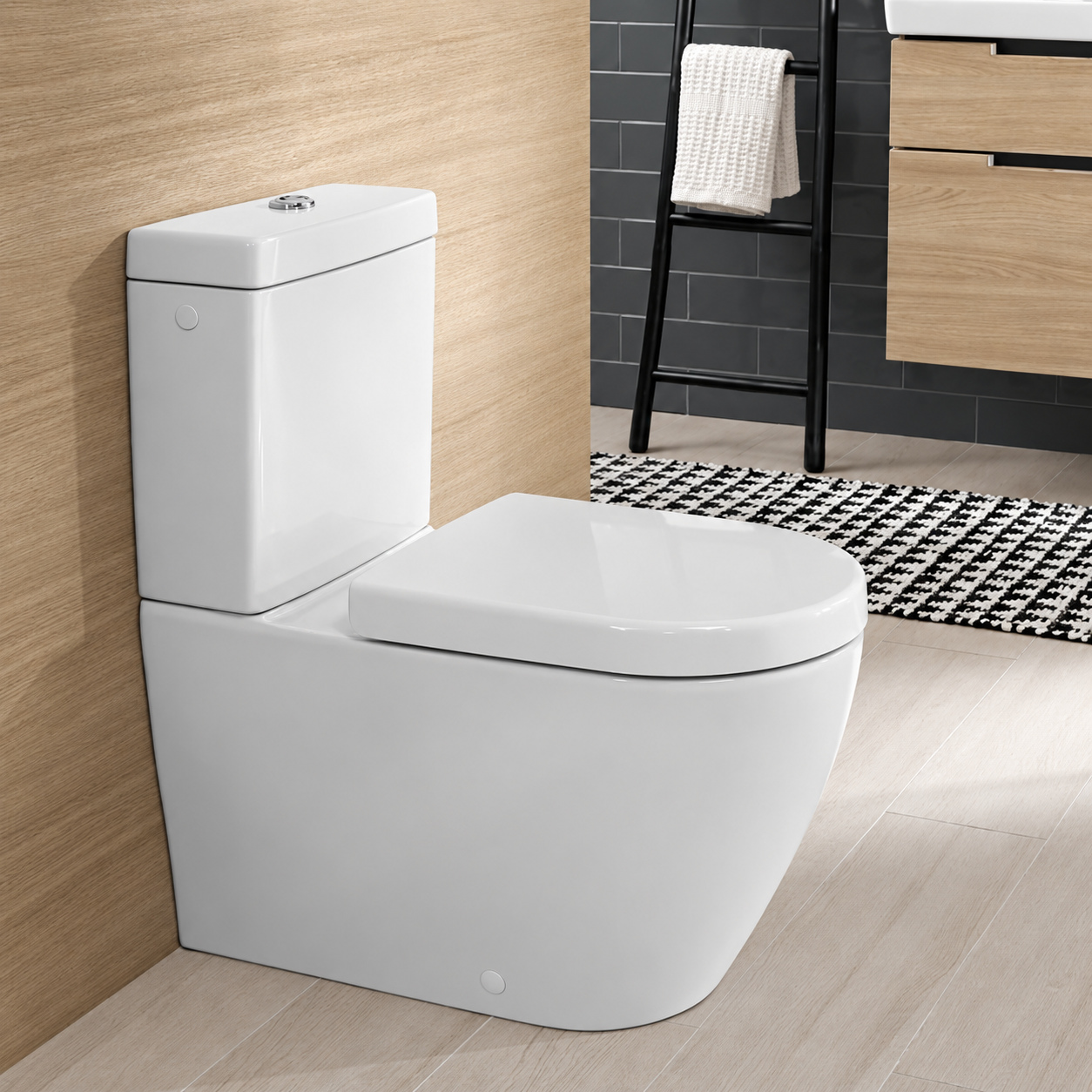
A closed back close coupled toilet - also called a back-to-wall close-coupled toilet - sits completely flush to the wall, hiding the pipework for a tidier finish. The pipe positions need to be right the first time, so measure carefully or have your fitter confirm compatibility.
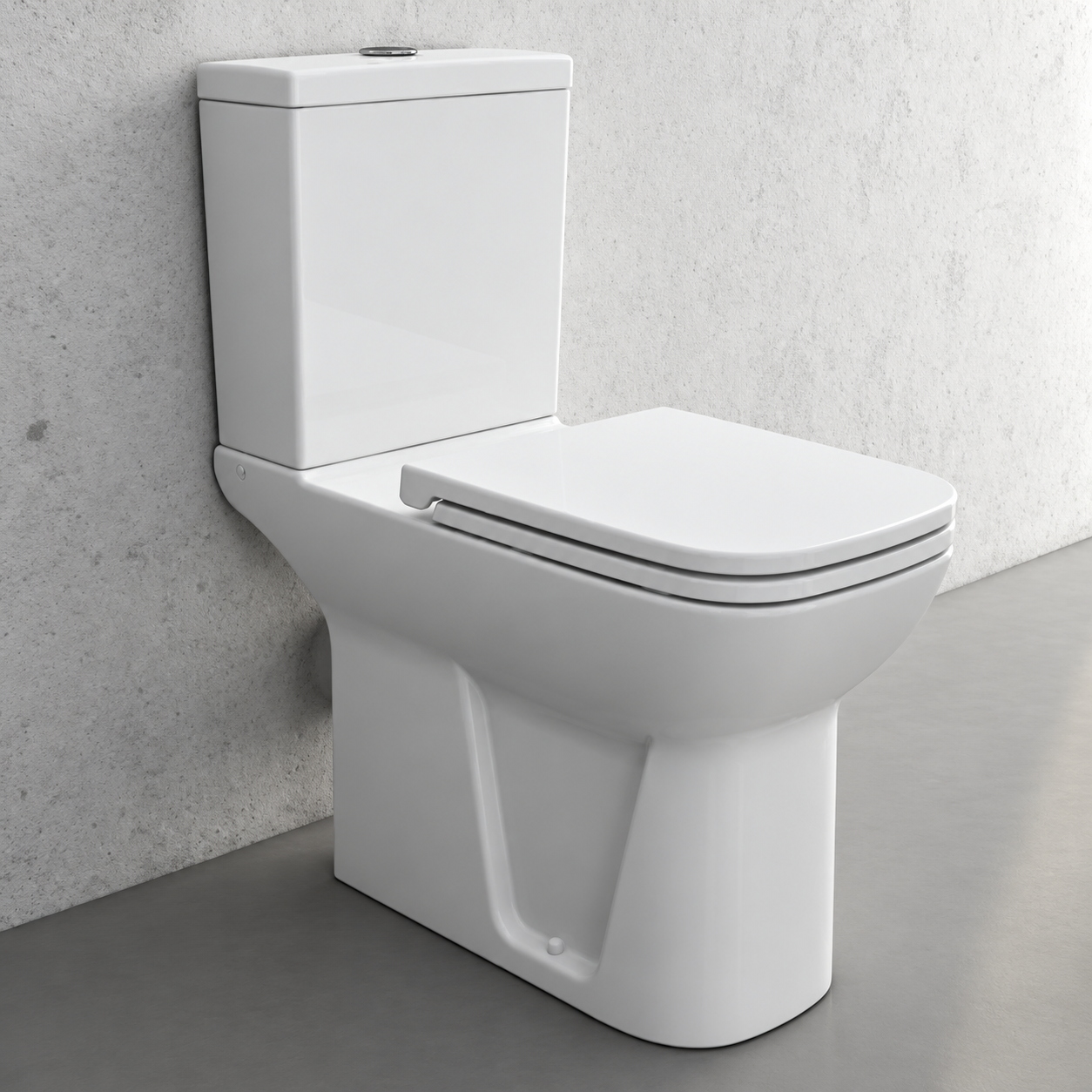
Open Back Close-Coupled Toilet
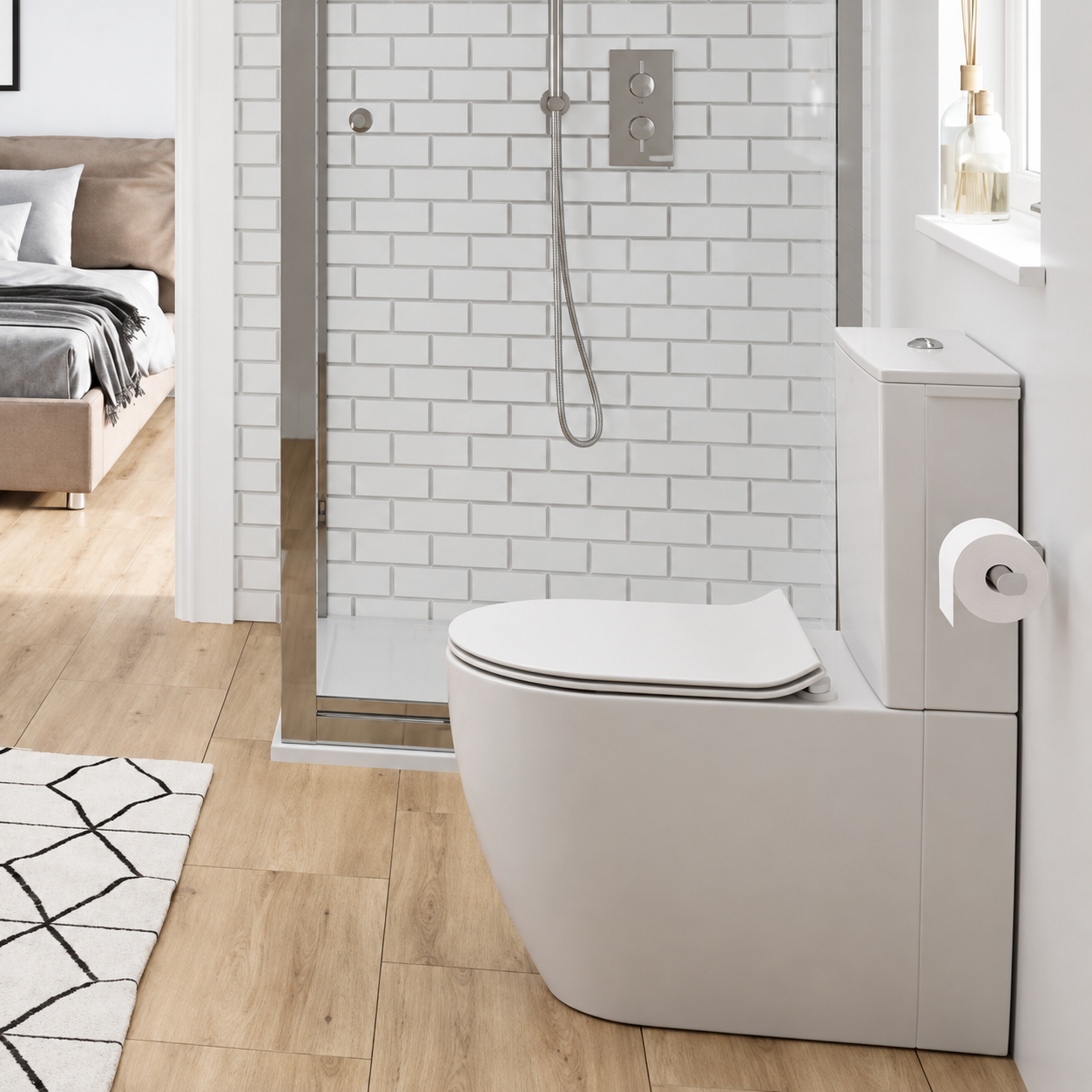
Closed Back / Back-to-Wall Close-Coupled Toilet
Wall-Hung Toilets
Undeniably the signature look of the contemporary bathroom, and the toilet type that has grown fastest in popularity over the last decade.
What is a Wall-Hung Toilet?
A wall-hung toilet, also known as a floating toilet, mounts the pan directly to the wall with no pedestal, suspended a short distance from the floor by a frame made of a strong material (usually steel), supporting the toilet's and the user's weight. These toilets are highly popular because they open up floor space, making the room appear larger, while blending seamlessly into their surroundings with no pipework or fittings on show. They tend to lean towards a more modern design (though traditional models are available) and can be paired with a toilet flush button in a range of colours and finishes to match the theme and style of the space, as well as personal taste.
- Pros: The most modern look; makes floor cleaning easier; ideal for ensuites that welcome less visual clutter.
- Cons: High installation costs due to the price of the cistern frame alongside its installation and maintenance - certainly not as easy as lifting the lid on a close-coupled toilet's cistern.
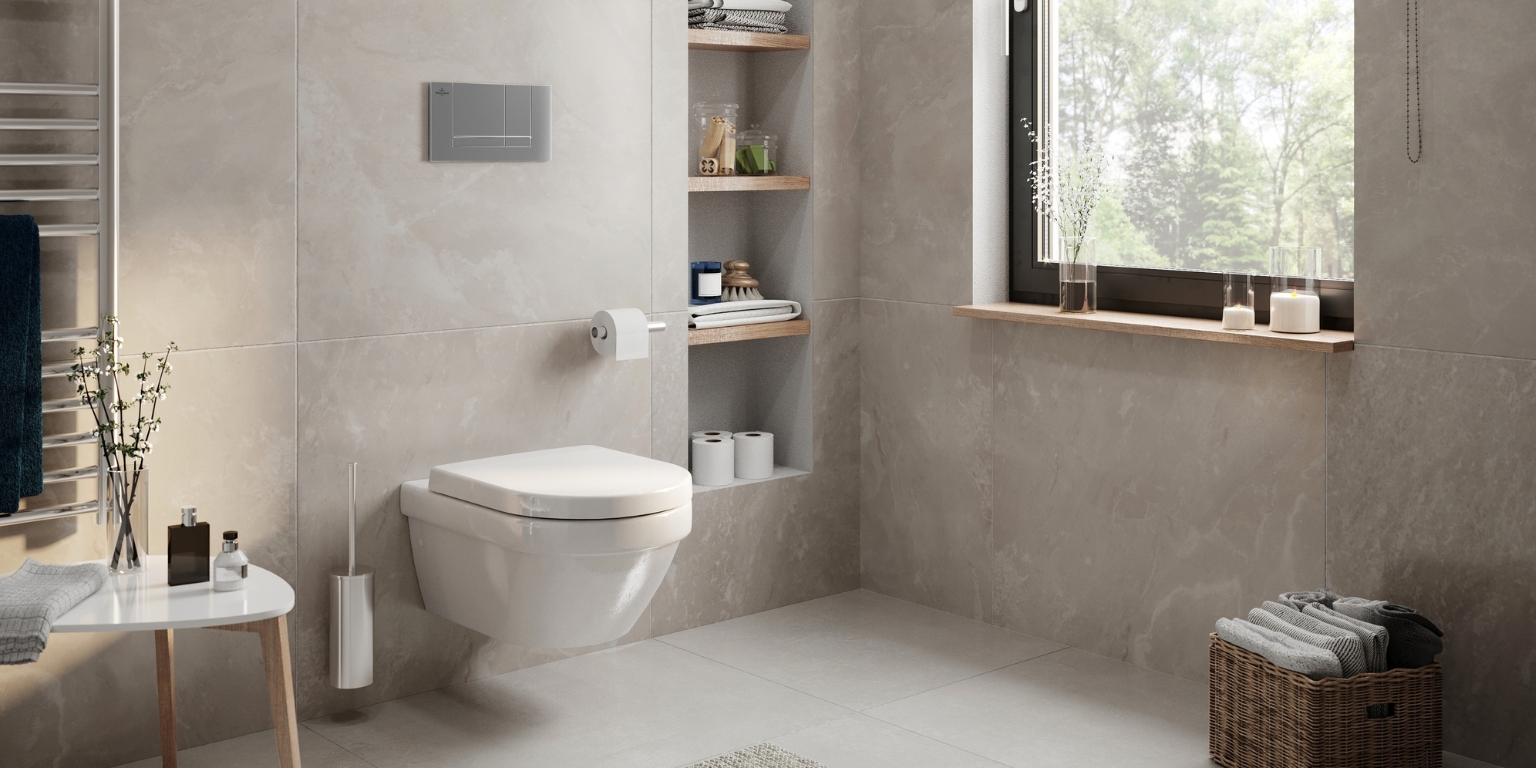
Back-to-Wall Toilets
Often easily confused with the closed back close-coupled design above, but a distinct type in its own right - and the practical middle ground of the three main toilet types.
What is a Back-to-Wall Toilet?
A back to wall toilet, or BTW for short, is a floorstanding pan that sits flush to the wall, with the cistern concealed in the wall or inside a furniture unit behind it. Because the weight goes through the floor, no frame is needed - just a concealed cistern.
- Pros: The streamlined look of a wall-hung toilet with a fraction of the structural work; can be combined with bathroom furniture to form a WC unit of toilet, basin, and storage all in one.
- Cons: Like any concealed cistern design, access for future servicing depends on how well the installation is planned - insist on an access panel.
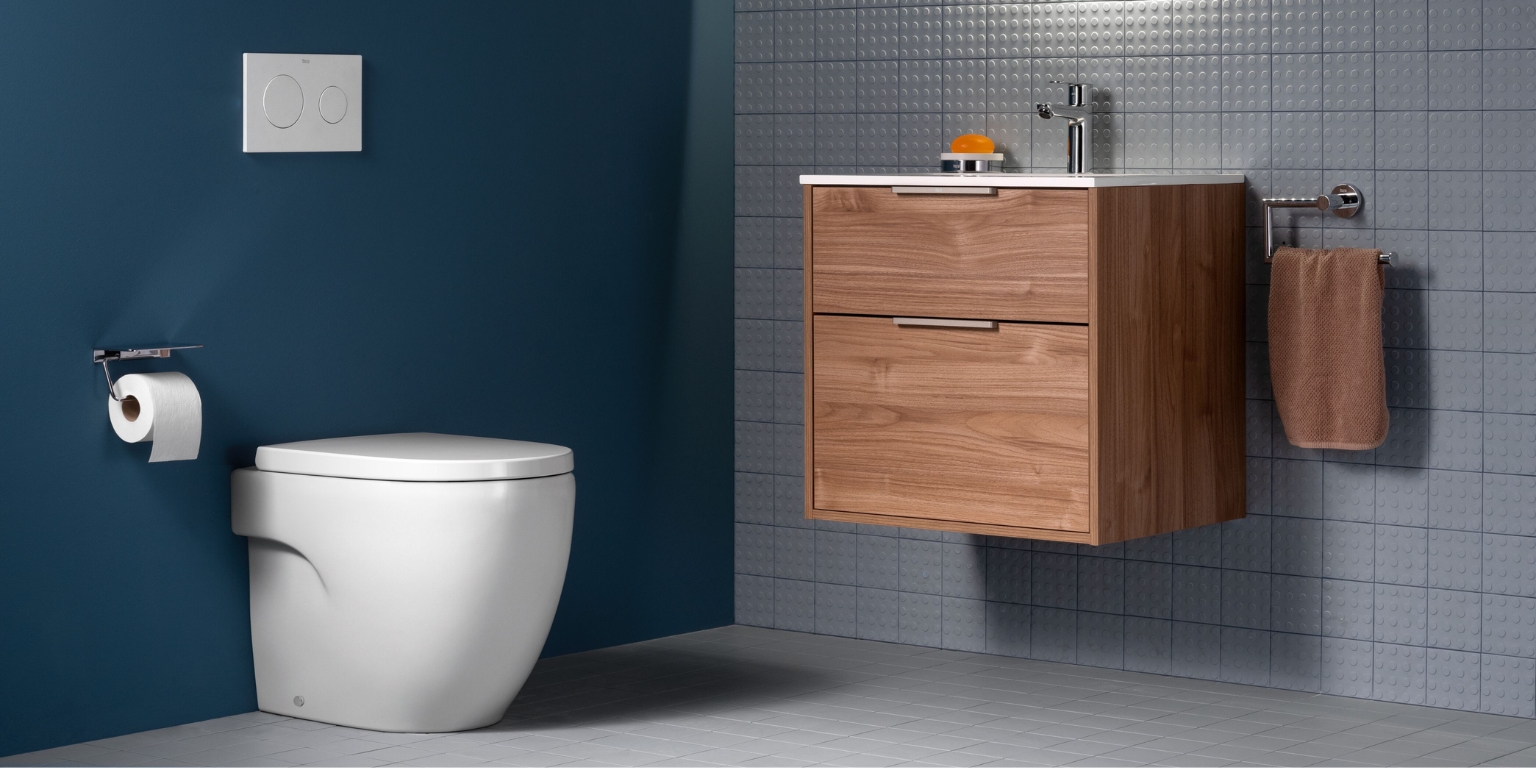
Specialist Toilet Types: Traditional, Comfort Height, Short Projection, and Smart Toilets
Beyond the main three, a handful of designs solve more specific problems - period styling, tight spaces, easier sitting and standing, and built-in washing. Each is a variant of the types above rather than a different plumbing arrangement, so the checks in the first section still apply.
Low Level, Medium Level and High Level Toilets
These are the period designs, made for Victorian, Edwardian, and Georgian-style bathrooms, where the exposed cistern and flush pipe are part of the look.
What is a Low, Medium, or High Level Toilet?
These are similar to close-coupled toilets, but instead of a connected cistern bolted to the pan, they connect via a pipe and are usually wall-mounted on brackets. The sizing in the name refers to the cistern height, positioning, and pipe length. A low level toilet places the cistern just above the pan, a medium level toilet around halfway up the wall, while a high level toilet can be up to 2 metres or ceiling height. Because of this, high-level toilets usually come with a pull-lever and chain flush, while lower ones operate with a push-button or lever-handle flush.
- Pros: An authentic centrepiece for traditional schemes where the exposed brightwork and ceramic detailing are the point.
- Cons: More exposed pipework to clean and more wall fixings; cistern height needs checking against windows, ceilings, and sloped cloakroom walls before ordering.
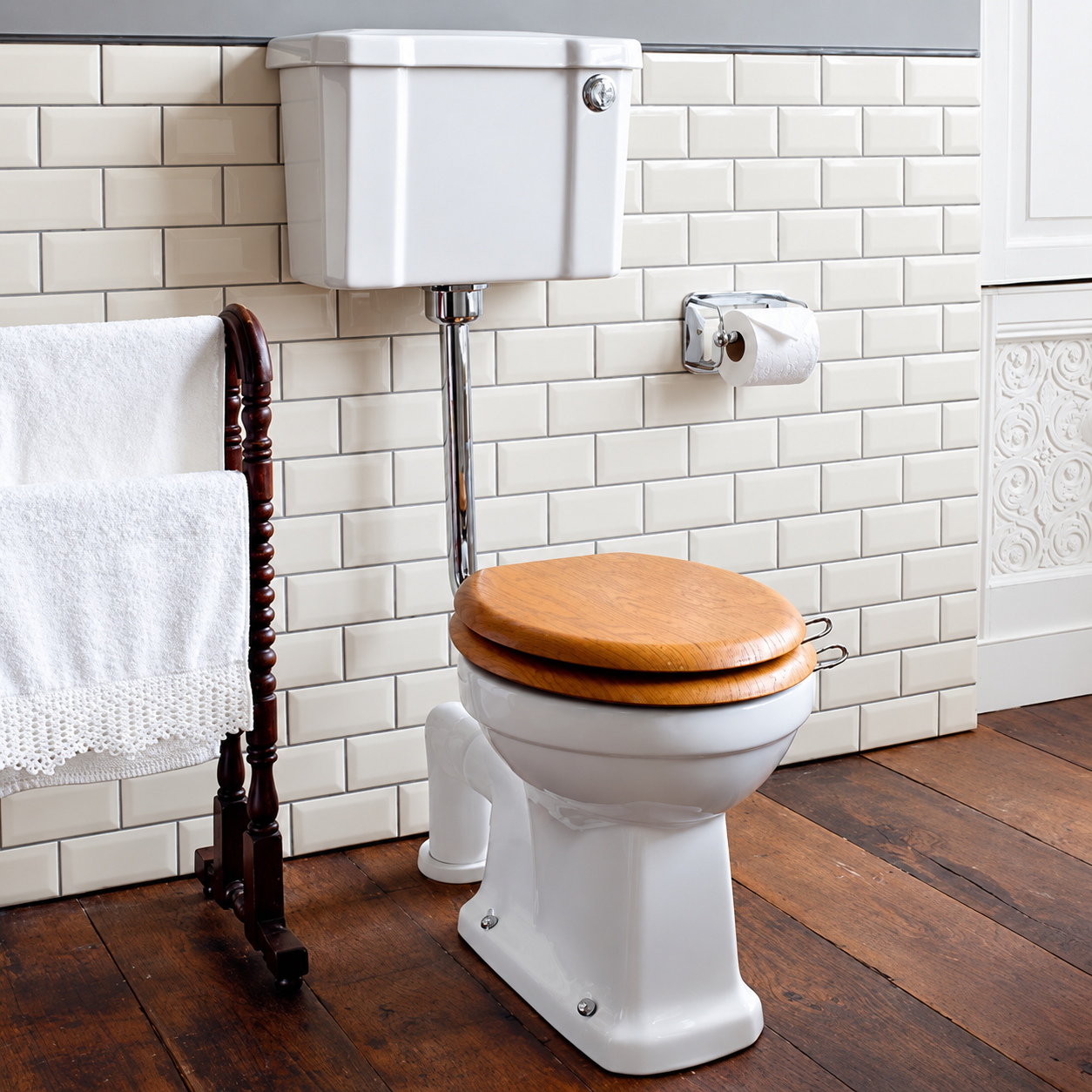
Low Level Toilet
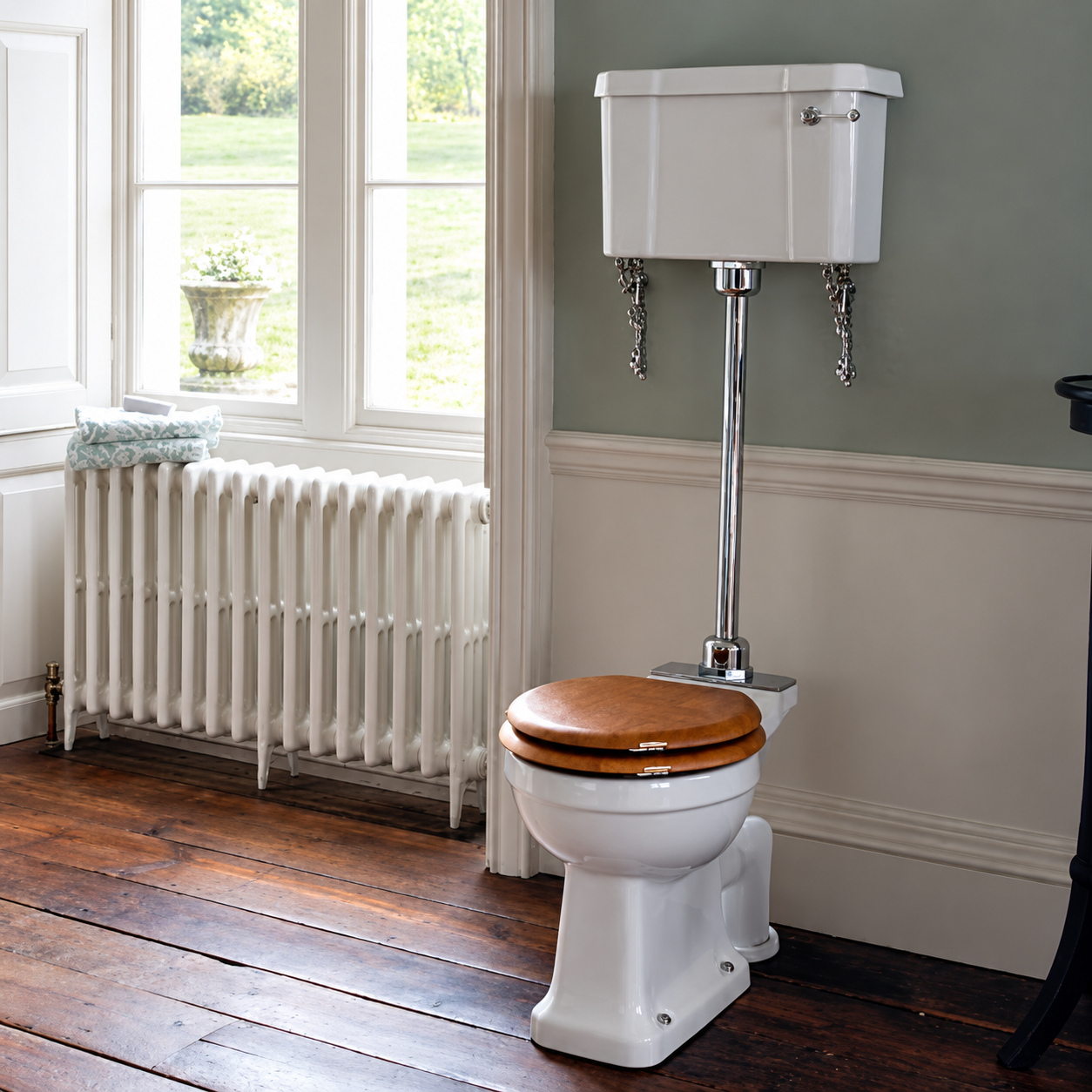
Medium Level Toilet
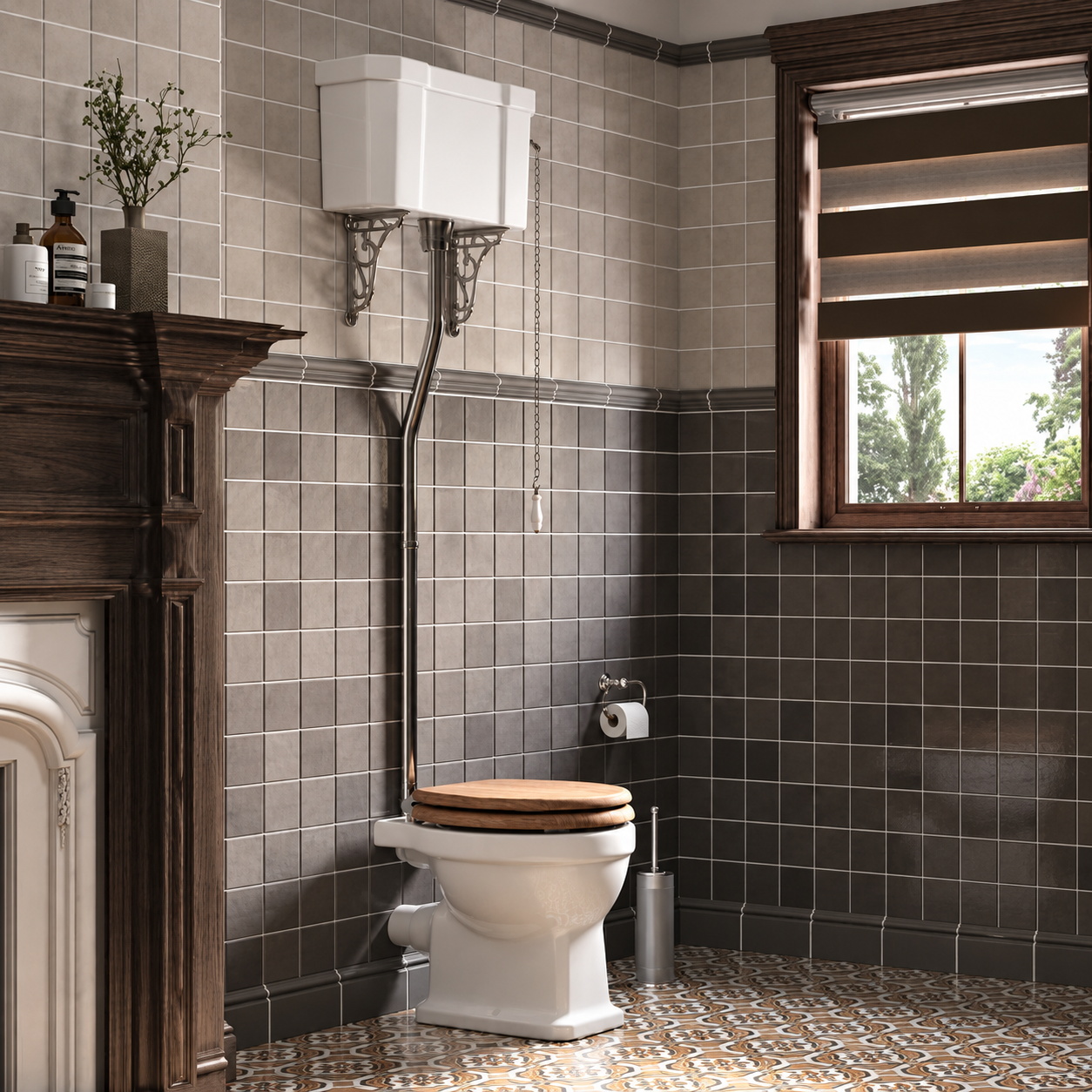
High Level Toilet
Short Projection Toilets
The space-saver of the family, and often the difference between a cloakroom that works and one that does not.
What is a Short Projection Toilet?
A short projection toilet has a reduced front-to-back depth - commonly around 450-610mm from the wall to the front of the pan, with back-to-wall and wall-hung variants often sitting at the shortest depth.
- Pros: Recovers up to roughly 150-200mm of floor depth, which is often what makes the difference between a cloakroom that achieves the 750mm clear access zone and one that does not.
- Cons: The smaller pan can feel less generous for taller or larger users, and there are fewer models to choose from than in standard sizes.
Comfort Height Toilets
The type to consider if sitting down and standing up is the hardest part of using the bathroom - or you would simply prefer not to drop so far.
What is a Comfort Height Toilet?
A comfort height toilet has a taller pan than a standard design, approximately 440mm or more, reducing how far you bend at the hips and knees when sitting down and standing up.
- Pros: Easier sitting and standing for taller users, older users, and anyone with joint pain or reduced mobility.
- Cons: Less practical for young children, who may need a step to use a taller pan, and because comfort height is a product description rather than a regulated standard, the exact height varies between manufacturers - always check the specification sheet.
Smart Toilets and Bidet Toilets
The premium end of the market, where the toilet takes on the job of a bidet as well.
What is a Smart Toilet?
A smart toilet, shower toilet, or bidet toilet combines the WC with the washing function of a bidet - from simple mechanical wash designs through to models with warm-water washing, seat heating, air drying, and self-cleaning functions.
Due to this, they sit at a higher price point and are a more premium product, but are a great investment for those who want a hotel-style feel, a multitude of features, and the space-saving benefits of combining bidet and toilet. Several brands are available on the UK market, most notably TOTO and VitrA, whose Washlet and V-Care ranges cover everything from straightforward wash-and-dry designs to fully featured models with remote controls, adjustable water temperature, and self-cleaning nozzles - so the technology is no longer confined to the very top of the market. For a closer look at the features and how to choose, see our smart toilet buying guide.
- Pros: A step up in personal hygiene, interactive controls that let each user tailor the wash, seat warmth, and drying to their own preference, and a real gain in everyday comfort.
- Cons: The highest price point of any toilet type, and most models need an electrical connection as well as water, which adds to the installation.
Toilet Style, Shape, and Finish
Once you've settled on the type, the next choices are largely aesthetic, though many still affect comfort, use, and hygiene.
Toilet Style: Modern Toilet or Traditional?
First up: modern or traditional? Classic or contemporary? This, of course, is determined by your current or intended style of bathroom. But how exactly do we identify which is which?
a) Modern
Modern toilets favour smooth, minimal forms. Look for flat cistern lids, slim or sandwich-style seats, concealed fixings, and push-button or flush-plate operation rather than a lever. Pan shapes tend towards D-shaped or square; detailing is kept to a minimum, and wall-hung designs are almost exclusively modern.
b) Traditional
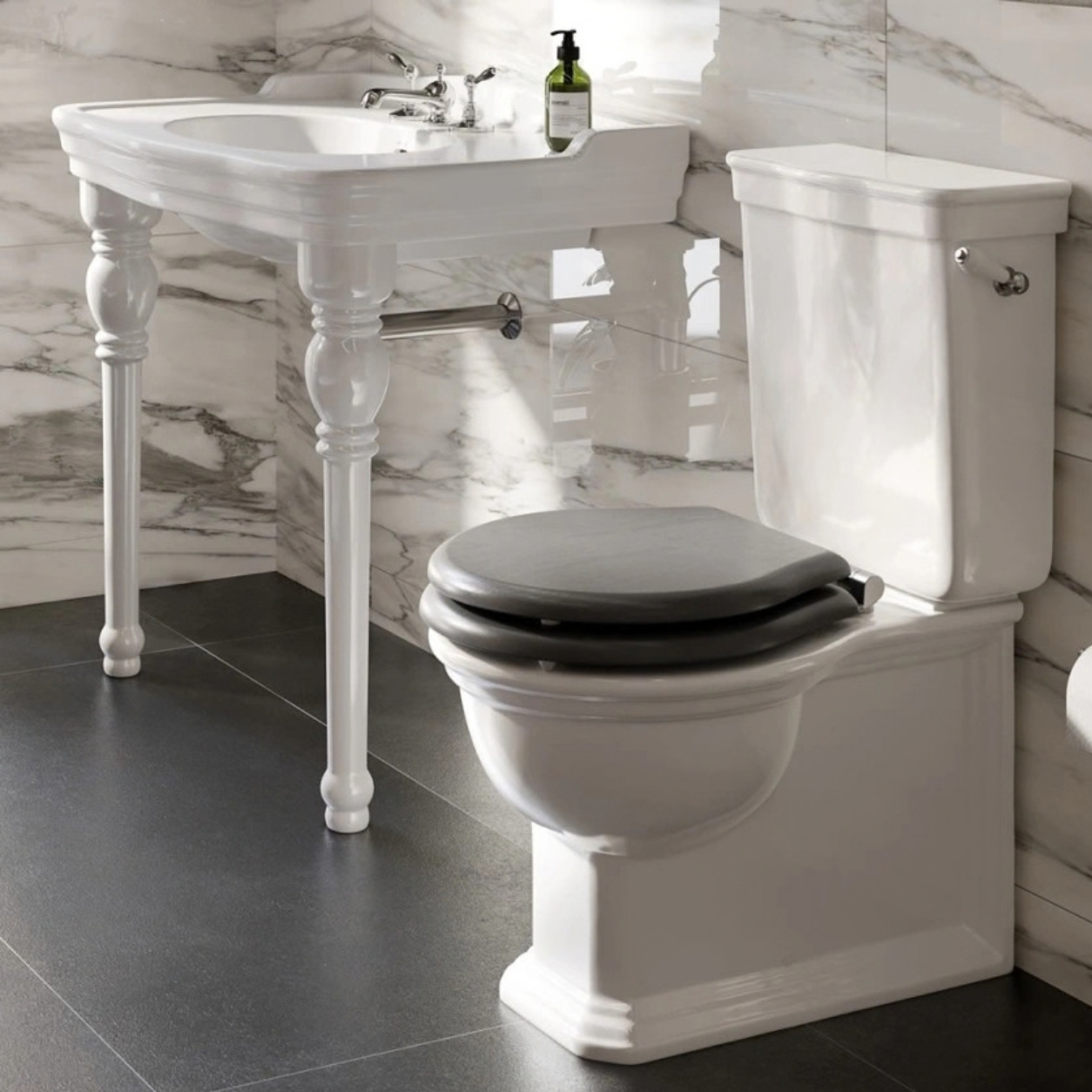
Traditional toilets go the other way. Look for sculpted, pedestal-like pans with visible ceramic detailing, exposed fittings, lever or pull-chain flushes, and seats available in rich wood tones as well as white. Low, medium, and high-level designs - with their wall-mounted cisterns and visible flush pipes - are the clearest traditional markers, though close-coupled toilets come in traditional styling too.
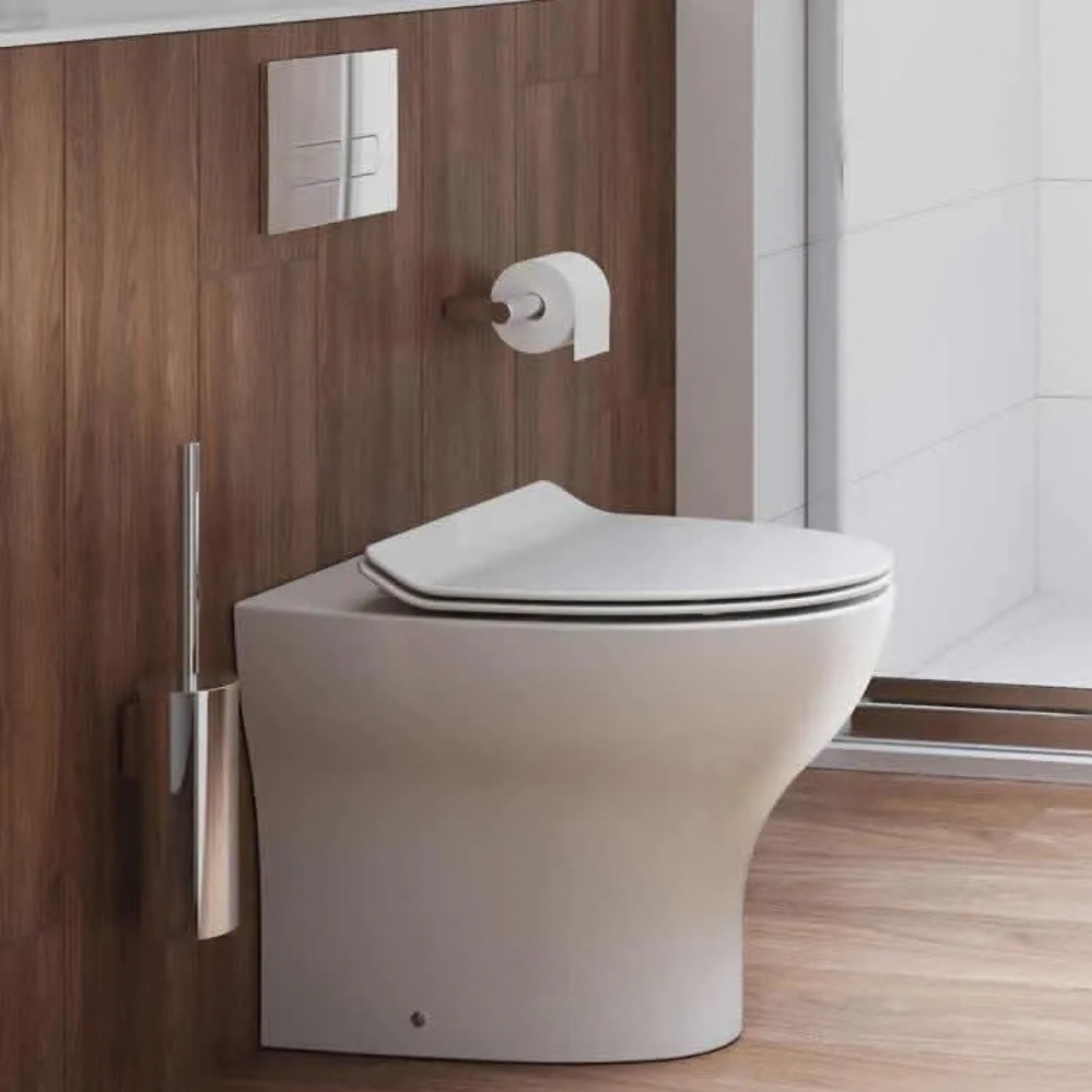
Toilet Shape
You might assume all toilets are the same shape. They aren't. In fact, toilets can be broken down into three distinct shapes:
- Round/Oval Toilets: These are toilets that feature a curved front, and a pan and seat that curve in at the back in a more rounded, sweeping arc.
- D-Shaped Toilets: These feature a flatter back and curve round at the front just like a letter D.
- Square Toilets: These are toilets with more angular shapes and linear edges. Some also have curved corners, where they could be called a ‘squircle’ shape.
Many toilets are D-shaped because of their simplicity and ability to fit against the wall easily. More rounded toilets tend to be traditional in style, while square toilets tend to be more modern and more likely to be wall-hung. It must be noted that toilet shape has no effect on performance; choose whichever matches your bathroom's scheme best.
Toilet Seats
Toilet seats come in a selection of sizes, with shapes and fixings to match the pan. These are some of the common elements you'll come across:
- Hinges: Standard toilet seats lift and shut at a normal speed. Alternatively, soft-close seats close more smoothly and slowly to reduce noise and improve safety.
- Types: These can also come as wrap-over toilet seats, where the lid fits over the seat for a tidy look, or sandwich seats, where the seat and lid sit flat on top of each other, much like the slices of bread in a sandwich. Both are available in standard or slimline versions, the latter offering a thinner, crisper appearance.
- Colour: While many toilet seats come in standard white colours (or match the colour of the toilet), some come in a variety of coloured or wood-tone options, particularly those with a traditional look.
Getting the fit of a toilet seat right matters more than you might think, so before buying a replacement or upgrade, use our complete guide to toilet seat sizes, shapes, and fixings, which covers everything mentioned here in more detail, including measuring, fixing types, and compatibility.
Toilet Colour
Most toilets are glazed white, for a couple of reasons. It's the default colour of ceramic or porcelain, meaning fewer steps (and lower costs) in the manufacturing process, but it’s also associated with hygiene because dirt is easy to see.
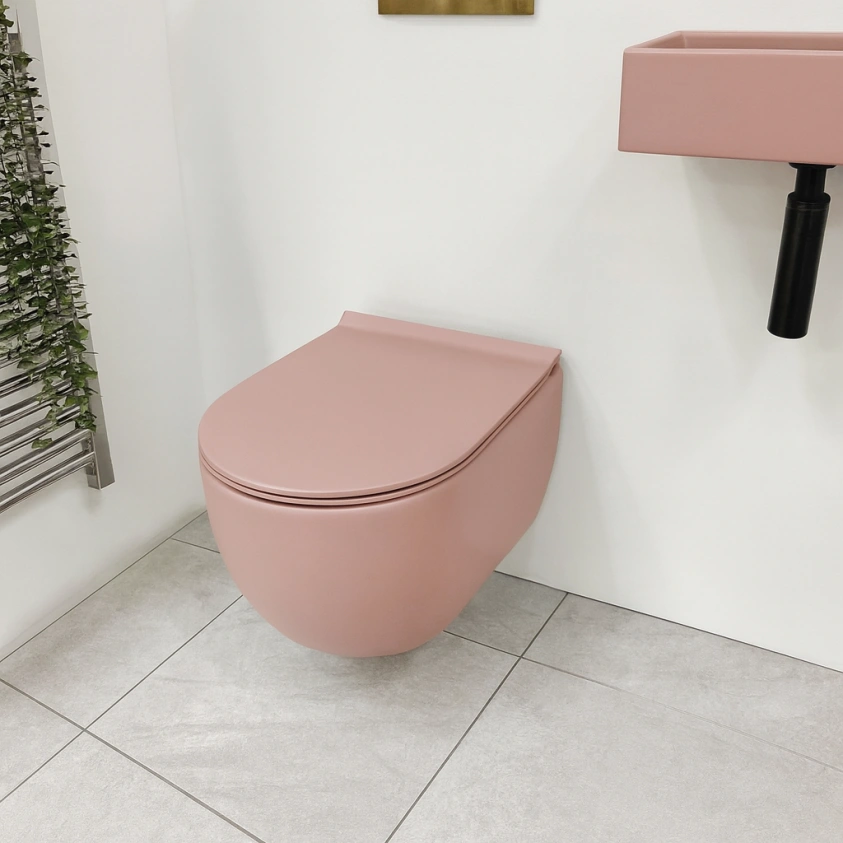
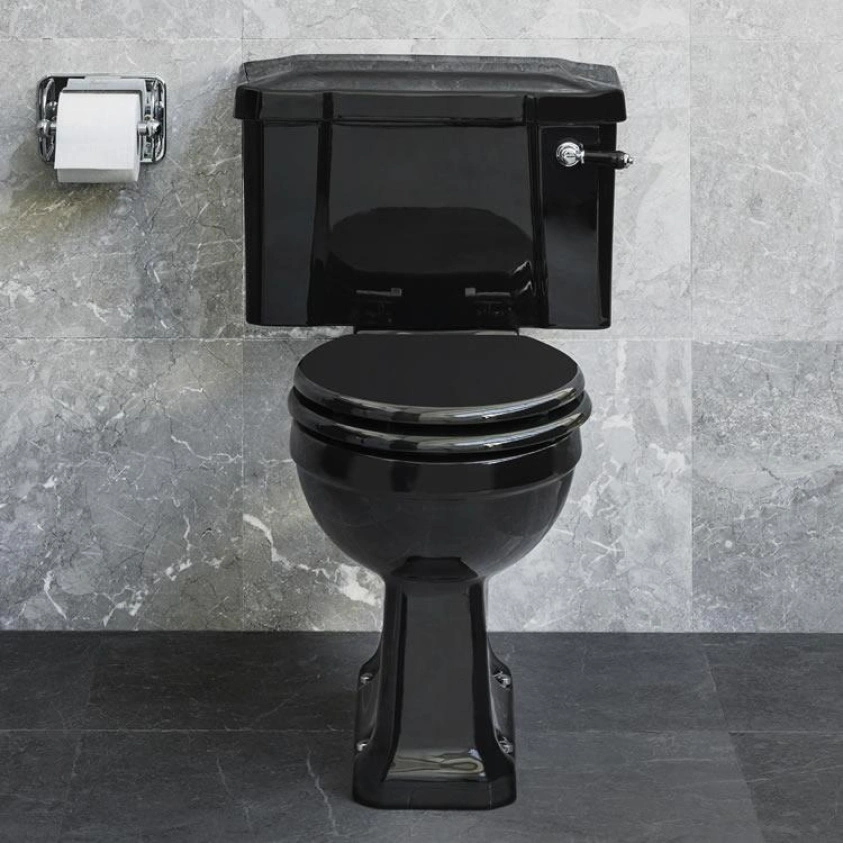
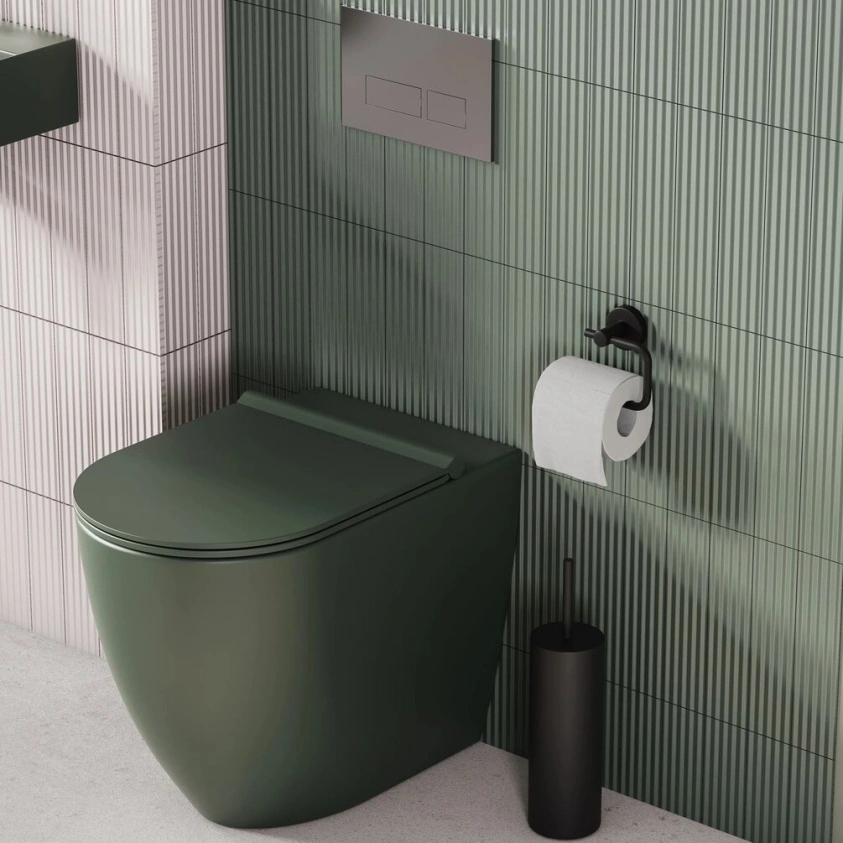
But while the majority of toilets are white, you are far from limited to this colour when deciding which one to buy. There are many coloured toilets available, from distinctly modern black for monochromatic a colour scheme, to subtle cappuccino or even greige. Additionally, cisterns and fittings, such as flush plates, come in many colours and bathroom finishes, from chrome, brass, black, and more.
Single Flush vs Dual Flush
Toilets typically come in single-flush or dual-flush options. The latter option has grown hugely in popularity and is more common as people become more eco-aware and focus on conserving water.
Single-flush toilets often use a single push button or lever handle, whereas dual-flush toilets are usually operated via a dual-flush push button or plate. These are usually identifiable by two separate buttons: the larger button signifies a large or “full flush” using 6 litres of water, while the smaller one is a small or “half-flush” at 3 or 4 litres. Some toilets, and accompanying frames, can be adjusted to flush a lower volume, such as 4.5 litres, so it is worth looking at this ahead of purchase if saving water - financially, environmentally, or both - matters to you.
For a more in-depth look at types of toilet flushes, take a look at our guide to different toilet flush systems.
Rimmed Toilets vs Rimless Toilets
Another choice is whether the pan should be a rimmed toilet or a rimless toilet.
Most standard toilets have a normal rim, or boxed rim, where water flushes from the cistern into the rim and pours out through small holes under the rim. Conversely, rimless toilets (which some manufacturers call by their own name, such as VitrA’s Rim-ex) do not feature an inside rim. The advantage of a rimless toilet over one with a rim is that it cleans the bowl more directly and often more efficiently. It also reduces cleaning time because there's no place for grime or dirt to hide and no need to clean under the rim, which is often forgotten. The disadvantages of rimless toilets are that they typically cost more upfront than a rimmed pan, and can sometimes splash water if the water pressure is too high.
If the easier cleaning appeals, browse our full range of rimless toilets, available across close-coupled, back-to-wall, and wall-hung designs. 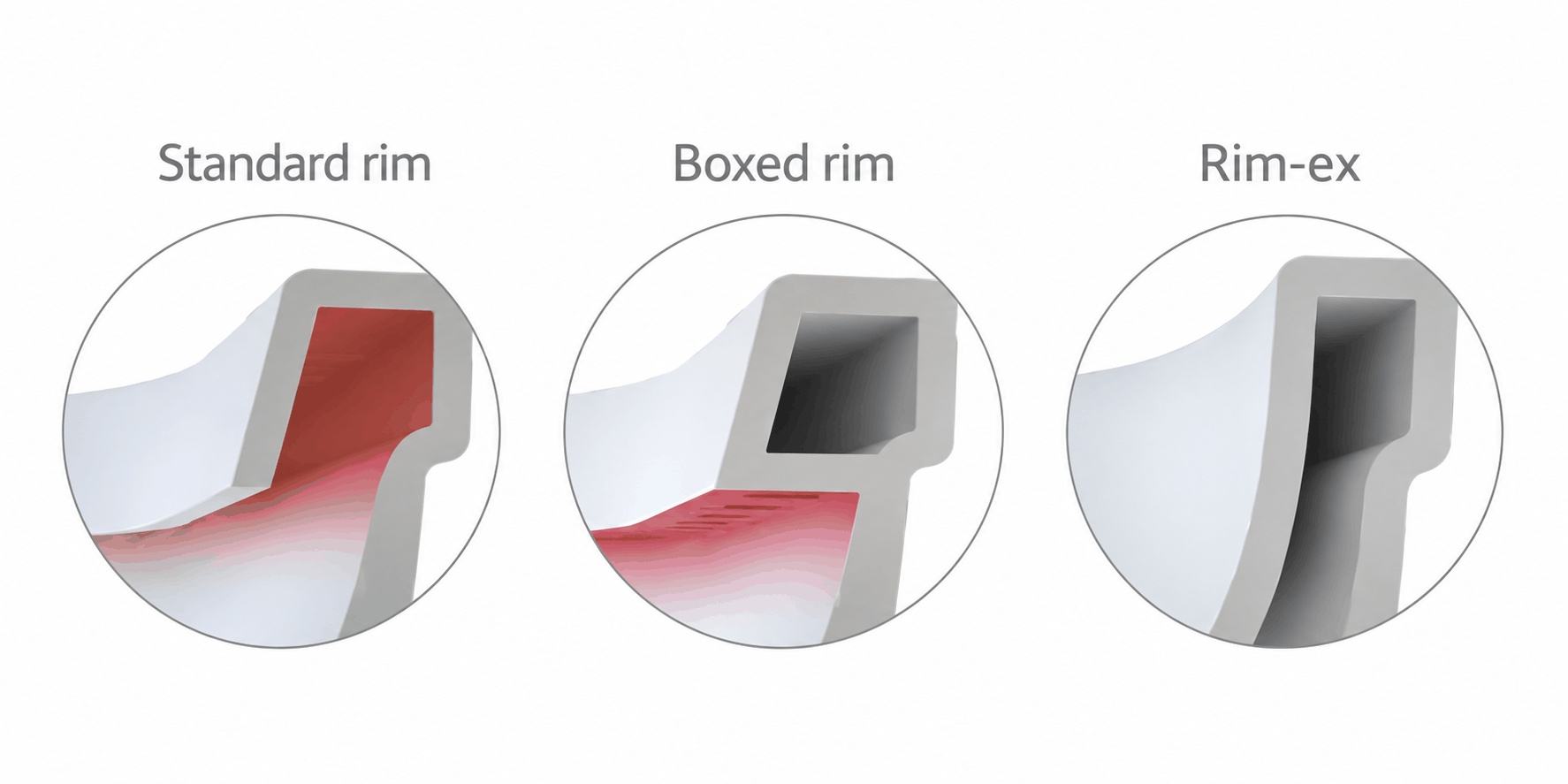
Installation: What to Expect
For most straightforward toilet replacements, Building Control approval is usually not required in England, and a competent plumber can usually carry it out. This normally applies when you replace an existing toilet with a similar model and the work does not involve alterations to underground drainage, or plumbing and drainage work that could affect health or safety. Where the work involves relocating a toilet, a new soil connection, altered drainage, structural work, ventilation changes or electrical work, Building Regulations may apply. In these cases, speak to your installer before work starts and check whether the work needs to be notified to a Building Control Body or can be self-certified by an appropriately registered installer.
A straightforward like-for-like swap can often take around two to four hours, assuming the existing pipework and connections are in good condition. Installing a back-to-wall toilet with a new concealed cistern commonly takes around a day where the required boxing or furniture unit is already in place. If new boxing, pipework, flooring, wall finishes or tiling are needed, allow longer. A wall-hung toilet is usually more involved. The installer must fix and level the load-bearing frame, connect the concealed cistern and waste pipework, construct or adapt the service wall, and then complete the wall finish before fitting the pan.
Before quoting, a plumber will normally need to know the toilet model you have chosen, the existing waste-outlet type and position, whether the toilet is moving, and which wall or floor finishes may need making good. Clear photographs of the existing WC, the surrounding wall and floor, and the new product’s technical specification can help them provide a more reliable quote. Final costs may still change if concealed pipework, flooring or drainage issues are discovered during the work.
How to Measure a New Toilet
If you are replacing an existing toilet, measure the available space and compare it with the technical drawing for the new model before ordering. Product dimensions can vary considerably, even between toilets of the same type. Just be sure to measure in millimetres and take each measurement from the finished wall and floor surfaces.
A replacement toilet may be compatible with an existing concealed cistern or wall-hung frame, but this should not be assumed. Check the manufacturer’s technical drawings for the fixing centres, waste and flush connections, pan projection and flush compatibility, or ask a qualified installer to assess the existing setup before ordering.
- Measure the height: From the floor to the top of the pan rim, excluding the seat. For close-coupled and traditional toilets, also measure to the top of the cistern, as this is the figure that matters under windows and shelving.
- Measure the projection: From the finished wall to the furthest forward point of the pan - usually the front of the rim. For close-coupled toilets, measure from the wall behind the cistern.
- Measure the width: Across the widest point of the toilet. On D-shaped pans, this is usually at the back; on rounded pans, it is at the middle of the bowl; on close-coupled toilets, check whether the cistern is wider than the pan and use the larger figure.
- Check the outlet: Note whether the waste connection runs horizontally through the wall, vertically through the floor, or to the left or right, and photograph it for your plumber or our team.
When to Buy a Toilet
We’ll touch on this briefly as it is a question we’ve been asked in the past. Put simply, there are a few indications that it’s time to buy a new loo:
- The current one leaks. No one wants a leaky toilet.
- Components are starting to fail due to age and wear and tear. If you find yourself doing a lot of repairs and fiddles, maybe it’s time for a new one.
- You’re redecorating. Depending on how drastically different your new bathroom is to your old one, the existing toilet might look quite out of place.
- You’re getting a new suite. Whether you fancy an upgrade or you’ve moved somewhere new and don’t like the one you found there, a new bathroom suite involves a new toilet.
Maintenance Tips
A little routine care keeps a new toilet performing and looking as it should for decades. Keep these in mind when choosing, and once it's installed:
- Rimless pans are the easy ones: wipe around the open bowl edge with a standard bathroom cleaner and the whole surface is done - no rim brush required. Rimmed pans need the underside of the rim cleaned regularly, as this is where limescale and bacteria establish first.
- In hard water areas - which covers much of England - limescale is the main enemy, dulling the glaze and encrusting the flush outlets. Regular descaling with a limescale remover suitable for ceramics keeps the flush performing; avoid leaving strong acid cleaners sitting in the pan for long periods, as they can attack the glaze and the seal.
- Soft close seat hinges should never be forced shut - pushing a soft close lid down defeats the damper and wears it out. Check the hinge fixings for looseness every few months and nip them up by hand.
- If you choose a concealed cistern, this is where the buying decision pays off or bites: the fill valve and flush valve are serviceable parts, and reaching them through a well-planned access panel or flush plate aperture is a ten-minute job. If your installation is being planned now, make the access panel a requirement, not an afterthought.
FAQs
Can you put a toilet under a window?
Usually, yes. While it is often more logical to place a toilet on a full-size wall, you may be able to place it under a window if it can reach the soil pipe and space permits. If it is a concealed toilet, you need to factor in the size and height of the frame as well, while the height and positioning of the pan must not be so low that they make the toilet impractical to use. For exposed cisterns, these shouldn't be so high as to impact access or block the window.
What's the best toilet for a small bathroom?
A short projection toilet is usually the best choice, because it is the only option that reduces floor depth without building anything out from the wall. However, wall-hung and back-to-wall toilets can also look equally space-efficient, and thus, make a room feel less cramped.
What toilet is the most water-efficient?
Almost every toilet on sale today is either a 4.5 litre single flush, or a dual flush using 6 litres for a full flush and 4 for a reduced one. Those are the legal maximums. If water use genuinely matters to you, look for a model rated at 4 litres and 2 litres instead - that's the tighter standard some new homes have to meet, and it's the biggest single saving available.
Need More Help?
If you take one thing from this guide, make it the order of decisions: check the soil pipe and the clearances first, choose the type second, and any style and features last. This structure is the surest way to avoid the truly expensive mistakes. If you still have questions, contact us today and talk to our team on everything from pan heights to seat styles - we'll be happy to help.
For any lingering questions, our showroom team can talk you through pan heights and seat styles in person, and if you would rather simply describe your space and be pointed at the right options, contact us today - we will be happy to help.

