Guide to Different Toilet Flush Systems
Choosing a toilet is an investment that involves serious consideration of style. It’s asking whether this shape matches this fixture, or if this colour will work well with this wall. However, one of the most critical yet often overlooked aspects of the modern toilet lies beneath the surface: its flushing mechanism.
While it’s easy to think that a toilet’s only job is to flush away waste, the reality is quite different. An effective toilet flush not only removes waste from sight but also plays a key role in water efficiency, hygiene, and even noise levels in your home. The right system can reduce your water bills, keep your bowl cleaner for longer, and ensure a quieter, more comfortable bathroom experience - helping to create the kind of pleasant and functional space that every household deserves.
In this guide, we will highlight the importance of a toilet flush and take a closer look at the types of toilet flush systems on the market. We'll weigh up the advantages and disadvantages of each to find the best option for your particular needs when buying a toilet.
- Why Your Toilet Flush System Matters
- What Are the Different Types of Toilet Flushing Systems?
- Proprietary Flush Systems
- Explaining Washdown and Syphonic Toilets
- What are the Different Types of Toilet Flush Controls?
- Finding The Right Flush for Your Bathroom
Why Your Toilet Flush System Matters
Let’s start by looking at why. Well, not why you flush, of course; you’ve probably figured that one out for yourself at some point. Instead, let’s explore why selecting the appropriate system is so crucial, and why there’s such a wide variety of options available.
A flush mechanism can affect the following four crucial factors homeowners should consider when selecting a new toilet:
Performance
The effectiveness of a toilet is intricately connected to its flushing mechanism. While it’s fundamental for a toilet to eliminate waste efficiently, other performance factors can elevate the need for a high-quality flush system tenfold.
One of the main effects of subpar performance is multiple flushes. These not only undermine the aforementioned need for water savings, but also cause immense user frustration. Clogs can also occur, leading to costly repairs and unnecessary expenses.
To meet the demands of modern living and own a toilet that you can rely on and be proud of, the flushing experience must be effortless and reliable, flush after flush.
Noise
On average, a toilet can produce noise levels exceeding 76 decibels per flush, sometimes rivalling those of common household appliances such as vacuum cleaners and dishwashers. This means that your toilet might actually be one of the loudest things in your entire home! A surprising revelation, particularly for those with small children and/or overly exuberant dogs.
The noise generated can vary widely depending on the type of flush system in use. This makes it an important factor to consider, especially in homes in which bedrooms or offices are adjacent to bathrooms. It's also relevant in apartments with thin walls, as well as any space where peace and quiet are blessed priorities.
Whether it’s work or sleep in danger of being disturbed, the demand for a quieter flush is an increasingly clamorous one in the realm of the contemporary home.
Hygiene
Perhaps the most obvious requirement: a good flush must help reduce visible waste, lingering residue, and the buildup that makes cleaning harder.
The way water moves through the bowl determines how effectively it rinses surfaces and removes waste. While rimless toilet pans boost hygiene and make cleaning easier, flushing systems that thoroughly eliminate waste, remove stains and marks, and prevent the need to reach for the toilet brush can be highly beneficial.
To really take hygiene to the next level, some advanced toilets offer hands-free flushing or even self-cleaning capabilities. After all, with less touching, there's less chance of spreading bacteria.
In short, the flush system you choose directly affects how hygienic your toilet remains between cleaning sessions and how much effort those cleans require.
Water Efficiency
Conserving water in the UK is essential for sanitation, the environment, agriculture and drinking water, yet toilets remain one of the biggest drains on our supply (and our wallets).
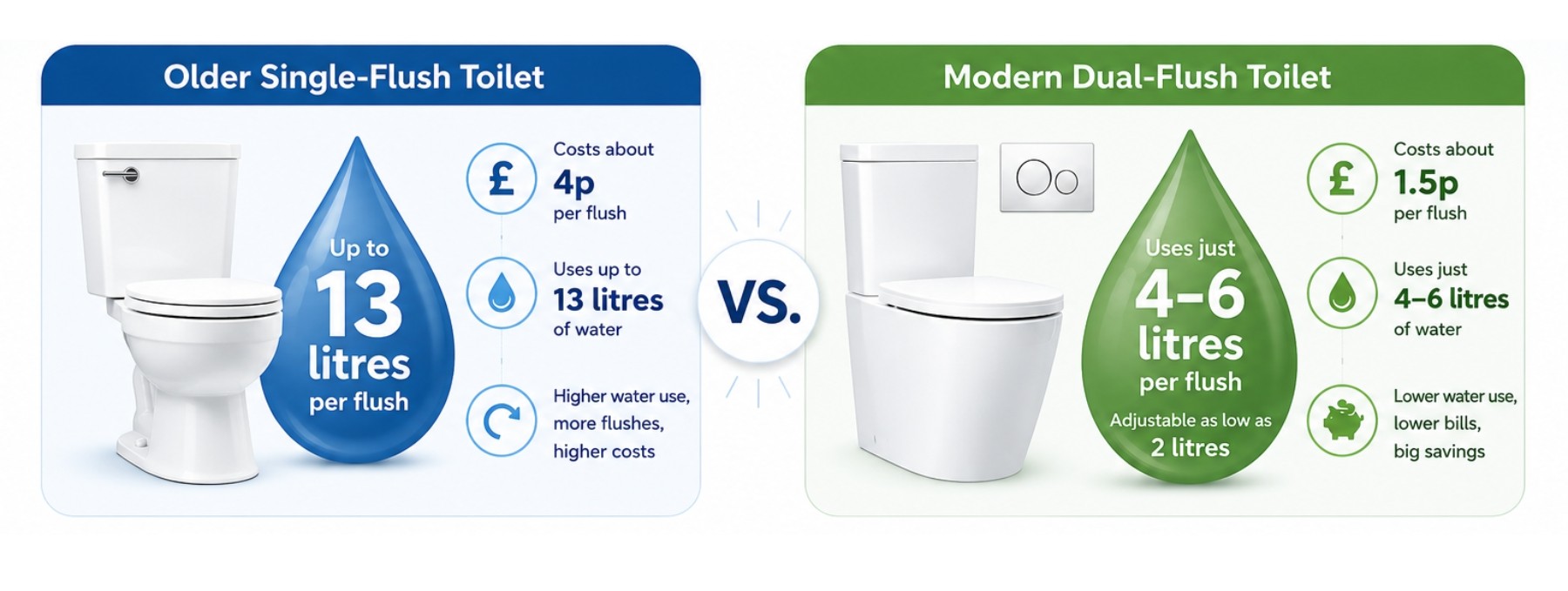
Many older single-flush toilet models consume up to 13 litres per flush, while modern dual-flush designs use just 4 to 6 litres, with some adjustable to 2 litres on their lowest setting. Meanwhile, according to Homebuilding & Renovating, a single-flush toilet costs about 4p per flush, whereas a dual-flush toilet costs approximately 1.5p per flush.
As reported by Save Water Save Money, the average toilet accounts for about 30% of household water use, with each toilet flushed roughly 5,000 times a year. Across the nation's 45 million toilets, that adds up to an estimated two billion litres of fresh water every single day. That’s a lot of water.
Ultimately, over thousands of costly flushes a year, if a flush mechanism is chosen accordingly, the savings can be significant.
Single Flush vs Dual Flush
Before we discuss specific toilet-flushing mechanisms, it's worth analysing what single flush and dual flush mean - because regardless of the type of cistern or filling system a toilet uses, every toilet falls into one of these two flush control categories.
Regardless of plumbing knowledge, perhaps the most common term you've heard when it comes to a toilet flush system is ‘dual flush’. That's because dual-flush systems are the most modern and widely used approach to economic toilet flushing, featuring two-volume valves and intuitive flush buttons/plates. Dual flush provides two options: a low-volume flush for liquid waste, and a higher-volume flush for solid waste. When the user presses a button, the valve opens either partially (half-flush) or completely (full-flush), allowing the specified amount of water to enter the bowl. This offers the flexibility to deal with any situation smartly and economically.
Single flush, on the other hand, delivers a fixed volume of water with every flush. There is no option to vary the volume - you get the same flush whether you're clearing out liquid or solid waste. Single-flush systems are typically found on traditional and older-style toilets and are operated by a lever, pull chain, or single push button.
It's worth noting that the vast majority of modern toilets sold in the UK are equipped with dual flush as standard, while the system itself is independent of the cistern type.
What Are the Different Types of Toilet Flushing Systems?
Today's market offers a wide range of toilet flush types; in fact, you might be surprised at just how many options are available. Each type, like any mechanical device, has individual advantages and disadvantages. And as technology rapidly evolves, even in the realm of bathroom design, each option presents unique traits that make it better suited to specific bathroom styles, plumbing setups, and everyday usage patterns. Let's break them down.
Gravity Flush
Also known as gravity-fed or gravity-flow systems, gravity flush systems are the most established and widely used toilet flush systems in domestic properties worldwide. This is largely thanks to their simplicity and reliability. Most likely, the average household toilet you're familiar with will be gravity-fed.
How Does Gravity Flush Work?
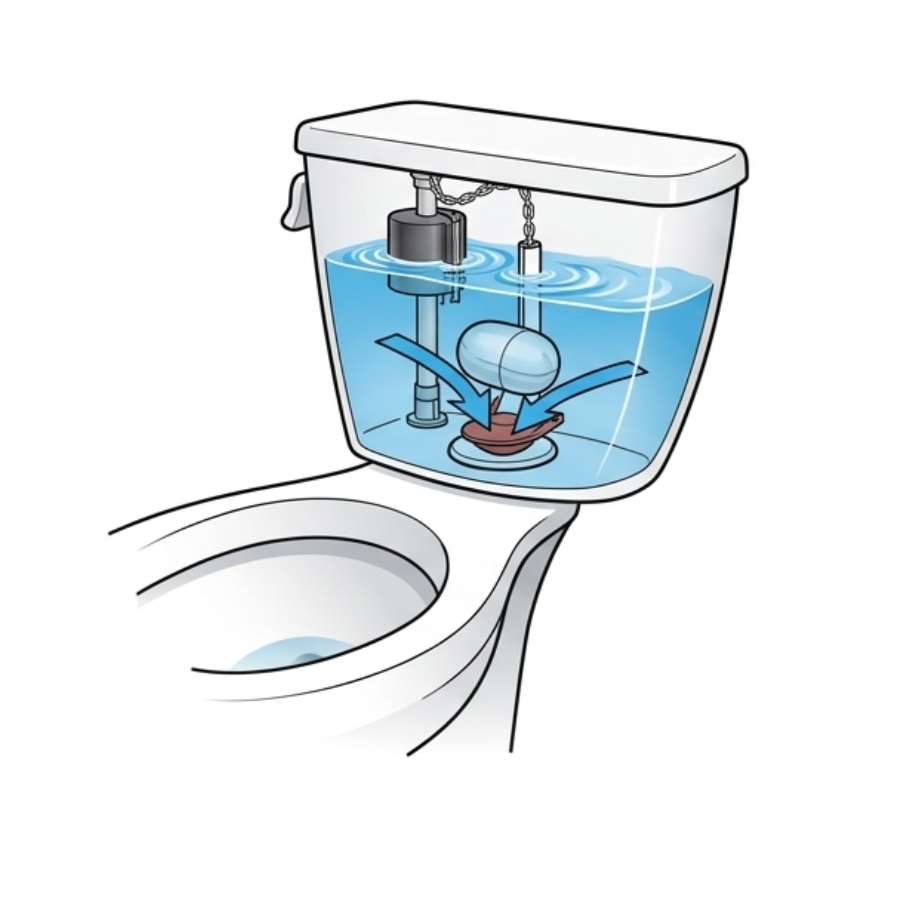
This time-tested technology, of course, utilises gravity to move water and remove waste from the bowl. The cistern is positioned above the toilet bowl, and when activated, water stored in the cistern flows through a valve at the bottom and plummets into the bowl below. The sheer weight and downward momentum of the water generate enough force - known as gravitational head - to push waste through the trapway and into the waste pipe
How that water actually clears the trapway depends on whether the toilet uses a washdown or syphonic system, which we'll cover in a following section. On the cistern side, traditional gravity-fed toilets typically rely on a ballcock fill valve (float valve) to control the flush, which rises with the water level to shut off the supply. Nowadays, modern gravity-fed cisterns will commonly use compact plastic fill valves paired with push-button flush valves operated by mechanical cables or pneumatic systems.
Pros of Gravity Flush:
- Since they rely solely on gravity rather than mechanical pressure, gravity flush systems have straightforward and dependable designs with fewer moving parts. This means they have a proven track record of reliability, durability, DIY-friendly installation, and reduced maintenance and repair needs.
- They work with the majority of plumbing setups, meaning most households can readily accommodate gravity flush toilets without significant plumbing modifications.
- Gravity flush systems are budget-friendly, making them a practical choice for any household.
Cons of Gravity Flush:
- Offering much less flushing power than most other flushes on this list, gravity flush systems can sometimes struggle to handle solid waste, often necessitating multiple flushes and therefore wasting water.
- Gravity systems' flushing power and performance are contingent on consistent home water pressure. This means that very low water pressure may hinder effective flushing.
- Gravity flush can cause toilets to clog more easily. This is especially prevalent in older designs, as well as in situations involving too much waste or non-flushable items.
Why Choose Gravity Flush?
Gravity flush toilets are a popular choice for homeowners seeking a reliable, cost-effective, and low-maintenance solution. Their simple design, with fewer mechanical components, means there is less that can go wrong over time, making them ideal for long-term use. They are also easy to install and repair, often without the need for specialist tools or expertise.
Pressure-Assisted Flush
Pressure-assisted flushing, also known as a power flush, is the counterpart to gravity flushing. It delivers a superior flush for toilets with a recognisable whooshing noise that helps prevent waste and reduces water usage. Though commonly found in commercial settings, such as high-traffic public restrooms, this flush system can also be found in toilet cisterns in new-build homes for its significant water conservation.
How Does Pressure-Assisted Flush Work?
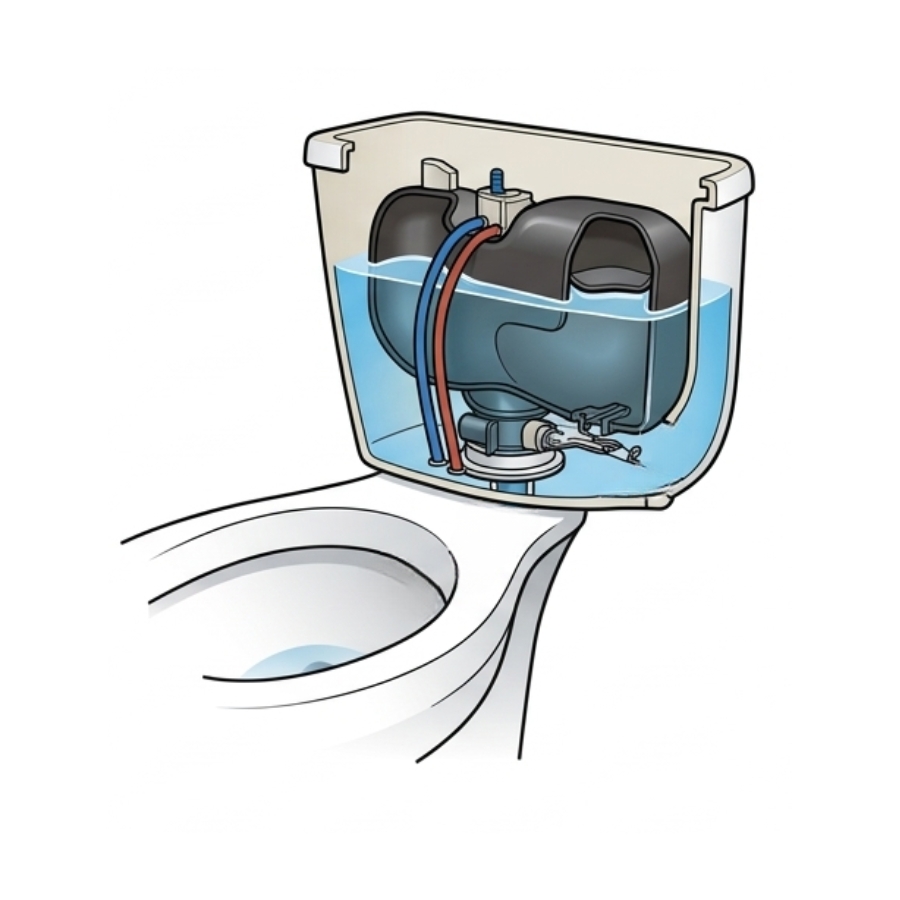
Rather than trusting in gravity alone, pressure-assisted systems use compressed air to boost their flushing power. Inside the cistern is a vessel that builds up air pressure as water fills the tank. When the flush is activated, this pressurised air supercharges the water's velocity, forcing it into the bowl.
In commercial settings, where cisterns are not preferred or practical, a flushometer or another pressure-flushing valve is typically used to supply water directly from the mains and flush the toilet. For domestic use, unlike gravity-fed systems that use ballcocks or flapper valves, pressure-assisted toilets must use an internal fill valve cartridge and flush valve cartridge (dump valve) to fill and release stored water from the cistern.
Pros of Pressure-Assisted Flush:
- With a strong, forceful flush, pressure-assisted flush systems are highly effective at eliminating solid waste. Thus, it's a superior choice for hygiene and preventing clogs.
- Often as little as 3-4.5 litres of water is required per flush, significantly supporting water conservation and reducing utility bills.
Cons of Pressure-Assisted Flush:
- The noise produced by flushing a pressure-assisted toilet may sound explosive and much louder than that of a standard gravity-flush toilet.
- Internal mechanisms are more intricate and expensive, requiring a greater upfront investment and making specialised repair parts more costly.
Why Choose Pressure-Assisted Flush?
Pressure-assisted toilets are ideal for those who prioritise performance, delivering reliable flushing to tackle solid waste and reduce the likelihood of blockages and repeated flushing.
In addition to their power, these systems are also water-efficient. They use markedly less water than traditional designs, which lowers bills and supports sustainability.
Proprietary Flush Systems
While the cistern system determines how water is stored and released, this is far from the full story. It's often the bowl-level flush technology that dictates how effectively this water rinses the pan, removes waste and maintains hygiene.
Many leading bathroom brands have now moved beyond standard rimless design, developing their own proprietary flushing systems to optimise the speed, trajectory and coverage of water within the bowl. These technologies sit independently of the cistern mechanism, meaning a toilet can use a standard gravity-fed cistern while delivering a far more advanced clean at bowl level. Here's how the major brands approach it: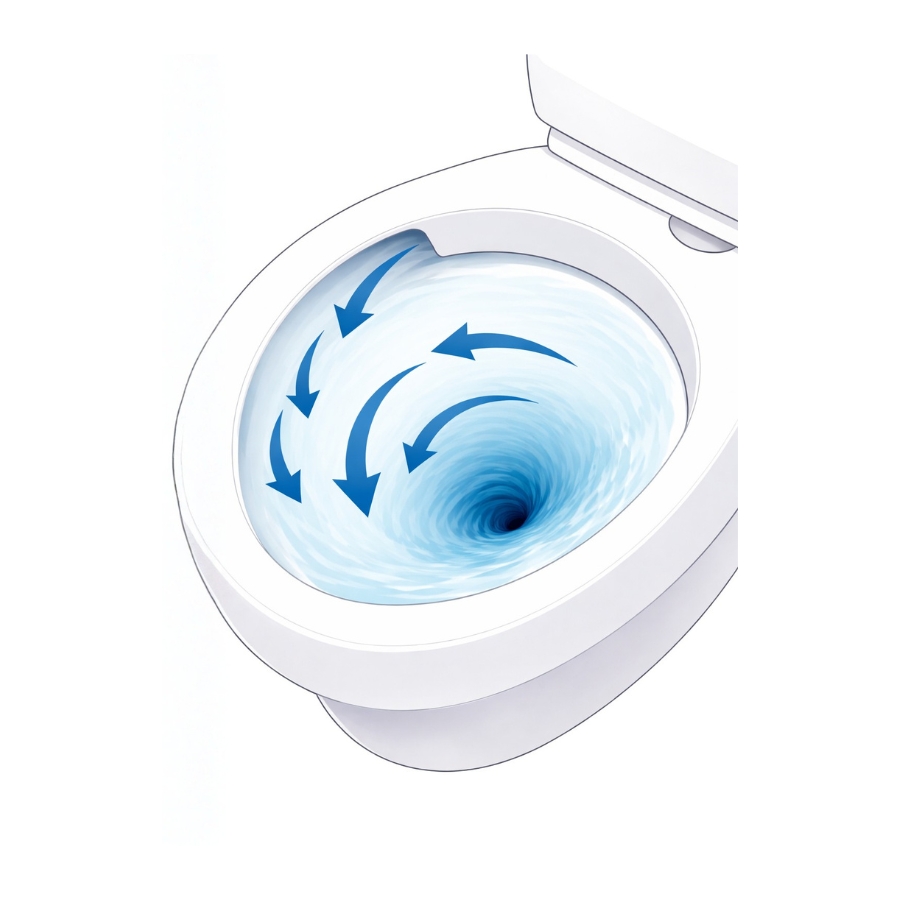
Tornado Flush - TOTO
The first company to launch a circular flush back in 2002, TOTO's Tornado Flush harnesses the formidable power of centrifugal water movement to deliver a deeper, more thorough clean.
Water enters the bowl from multiple angles through strategically placed water jets around the rim or wall of the toilet bowl. This creates a rapid swirling motion that distributes water across the entire bowl surface, dislodging waste and delivering a decisive clean.
TwistFlush - Villeroy & Boch
Villeroy & Boch's TwistFlush system operates on a similar principle to Tornado Flush, generating a water vortex to clean the bowl with as little as 3 litres per flush.
It works in tandem with the brand's DirectFlush rimless bowl design. So, if you’ve been searching for a comparison between TwistFlush vs DirectFlush, they are in fact complementary systems rather than competing ones.
TurboFlush - Geberit
Using rimless, asymmetrical geometry, TurboFlush from Geberit also employs a powerful vortex flush for a silent and comprehensive clean.
AquaBlade - Ideal Standard
AquaBlade technology is designed by Ideal Standard, positioning a channel at the top of the bowl to utilise the smooth curves. This ensures that 95% of the surface area is cleaned every time, with no unhygienic splashing.
Explaining Washdown and Syphonic Toilets
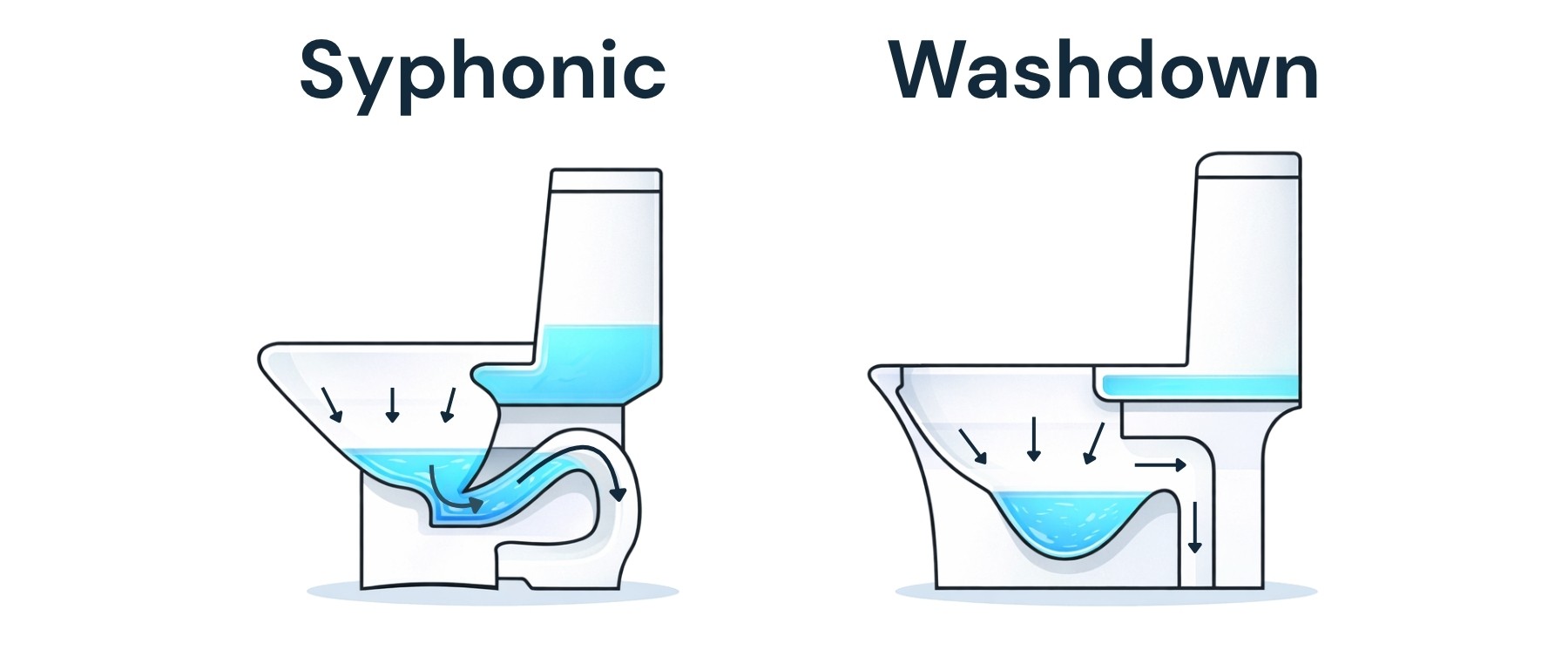
Beneath many of these flush systems, you’ll normally find one of two fundamental hydraulic toilet bowl principles: washdown or syphonic.
These are the core methods by which water moves waste from the bowl and into the trapway. Understanding the difference can help explain why certain toilets feel, sound and perform the way they do.
Washdown
Washdown flushing is the more commonly found system in the UK and across Europe. It works on a straightforward principle: when the flush is activated, a large volume of water drops into the bowl from the cistern. The water’s sheer weight and momentum push waste down through the trapway and into the waste pipe.
Washdown toilets are characterised by a shorter, wider trapway than their syphonic counterparts, which makes them significantly less prone to blockages. That broader outlet allows waste and water to pass through more freely, even when non-flushable items are accidentally introduced. The simple internal geometry makes washdown toilets easier to install and less expensive to maintain, not to mention compatible with a wider range of plumbing setups.
Syphonic
Instead of relying on water weight or air pressure, a syphonic flush optimises the natural syphoning action that occurs in a toilet's S or P-shaped trapway. Water enters the bowl and quickly fills the curved trapway, creating a vacuum effect (negative pressure) that pulls waste and water away. The combined geometry of the bowl and trapway maintains this syphon action until the bowl is completely cleared.
Syphonic toilets are more commonly associated with North American markets, though they do appear in some UK models. One of the most notable advantages is quieter operation, as the smooth siphoning action produces far less noise than a washdown flush. This makes syphonic toilets well suited to noise-sensitive environments, such as family homes, apartments or bathrooms adjacent to bedrooms. These models also tend to retain more water in the bowl and trapway, which creates an effective seal against odours.
What are the Different Types of Toilet Flush Controls?
With so many toilet flushes to choose from, the activation method is just as important as the system itself. A myriad of aesthetic styles and functional options are available, and selecting the right flush control can truly take your toilet to the next level.
Single-Flush Buttons
Although less prevalent in many homes today, single-flush buttons remain a practical and straightforward choice. These typically take the form of a pushable circular button at the top of the cistern, allowing a complete flush with a single push.
Dual-Flush Buttons
Taking advantage of dual-flush toilets, dual-flush buttons follow a similar shape and design to single-flush buttons but offer the flexibility to choose between full and half flushes, conserving water without compromising performance. They come in pneumatic and mechanical variants, with the former using air to activate and the latter using cables.
Flush Plates
Sleek and modern, flush plates are explicitly designed for concealed toilet cisterns paired with back to wall and wall hung toilets. These stylish flat panels are most commonly mounted on the wall for convenient access, often featuring two push buttons for dual flush functionality.
Sensor Activated
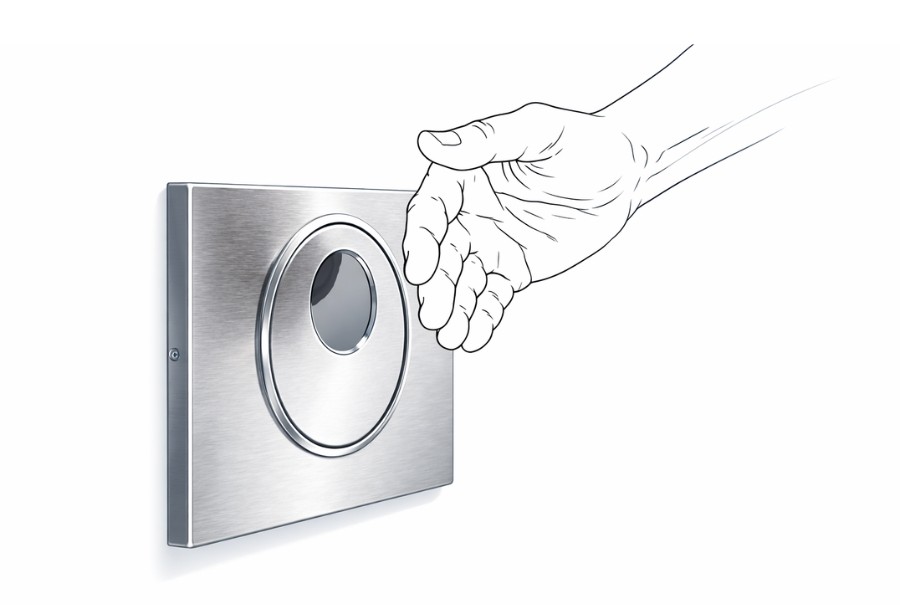
These advanced systems prioritise hygiene by allowing users to flush the toilet without any physical contact. Utilising infrared technology, they can detect hand movements and automatically trigger the flush mechanism accordingly.
Lever Control
The lever handle is a timeless choice for flush controls, commonly found on traditional-style toilets. It complements the elegant design of a classically themed bathroom while serving as a dependable, budget-friendly option for single-flush toilets.
Pull Chain
A pull chain is another option for traditional toilets, most commonly associated with high-level cistern designs in which the cistern is mounted well above the pan. Pulling the chain lifts a valve inside the cistern, releasing water with the added force of a greater drop height.
Finding The Right Flush for Your Bathroom
For most UK households, a gravity-fed cistern paired with a dual-flush mechanism remains the practical foundation for any toilet. However, the real performance gains increasingly come down to what happens at bowl level. Proprietary technologies, such as TOTO's Tornado Flush, Villeroy & Boch's TwistFlush, Geberit's TurboFlush and Ideal Standard's AquaBlade, are rapidly transforming what homeowners can expect from a single flush. These innovations deliver superior hygiene, reduced noise and remarkable water efficiency from as little as 3 litres per flush.
With so many toilet flushes available, the perfect system is ultimately one that meets your bathroom's requirements whilst staying within your budget. Prioritising performance, hygiene, noise level and water efficiency will help you narrow down the right choice for your household, ensuring the long-term success of your bathroom.
If you'd like help finding the right toilet flush system for your bathroom, our team is here to help. Browse the full collection of toilets at Sanctuary Bathrooms - including models from TOTO, Roca and Villeroy & Boch - or get in touch with us directly for expert, personalised advice.
.

