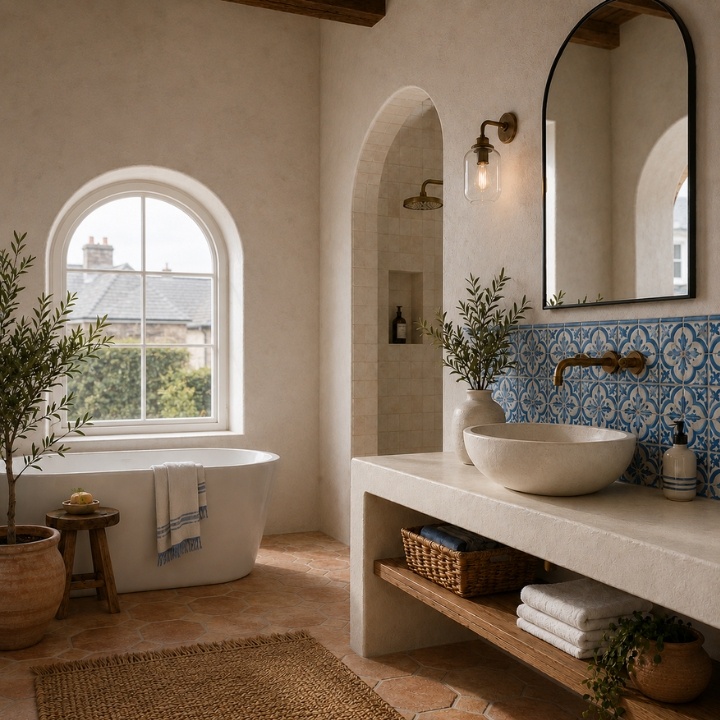
Whereas many bathroom trends fade in and out of popularity, Mediterranean design is far more enduring. Its longevity stems from the fact that it was not created as a modern means of styling homes but rather developed over centuries of living in a hot coastal environment. Bringing that rich heritage into a rainy British bathroom is no small feat, but it promises a timeless transformation.
The best part? You do not need a sun-bleached villa in Mykonos or a rustic farmhouse in Puglia to embrace Mediterranean style. With thoughtful choices in colour, materials, and fixtures - and a touch of restraint - you can bring this look to any family bathroom in Manchester as effortlessly as on the Amalfi Coast.
This style guide walks you through the essential principles and elements that make it work in the modern bathroom, using four distinct Mediterranean styles to showcase a full range of Mediterranean bathroom ideas and inspiration to draw from, whatever your space.
- What is Mediterranean Style?
- Greek Style Bathrooms
- Spanish Style Bathrooms
- Moroccan Style Bathrooms
- Creating Your Own Mediterranean Bathroom
What is Mediterranean Style?
Before jumping right into the details of designing a Mediterranean-style bathroom, it helps to identify the common interior design choices that make this theme so popular.
Mediterranean style is an adaptation to the architecture and climate of the countries ringing the Mediterranean Sea - chiefly Greece, Spain, Italy, and Morocco. In these hot, sun-drenched places, it leans on cool plaster walls, terracotta floors, shaded courtyards, and materials found close to hand. The Mediterranean colours come straight from that landscape - the clay of the earth, the blue of the sea, the green of the olive groves - which is why Mediterranean house colours shift from one country to the next. Above all, these homes are built around indoor-outdoor living, blurring the line between inside and out – the same instinct that drives today’s biophilic design.
Key Features of Mediterranean Design
Across Mediterranean interior design, the following features appear throughout the whole house. From Greece to Morocco, you'll commonly find these elements:
- Earthy Colour Palette: Warm, light tones drawn from nature - terracotta, sandy beige, ocean blue, olive green - with white and light neutrals that reflect the heat.
- Natural Materials: Wood, stone and terracotta running through floors, furniture and accents, along with rattan and cane furniture, linen textiles, wooden beams and wrought-iron detailing.
- Coastal Influences: Sea-inspired touches, from blue-and-white palettes to maritime accents.
- Textured Surfaces: Plastered walls, textured tiles and stucco adding depth.
- Greenery: Indoor plants and herbs bringing the outdoors in, often in hand-thrown terracotta pots.
The Modern Mediterranean Bathroom
Rustic charm often springs to mind when thinking of Mediterranean design, but the bathroom offers a fresh twist. Modern Mediterranean bathrooms shed the ornate details; no more heavy wood or busy bathroom tiles. Instead, think clean lines, soothing neutrals, and contemporary fixtures. The warmth and authenticity remain, but the clutter fades away. The best modern Mediterranean bathroom ideas aim for minimalist elegance, letting a few key elements shape the space.
Fortunately, as part of larger bathroom renovation plans or smaller budget DIY updates, the bathroom is perhaps the most welcoming canvas for Mediterranean style. With water at its core and natural materials already in play, it's less about importing a whole new look and more about leaning into what the room already is. Little wonder, then, that it earned its place among our list of popular 2026 bathroom trends.
Types of Mediterranean-Style Bathrooms
'Mediterranean' encompasses a lot of coastline, so the look is really a family of four regional styles rather than a single one. They share the same roots - natural materials, warm light and a connection to the landscape - but each leans a different way.
Greek Style Bathrooms
Picture the blue-and-white villages of Santorini, and you immediately have the Greek look; undeniably the brightest and perhaps the most iconic of the four. It's also the most pared-back, though, which makes it the one that takes the most curation to get right - with no pattern or ornament to hide behind, every choice has to count.
Colour Palette
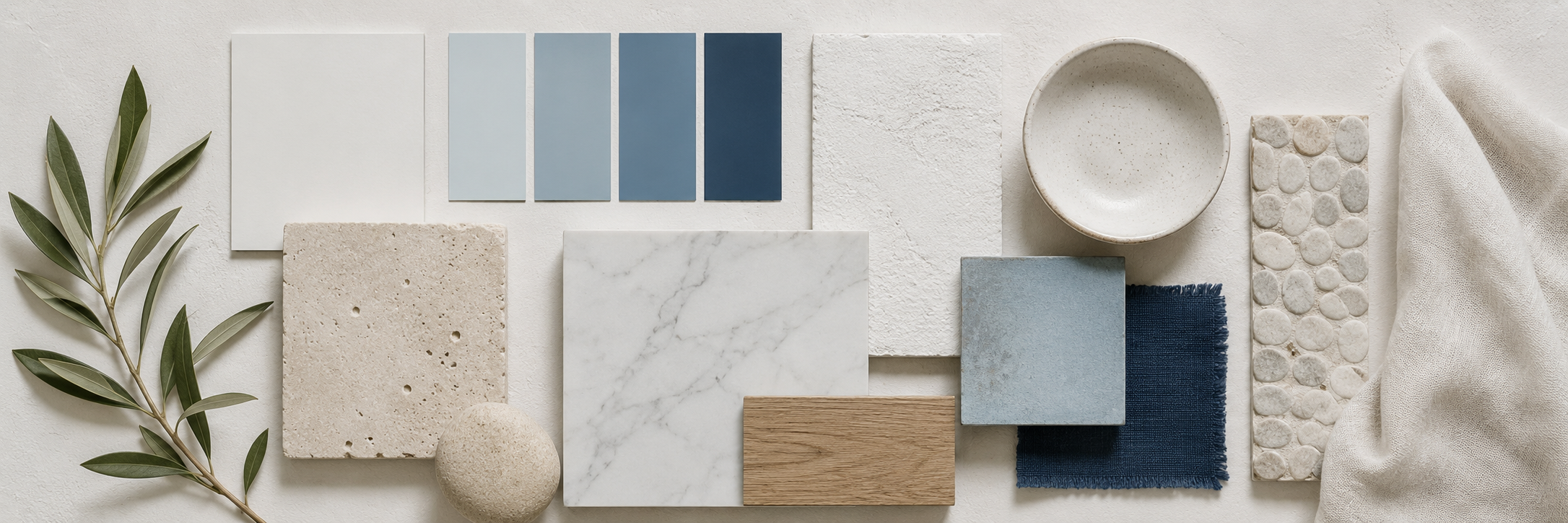
Here, the colour scheme's base is a clean, bright white, set against the blues that define the Aegean Sea, ranging from a dusty, faded blue to a sharp cobalt. This palette feels unmistakably fresher than many of the earthy tones commonly found around the Mediterranean, making the most of natural light rather than compensating for its absence, and bringing in a coastal scheme that doesn't veer into seaside clichés. The secret is to keep white the majority and let blue shine as an accent.
Materials
Smooth lime plaster is the signature Greek wall finish, often polished to a tadelakt-like sheen for a soft, buttery surface that bounces light around the room. Underfoot, local pebble and natural stone flooring bring a tactile, organic texture. Marble then comes in as touches rather than the main event - a basin, or a countertop - while olive wood adds warmth against all the pale, cool surfaces. Keep the types of finishes matt and honed rather than glossy, so everything stays calm and sun-worn.
Fixtures and Fittings
Fixtures stay understated and let the light do the work. For the basin, keep it natural - a stone or marble countertop basin, or a simple pedestal sink - and pair it with a walk-in shower rather than an enclosed cubicle, so the sightlines stay open and the room bright. Brassware is where a little contrast comes in: brass or matt black both add a warm counterpoint against all the white. Keep storage open rather than closed - a run of olive-wood shelving holds everything without boxing the space in, which is exactly the light, uncluttered look Greek style is after.
Decorative Details
The Greek meander is the signature detail. While it may not be the ideal addition, often looking slightly out of place for a UK home, it can still be used tactfully. Keep it restrained, as a border on a mirror, a shelf edge or tile edging, rather than running it across a whole surface. Handcrafted ceramics do the rest - amphora-style pots and vases, with a few stems of olive branch for an organic touch. Everything else stays minimal: soft white towels, linen and natural fibres, guided by the principle that less is more.
Spanish Style Bathrooms
The Spanish, or Andalusian look is the warm, decorative cousin of all of Mediterranean design; all hand-painted tiles, terracotta and wrought iron, shaped by centuries of Moorish influence across southern Spain. Where the Greek look talks, this one is happy to shout, making it the natural choice for anyone who wants colour and pattern in the room.
Colour Palette
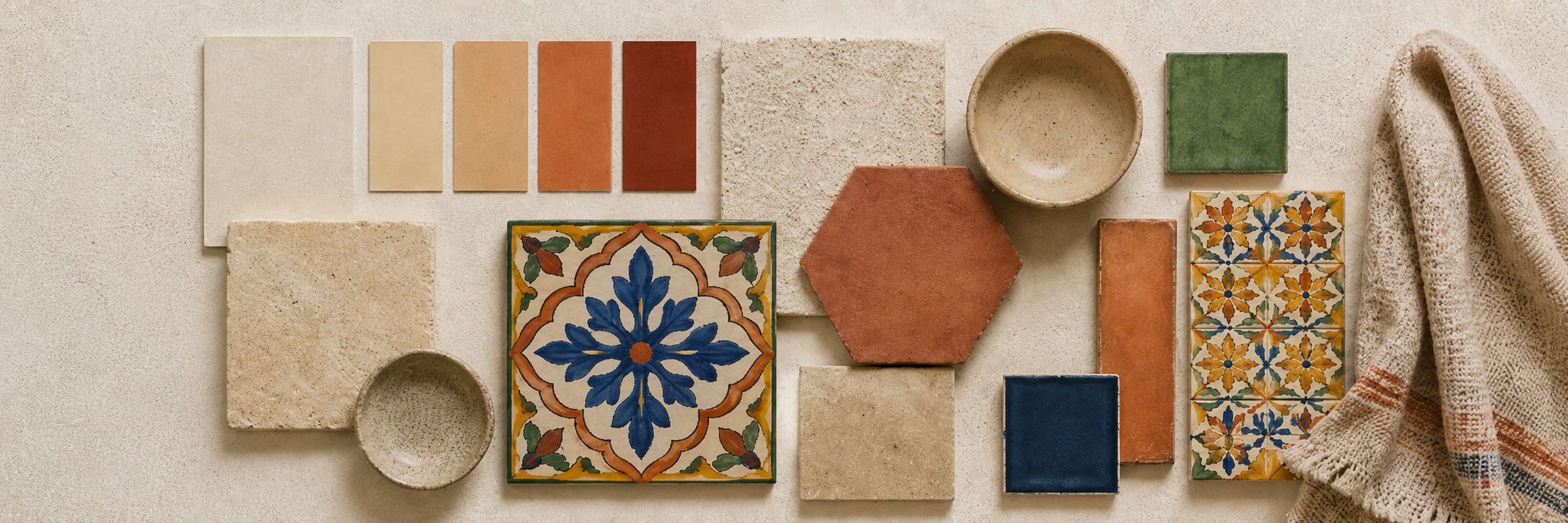
The Spanish base is typically terracotta in shades ranging from soft clay to deep rust, set against beige, sand, and warm plaster neutrals. However, with the Andalusian influence, it can provide a canvas for colour. As such, vibrant, saturated tile in cobalt blue, yellow, orange, and green is used confidently as the focal point rather than held back. Natural terracotta and stone tones fuse it all together, so even the boldest palette stays grounded and earthy. It's the balance most Spanish Mediterranean bathroom ideas are built on.
Materials
Patterned ceramic tiles are central - talavera-style, geometric, hand-painted designs - worked in as borders, a feature wall, a splashback, or full-room cladding where you want maximum impact. Underfoot, terracotta is the classic choice, and these Mediterranean bathroom floor tiles bring authentic warmth; have them sealed or glazed to keep them watertight in a bathroom. Natural stone works as a subtler alternative or a complement to the bolder tilework, while stuccoed or textured plaster walls - traditionally paired with the red terracotta tiling used elsewhere in a Spanish home - keep the surfaces soft and handmade.
Fixtures and Fittings
Fixtures lean rustic and full of character, relatively traditional and understated, so the bold tilework keeps its place as the star of the show. A dark timber vanity unit, a ceramic basin - a hand-painted one if you can track it down - and metalwork in wrought iron or aged brass. Wrought iron is a particular highlight and an ideal feature on bathroom mirror frames, bathroom lighting, or around a shower enclosure or alcove. Ornamental ironwork is one of the defining crafts of Andalusia - think window grilles, balcony railings, gates and lanterns across the region - so working it into a bathroom is one of the most authentic Spanish details you can choose.
Decorative Details
Spanish style rewards a bit of boldness with pattern. Mixing and matching tiles is encouraged rather than avoided - combine different patterned tiles, or set a busy pattern against plain neutral tiles to give the eye somewhere to rest. Use tile architecturally, too: clad a set of stairs, frame a window, run an eye-catching border, or cover a whole room for maximum impact. For a more contemporary take, modernise traditional terracotta by pairing it with chic, glossy neutral wall tiles, letting the old and the new play off each other.
Italian Style Bathrooms
The Italian take is the most refined of the four - and the most modern. It trades pattern and bold colour for the quiet luxury of clean, contemporary lines. If you want modern Mediterranean bathroom design without anything that reads as busy or overly rustic, this is the choice for you.
Colour Palette
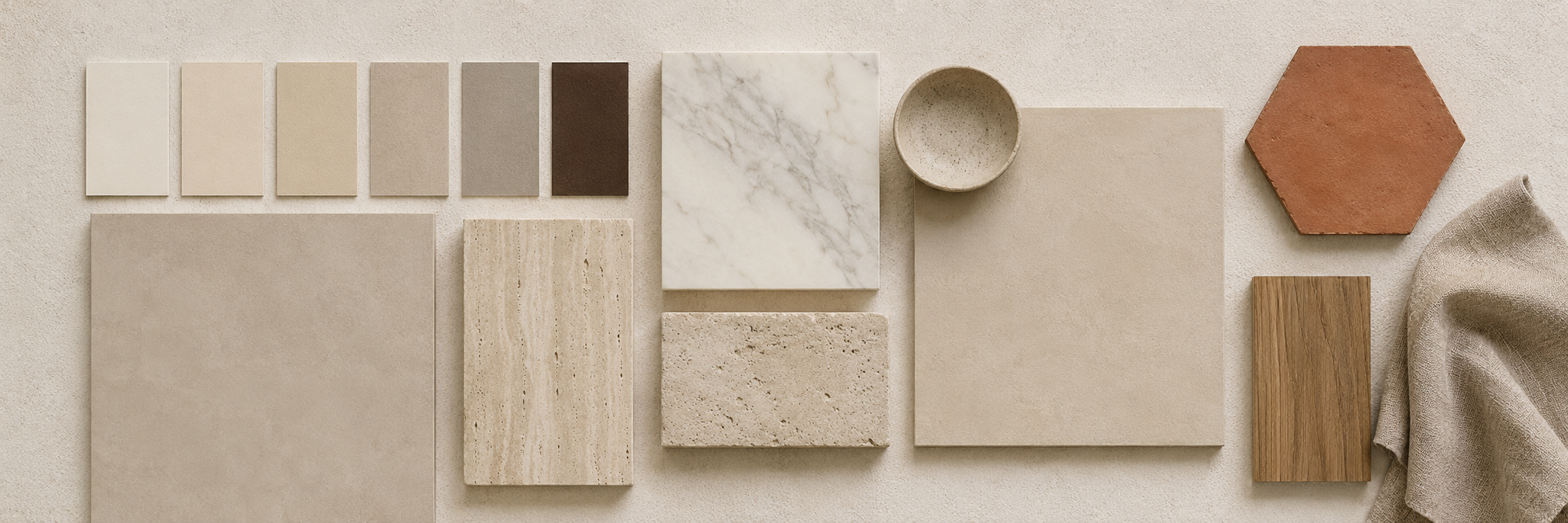
The palette is warm but muted: cream, sand, stone greys, and even chocolate brown, with nothing loud. Ultimately, the colour should come from the materials themselves - the veining in marble, the tone of travertine - rather than from paint or tile, so the room stays calm and grown-up. If you do paint, the Mediterranean paint colours to reach for are warm off-whites and soft neutrals.
Materials
Stone does the heavy lifting. Travertine and honed marble across floors, walls and vanity tops set the tone, with limestone and warm neutral plaster filling in around them. Tuscan terracotta is the one warmer note underfoot. Everything stays matt and tactile rather than polished - the luxury is in the quality of the material, not the shine. For the most contemporary finish of all, microcement gives seamless, jointless, waterproof surfaces - a monolithic, architectural effect with no grout lines to break it up. Wood then warms and balances all that hard stone and cement, so the room stays inviting rather than clinical.
Fixtures and Fittings
Fixtures follow the same clean, contemporary logic - precision and quality over anything ornate or decorative. The signature move is an integrated stone basin, carved from or matched to the surrounding marble for a seamless look, though a stone countertop basin offers much the same effect. Add a sculptural stone or stone-resin freestanding bath and refined, minimal brassware, and little else - the modern Italian look is about restraint, letting a few beautiful materials carry the whole room.
Decorative Details
This is where Italy's design heritage shows - a sculptural wall light or pendant, a single piece of art, one beautiful object on the vanity rather than a collection. Warm metals earn their place as restrained jewellery, a brushed brass or bronze detail on the brassware or mirror frame, never more than the room needs.
Moroccan Style Bathrooms
Though it possesses only a small stretch of the Mediterranean Sea, Morocco has an undeniable pull in its interior design style. The Moroccan, or Moorish, look is the richest and most sensory of the four - the world of the hammam, where zellige tile, carved plaster and jewel colour cover almost every surface. It's the boldest direction, and the most dramatic in a bathroom, because the materials are so distinctive.
Colour Palette
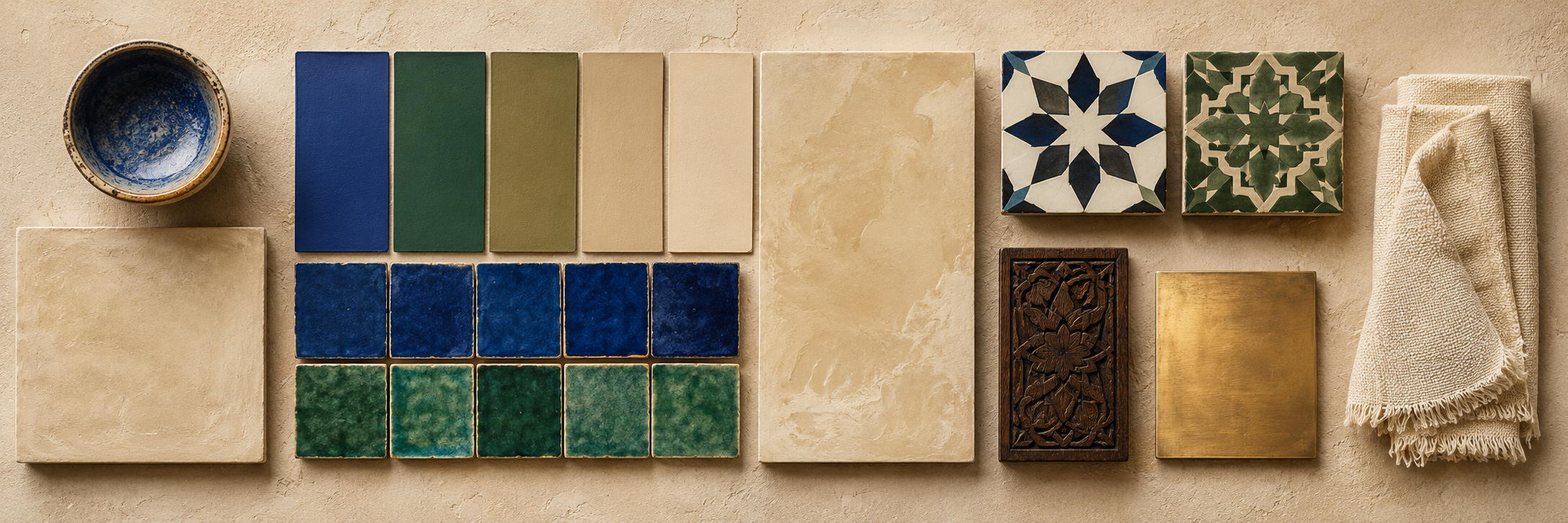
Go rich and layered - this is the one regional look where more colour is the point. Bold statement colour leads the way: deep cobalt blue and emerald or olive green especially, used confidently across tiles and walls, often several at once, held together by the warmth of brass and natural plaster. If that's a lot to commit to, there's a striking alternative: a high-contrast black-and-white palette that uses patterned tile to create the drama, while warm plaster and brass keep it from turning cold. Either way, grounding it with a neutral tadelakt somewhere helps stop it tipping over.
Materials
Texture and pattern are everything here. Zellige is the defining Moroccan material - small, hand-cut glazed mosaic tiles with a slightly irregular, light-catching surface - run across walls, splashbacks and feature areas so it shifts as the light moves. Tadelakt is the other hero: a polished, waterproof lime plaster worked smooth and seamless by hand, earthy and organic in texture, and used on walls and even the bath itself. Underfoot, patterned floor tiles - geometric, encaustic-style - layer in more pattern, while a keyhole arch over a niche or shower and some carved or dark timber add the contrast.
Fixtures and Fittings
Brass is everywhere in this look, and it only gets better with age. Aged or antique brass on the fixtures - the wall-mounted basin mixer, the exposed shower column and the hardware - develops a patina over time for a warm, lived-in character, alongside brass lanterns for that hammam glow. An ornate arched mirror echoes the keyhole openings used elsewhere in the room, while wood details balance the brass, tile and plaster so the space stays warm rather than hard. A zellige-clad or tadelakt basin surround ties it all into the surfaces around it. It's the most ornate of the four, so pick a few strong moves and commit rather than layering everything in at once.
Decorative Details
Arched niches, doorways, and openings are a core hallmark - they soften the hard edges of a room and echo traditional Moroccan architecture, so, if a full remodel is planned, build them in wherever you can. For a more low-cost solution, layer handcrafted ceramics and patterned motifs to reinforce the artisan, handmade character, and global textures - a rug underfoot, woven baskets, textiles with some age to them - for richness and warmth. The effect blends tradition with elegance: rich texture, bold tilework, and an enveloping, almost sensory atmosphere, like stepping into a riad.
Creating Your Own Mediterranean Bathroom
Whichever direction you choose - the cool brightness of Greece, the warm pattern of Spain, the quiet luxury of Italy or the richness of Morocco - a Mediterranean bathroom isn't hard to pull off in a UK home. Each one comes down to the same three things: a clear palette, honest natural materials, and a few well-chosen fixtures to anchor the room.
The best part is that you can build it gradually. A terracotta floor, an arched mirror or a set of aged brass taps will each move a room in the right direction long before a full renovation, so it's a look you can grow into rather than commit to in one go.
And if you'd like a hand choosing where to start, our team is always happy to talk it through - get in touch, and we'll help you find the pieces to build around.


