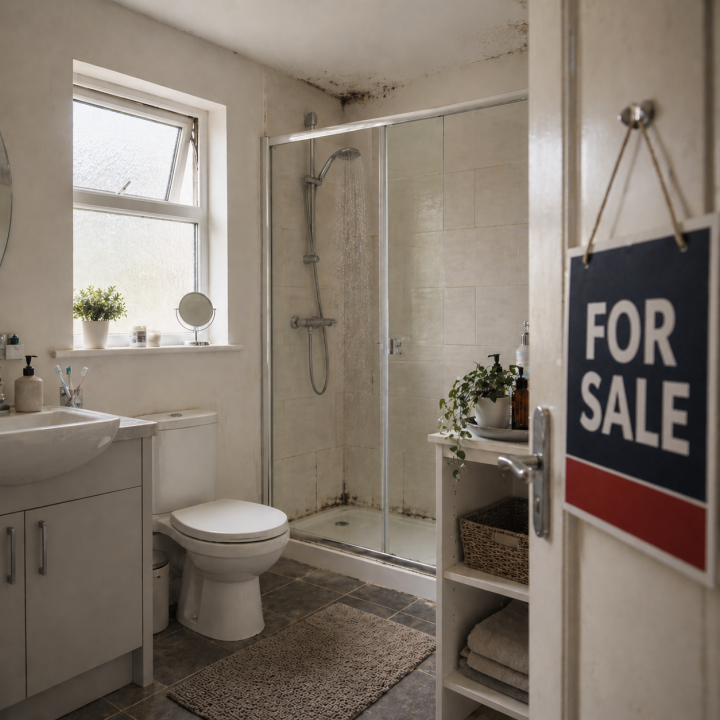
If you're preparing your home for sale or looking for tips for selling a house, it’s natural to focus on the first impressions: tidying the garden, refreshing the living room, and modernising the kitchen. But when it comes to what puts buyers off a house, there's one room that might deserve closer attention than sellers think: the bathroom.
Sanctuary Bathrooms asked 2,000 UK adults which bathroom problems would affect whether they made an offer on a property, and almost 9 in 10 (88%) said at least one would influence their decision.
That’s more than a minor grumble, and the financial stakes are significant. According to Robin Edwards, Buying Agent at Curetons Property Finders, just one unresolved bathroom issue could reduce what buyers are willing to pay by thousands of pounds.
If you’re wondering how to add value to your home before listing, the answer is not a rushed bathroom renovation. It’s knowing which issues are worth fixing before you list your property and viewings begin, which need further investigation, and which simply need to be presented in the best light possible.
Drawing on insights from property experts, this guide sets out a checklist for tackling the top five bathroom issues most likely to put buyers off, along with what each one could cost you if left unaddressed.
For expert guidance, Sanctuary Bathrooms spoke to:
- Robin Edwards, a property buying agent at Curetons
- Karim Ellington, Director of damp proofing and mould removal specialists, Total Damp Repair Ltd

Robin Edwards
The Biggest Bathroom Red Flags
The survey presented respondents with 12 potential bathroom issues and asked which would affect their decision to make an offer. The five that topped the list were:
- Signs of mould - 60%
- Lack of space - 44%
- Water pressure - 37%
- Looking outdated - 27%
- Lack of storage - 27%
The Full Bathroom Red Flags Ranking
Rank | Bathroom Issue | % of respondents who said the issue would affect their decision to make an offer |
|---|---|---|
1 | Signs of mould | 60% |
2 | Lack of space | 44% |
3 | Water pressure | 37% |
4 | Looking outdated | 27% |
5 | Lack of storage | 27% |
6 | Only bathroom in the property | 25% |
7 | Shower-only | 23% |
8 | Coloured toilets/sinks | 22% |
9 | If it had a bath | 16% |
10 | Colour scheme | 15% |
11 | North-facing/lack of sunlight | 12% |
12 | Lack of accessibility/disabled-friendly features | 11% |
Why Bathroom Checks Matter Before Selling
Bathrooms tell a lot about a home’s true condition. Our survey found that homeowners typically renovate them only every 8 to 10 years, long enough for hidden problems like poor ventilation or ageing plumbing to surface as discoloured sealant, damp walls, and tired fixtures.
Many sellers ask how much a new bathroom adds to house value, or whether they should update their bathroom before selling. The honest answer: it depends on the condition of what’s already there. For buyers, visible issues don't just suggest a bathroom that needs updating; they suggest a property that may have been neglected more broadly, and that perception directly affects what they're willing to offer. In most cases, addressing the issues buyers notice most delivers a stronger return than a full renovation.
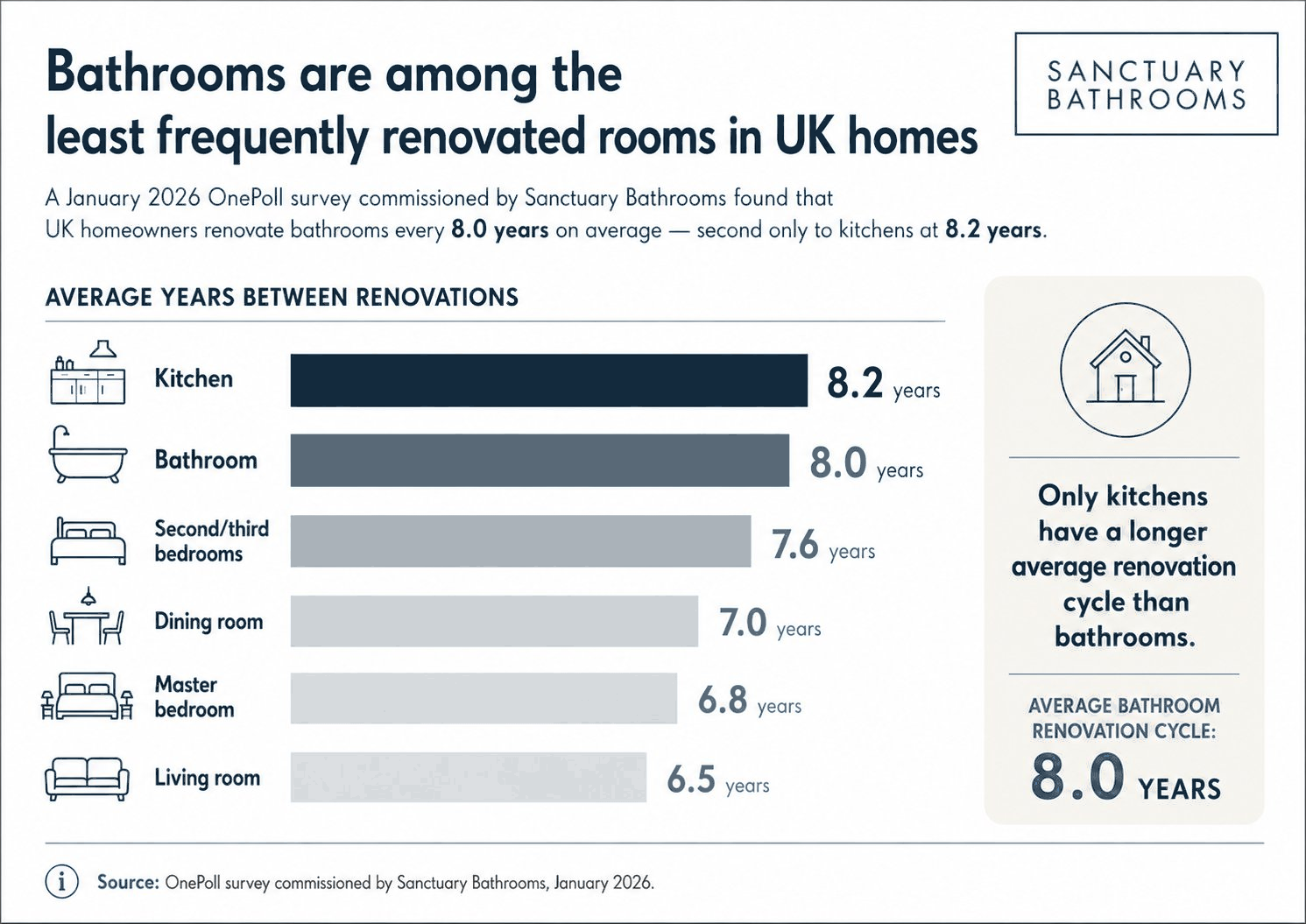
Image credit: OnePoll/Sanctuary Bathrooms, January 2026.
Fix, Investigate, or Improve Presentation?
A full renovation isn't realistic for most sellers, and it's rarely the most effective use of budget either. Preparing a bathroom for sale is less about cosmetic cover-ups and more about prioritisation – knowing which issues to fix, which to investigate, and which to present in the best possible light.
Broadly, the most off-putting bathroom issues fall into three categories:
- Fix or improve before viewings: Issues that can be softened before viewings with decluttering, styling, lighting, accessories, or small cosmetic updates.
- Investigate before listing: Issues that sellers should look into, understand, and address properly.
- Improve presentation: Limitations that can’t be changed quickly, and where a better presentation makes the biggest difference.
1. Mould - Investigate Before Listing
Mould is the biggest bathroom turn-off by a significant margin, with 60% of buyers saying it would affect whether they made an offer. It’s perhaps the most instinctive reaction on the list; one that buyers don’t need to be property experts to understand.
With an estimated 3-4% of English homes affected by significant mould or damp in at least one room, and awareness of mould-related health risks growing, buyers are increasingly likely to take any visible signs seriously.
Left untreated, mould can also spread and damage surfaces, turning what may look like a small issue into a much bigger and pricier concern. Ellington confirms this: "Over time, mould spores will continue to spread and compound, increasing contamination levels. It will also begin to deteriorate the surfaces it grows on, damaging paint, plaster, and other materials."
How Signs of Mould Could Impact Your Sale Price
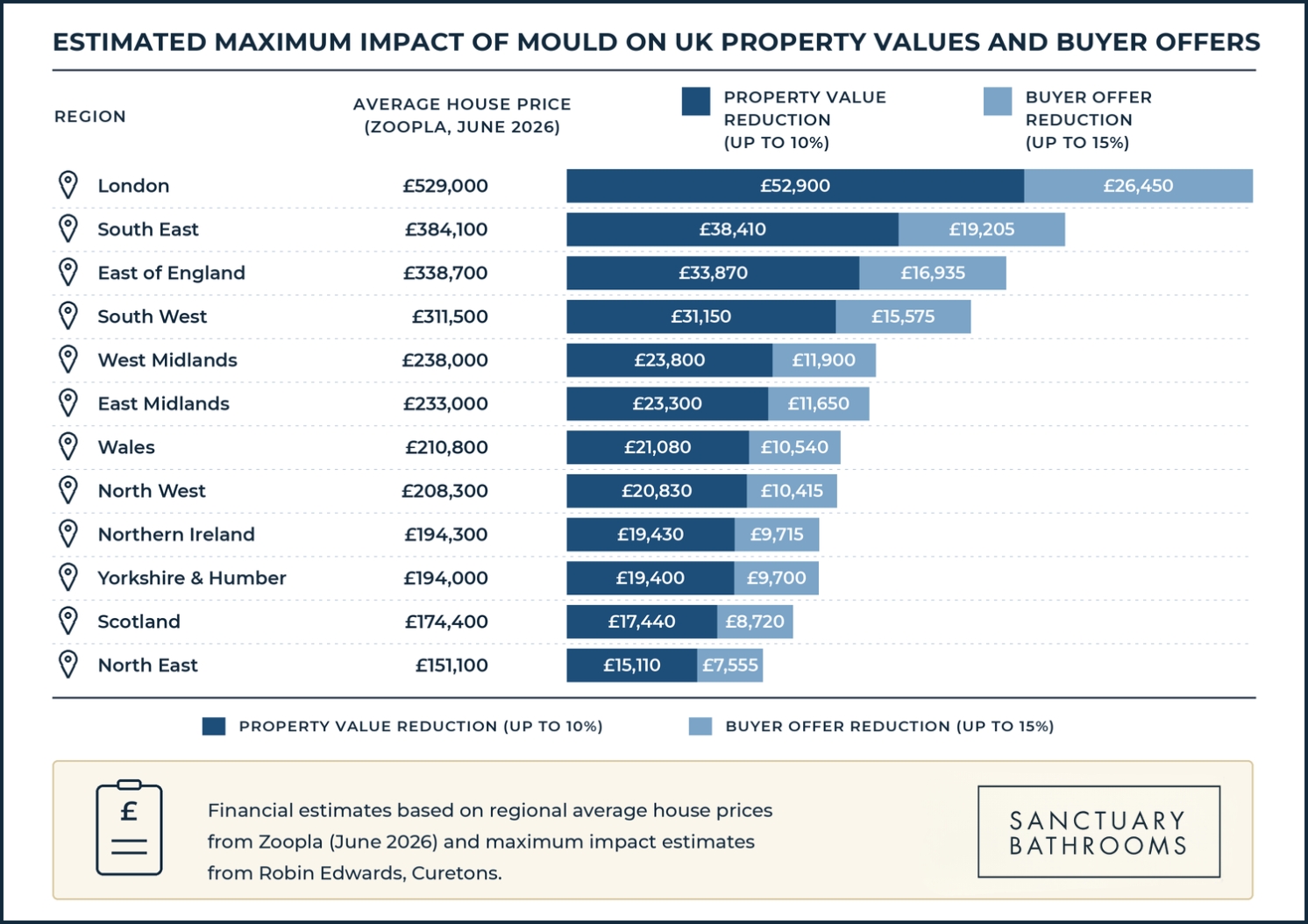
Mould is an instant red flag for buyers, hinting at bigger problems like poor ventilation or damp and raising fears of costly repairs. Edwards estimates that visible mould can reduce property value by 5-10% – around £13,200 to £26,400 on the average UK home – with some buyers pushing for as much as 15% off the asking price.
"I dealt with a buyer who reduced their offer by over £50,000 after spotting mould behind furniture during a second viewing. Their concern was less about the issue itself and more about what it suggested - poor ventilation, possible damp, and the risk of hidden repair costs. In the end, the seller accepted a reduced figure because the issue arose with other viewers as well."
- Robin Edwards, Buying Agent at Curetons
Signs to Look For
- Mould or dark staining on ceiling corners – especially above the bathtub or shower - and peeling, bubbling, or discoloured paint on walls or ceilings, particularly where the surface feels damp, or staining keeps returning.
- Discolouration or black patches in silicone sealant around the bath, shower tray, shower screen, window frames, and in grout lines between tiles.
- A persistent musty or damp smell, even without visible mould, may indicate growth behind wallpaper, tiling, pipework, or inside ventilation units.
What Sellers Should Do
Ellington stresses the importance of addressing the root cause rather than masking symptoms: "A common mistake is treating the visible mould without addressing the underlying cause, such as excess humidity or condensation. In these cases, cleaning the mould only provides a temporary solution, and it will often return quickly. Without resolving the root issue, the problem will persist regardless of how often it is treated."
In other words, don't just paint over mould and hope it disappears. Fixing the root cause – or at least investigating it and being upfront about what has been found – can help protect a sale. If mould returns or is flagged later in a survey, buyers may lower their offer, delay the process, or walk away entirely.
Treat Visible Mould Carefully
While it won't eliminate the root cause, for visible cases on sealant and grout, you can attempt to clean bathroom mould yourself using a product specifically designed for mould and mildew. However, it's important to know the limits. According to GOV.UK, sellers should avoid removing wallpaper, carpets, or panelling without professional guidance, as this can disturb hidden mould and release a heavy spore load into the room, making the problem significantly worse.
Check Ventilation
Mould is usually a sign of excess moisture, as Ellington explains: "The most common cause is condensation. These issues are best addressed through passive or mechanical ventilation systems..."
In practice, if condensation lingers after bathing or showering, the extractor fan is the first thing to check. If it's faulty, noisy, weak, or not properly ducted outside, speak to a qualified installer or electrician about replacing it with a suitable high-performance model.
Get Professional Help if Mould Keeps Coming Back
If ventilation problems have been ruled out but the mould keeps returning, or a deeper issue still seems possible, it could indicate a fixture leak, rainwater penetration, or rising groundwater. For these cases, arrange a professional damp or building assessment before viewings. Professional mould removal may be needed, from specialist cleaning and antifungal treatments to HEPA vacuuming or anti-VOC fogging, depending on the scale of the problem.
Use Mould-Resistant Paint
Once the underlying issue has been fixed, mould-resistant paint can help reduce the chance of mould returning. It is designed to slow mould growth, but protection can wear over time and only works well if the surface is clean, dry and properly prepared first.
2. Lack of Bathroom Space - Present at Its Best
Nearly half of respondents (44%) said a lack of bathroom space would affect whether they made an offer. Buyers noticed cramped or awkward layouts straight away and may reflect this in their offer. Because a small bathroom is usually a design limitation rather than a quick fix, sellers should focus on making the room feel as open, practical, and well-presented as possible.
How a Lack of Space Could Impact Your Sale Price
Space is hard for buyers to change without major expense, making cramped bathrooms strong negotiation points. Edwards says poorly proportioned rooms and awkward layouts can lead buyers to push for reductions close to 10% around £26,400 on the average UK home, or £52,900 in London.
Signs to Look For
- Fixtures are tightly packed with little clear floor space, and doors, drawers, or shower screens can't open comfortably without requiring awkward manoeuvring.
- The room looks cluttered or visually busy when viewed from the doorway, with bulky freestanding furniture, laundry baskets, or storage units taking up floor space.
What Sellers Should Do
Full bathroom remodels are time-consuming, costly, and out of the question for many. Instead, make sure the bathroom looks as open, functional, and well-maintained as possible. Ultimately, knowing how to maximise space in a small bathroom isn't about disguising problems; it's about showing the space at its best.
Declutter Thoroughly
Remove everything non-essential – shampoo bottles, cleaning products – from surfaces and store them away. Then follow up with a good, deep clean. Keep as much floor space visible as possible so the bathroom feels open, practical, and easy to use.
Use Mirrors Strategically
Bathroom mirrors are one of the simplest ways to make a bathroom feel larger without changing the layout. A large mirror above the basin, or one positioned opposite a window, reflects light and creates a genuine sense of depth. Research supports this, showing that mirrors can meaningfully increase the perceived size of a room. For a relatively small investment, it's one of the most effective visual changes a seller can make.
Keep Sightlines Clear
Help buyers see the bathroom’s full size by removing anything that visually breaks up the space, from freestanding storage to bulky shower curtains. Keep towels and textiles minimal and neatly folded and replace shower curtains with a screen if budget allows. The more free space buyers can see at a glance, the larger the room will feel.
Consider Compact Fixtures
Swapping hefty fixtures for slimmer, compact, short-projection designs or wall-hung storage is one of the most “cost-effective” ways to enhance the sense of space without major structural work, Edwards advises.
3. Poor Water Pressure - Investigate Before Listing
Over one third (37%) of respondents said poor water pressure would affect whether they made an offer. It's an issue that often goes unnoticed during sale preparation, but as Edwards explains: "From a buyer's perspective, poor water pressure usually becomes apparent the moment they imagine using the shower. If the shower feels weak or if taps take a long time to fill a basin or bath, it raises questions about the plumbing system. Buyers may not always test it directly during a viewing, but it's something that often comes up in surveys or second visits."
How Poor Water Pressure could Impact Your Sale Price
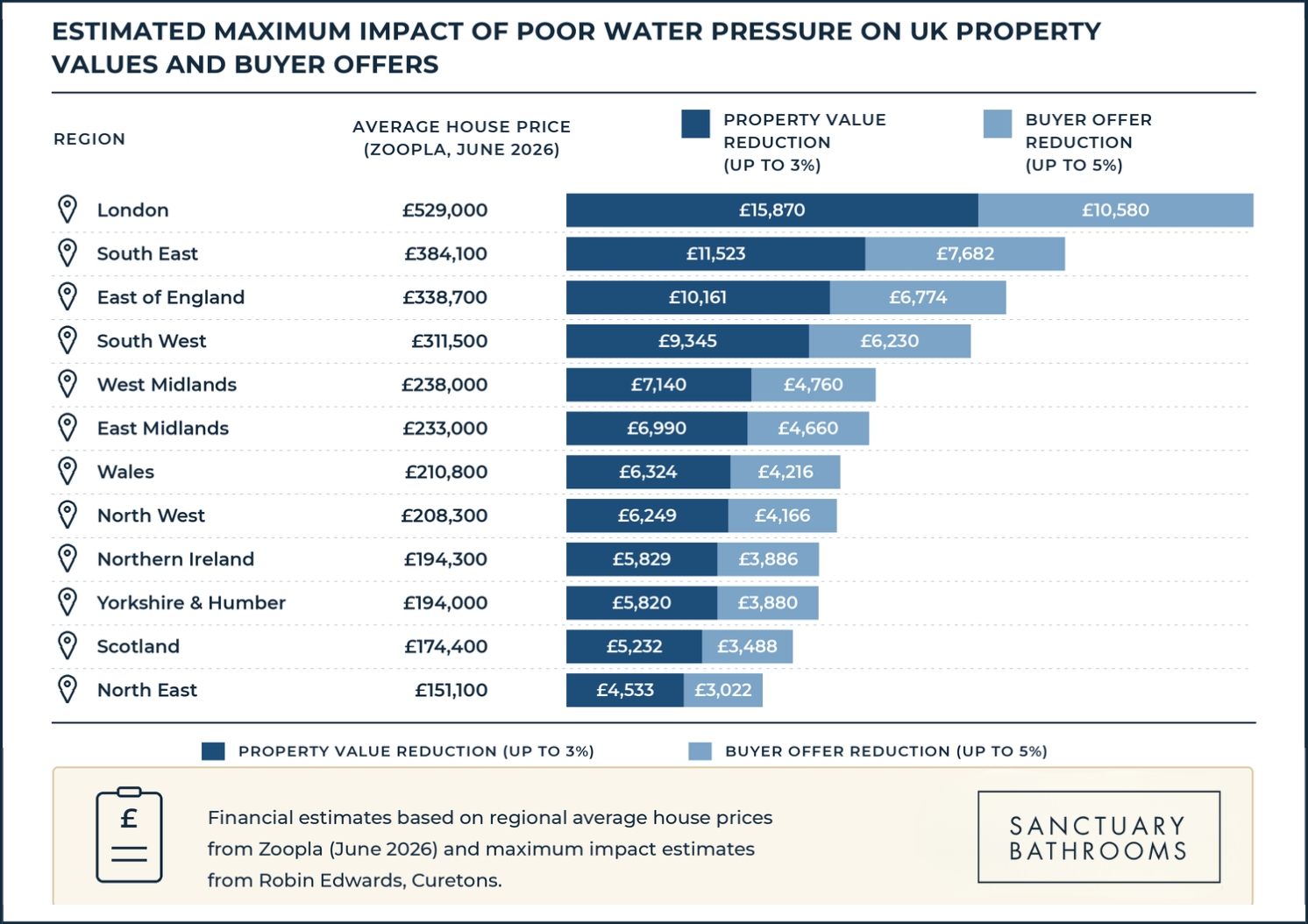
“Buyers regularly overestimate the cost and inconvenience of fixing poor water pressure,” Edwards warns, estimating that the issue can reduce property value by 1–3% and offers by up to 5% - a potential loss of up to £13,197 on the average UK home and £26,450 in London.
Signs to Look For
- At a fixture level, the shower feels weak or inconsistent, taps fill the basin slowly, or the toilet doesn’t flush cleanly
- At the property level, multiple fittings are affected and pressure drops when another appliance is running or varies noticeably at different times of the day
What Sellers Should Do
Before listing, check whether the issue is limited to the bathroom or affects the whole property. Understanding the cause early and potentially increasing low water pressure can help reassure buyers and reduce the risk of it becoming a negotiation point.
Test Your Water Pressure
Test your shower and basin taps before viewings so you know what buyers will encounter. For a simple check, run the cold kitchen tap at full for 6 seconds, collect the water in a measuring jug, then multiply the amount collected by 10 to estimate your flow rate. Below 10 L/min suggests room for improvement, while around 15 L/min is generally considered good.
Establish the Extent of the Issue
Inspect showerheads for limescale build-up and check taps for flow restrictors to rule out fixture-specific problems. If water pressure is low for one fixture but runs fine elsewhere, the issue may be as simple as a clogged showerhead or tap aerator mesh. Descaling the showerhead and tap aerators can be a cheap way to quickly improve flow, especially in hard-water areas where limescale and debris are common causes. It’s also worth checking whether an internal stop valve has been partially closed, but do not force it if open – consult a plumber.
Get a Professional Diagnosis if Needed
If low water pressure affects the whole property, or the cause is unclear, it may indicate a wider issue with the supply, pipework, or plumbing. Speak to a plumber before viewings so you can understand the problem and answer buyer questions accurately.
Check with Your Water Company
If the whole property is affected, check your water company’s incident and works information and ask neighbours whether they are experiencing the same issue. In England and Wales, water companies must provide a minimum level of water pressure up to the point where their pipe connects to your property.
4. Outdated Design - Be Honest or Make Targeted Updates
More than one in four respondents (27%) said an outdated-looking bathroom would affect whether they made an offer. While dated décor may not raise the same alarm bells as mould, it can make other issues feel worse and leave buyers mentally adding up renovation costs.
How an Outdated Bathroom Could Impact Your Sale Price
Dated tiles, old-fashioned patterns, ageing fixtures, or a worn suite can make buyers think of expense, disruption, and extra work. Edwards estimates old-fashioned interiors can knock 5–10% off achievable value – up to £26,400 on an average UK home and £52,900 in London – with buyers often “calculating refurbishment costs aggressively” and pushing for larger reductions.
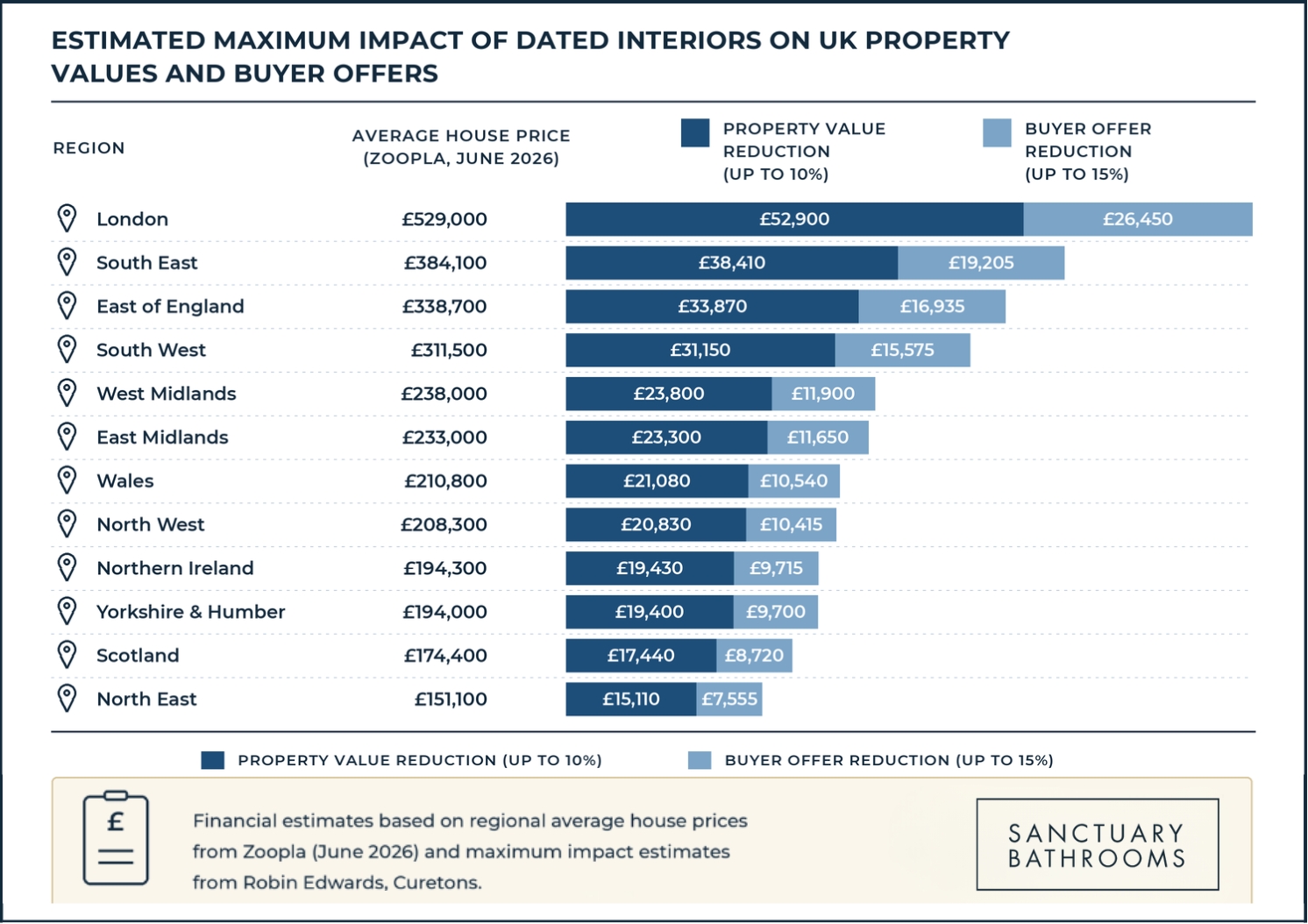
Image credit: OnePoll/Sanctuary Bathrooms, January 2026.
Signs to Look For
- Heavily scaled or rusting metal fixtures (taps, towel rails, flush handles) that have lost their finish
- Yellowing, cracked, or discoloured sealant around the bath or shower, and darkened, stained, or missing grout between tiles
- Worn accessories, including a stained toilet seat, spotted mirror, or yellowing light fittings.
- Strongly coloured tiles, walls, or accessories that date the room
What Sellers Should Do
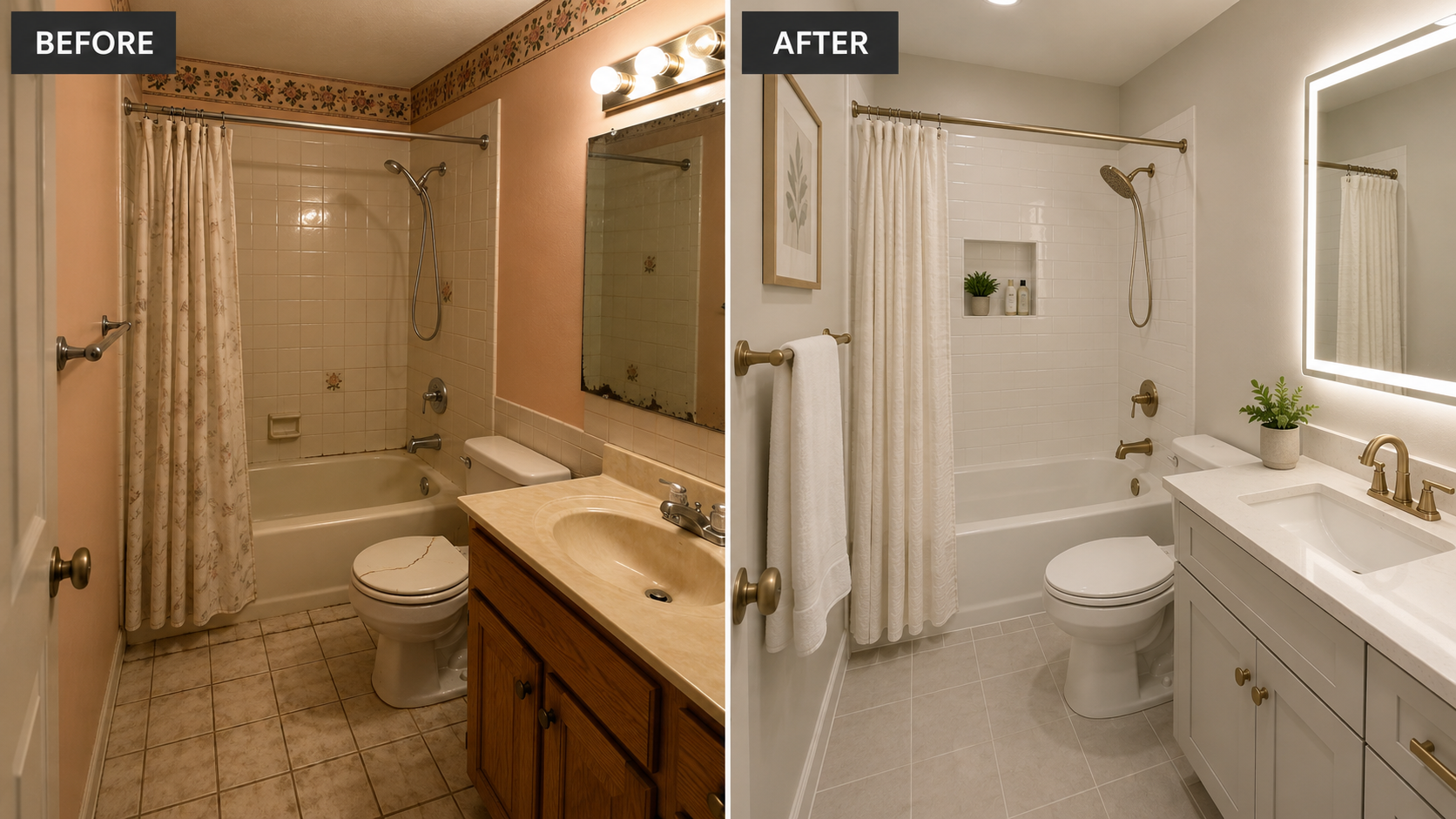
If the bathroom is dated but functional, being upfront about the likely renovation costs can stop buyers from overestimating the work involved. But if the dated look comes with issues like poor water pressure or a cramped layout, small cosmetic updates can make a big difference and help reduce the risk of a negotiated discount. Knowing how to make a bathroom look more expensive without a full renovation is the goal here – small updates to lighting, fixtures, finishes, and sealant do most of the heavy lifting.
Deep Clean the Entire Room
A thorough clean can make a surprising difference. Pay close attention to grout lines around the base of the toilet, behind taps, along the back of the basin, and at any corners or edges where grime, limescale, or soap scum accumulates.
Freshen Up Surfaces by Re-Grouting, Re-Sealing, and Painting
Replacing discoloured or peeling sealant around the bath, shower, and basin can make a big visual difference, while re-grouting can refresh tiles that are still in good condition. Make sure surfaces are dry and any mould has been fully treated first, as sealing over damp or mould will trap the problem.
Fresh paint can also lift the room. Neutral colour schemes such as white, light grey or soft cream can make a dated bathroom feel brighter and more contemporary. Choose a matt or satin finish rather than gloss, which can look too reflective.
Update Lighting
Outdated or dim bathroom lighting can instantly age a space. Swap yellowing bulbs for brighter, neutral-tone LEDs to make the room feel fresher and cleaner. For a neater look, consider recessed downlights, an illuminated mirror, or subtle LED strip lighting around the basin, aiming for balanced, natural-looking light rather than anything too harsh or warm.
Swap Dated Accessories and Fixtures
Replacing worn towel rails, toilet roll holders, stained or cracked toilet seats, and even soap dispensers with up-to-date alternatives can refresh the room for minimal cost. For a bigger, though more costly, update, a new showerhead or taps can also make a noticeable difference.
“Sellers underestimate how much the small details matter. A modern towel rail, a clean toilet seat, and a new set of taps can completely change the feel of a bathroom. Buyers aren't consciously noting each one, but the overall impression is that the home has been looked after - and that's what drives offers.”
- James Roberts, Director of Sanctuary Bathrooms
5. Lack of Storage - Fix or Improve Before Viewings
More than one in four respondents (27%) said a lack of storage would affect whether they made an offer. Overflowing surfaces and nowhere obvious to store everyday essentials can quickly make a bathroom feel smaller, busier, and less practical during viewings, even if the actual footprint is reasonable.
How a Lack of Storage Could Impact Your Sale Price
Limited storage can affect how buyers feel about a home and what they are willing to offer. Edwards estimates it can reduce property value by 2–5%, a potential loss of up to £13,200 on an average UK home, or £26,450 in London.
Signs to Look For
- Toiletries, cleaning products and toilet rolls taking up visible floor or surface space, including lining the bath rim, windowsills, and basin decks
- Towels draped over the bath and furniture or bunched on a single towel hook
- No visible cabinet, shelving, or other functional storage
- Cupboards or shelves that are overloaded, damaged, or difficult to open
What Sellers Should Do
The good news is that storage is one of the easier red flags to fix. Unlike mould or water pressure, it can often be improved quickly before viewings with low-cost additions and smarter use of space.
Audit Existing Storage
Before adding anything new, look for unused storage potential, such as wall space above the toilet, beside the mirror, or within the shower area. This helps any additions feel planned rather than squeezed in. Check existing storage too. Damaged, overloaded, or awkward units can make the bathroom feel poorly planned or badly maintained, especially if buyers open cupboards during a viewing.
Add Simple, Low-Cost Storage Solutions
You don’t need large or costly furniture to improve bathroom storage. A few low-cost additions, such as a shower caddy, corner shelf, over-the-door hooks, or drawer dividers, can help keep essentials organised and instantly make the space feel more considered.
Consider a Mirrored Cabinet
If there is wall space, a mirrored cabinet can add storage while making the bathroom feel brighter and bigger. Choose a non-electrical option unless it is being professionally installed, and check for hidden pipes, cables, and suitable fixings if fitting it yourself.
Upgrade Your Bathroom Furniture
If the budget allows, upgrading bathroom furniture can improve storage and appearance in one go. A wall-hung vanity keeps essentials hidden while freeing up floor space, while slim shelving, a tallboy, or a narrow freestanding unit can make use of awkward gaps.
Only add storage where there is genuine room, without reducing safe movement around the toilet, basin, bath, or shower.
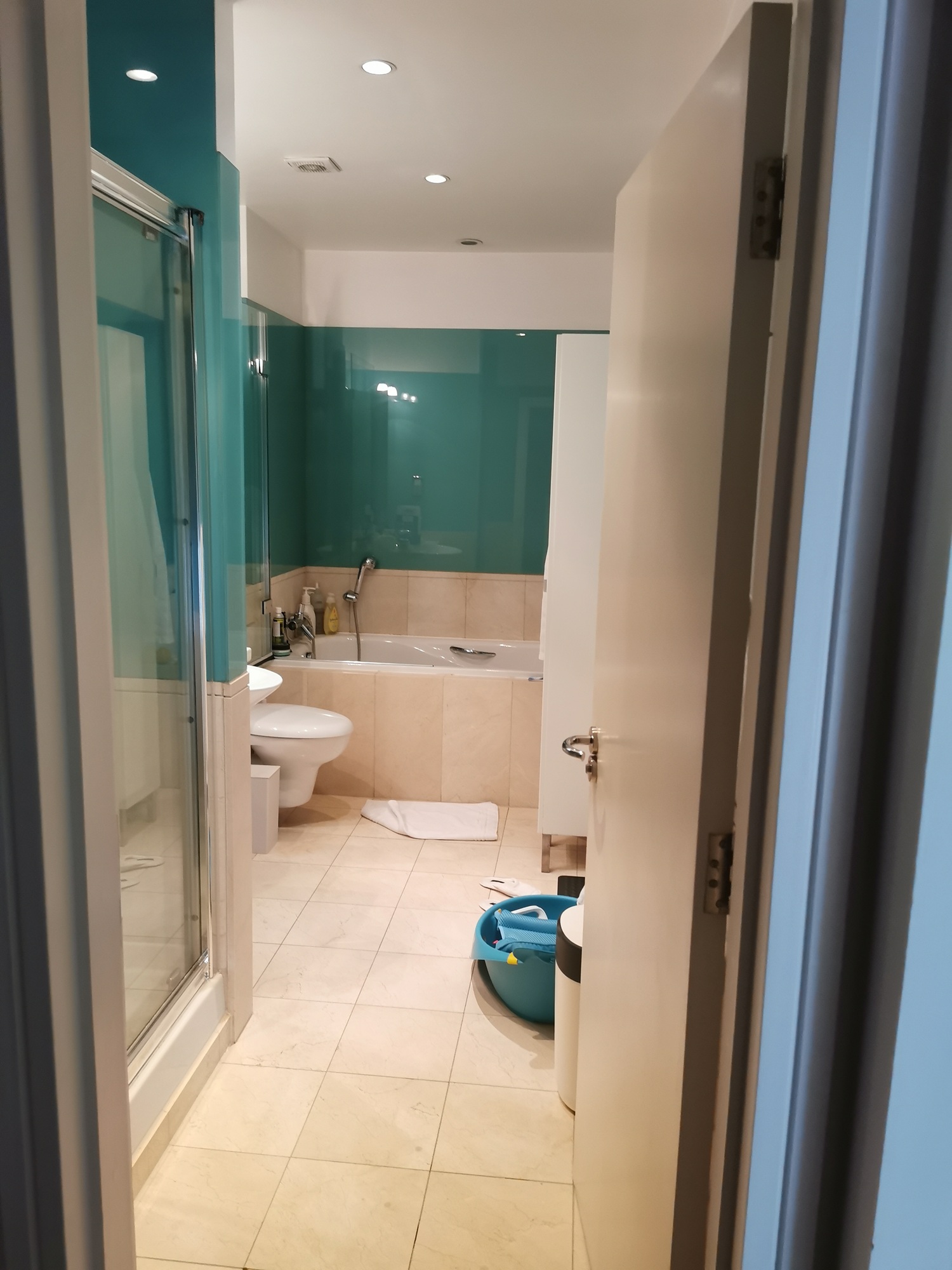
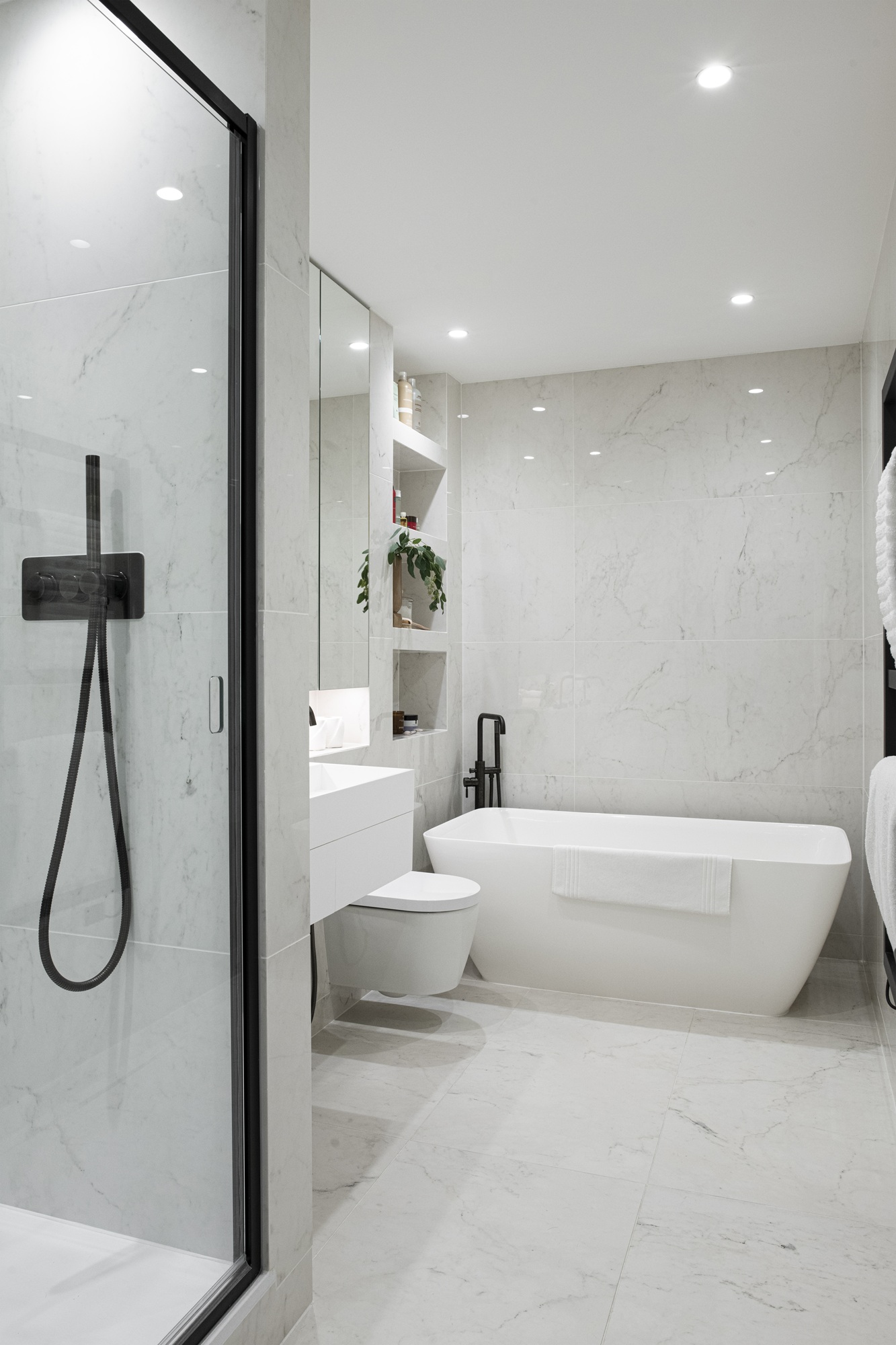
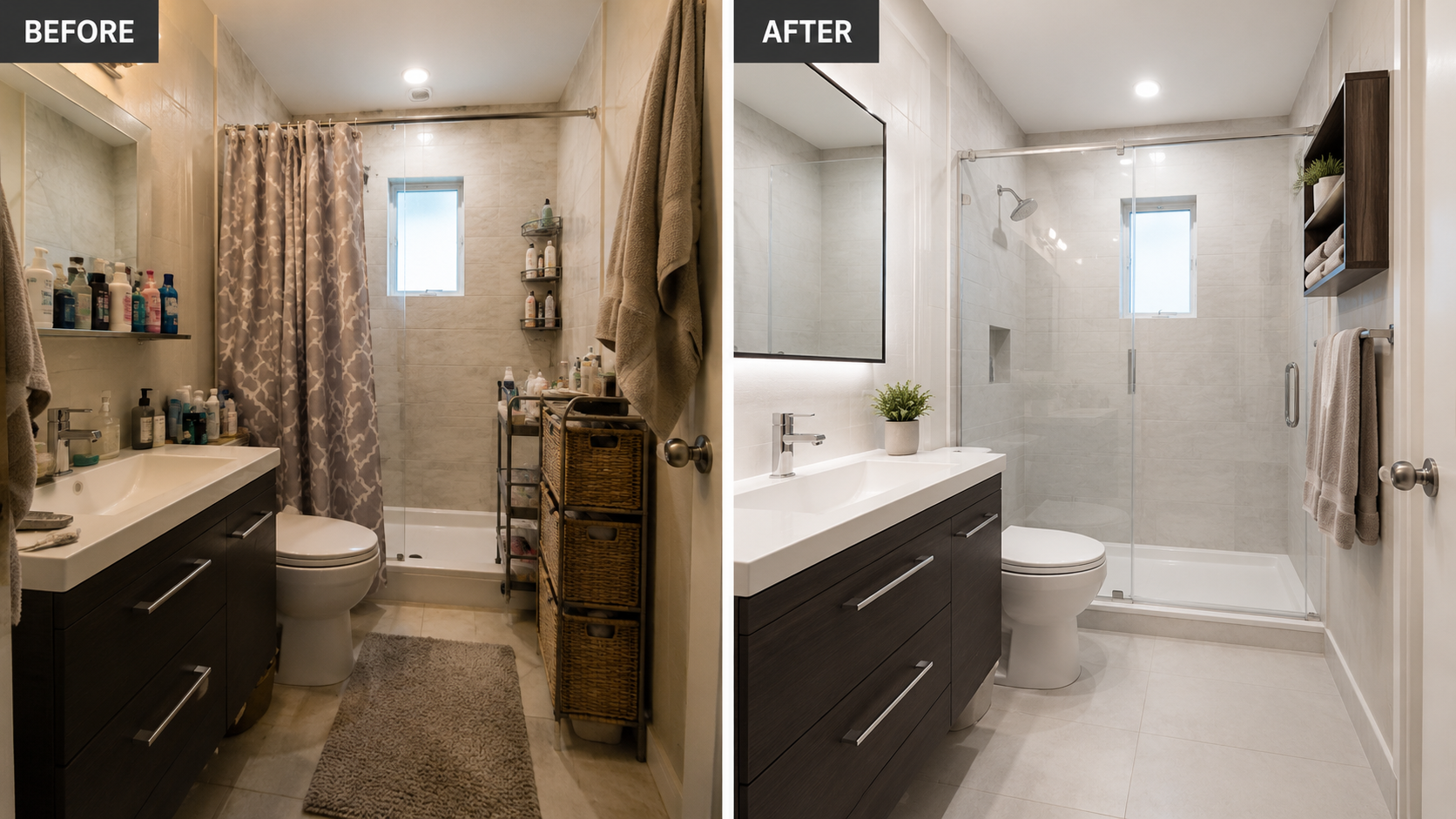
Image from our previous bathroom makeover case study: London Mews House in Battersea in collaboration with misch MISCH studio—read the full transformation here.
Do Different Generations Notice Different Bathroom Red Flags?
Mould may top the list, but age plays a clear role in what buyers look for when buying a house, particularly when it comes to the bathroom.
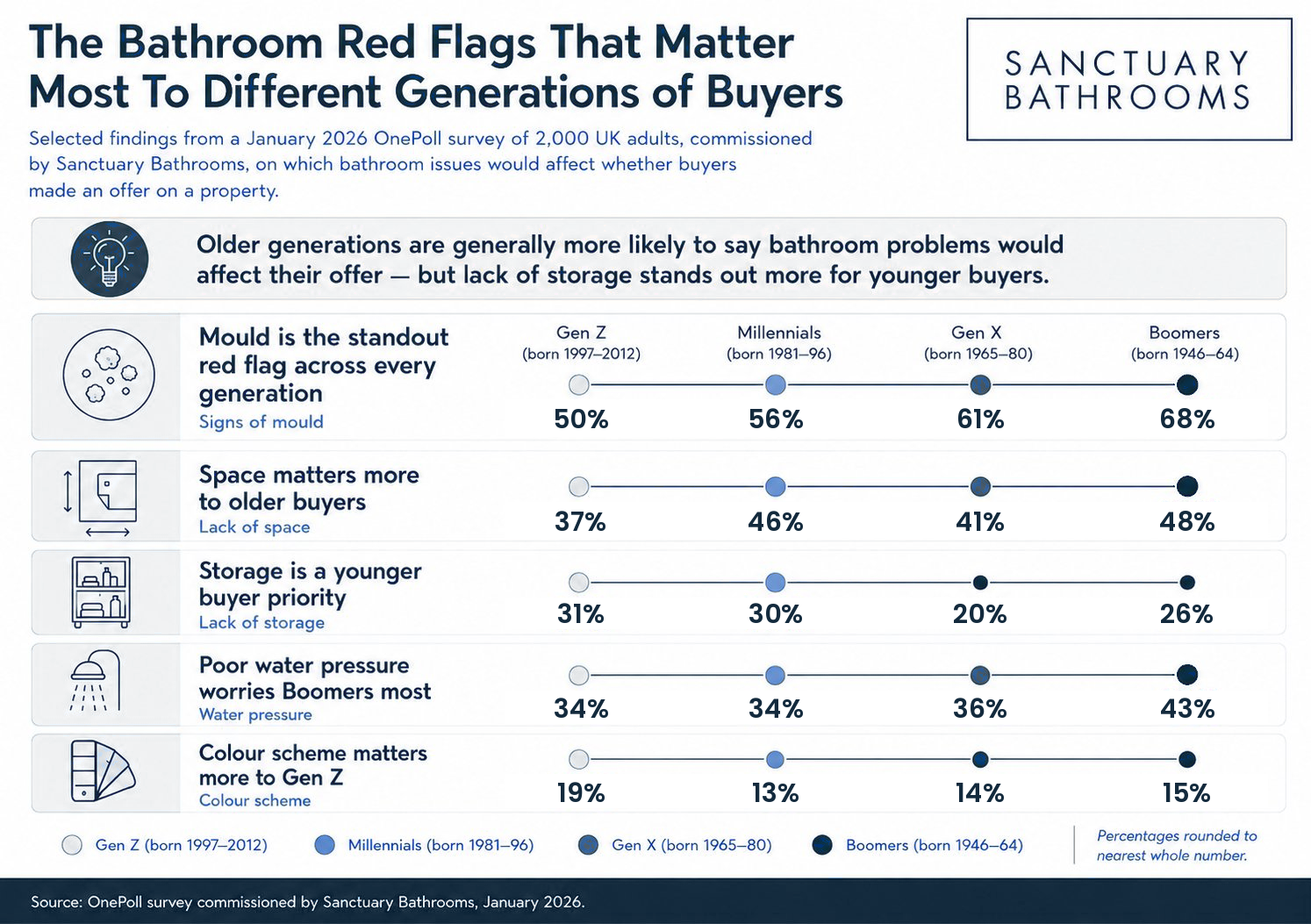
Image credit: OnePoll/Sanctuary Bathrooms, January 2026.
The Data: Generational Differences in Bathroom Red Flags
| % of respondents who said the issue would affect their decision to make an offer | ||||||
|---|---|---|---|---|---|---|
Bathroom Issue | Average | Gen Z | Millennials | Gen X | Boomers | Silent Gen* |
Signs of Mould | 60% | 50% | 56% | 61% | 68% | 56% |
Lack of Space | 44% | 37% | 46% | 41% | 48% | 37% |
Water Pressure | 37% | 34% | 34% | 36% | 42% | 29% |
Looking Outdated | 27% | 27% | 29% | 25% | 27% | 34% |
Lack of Storage | 27% | 31% | 30% | 20% | 26% | 34% |
Only One Bathroom | 25% | 23% | 27% | 22% | 26% | 22% |
Shower Only | 23% | 20% | 20% | 23% | 28% | 20% |
Coloured Fixtures | 22% | 22% | 22% | 18% | 26% | 20% |
If It Had A Bath | 16% | 16% | 13% | 16% | 18% | 10% |
Colour Scheme | 15% | 19% | 13% | 14% | 15% | 12% |
North-facing / Lack of Sunlight | 12% | 15% | 11% | 10% | 13% | 20% |
Lack of Accessibility | 11% | 12% | 13% | 8% | 11% | 15% |
Source: OnePoll for Sanctuary Bathrooms, January 2026. 2,000 UK adults. Q: "Which, if any, of these factors relating to bathrooms would affect whether you would make an offer when buying a new property?" Respondents could select all that applied.
Boomers were more likely to flag mould, lack of space, poor water pressure, and shower-only bathrooms, suggesting a focus on comfort, reliability, and everyday usability. Gen Z buyers, meanwhile, were more likely to flag limited storage, difficult colour schemes, and poor natural light, suggesting they care most about how a bathroom looks, feels, and functions day to day.
Buyers may notice different details first, but the basics are the same: a bathroom should feel clean, functional, well-maintained, and easy to live with. Sellers should focus on passing the most common buyer tests by tackling issues such as mould, poor water pressure, and cramped layouts where possible, while using smaller updates to improve storage, lighting, and colour.
How Do Bathroom Deal-Breakers Differ Across the UK?
Bathroom red flags vary by region, shaped by housing stock, prices, and buyer expectations.
- Buyers in the South East appear hardest to impress, with mould, poor water pressure, limited storage, lack of space, and shower-only bathrooms all causing above-average concern. In this high-cost market, sellers should prioritise meaningful fixes over quick cosmetic updates.
- Buyers in the West Midlands and Scotland seem more forgiving overall, making good maintenance, cleanliness, and small updates the main priorities.
- Shower-only bathrooms are a bigger concern in the East, South East, and South West, so sellers should think carefully before removing the only bath, especially in family-friendly homes.
- London buyers are less put off by shower-only bathrooms or homes with just one bathroom, reflecting a market of smaller homes and space trade-offs. However, they are more sensitive to accessibility, so the space should feel well planned and easy to use.
- In the North West, appearance matters more. Outdated bathrooms and off-putting colour schemes are more likely to influence buyers, making quick cosmetic updates especially worthwhile.
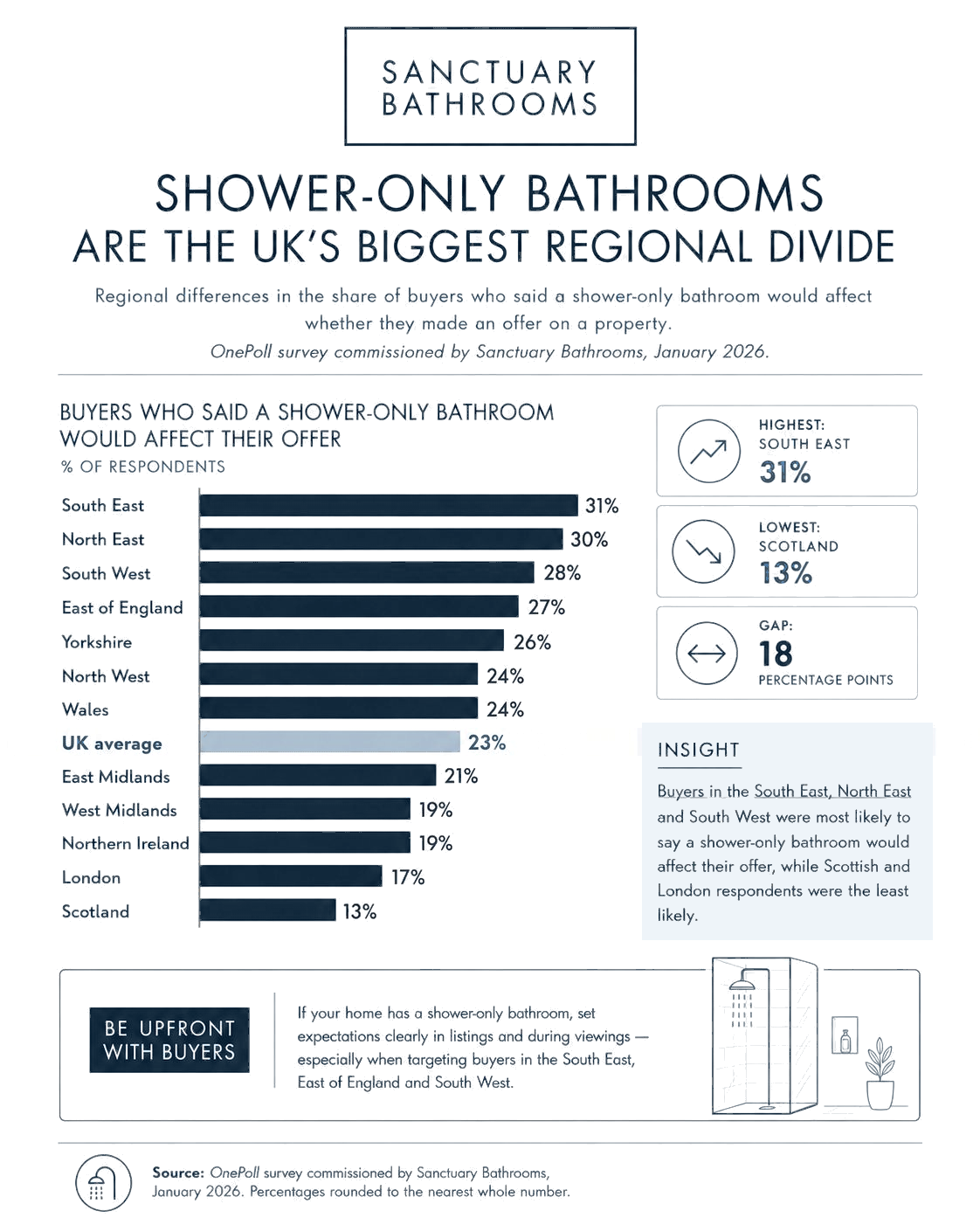
Image credit: OnePoll/Sanctuary Bathrooms, January 2026.
The Data: Regional Differences in Bathroom Red Flags
| % of respondents who said the issue would affect their decision to make an offer | |||||||
|---|---|---|---|---|---|---|---|
Bathroom Issue | Average | East Midlands | East of England | London | North East | North West | Northern Ireland |
Signs of Mould | 60% | 59% | 63% | 51% | 66% | 61% | 63% |
Lack of Space | 44% | 37% | 41% | 45% | 45% | 45% | 39% |
Water Pressure | 37% | 40% | 40% | 38% | 31% | 41% | 32% |
Looking Outdated | 27% | 24% | 24% | 28% | 36% | 36% | 43% |
Lack of Storage | 27% | 23% | 25% | 29% | 33% | 30% | 37% |
Only One Bathroom | 25% | 28% | 30% | 21% | 17% | 22% | 30% |
Shower Only | 23% | 21% | 27% | 17% | 30% | 24% | 19% |
Coloured Toilets/Sinks | 22% | 24% | 25% | 24% | 31% | 23% | 30% |
If It Had A Bath | 16% | 14% | 17% | 19% | 11% | 17% | 11% |
Colour Scheme | 15% | 15% | 15% | 17% | 22% | 20% | 17% |
North-facing/Lack of Sunlight | 12% | 11% | 13% | 14% | 13% | 13% | 17% |
Lack of Accessibility | 11% | 9% | 11% | 17% | 10% | 10% | 13% |
None of the Above | 6% | 9% | 5% | 4% | 5% | 6% | 4% |
Don't Know | 7% | 9% | 6% | 4% | 4% | 5% | 6% |
Base n | 2,000 | 149 | 189 | 260 | 83 | 223 | 54 |
Source: OnePoll on behalf of Sanctuary Bathrooms, January 2026. 2,000 UK adults. Q: "Which, if any, of these factors relating to bathrooms would affect whether you would make an offer when buying a new property?" Respondents could select all that applied.
Download the Bathroom Viewing Checklist for Sellers
Download our Bathroom Viewing Checklist to spot the red flags buyers may notice, from issues worth investigating properly to simple updates that can make the space feel cleaner, brighter, and better cared for.
Use it as a final sense-check before your property goes on the market, so small issues don’t become reasons to negotiate.
Download the Bathroom Viewing Checklist for Sellers
Preparing Your Bathroom for a House Sale
With 88% of buyers saying at least one bathroom issue would affect their decision to make an offer, the bathroom is one of the highest-impact rooms to get right before listing – and fortunately, one of the most straightforward to improve.
A new bathroom can add value to a house, but as our research shows, simply addressing the red flags buyers notice most often delivers the strongest return. More importantly, leaving these issues unresolved is one of the quieter reasons that stops a house from selling at its true asking price.
If you're preparing your bathroom for sale and want to make the most of your space, our team can help. Contact us today or book a free 3D bathroom design consultation with a professional to get the most out of your space.


