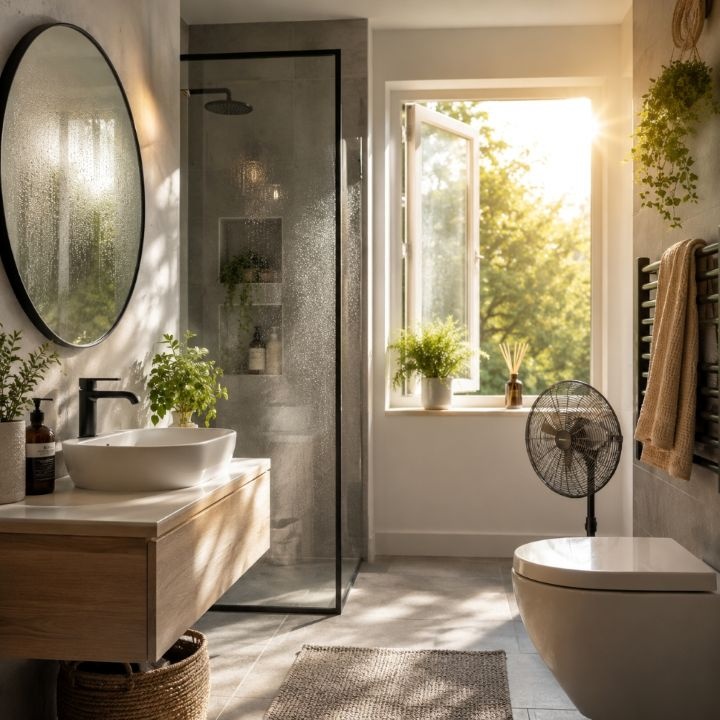
We don’t tend to think of bathrooms as rooms that struggle in the heat, but they do. During a rare British heatwave, bathrooms can show signs of stress that are easy to miss. Extra showers, warmer indoor air, and higher humidity can make existing issues more noticeable, and without prompt care and remediation, they can unfortunately lead to further problems.
Below, with the help of our resident plumbing expert, James Roberts, we’ll explain six heatwave bathroom problems homeowners ought to watch out for. For each, we’ll also tell you how to identify them, provide simple, often DIY-friendly ideas to help prevent them, and advise you when it’s time to seek professional help.
- Toilet Condensation and Wet Floors
- Dirty Pipes and Drain Flies
- Smelly Bathroom Drains and Biofilm
- Excess Moisture and Costly Mould
- Thermal Pipe Expansion and Unwanted Noise
- Peak Usage and Water Pressure Dips
- Designing a Bathroom That Copes Better in Heatwaves
1. Toilet Sweating
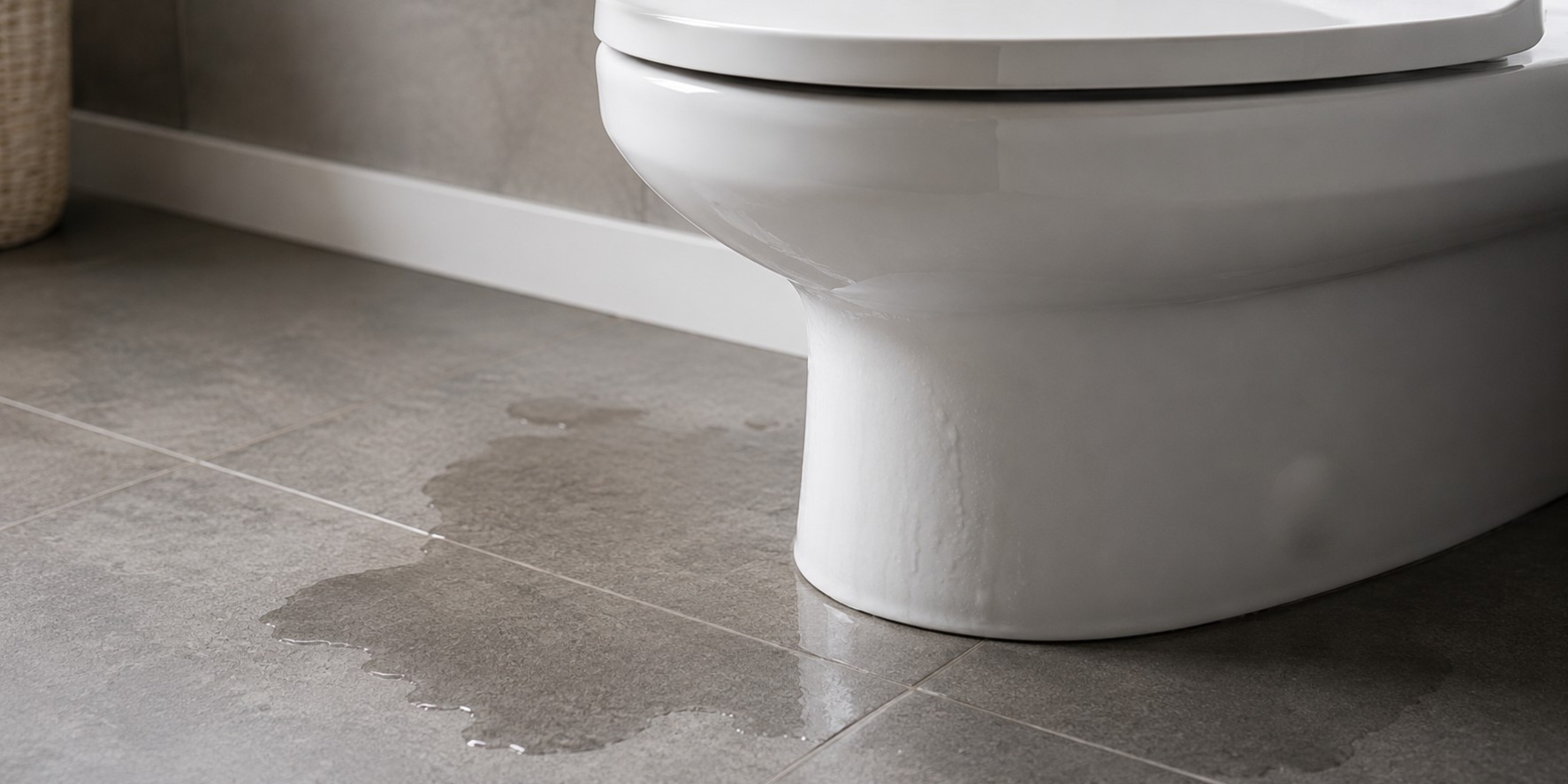
If you've ever walked into your bathroom on a warm day and found a puddle at the base of your toilet, your first thought is likely a dreaded leak. Don't panic. Often, the culprit is plain old condensation. It happens when the cold mains water sitting in your cistern meets warm, humid bathroom air; moisture forms on the outside of the tank, just as a cold drink sweats on a summer afternoon.
This phenomenon, dubbed ‘toilet sweating’, is harmless in small amounts. The real problem starts when it happens day after day, and nobody's dealing with it. Tiles can become stained, sub-flooring can rot, sealant can break down, and mould can take hold underneath the cistern where you'd never think to look. By the time you notice, you could be facing a repair bill you didn't see coming. Better to nip it in the bud now rather than pay for it later.
How to Identify Toilet Sweating
This one's pretty hard to miss - after all, there's a puddle on your floor. But to be sure it’s actually cistern condensation, run your hand along the outside of the cistern. If the surface feels wet or clammy and there's no visible crack or fitting failure, condensation is almost certainly the cause.
James Roberts believes that "During warmer, more humid spells, homeowners may notice water around the base of the toilet and assume the cistern is leaking. In some cases, it may actually be condensation forming on a cold cistern - but it still needs managing because repeated pooling can damage flooring or encourage mould.”
If you want to completely rule out a leak, try the food colouring test. Add a few drops of food colouring to the cistern, leave it for at least 20 minutes without flushing, then check the bowl and the base of the toilet. If coloured water shows up in either, you've got a leak rather than a condensation problem.
How to Prevent Toilet Sweating
- Improve ventilation: Better airflow is perhaps the single most effective countermeasure to stop toilet condensation. Open a window, switch the extractor fan on, or even just leave the bathroom door ajar after you've finished in there. Anything that gets the humid air moving out of the room will help prevent condensation from forming in the first place.
- Use a dehumidifier: A desiccant dehumidifier can prove a worthwhile, low-cost investment to reduce humidity enough to stop sweating. While certainly not the primary solution, it’s a stopgap to alleviate the issue, especially in bathrooms without windows or an extractor fan.
- Keep surfaces dry: This is certainly more of a short-term solution, but getting into the habit of wiping down the cistern and pan when you spot condensation prevents water from pooling and buys you time before any real damage is done.
When to Call a Professional
If better ventilation hasn't made a difference, the problem might point to an actual leaky loo – and that’s an issue for a plumber. The cistern inlet, outlet valve and pan connector can all drip in ways that look a lot like sweating, so it's easy to mistake one for the other. A plumber can figure out which it is pretty quickly. If it turns out to be a leak, they'll fix the fitting. If it really is just condensation, they can insulate the cistern or fit an anti-sweat valve to stop it for good.
2. Drain Flies
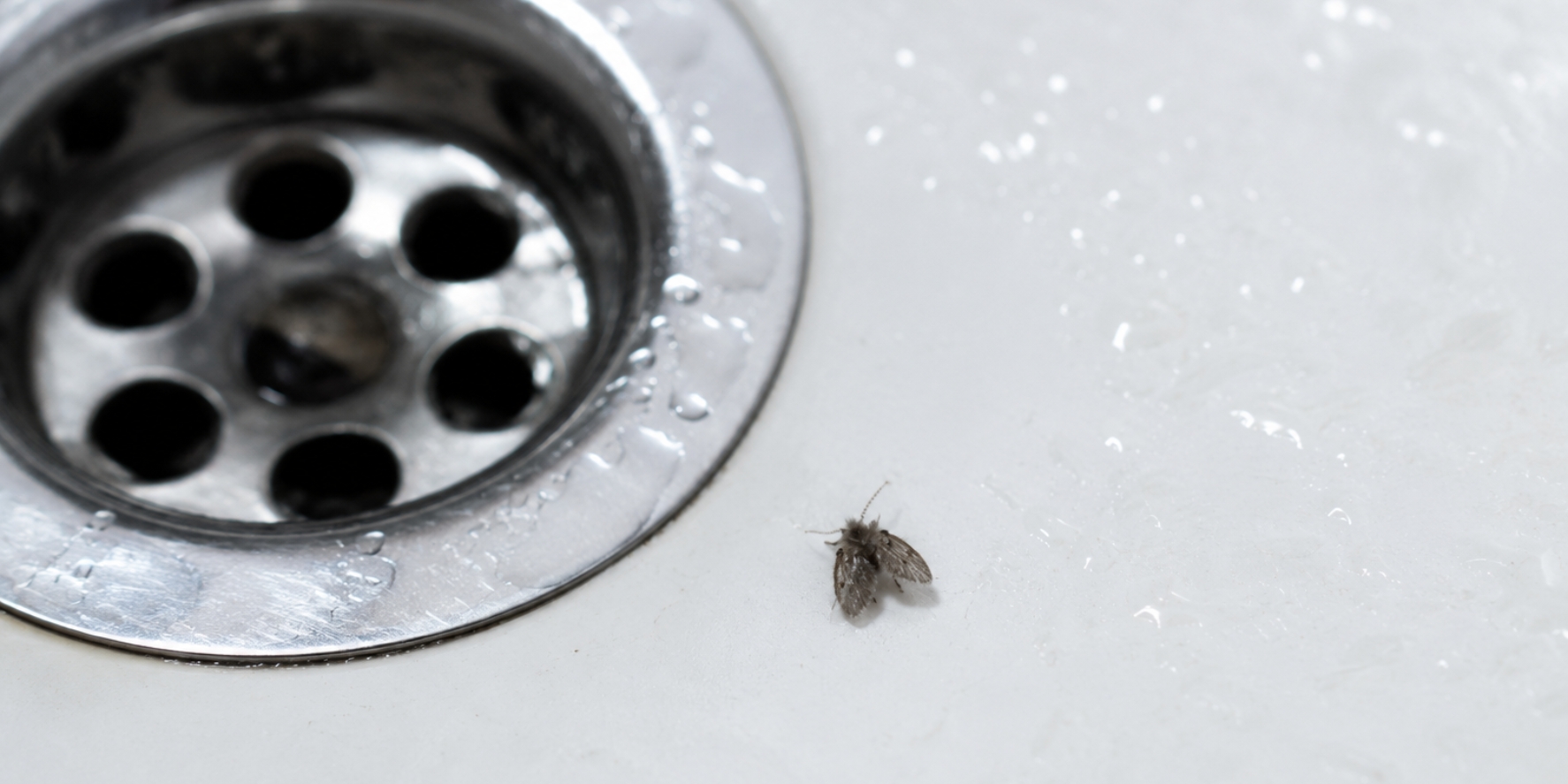
There's nothing quite like spotting tiny insects scuttling around your plughole and making your skin crawl. Drain flies - sometimes called moth flies for their moth-like, furry, winged bodies - love humid, damp conditions. This makes your bathroom drains pretty much their dream summer holiday home.
Drain flies are harmless; they don't bite; they're barely even capable of flying. But certainly, don't ignore them; they’re pests and can be an unsightly nuisance in large numbers. If they've shown up, it means organic matter has built up inside your waste pipes, and their larvae are feeding on it – gross! Heatwaves make the whole thing worse. The warmth speeds up this gunky buildup and the nasty smells that come with it, meaning more unwanted guests that can be even harder to evict.
How to Identify Drain Flies
While small – roughly three to five millimetres – drain flies are unmissable insects that are attracted to plugholes, making your basins and showers prime targets. According to the University of Arkansas Division of Agriculture, they most commonly set up shop at drains that aren't used regularly, such as a guest bathroom shower or an en suite that's been sitting idle, where water collects in the trap and goes stagnant. While larvae inhabit pipework, adults are mostly found perched on walls or ceilings and are most active in the evening. Chances are, if you've seen one, vanquished at least a dozen, and are catching strange smells, there are likely many more out of sight.
James Roberts says: “If you are seeing tiny flies repeatedly around the same plughole, it is usually a sign to look deeper than the surface. People often wipe down the basin or spray the flies, but the breeding source can be the damp organic layer inside the drain.”
One thing to note: don't confuse them with fruit flies, which are smaller-bodied and much better fliers. Our guide to keeping pests out of your bathroom covers how to spot these, along with other unwanted visitors that warm weather can bring.
How to Prevent Drain Flies
- Flush drains weekly with boiling water: Pour a full kettle of boiling water down each drain once a week to break up the matter that drain flies feed on and clear the system.
- Use a biological drain cleaner: Enzyme-based cleaners eat through the buildup without damaging your pipes - much better for your plumbing than bleach or caustic chemicals, and they keep working after you've poured them in.
- Try a drain snake or brush: If boiling water and cleaners aren't clearing it on their own, a flexible drain snake or brush can dislodge debris that's settled deeper in the pipework.
When to Call a Professional
To fully get rid of drain flies, stick with the cleaning routine for at least three weeks; it can take that long to break the breeding cycle. If they're still coming back after that, showing up at multiple drains, or there's a persistent smell you can't shift, it's time to call in a drainage specialist or pest-control professional. At that point, you're likely dealing with something deeper, such as a cracked pipe, a stubborn blockage, or buildup that's further down the system than you can reach from the plughole.
3. Drain Biofilm
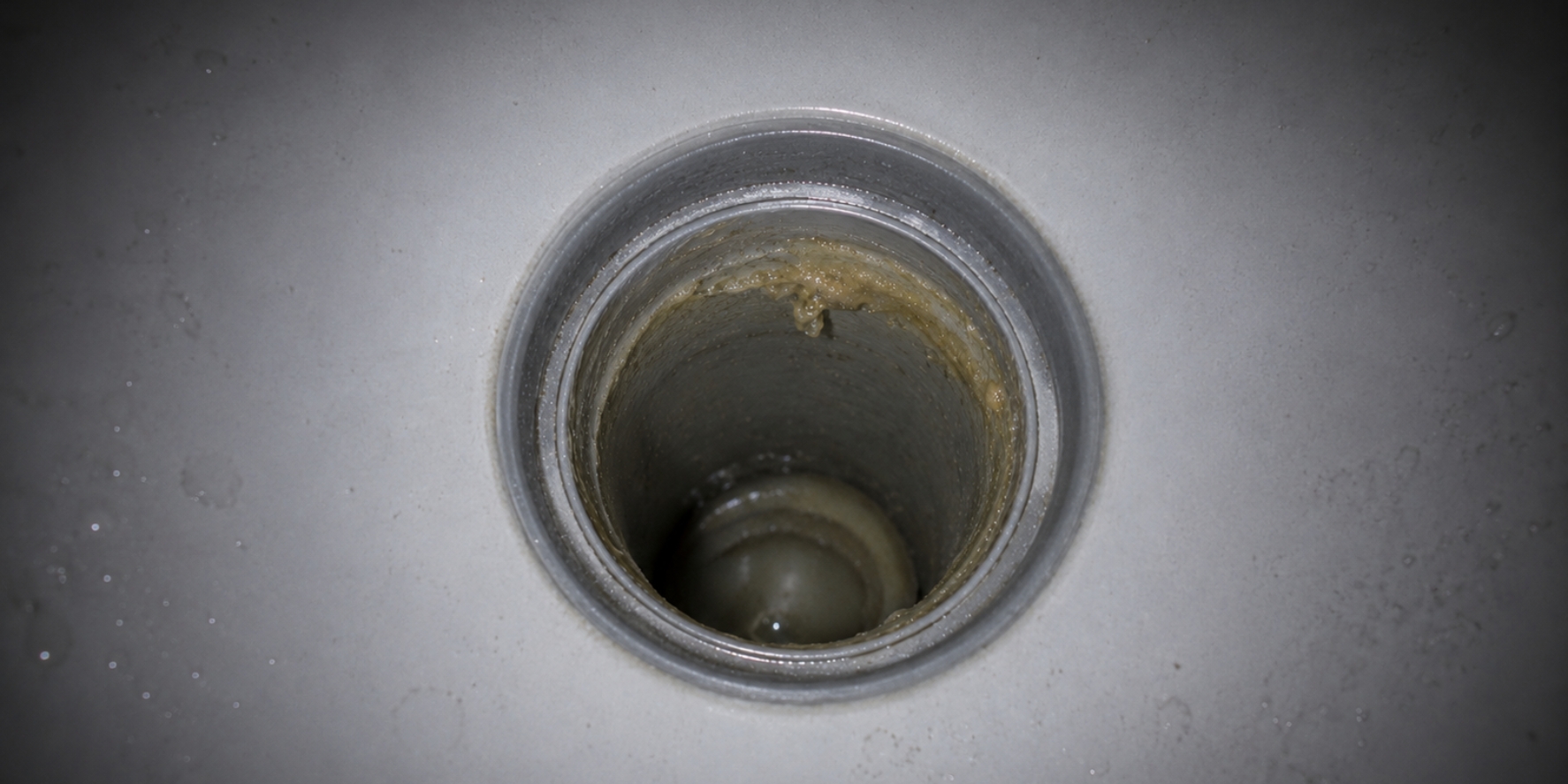
It sounds like something from a sci-fi film and looks even worse, but biofilm is something every bathroom has to some degree. It's the slimy, dark-coloured residue that builds up inside waste pipes: a delightful accumulation of soap scum, hair, skin cells, shaving debris, all bonded together by bacteria. Warm weather makes it thicken faster, which is why drains that behave themselves all winter can start causing problems in the summer.
If you've read the section above on drain flies, biofilm is essentially what they're feeding on. But even without the flies, it's worth dealing with on its own; left alone, it narrows your pipes' bore and slows your drains, making your bathroom highly inefficient.
How to Identify Drain Biofilm
For this matter, trust your nose; it will find it before your eyes do. Sure, biofilm slows drainage, but that’s easy to miss – the smell isn’t. In a heatwave, especially, it produces a stale, musty whiff that drifts up from the basin or shower drain. If you want to see it for yourself, lift out the plug or waste cover and shine your phone torch into the drain. That dark, gel-like coating around the inside of the pipe? That's the stuff.
How to Prevent Drain Biofilm
- Flush drains with bicarbonate of soda and vinegar fortnightly: Tip a good scoop of bicarb down the plughole, then follow with a splash of white vinegar. Leave this solution to fizz for five minutes, then chase the lot with a kettle of boiling water to melt away residue and break down biofilm naturally.
- Keep plugholes clear with a hair strainer: A cheap silicone or stainless-steel strainer over the shower waste catches hair and debris before they get into the pipe. Just be sure to empty it after every shower.
- Rinse the tray and basin after use: A quick rinse of your shower tray or basin with clean water after you've finished washes away the soap, oil and product residue that biofilm feeds on. Also, if you use heavy hair products, thick cosmetics or anything oily, try to wipe the worst of it off with a tissue before it goes down the plughole.
When to Call a Professional
If you've been keeping on top of the cleaning and the drains are still slow or the smell won't budge, the problem's likely further down the pipe than you can reach. Same as with drain flies - there comes a point where home remedies aren't going to cut it. To fully get rid of biofilm, a drainage specialist or plumber can jet-wash the full length of the waste run or check for a partial blockage at a joint or bend, which is usually enough to sort it in one visit.
James Roberts adds: “If a bathroom drain smells again a day or two after you have cleaned the plughole, the source may be further down the waste. The visible metal or ceramic part can look clean while the pipe below is still coated with residue.”
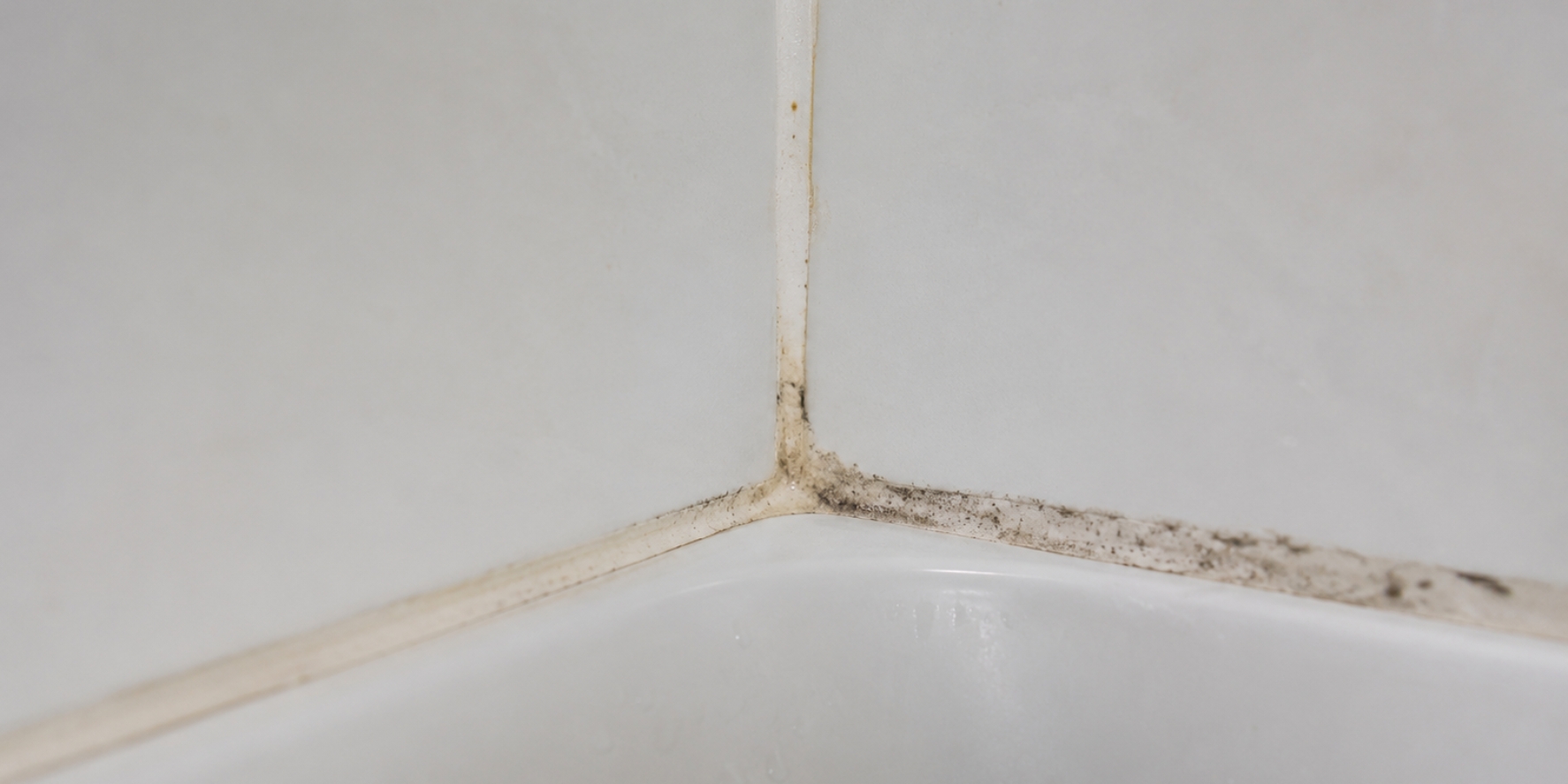
4. Excess Moisture
Bathrooms and humidity go hand in hand at the best (and worst) of times, but a sustained stretch of hot weather takes it to another level. Warmer air holds more moisture, and when that moisture-laden air meets cooler surfaces, condensation forms and the misery of mould follows. The problem's compounded by the fact that we shower more in summer; water demand spikes during warm spells as people take cooling showers throughout the day, and each one pumps a burst of humidity into a room that's already warm and damp.
James Roberts agrees: “During hot weather, bathrooms can be used more frequently, but every extra shower adds moisture. If the extractor fan is weak, switched off, or not run long enough afterwards, that humidity can linger on grout, silicone and painted surfaces.”
As a bathroom retailer, we see the wide-ranging effects of mould. In fact, our research into what puts buyers off a house found that 60% of prospective buyers consider mould the number one bathroom deal-breaker. We’ve come to realise the problem of mould isn’t just a matter of cleaning; it’s one that can genuinely cost you serious money.
How to Identify Excess Moisture
The first sign that your bathroom has a moisture problem isn't always mould itself. Look out for condensation that lingers on mirrors and tiles long after you've finished showering, windows that are constantly fogged up, or a damp feeling in the air that doesn't seem to clear. Additionally, if paint is starting to bubble or peel, grout is turning a faint grey, or there’s a persistent musty smell even post-cleaning, that’s moisture doing its work.
How to Prevent Excess Moisture
- Run the extractor fan during and after every shower: If your bathroom has one, run the extractor fan for at least 15 minutes after you've finished showering. Be sure not to switch it off the moment you step out, as it is one of the most common mistakes - that's when humidity is at its peak.
- Wipe down surfaces: A quick once-over with an old towel or a squeegee removes standing water, which can generate humidity. You don't need to dry everything perfectly; just get rid of the puddles and the worst of the water sitting on the tiles, glass, and the shower tray. A squeegee is particularly good for shower screens and tiled walls; keep one hanging in the shower, and it becomes second nature.
- Give wet towels a proper place to dry: Every damp towel left draped over the side of the bathtub is basically a humidity generator. Hang them somewhere with better airflow or invest in a quality heated towel rail to ensure they dry effectively.
When to Call a Professional
If you're constantly battling condensation, the bathroom never seems to fully dry out, or you're finding damp patches on walls that shouldn't be wet, there's likely a bigger moisture problem than ventilation alone can solve. A damp specialist can work out what's driving it - whether that's inadequate extraction, poor insulation, or a hidden leak you can't see - and recommend the right fix. However, if mould has already taken hold, our guide to cleaning bathroom mould covers step-by-step processes for sealant, grout, and tiles.
5. Thermal Pipe Expansion
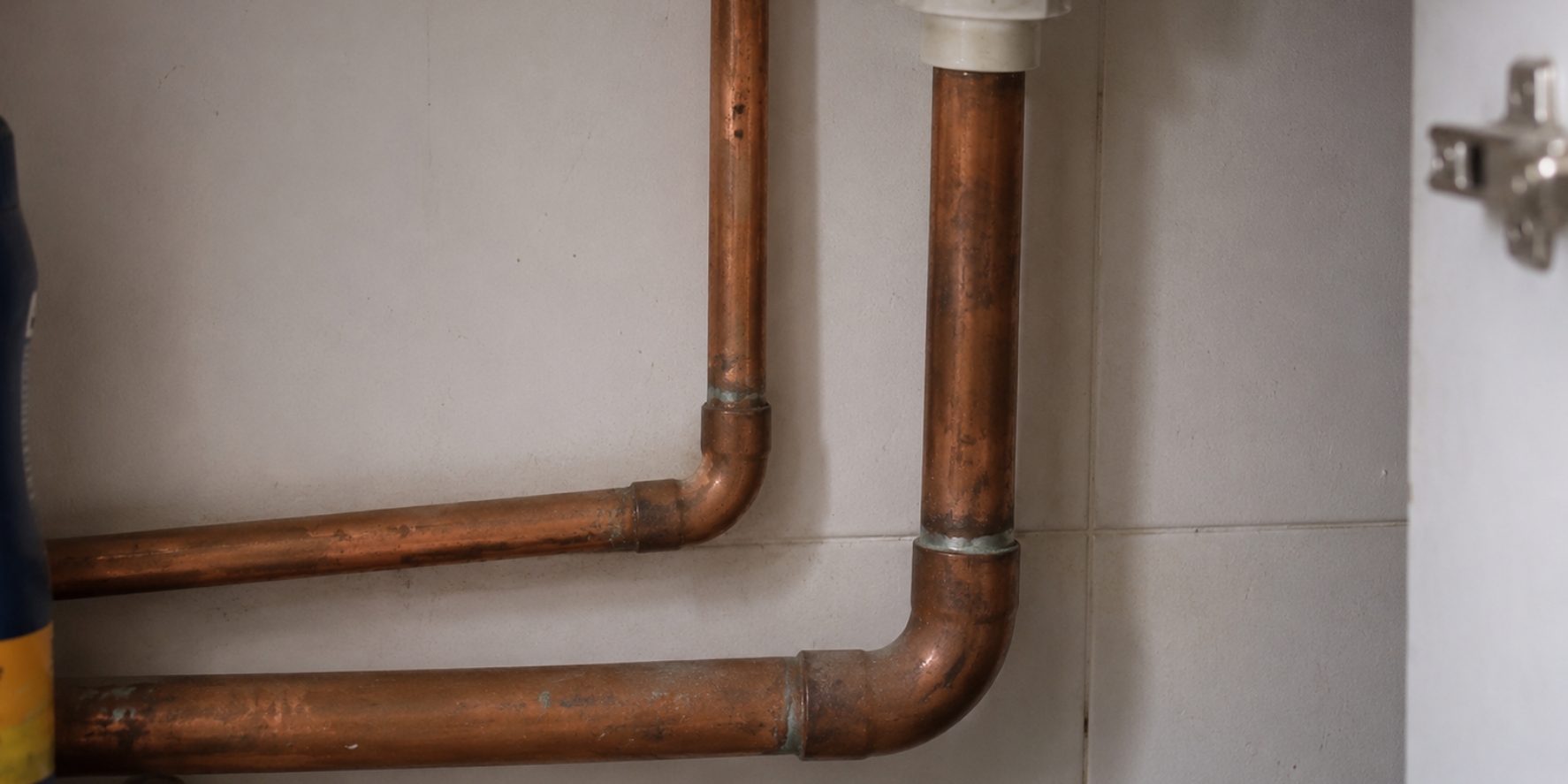
Ticking, creaking, and the odd gentle bang coming from behind the walls during a heatwave can be unnerving, but in most cases, it's completely harmless. It's called thermal expansion. It’s where pipework swells slightly when it heats up and shrinks back when it cools, and that movement creates noise. You'll usually hear it when hot water's running, but ambient temperatures alone can be enough to trigger it.
Copper pipes are the worst for it, and the sound is loudest where pipes pass through tight clips, sit against joists or run through wall cavities - anywhere the expanding pipe has something solid to knock against.
How to Identify Thermal Pipe Expansion
The easiest way to spot it is simply to listen. A rhythmic ticking or a single knock shortly after you turn on the hot tap or shower is the classic sign. Pay attention to any new noises or sounds that are getting louder, especially during hot spells when the bathroom's getting more use than usual.
James Roberts says: “A little ticking after hot water use can be normal, especially where pipes are warming up or cooling down. What homeowners should pay attention to is a new noise, a noise that is getting worse, or any sound that appears alongside damp patches, leaks or pressure changes.”
It's also worth keeping an eye on water pressure - if the flow from a tap or shower suddenly drops or fluctuates around the same time as the noises start, it can be a sign that a pipe is affected as it expands and cools.
How to Prevent Thermal Pipe Expansion
- Make sure pipework has room to move and can still be inspected: This is especially worth considering during a renovation, when pipes are often rerouted, boxed in, or hidden behind new surfaces. Ask your installer how the pipework will be clipped, insulated, and allowed to expand, and avoid boxing pipes in so tightly that they rub against timber, plasterboard, or fittings when hot water runs through them. Keeping access panels accessible rather than permanently sealing everything off means a minor issue stays a minor job.
When to Call a Professional
Any visible cracking or movement at pipework joints, or banging that is getting louder rather than settling, should be assessed by a plumber. Persistent water hammer, in particular, can weaken fittings over time, and a professional can reroute or re-secure the affected pipe before a joint fails.
6. Water Pressure Dips
Picture this: it’s the hottest day of the year, you step into the shower for a cooling wash, and the flow drops to a trickle. Frustrating as it is, the explanation is usually that everyone else on your street is doing exactly the same thing.
Unfortunately, UK water usage is highly sensitive to weather, with demand rising sharply when conditions are hot and dry as households take extra showers, fill paddling pools and run garden hoses. In fact, during one recent warm spell, peak demand rose by as much as 30% in some areas. When the network is under that kind of pressure, homes with mains-pressure showers or combi boilers feel it first.
How to Identify Water Pressure Dips
A noticeable reduction in flow that coincides with water usage during the morning and early evening, when demand is highest, is the main giveaway. If your pressure is fine at two in the morning but poor at eight, the issue is almost certainly network-related rather than a fault with your shower or plumbing. However, if you're entirely unsure where your water pressure should sit, our guide to water pressure explains what a normal pressure should be and how to measure it.
James Roberts adds: “A short dip in shower pressure during a heatwave is not always a sign that something is wrong with the bathroom. The key question is whether it is temporary and affecting the whole home, or sudden, persistent and limited to one shower.”
How to Prevent Water Pressure Dips
- Install a shower pump or booster pump: A dedicated pump keeps the flow steady, no matter what's going on with the mains. If your street turns into a ghost town for water pressure every July, this is probably the most reliable long-term fix.
- Choose a thermostatic shower valve with pressure balancing: Modern thermostatic valves are designed to cope with fluctuating pressure, so you get a consistent shower even when half the neighbourhood is watering the garden.
- Shower outside peak hours as a quick fix: It's not ideal, but avoiding the morning rush (before seven) and the early evening (after nine) can make a surprising difference when demand is at its worst. If you can shift your routine by even an hour, you'll probably notice it straight away.
When to Call a Professional
If your shower pressure has dropped permanently rather than dipping during peak demand, the problem may be internal. A plumber can diagnose whether a failing valve, pump or stopcock is restricting flow, or whether it's a mains supply issue that needs reporting to your water company.
Designing a Bathroom That Copes Better in Heatwaves
Most of the problems aren't emergencies, but they are your bathroom telling you something needs attention. Fortunately, all of them are manageable when you catch them early. Yet, if something doesn't improve after you've had a proper go at it, get a professional in sooner rather than later. A short call-out now is always cheaper than a major repair in the heat of July.
However, if the problems keep cropping up every summer, it might be worth thinking bigger the next time you’re planning a bathroom renovation. When we help customers plan a bathroom, we talk about many of the issues addressed in this guide, not just the look of the room - ventilation and drainage, especially. If you'd like advice on designing a bathroom that copes better with the heat, get in touch with our team - we're always happy to help.


