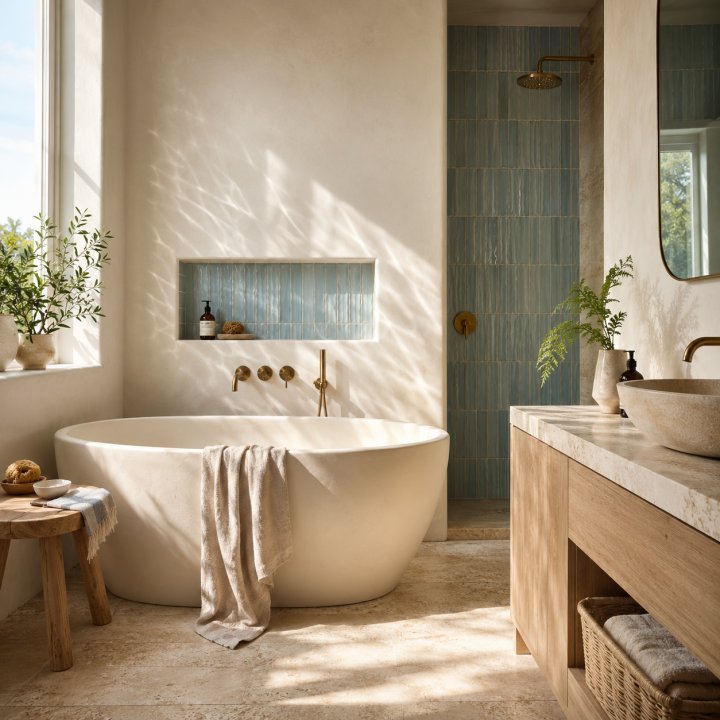
There's just something about the seaside, isn’t there? The shifting blues of a simmering ocean, sun-bleached wood against a rising dune, the soft embrace of a cotton beach towel... these sights and sensations leave you wistfully yearning to feel the surf between your toes once again. However, what if we told you could replicate this without ever leaving your home? What if you could bring a little bit of that seaside magic breezing into your very own bathroom? The good news is, it’s simpler than you might think!
Coastal bathrooms have surged in popularity in recent years, and it's easy to understand why. At a time when most of us are craving simplicity and a sense of escape, the seaside aesthetic offers exactly that. Whether you're drawn to a modern coastal bathroom or something with a little more warmth and character, this style guide will help. We'll cover what coastal interior style actually is, identify its key elements, and walk through the decisions that separate a genuine coastal bathroom from a tawdry souvenir shop.
- What is Coastal Interior Style?
- Key Elements of Coastal Interior Style
- Why Does Coastal Style Work in a Bathroom?
- Coastal vs. Nautical: What's the Difference?
- How to Create a Coastal Style Bathroom
- Create Your Coastal Bathroom with Sanctuary Bathrooms
What is Coastal Interior Style?
Before we get into how you can achieve the coastal look, let’s briefly dissect what it is so we can better understand what we’re trying to attain.
At its heart, coastal interior design is more of an atmosphere than a definitive checklist. Rather than rigidly adhering to a fixed ruleset, you have plenty of license to stretch out and indulge your artistic and creative impulses. However, this doesn't mean you should approach things haphazardly. Otherwise, you risk tipping over into the realms of parody, which is something we’re definitely trying to avoid. When it comes to coastal bathrooms, many people instinctively picture a sort of mildly domesticated beach holiday theme, which is really not what the whole thing’s about.
Instead, the best seaside bathroom ideas draw on something far more considered. True coastal style takes its cues from the shoreline's particular combination of natural light, raw texture and open space, translating these qualities into a room that feels like somewhere you can really breathe and luxuriate.
The coastal aesthetic is also broader church than you might imagine, ranging from the earthy, rough-hewn quality of a fisherman's cottage to the refined polish of a seaside hotel suite. What connects them isn't a fixed set of colours or objects. Rather, it’s a sense of openness, a connection to nature, and an unhurried pace that other rooms in the house rarely manage to attain.
Key Elements of Coastal Interior Style
So, what does the coastal style actually consist of? Its principles are wide-ranging, but they can still group neatly into three basic categories:
- Light and Colour: The foundation of any coastal interior is a direct response to the natural environment of the shoreline on a sun-kissed day. The priority is natural light, which in turn works with your chosen colours to dazzling effect. Natural light should be treated as a material in its own right, with your surfaces, fixtures and layout all geared towards maximising its potency.
- Material and Texture: These provide the tactile layer that gives a coastal interior its character. An emphasis should be placed on organic variation and imperfection rather than artificial uniformity. Wood, stone and linen are excellent choices, but synthetic surfaces can still achieve the desired effects when genuine materials aren’t practical. The aim is simply to capture the natural qualities of coastal life; the smoothness of sea-worn pebble, the roughness of salt-bleached timber, the looseness of woven cloth.
- Ease and Restraint: This is the discipline that separates a genuine coastal room from a nautical or beach-themed imitation. At its best, coastal style looks as though it’s settled into itself over long, weather-beaten years, rather than being merely assembled in the space of an afternoon. This means bringing in fixtures and features that appear found or inherited, as well as resisting decorative clutter and cultivating an overall sense of languid, unhurried calm.
Why Does Coastal Style Work in a Bathroom?
Of all the rooms in the house, the bathroom is the one that lends itself most willingly to the coastal style. This is mainly for the following reasons:
1. Supports Relaxation and Wellbeing
The bathroom is one of those precious few spaces where people can reasonably expect a moment of blessed privacy. It’s a place to escape, decompress and mark the transition between work and rest. A coastal scheme, carefully calibrated for calmness and tranquillity, simply reinforces what this room is already used for. It's much the same instinct that drives the hygge style bathroom, just approached from a different shoreline.
2. Works with Light and Moisture
Strip a coastline back to its essentials and you're left with two things: light and water. A bathroom is the only room in the house designed around both. It's the one place where water is the point rather than a problem, equipped throughout with surfaces built to handle moisture – think bathroom tiles, ceramics, and glass. Handily, most bathroom surfaces also facilitate the passage of light rather than absorb it. As a result, the coastal style isn't being awkwardly imported into a bathroom the way it would be into a living room or bedroom. It takes advantage of the conditions already present, ensuring a seamless integration.
3. Offers a Sensory Environment
Water, steam, the ritual of immersion; the bathroom shares more sensory territory with the coast than any other room in the house. Moreover, the restorative qualities of the coast aren’t simply limited to romantic exaggerations. A study at the University of Exeter tracked the same group of people across England over a number of years, with all participants reporting better mental and physical health during periods in which they lived nearer the coast.
Now, we’re not claiming that a coastal bathroom is magically good for your health, of course. What the research does establish is that the pull towards water is real and measurable, not merely sentimental. A coastal bathroom takes advantage of the positive associations - light, water, openness, peace - that make the real thing worth travelling to.
Coastal vs. Nautical: What's the Difference?
This is worth spelling out clearly, as the two are regularly confused. This confusion is usually what leads a coastal bathroom astray.
The key distinction is between evoking the coast and illustrating it. Coastal style works through atmosphere and suggestion. A nautical bathroom is more literal, reaching for specific, recognisable symbols of maritime life. Seashell and anchor motifs, framed lighthouse prints, your prized SpongeBob SquarePants figurines, etc. While these can be tactfully incorporated into a coastal bathroom (well, maybe not SpongeBob), they require measured discipline to avoid falling into cliché.
If you've decided the nautical look is genuinely what you want, it's worth pursuing it properly rather than trying to split the difference. After all, a bathroom that’s half-coastal and half-nautical tends to look confused. But for most bathrooms - and most budgets - coastal style is the more versatile, liveable, and enduringly appealing of the two.
How to Create a Coastal Style Bathroom
Coastal style rewards a methodical approach. You need to cultivate atmosphere from the ground up, rather than frontloading maritime accessories and hoping the rest of the room follows suit. The following steps adhere to this logic, moving from the foundations that shape a room to the details that complete it.
Colour Palettes
As with all interior design schemes, colour is the best place to start. It sets the scene and lets everything else fall into place. A coastal bathroom attempts to capture the outdoors, so your palette has three main targets: sky, sand and sea. In practical terms, light neutrals form the base, sandy driftwood tones bring the warmth, and ocean blues arrive as deftly implemented accents. Though if you'd rather commit to a single tone and take it everywhere, our colour drenching guide shows how.
A modern coastal bathroom tends toward the cooler, pared-back end of the palette; if you're drawn to the warmer, more layered 'coastal grandma' style that has remained popular through 2025 and into 2026 - one of several looks featured in our 2026 bathroom trends report - sandy creams, aged whites, and a shot of cerulean blue are the colours to reach for.
Choose Light, Airy Colours as a Foundation
Start with the sky. Whites and soft neutrals should always be the foundation of a coastal bathroom colour palette. These pale tones bounce light around rooms of any size, making the space feel airier than it would under a darker, heavier hue. A dark bathroom can be many things - dramatic, enveloping, handsome - but it can't suggest open air, which is the fundamental ingredient the coastal scheme is based around.
Add Soft, Sea-Inspired Accents
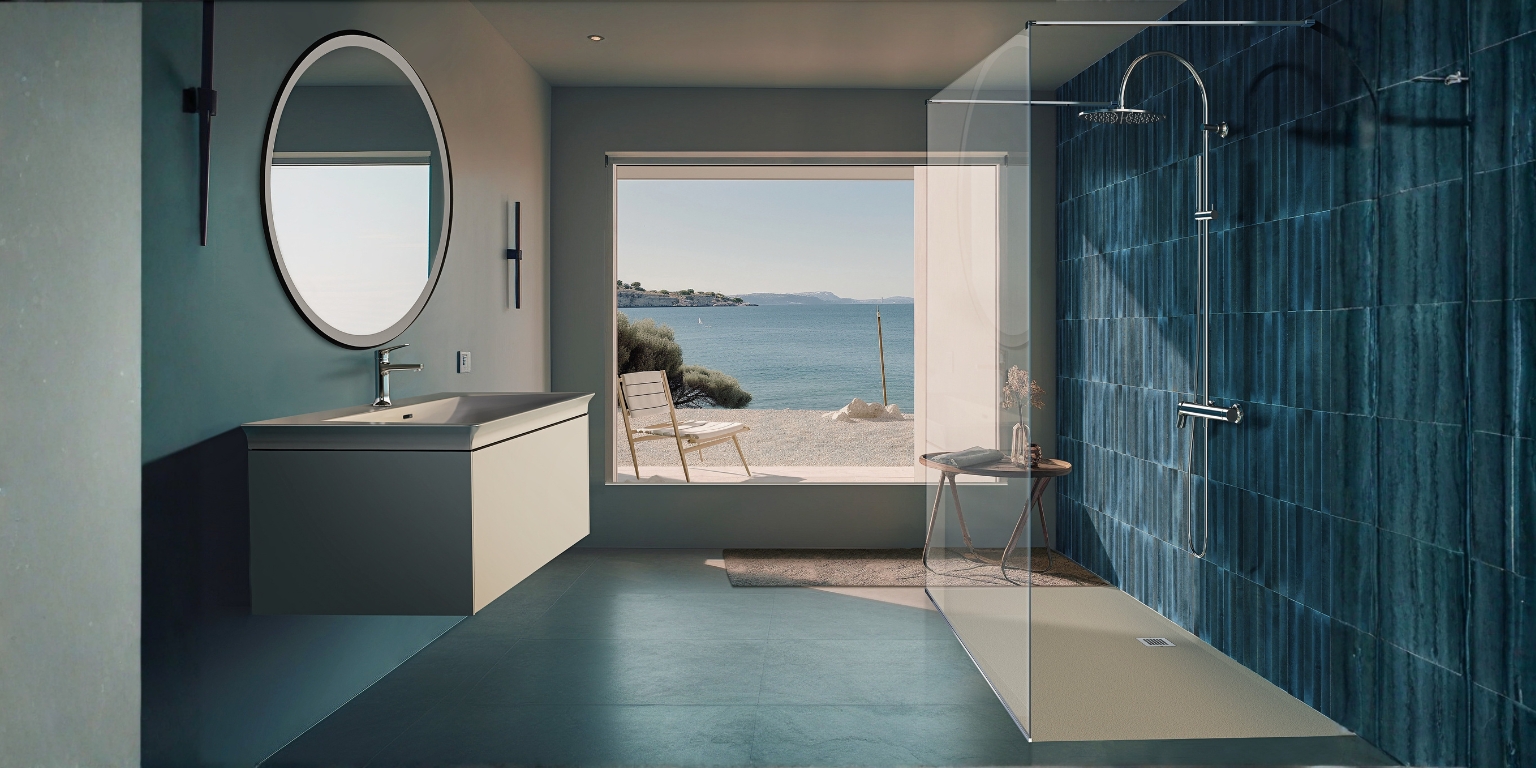
Now for the water! Soft blues, seafoam, and muted aqua are your colours here, and they work best in small doses - think an accent wall, a tiled niche or a run of shower tiles. That's enough to bring the coastal feel into focus without letting it take over. The main trick is to let the blue sit against your pale base rather than fight against it. It should meld naturally into the space, not appear as a tacked-on afterthought.
Layer In Sand and Driftwood Tones
Beige, oat, and timber shades make up the rest of our coastal colour scheme, eliciting thoughts of gentle sand and natural driftwood. These take the form of your bathroom furniture, shelving, and flooring. Wood-effect tiles are the most practical route for floors and walls, delivering the timber aesthetic without risking the warping or moisture damage that real wood is susceptible to. Together, these richly warming colours prevent the room from becoming too cold or clinical.
Surfaces and Materials
Coastal style bathrooms are built around natural materials wrought with strong texture. However, it’s important to combine the right aesthetic with genuine practicality to handle a bathroom's humidity.
Use Textured Tiles
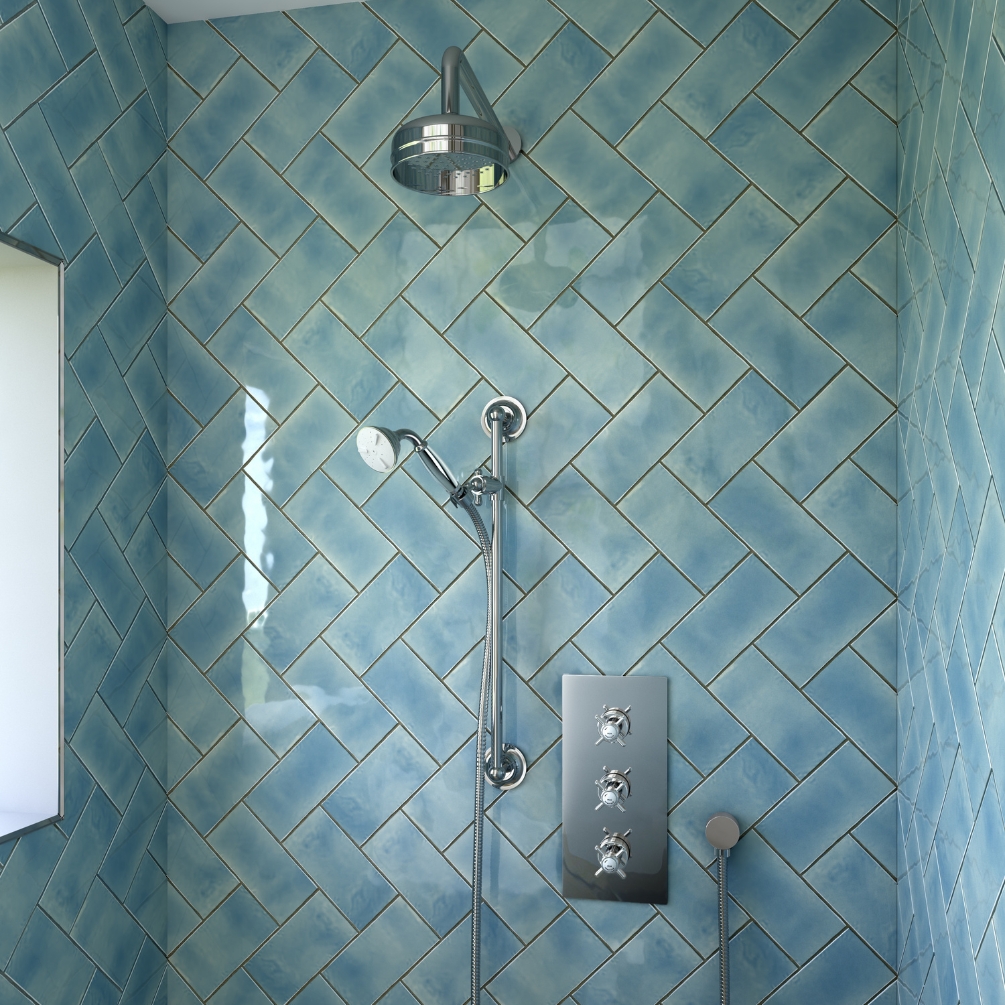
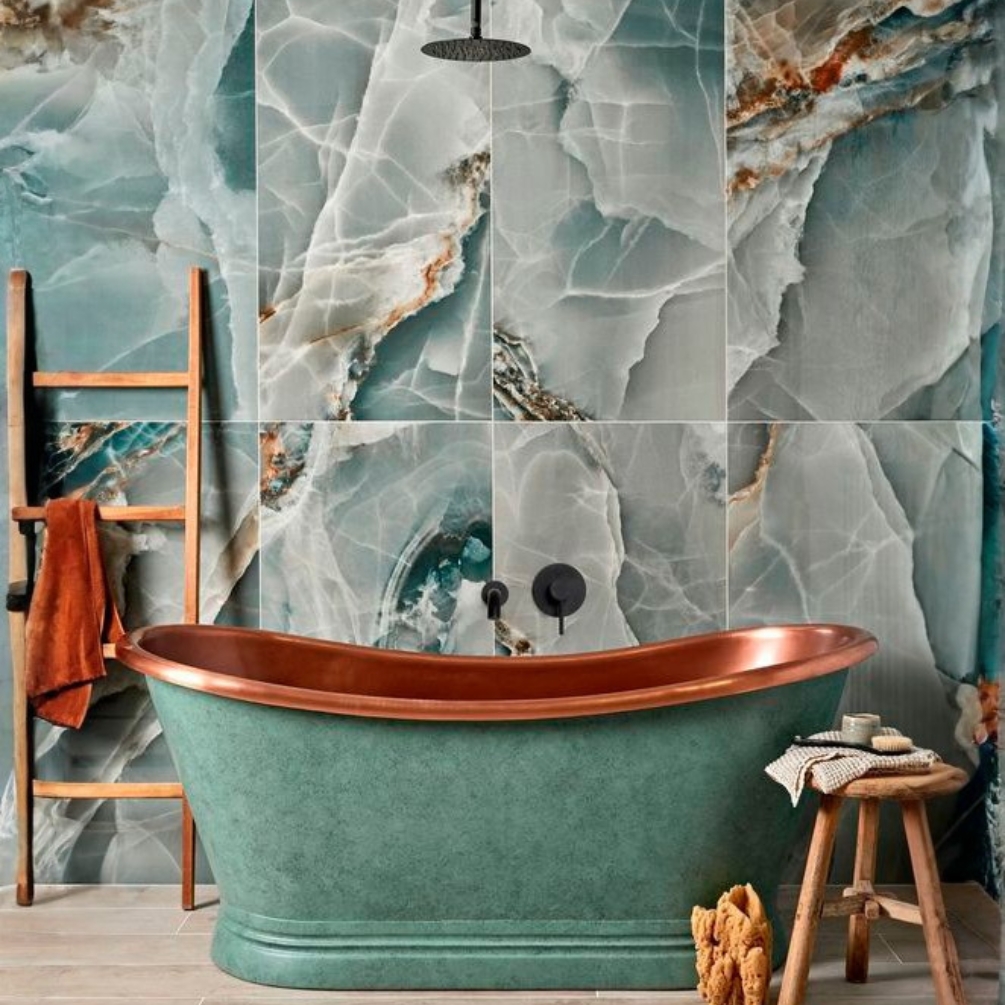
Matt, honed, or textured tiles are the most versatile surface choice for a coastal bathroom. Ripple, herringbone, and scallop textures are definitely worth considering, with many referencing the movement of water without depicting it literally. They catch light in a way that flat tiles don't, and can be introduced as accent walls or within shower enclosures.
Combine Natural Stone, Wood, and Stone-Effect Finishes
Few things ground a modern bathroom, let alone a coastal bathroom, like natural stone and wood. Marble and travertine bring that quality indoors with a quietly luxurious feel. Both are at their best on countertops and other solid surfaces, where their natural veining and variation can actually be seen and touched. Meanwhile, wood is a highly viable choice as an oak vanity unit or a simple teak bath rack, provided it keeps clear of the splash zone.
Fixtures and Fittings
The coastline is teeming with objects shaped by their environment, worn smooth by water, softened by salt air and stripped back to their essential forms. The fixtures and fittings of a coastal bathroom take their cue from the same principle: fluid in shape with very few straight lines.
Pick Softly Curved Basins and Baths
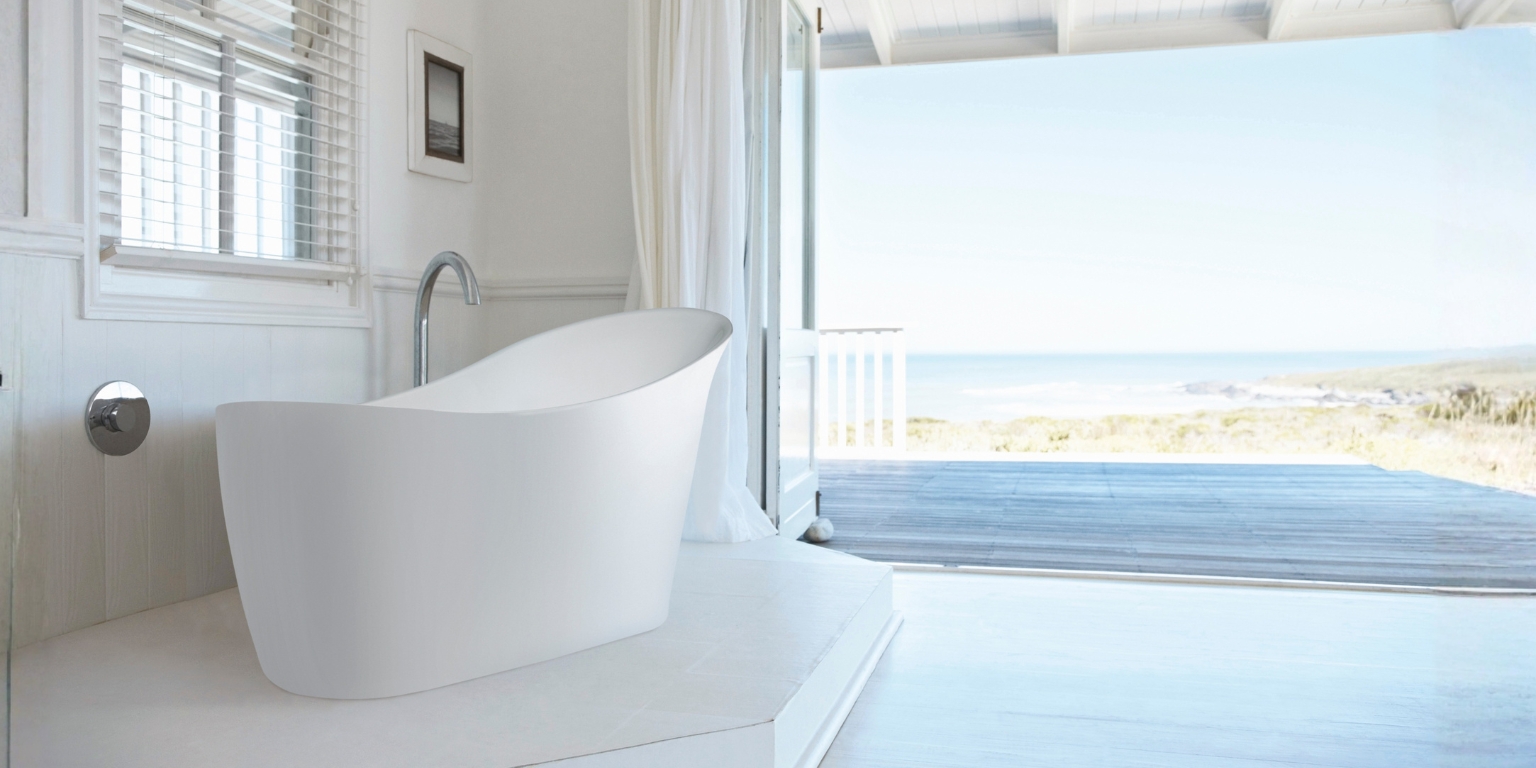
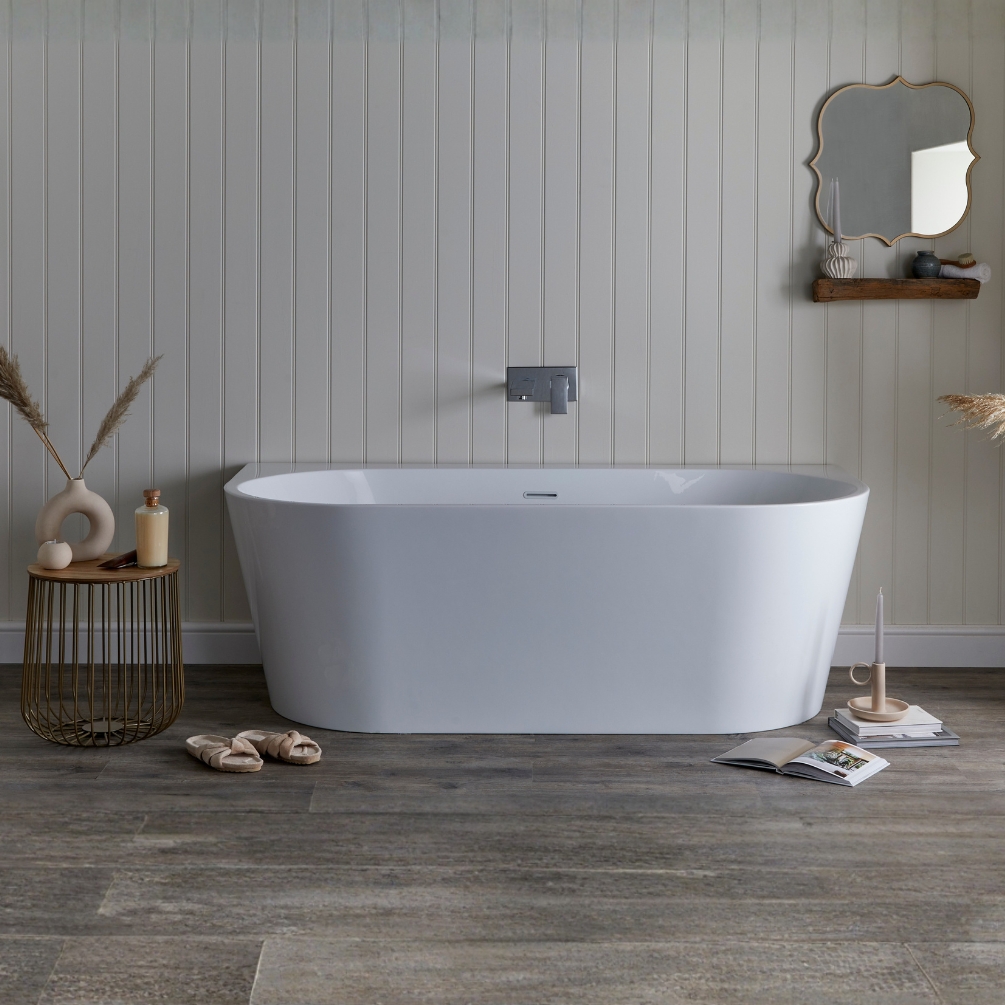
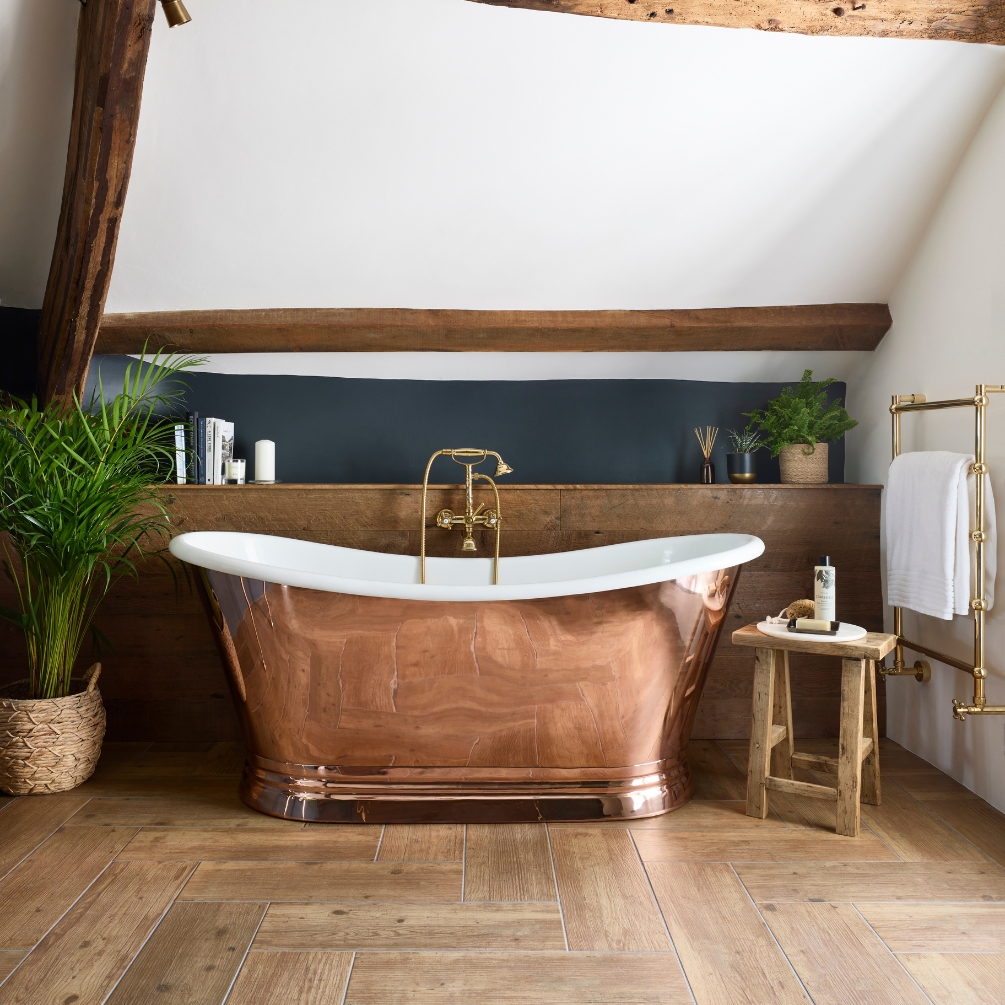
Rounded sanitaryware feels more relaxed and organic than hard rectangular forms, and that softness is central to the coastal aesthetic. Freestanding baths are the most natural fit, bringing a sculptural quality to the room without requiring a large footprint. Either a back-to-wall D-shaped design or a bateau bath is particularly worth considering. For the basin, a curved countertop or oval under-counter basin reads as contemporary coastal rather than clinical.
Choose Warm Metals and Consistent Finishes
Brushed brass, antique gold, copper, and brushed bronze position a coastal bathroom at the warmer, more expressive end of the coastal bathroom spectrum (often referred to as coastal luxe). Whatever you prefer, the specific type of bathroom finish matters less than the consistency. A room where every tap, towel rail, and accessory shares the same metal reads as deliberate and composed, while mixed finishes tend to inform the lived-in, gradually assembled quality that the coastal style depends on.
Lighting
Coastal light has an ethereal quality that's instantly recognisable, yet almost impossible to describe. We can all envision the way it sparkles across waves, diffuses through seaborn mists and turns a white beach gold as the evening sets in, but quantifying such marvels is another matter entirely. This section is about how to bring these intangible phenomena into a bathroom setting, using light sources themselves as well as the surfaces that reflect them.
Embrace Natural Light Where You Can
Natural light is the single most important element in a coastal bathroom, and anything that maximises it is worth the investment. This can take the form of a large window or skylight, or even borrowed light from an adjacent room if your bathroom lacks an external wall. Where the existing light can't be changed, lean harder on the choices we’ve already identified: those pale walls, blue accents, and polished stone touches will all make the most of whatever light is present, reflecting it rather than swallowing it up.
Use Mirrors to Reflect Light Like Water
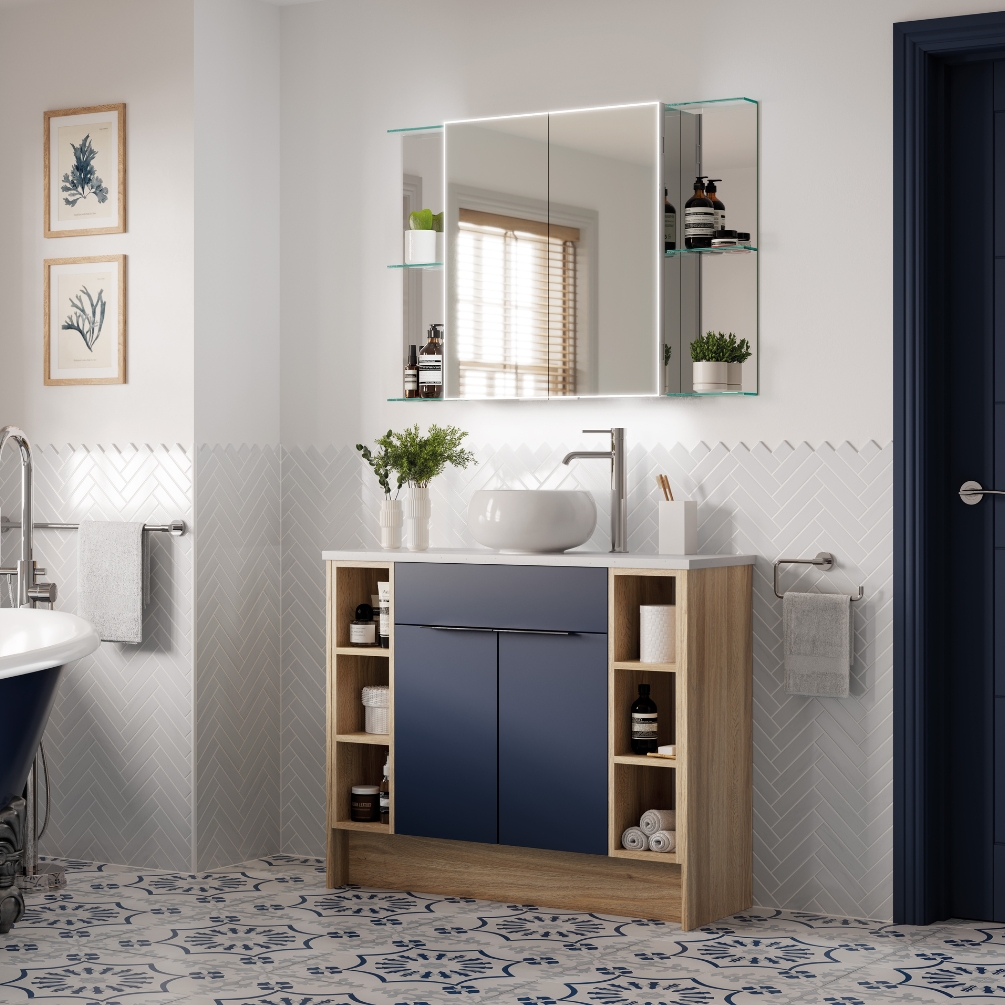
A carefully positioned bathroom mirror opposite or adjacent to the main light source can make the room feel considerably brighter, imitating the sun's reflection off the sea. For small coastal bathroom ideas specifically, mirrors are one of the most powerful tools available; a cluster of mirrors at different heights can substitute for a single large one, extend the apparent depth of the room, and add a slightly collected, organic quality that suits the coastal aesthetic well. If you're working with a large bathroom, a wall-hung mirror cabinet is hard to beat. These units combine the utility of a mirror with convenient hidden bathroom storage and help keep the room uncluttered.
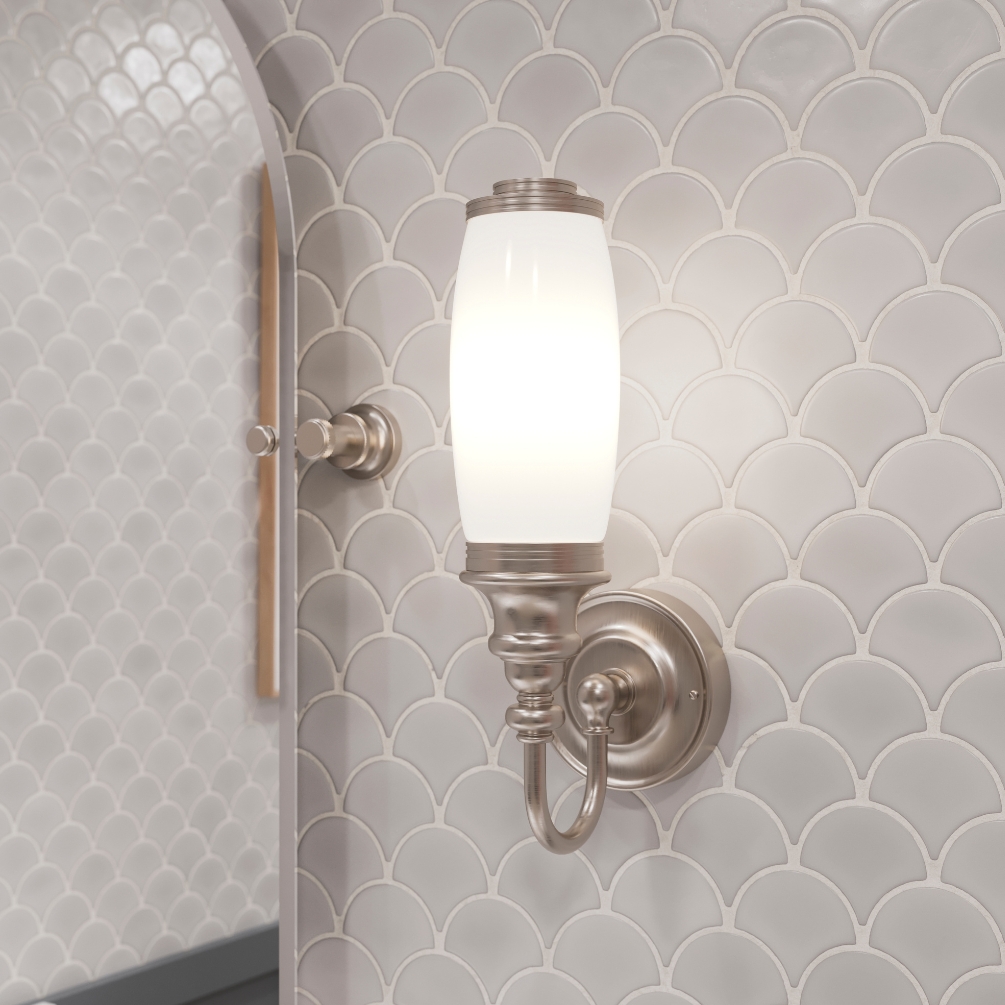
Add Coastal-Inspired Lighting
Good artificial bathroom lighting doesn't replace natural light – it simply continues it. For coastal-style lighting, you should aim for warm colour temperatures and material quality over intense brightness. Bulkhead lights, lantern-style wall lights and ribbed/seeded glass pendants all reference maritime heritage without seeming obvious. Just be sure to layer them strategically - a central pendant with wall lights flanking the mirror, for example - to create the cosy, enveloping quality that a single overhead source can't produce.
As a quick safety note, be aware that all bathroom lighting must be installed in the appropriate electrical zone. Always check zone requirements and IP ratings before specifying any fitting, particularly pendants over baths or in other wet areas.
Accessories and Styling
Unfortunately, the styling stage is usually where things go awry. This is the layer that can really tip a bathroom from ‘authentically rugged coastal haven’ into ‘kitsch beach hut nightmare’. The difference lies in the quality of your choices. As stated before, you need to suggest the coast rather than illustrate it. So, hide the decorative seashells, take down that nautical rope sculpture and, for Neptune’s sake, please go easy on the rum. Our timbers must remain decisively unshivered for the delicate task ahead.
Bring in Woven and Natural Textures
Rattan baskets, jute bathmats, wicker laundry bins and wooden stools bring the indoor-outdoor quality of coastal living into the bathroom. Better still, they do so without a single piece of overtly maritime imagery. Such items are practical as well as tasteful, keeping messy surfaces at bay in style.
Use Subtle Coastal Patterns
A little pattern goes a long way. Blue-and-white striped towels, a striped bathmat, or a striped roller blind are among the most recognisable coastal references. Just be sure to use them sparingly. A few stripes read as a knowing wink to the seaside; many stripes become a garish theme. As long as you keep the rest of the room calm, the pattern will do its job without going overboard.
Choose Art That Evokes Rather Than Depicts
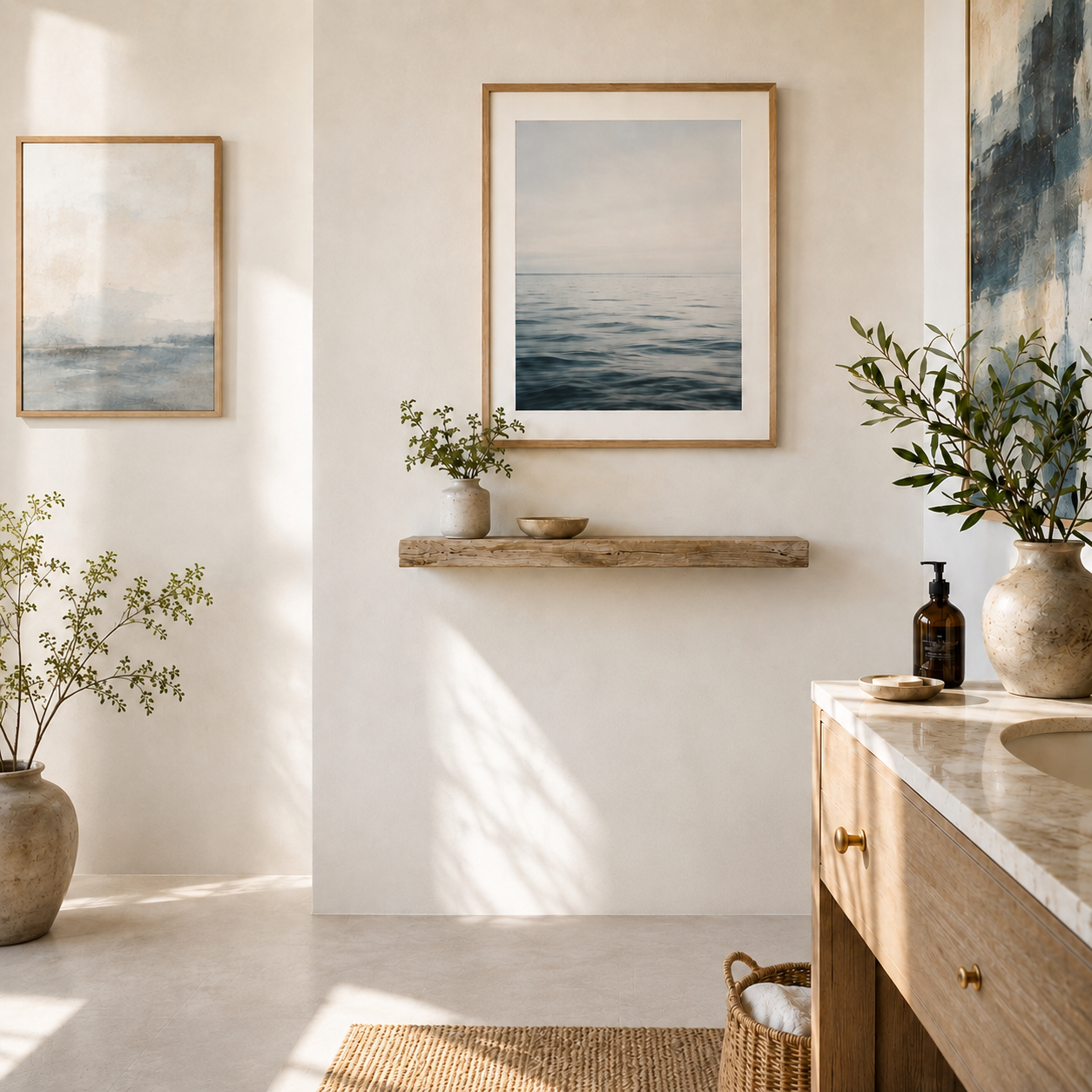
The walls of a coastal bathroom are blank canvases filled with opportunity, so don’t squander them with stick-on seagulls or generic lighthouse prints. A framed photograph of open water, an abstract print in the blues, and neutrals of the coastal palette, or a simple piece of driftwood-toned artwork can all be perfect mood setters, and all without literally illustrating a beach. When selecting pieces, just keep one simple question in mind: does this gently evoke the coast, or does it loudly announce it?
Add Coastal Greenery
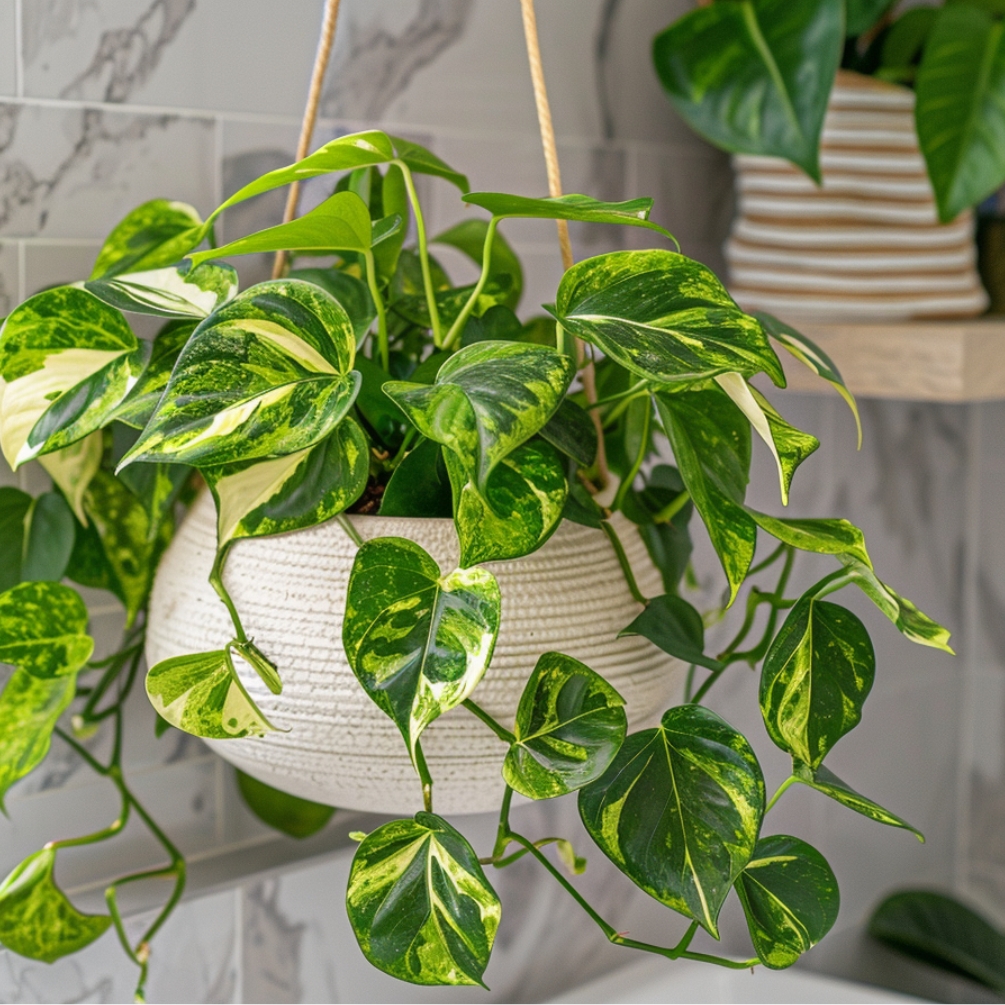
Nature doesn't stop at the bathroom door. The best bathroom plants soften the harder surfaces of a bathroom and reinforce the connection to the natural world that coastal style depends on, a principle borrowed straight from biophilic bathroom design. Pothos, ferns, and peace lilies all handle bathroom humidity well and thrive in indirect light - the conditions most bathrooms offer. A single well-placed plant does more for the room than a shelf of small pots: greenery works best in a coastal bathroom when it's treated as an element of the room rather than an afterthought on the windowsill.
Create Your Coastal Bathroom with Sanctuary Bathrooms
The underlying principle of a well-executed coastal bathroom is restraint. This means a limited two/three-toned colour palette, a small number of core materials repeated throughout the room, and a resistance to the accumulation of overly nautical tat. Coastal style interior design done well arrives as a feeling rather than a look, and the self-editing that produces that feeling is as important as any individual decision about brassware or ceramics.
At Sanctuary Bathrooms, we have the fixtures, materials, and finishes to bring your coastal bathroom decor ideas together at any budget and in any space. Freestanding baths, curved basins, timber vanities, wall panels, and our full brassware range give you the building blocks you need, and our team can help you put them all together. We’re always happy to talk through a project, so feel free to hoist your colours in our direction or contact us via a bottled message any time you like.


