Basin Terminology: A Glossary of Basin Parts and Types
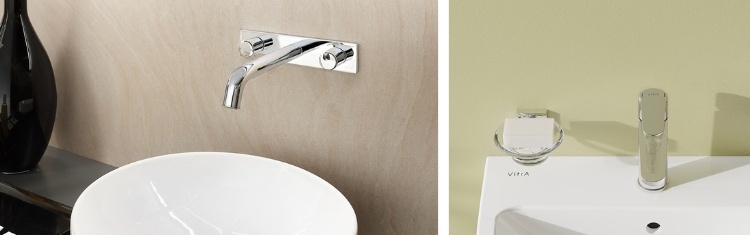
Countertop or semi-recessed? Slotted or unslotted? When it comes to choosing a basin, the terminology can be as varied as the designs themselves. From traditional pedestal basins to contemporary wall-hung styles, there's a wide range of types and features to weigh up, and knowing what each one means makes it far easier to find the right fit for your bathroom.
This glossary is here to help. We've brought together the essential basin terminology, complete with illustrations, so you can choose the right basin for your bathroom with confidence.
Common Basin Parts
The terms and illustrations in this section cover the key parts found on most types of bathroom basins, so you'll know exactly what's what when choosing, fitting, or maintaining yours.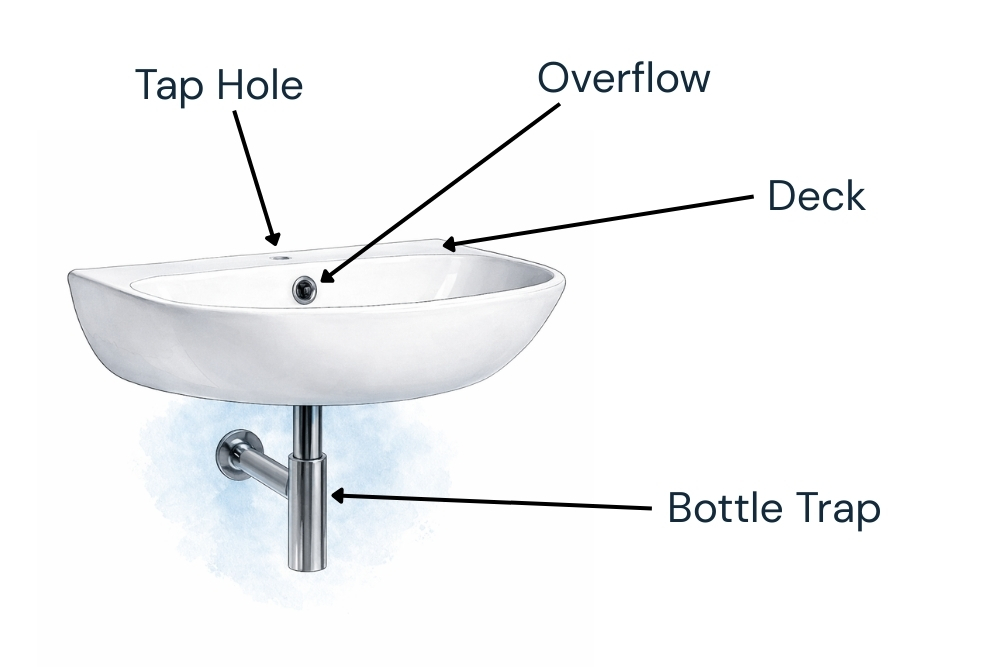
Deck
The flat, horizontal surface area around the rear and edges of a basin. This is where deck-mounted basin taps are fitted through pre-drilled tap holes, and where you can place accessories such as soap dispensers.
Overflow
A small opening on the rear wall of a basin that stops water spilling over the rim if the plug is in and a tap is left running. Internally, the overflow passage is connected back into the basin waste so that, once the water level reaches the overflow, water is diverted down into the same trap and out through the normal waste pipework.
Tap Hole(s)
The pre-drilled holes in a basin deck, used for mounting taps. You'll usually see these in product listing titles or on spec sheets as:
- 0 tap holes (0TH) - No holes, for use with wall‑mounted or countertop‑mounted taps fitted into a worktop.
- 1 tap hole (1TH) - One central hole for a monobloc basin mixer.
- 2 tap holes (2TH) - Two separate holes, usually for hot and cold pillar taps or a bridge mixer.
- 3 tap holes (3TH) - Three holes, typically for a three-hole mixer with separate hot and cold controls and a central spout.
For more information on tap types that suit each configuration, see our tap glossary.
Bottle Trap
The pipe section fitted beneath a basin, with an upright body shaped roughly like a bottle. It holds a small amount of water that seals out drain odours while allowing wastewater to drain. Bottle traps are an essential part of bathroom sink plumbing, and an alternative to a traditional P-trap or U-bend. Their neat, often compact shape makes them a popular choice under wall-hung basins where the pipework is on show.
Waste
The fitting that sits in the basin's plug hole and lets used water drain into the trap below. There are several types of basin waste available, each offering its own closing mechanism:
- Click Clack - A push-to-activate waste that distinctively 'clicks' down to seal water in the basin, and ‘clacks’ up to open and drain water away.
- Pop-Up - Opened and closed by a lift rod, usually positioned behind the tap. Pop-up wastes are often supplied with basin mixers.
- Plug and Chain - A traditional-style waste with a separate plug attached to a chain, which you push into the plug hole to fill the basin.
- Flip Top - A plug with a hinged 180° rotating disc that you press to flip between open and closed positions.
All these waste types can also come with or without a slot. Choosing slotted or unslotted depends on whether your basin has an overflow:
- Slotted Waste - Has one or more openings in the side of the waste body, allowing water from the basin's overflow to drain away, even when the plug is closed. Use with basins that have an overflow.
- Unslotted Waste - Has a solid body with no openings, for basins without an overflow. Water can only drain through the plug hole when the waste is open.
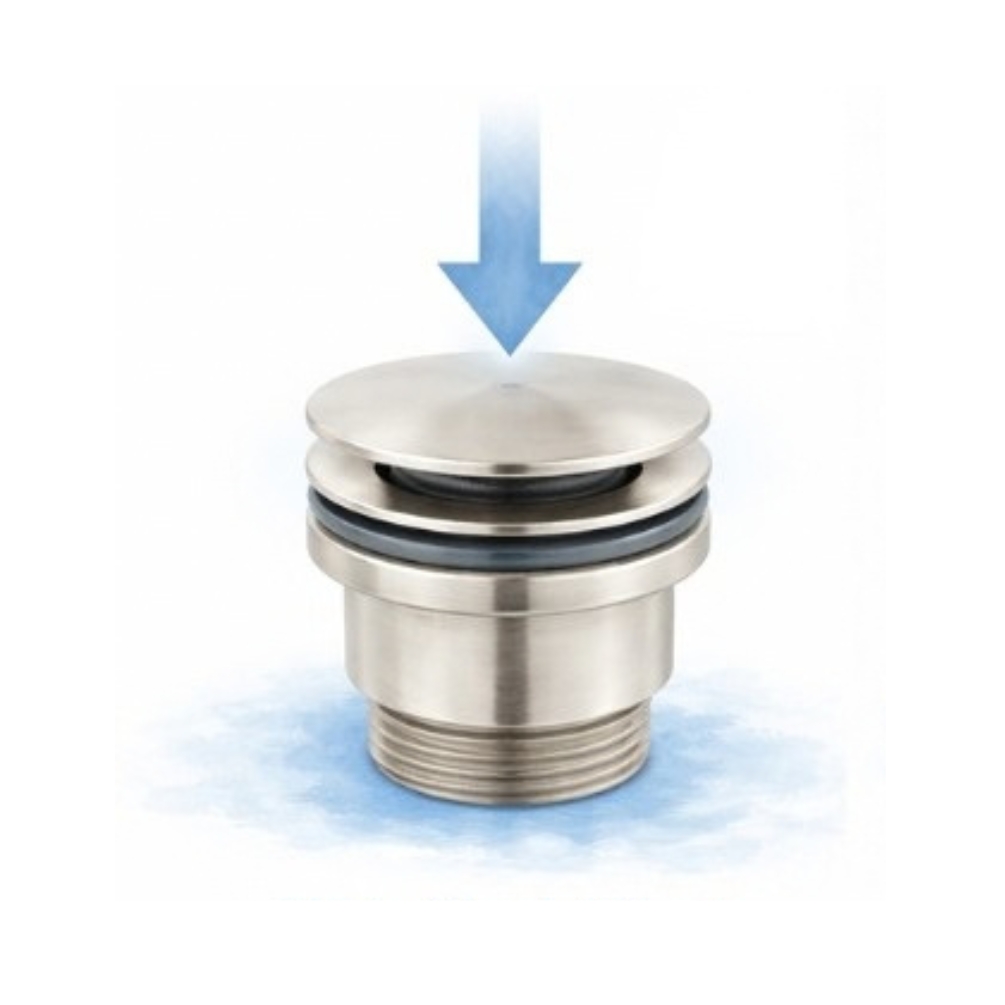
Click Clack Waste
Push to open / close
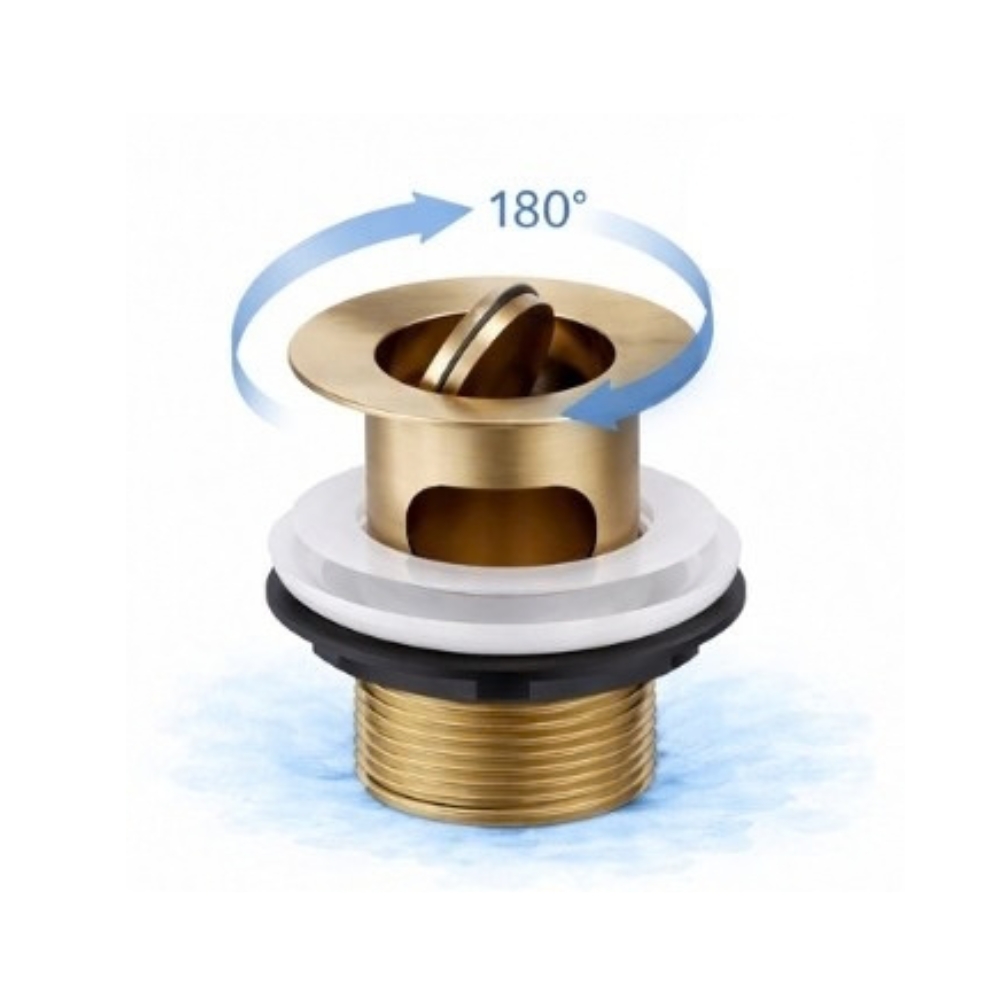
Flip Top Waste
Rotate to open / close
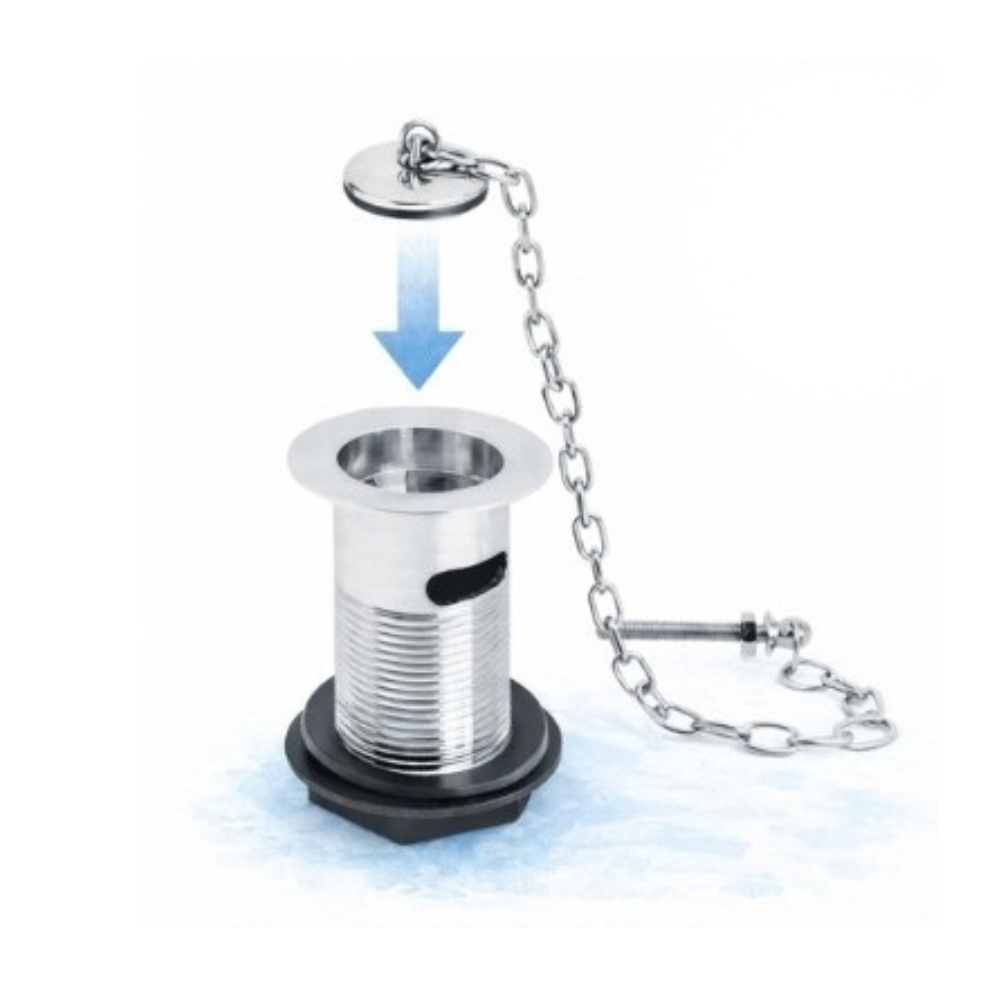
Plug and Chain
Insert plug to seal
Basin Types
From compact cloakroom basins to statement countertop designs, these are the main types of basins you'll come across. For a closer look at how each one compares, read our guide to understanding the different types of bathroom basins.
Cloakroom Basin
A compact basin designed to maximise floor space in small bathrooms, such as ensuites and cloakrooms. Cloakroom basins typically have reduced width and projection, so they fit neatly into tight spaces while still being practical for everyday hand-washing.
Corner Basin
A space-saving triangular or quadrant-shaped basin designed to fit snugly into 90° corner. A corner basin puts an often-unused space to work, which makes it ideal for cloakrooms and ensuite bathrooms.
Corner basins come in several styles, so for more help choosing one, read our corner basin buying guide.
Countertop Basin
A basin that sits on top of a vanity unit or worktop surface, rather than being set into one, or fixed directly onto a wall. Also known as a vessel sink, a countertop basin is fixed and sealed to the surface beneath it and and becomes a real focal point in its own right. Countertop basins often come without tap holes and are usually paired with a tall basin tap or a wall-mounted tap.
Find out more about these basins, including their practicality and benefits, in our countertop basin buying guide.
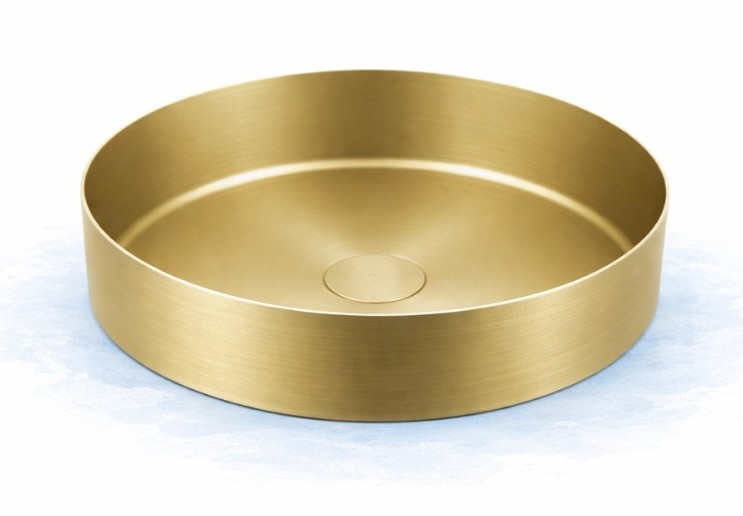
Double Basin
A single unit with two separate basin areas side by side, each with its own waste and usually its own taps. Double basins allow two people to use the basin at the same time, making them ideal for busy family bathrooms and shared ensuites.
Inset Basin
Also known as a drop-in, under-counter, countersunk, or fully recessed bathroom sink, an inset basin sits in a cut-out in a worktop or vanity unit, with its rim either resting on top of the surface or flush within it.
Pedestal Basin
A basin fixed to the wall and supported by a full-height column, or pedestal, that stands on the floor. The pedestal hides the waste pipework for a tidy finish. While pedestal basins are a traditional favourite, there are plenty of contemporary designs available too.
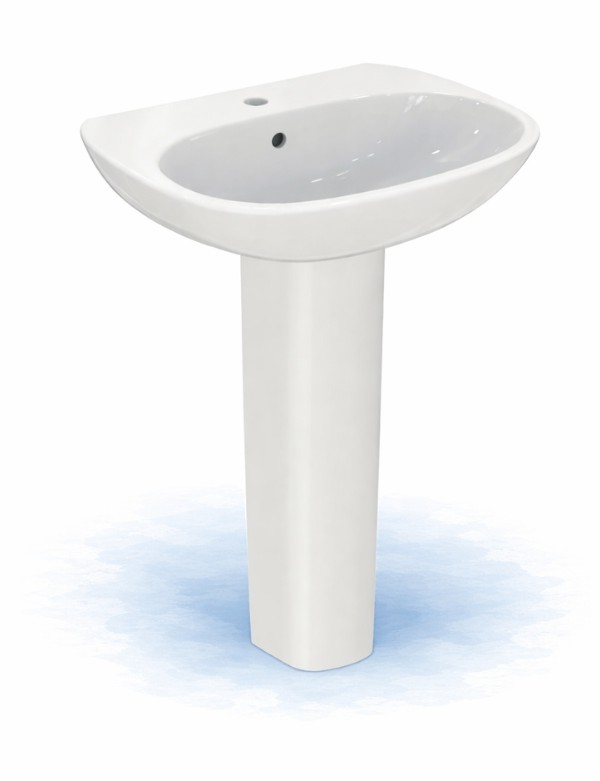
Semi-Pedestal Basin
A wall-hung basin with a short, half-height pedestal fixed beneath it that doesn't make contact with the floor. Like a pedestal basin, a semi-pedestal basin conceals any pipework, but it keeps the floor clear for a lighter look and easier cleaning.
Semi-Recessed Basin
A semi-recessed basin, also known as a semi-countertop, half-inset, or half-recessed basin, combines elements of an inset basin and a countertop basin. It is partially set into a vanity unit or countertop, so the back and underside of the basin are recessed into the surface while the front projects and hangs beyond it.
Read our semi-recessed basin buying guide to find out more.
Wall-Hung Basin
A basin fixed directly to the wall with brackets or bolts, with no pedestal, vanity unit or legs to support it from the floor. A wall-hung basin leaves the floor entirely clear, making the room feel more spacious and the floor easier to clean. As the wall carries the full weight of the basin, the basin needs to be installed on a solid wall, or on a stud wall with noggins or a support frame fitted behind it.
Washstand
Also known as a console basin, a washstand combines a basin with a furniture-style metal or wooden frame. Washstands with four legs are floor-standing, while two-leg designs are also fixed to the wall for support. Many feature a towel rail or shelf for extra practicality.
Other Basin Terms
Backsplash
A built-in raised lip or vertical panel section along the rear of a basin that shields the wall from water splashes, stains, and moisture damage.
Handing
Some basins are 'handed', meaning the tap hole and tap ledge are offset to one side rather than centred. A left-hand basin has the tap hole on the left, and a right-hand basin has it on the right, when viewed from the front. Handing is most common on cloakroom basins, where the layout of the room often dictates the best position.
Projection
The depth of a basin, measured from the wall to the front edge of the basin. Projection is one of the most important measurements when planning an ensuite or cloakroom bathroom, as it determines how much space the basin will take up.
Volume
The water-holding capacity of a bathroom basin. Volume is usually expressed in litres, measured from the lowest point of the bowl up to a defined waterline (often just below the overflow or rim), based on the internal dimensions of the bowl.
Expert Guidance for Your Basin Selection
Now you know your inset basins from your semi-recessed designs, explore our basin collection - from traditional pedestal basins to contemporary wall-hung and countertop styles by leading brands including Roca, Burlington, and Crosswater.
Still unsure which basin will suit your space, your taps, or your plumbing? For over four decades, our in-house specialists have helped homeowners and designers find the right basin. Contact us for personalised advice, or visit our Leeds showroom to see basins alongside vanity units and brassware, compare sizes in person, and talk through the installation with our team.

