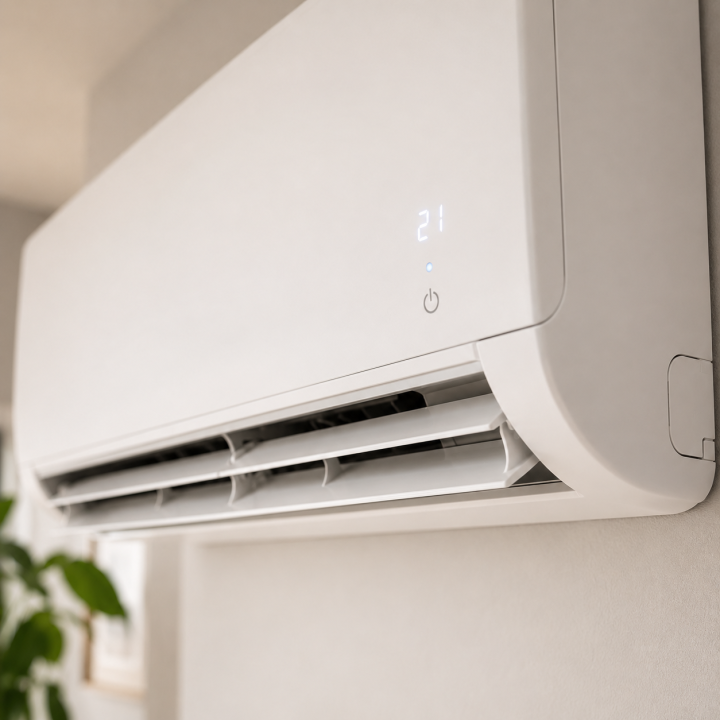
In the UK, every time a heatwave hits the headlines, the same question starts trending: should I get air conditioning? Searches for AC units spike, and it is easy to assume that hotter British summers mean American-style cooling in every home. The reality is more reassuring.
Most UK homes are unlikely to need air conditioning any time soon, and there are easier, cheaper, and more sustainable steps you can take to keep a house cool before you reach for a cooling unit. That is especially true in the bathroom, where air conditioning is neither ideal nor recommended due to strict rules around water and electrics, making practical passive measures the sensible way to tackle the heat.
For expert guidance, Sanctuary Bathrooms spoke to:
- Marta Pawlik, co-founder and creative director of holiday rental management company Laik.
- Dr Ben Roberts, senior lecturer in healthy buildings at Loughborough University.
- Andy Marlow, director of Australian architecture firm Envirotecture.
- Ross Evans, co-founder of British shutter company ShuttersUp.
- Marcus Pearson, head of design at Hudson Reed.

Marta Pawlik

Dr Ben Roberts

Andy Marlow

Ross Evans

Marcus Pearson
Do UK Homes Need Air Conditioning?
British homes are getting warmer. In 2023-24, 2.9 million households in England reported that their home got uncomfortably hot, according to the English Housing Survey. So, it is understandable that homeowners are asking whether air conditioning is the answer. For most, it is not - at least not yet.
UK houses struggle in summer largely because of their design. For generations, the primary design priority was to trap warmth and manage damp during long winters, not to shed heat during repeated heatwaves. As Marta Pawlik puts it: UK bathroom design is "based on the assumption that the bathroom will always be cold, damp, dark, and well-ventilated", despite summer temperatures rising in recent years, and being projected to keep climbing.
Small windows, heavy brickwork, and draught-proofed exteriors let heat build up during the day and linger into the night. The good news is that the same logic works in reverse: stop heat getting in, move air through the house at the right times, and the temperature stays manageable without active cooling.
The evidence backs this up. Dr Ben Roberts says his research shows that "external shading of windows, keeping windows closed when it's hotter outside than in, and opening windows at night when it's cooler are the primary ways we can deal with overheating".
The problem is that Britain uses these passive measures only sparingly. The English Housing Survey 2021-22 found that:
- 93% of households cool their homes by opening windows.
- 52% use fans.
- 9% close external shutters.
- 2% use an awning or canopy.
In other words, the most effective tools for keeping heat out are also the most neglected.
So, does every home need air conditioning? Not quite. It may still have a place in some UK homes, particularly heat-prone rooms such as loft conversions, west-facing rooms, and spaces with large unshaded glazing, or where vulnerable people need reliable temperature control. But it should be the last resort rather than the default first fix, and that point matters even more once you get to the bathroom.
James Roberts, Director of Sanctuary Bathrooms, agrees that cooling units should not be the reflex response. "US-style air conditioning may become part of the solution for some UK homes, but it's unlikely to 'take over' and is by no means inevitable," he says, "especially as there are easier, more passive, and more sustainable first steps that can be taken to improve heat resilience." His advice is to work through a clear order of priority: stop heat from building up in the first place, then improve airflow, and only consider active cooling if those measures are not enough.
Why Air Conditioning Shouldn’t Be Your First Move
There are two major reasons to treat air conditioning as a last resort rather than a first move.
The first is sustainability. Air conditioning is energy-intensive, and widespread home cooling would undermine the broader effort to reduce household energy use and carbon emissions. Globally, air conditioning accounts for around 7% of the world’s electricity and roughly 3% of total greenhouse gas emissions. Refrigerant-based systems carry environmental obligations of their own, too.
The second issue is that air conditioning units only treat the symptom, not the cause. If a room is getting too hot or humid, using artificial cooling just masks the problem, and you're left paying to run it all the time: around 20p per hour for one room, according to GetSmartSaver. It usually makes more sense to fix the design rather than work around it and pay more in the long run.
Can You Get Air Conditioning in the Bathroom?
While most people think of air conditioning for bedrooms and living rooms, many ask whether it’s possible to install AC in the bathroom as well. Unfortunately, the bathroom is the one room where air conditioning is hardest to justify and often simply inappropriate, primarily because the room combines the hazardous elements of water, steam, and electricity.
This is reinforced by UK regulations: the wiring rules (BS 7671) divide a bathroom into safety zones based on proximity to water, and any electrical item in these zones must carry an appropriate IP (Ingress Protection) rating that many standard AC units lack. On top of this, bathroom circuits must have RCD (Residual Current Device) protection, and any electrical work is notifiable under Part P of the Building Regulations, so retrofitting cooling is never a simple plug-in job, but a specialist task requiring qualified sign-off. Even setting compliance aside, the bathroom's constant high humidity is exactly the environment AC systems are least suited to, meaning any unit installed there would corrode faster and be far less reliable.
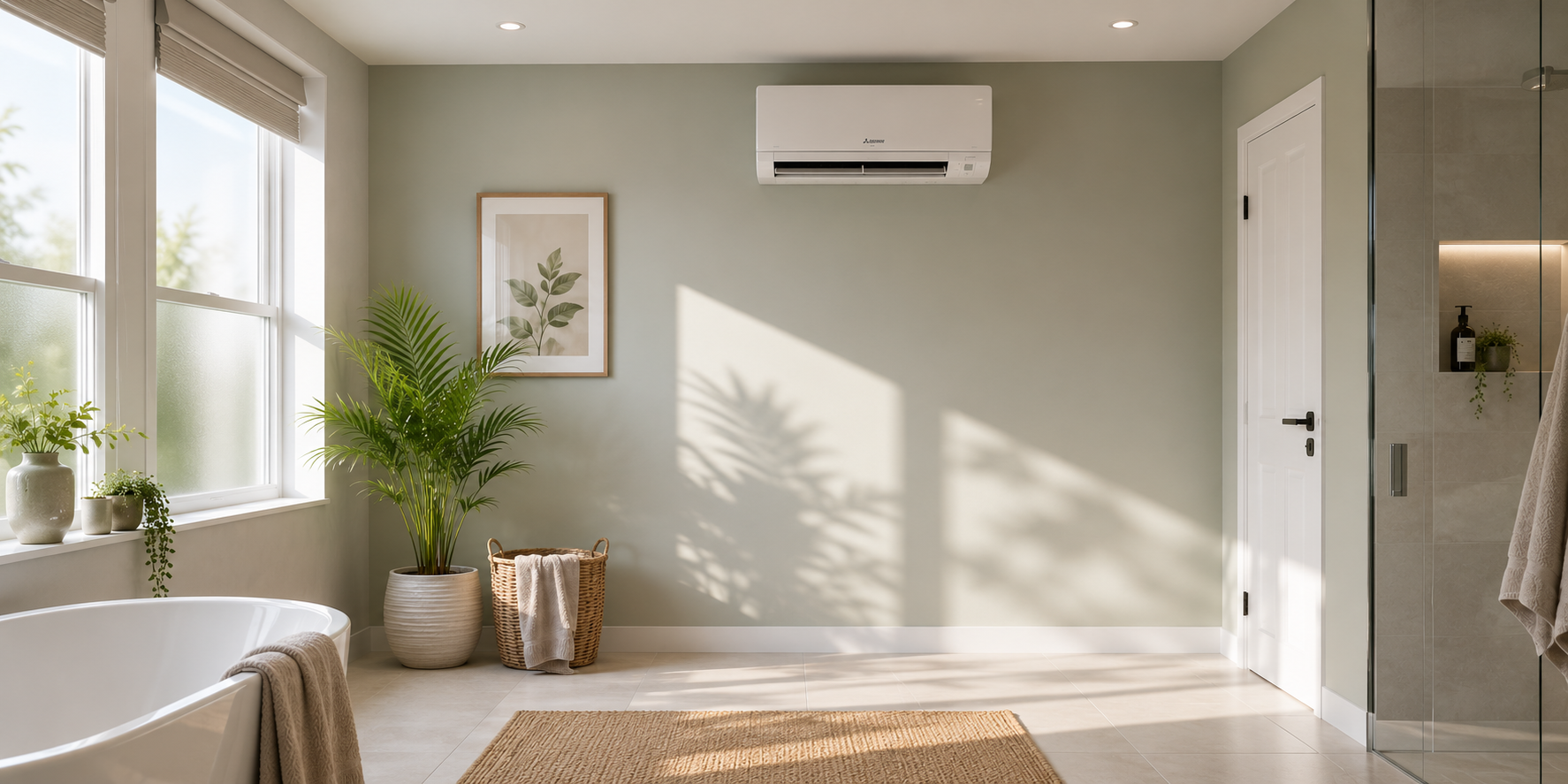
However, none of this is to say it’s not possible. Some manufacturers offer specialist, humidity- and corrosion-resistant units that can still be installed outside the wet zones. Such models are built with sealed electrical components and are designed for bathroom environments.
How to Keep Your Bathroom Cool
So, with air conditioning best set aside for most bathrooms, the question becomes how to counteract the heat using everything else at your disposal. That is no small task in a bathroom, which comes with major heat problems - small windows, space constraints, heavy tiling, and excess moisture - all of which make it harder to cool than most rooms. Heat takes a real toll on the space, too, from sweating cisterns to mould flare-ups. As such, we’ll be looking at methods of passive cooling, interventions that keep the heat out.
With these interventions, it is worth being realistic from the outset. While a few are simple behavioural changes, most involve some fitting, electrical, or building work, so they are best planned as part of a bathroom renovation rather than bolted on afterwards. But if you are already in the process of updating a bathroom, now is the optimal time to design for better heat resilience.
1. External Shading
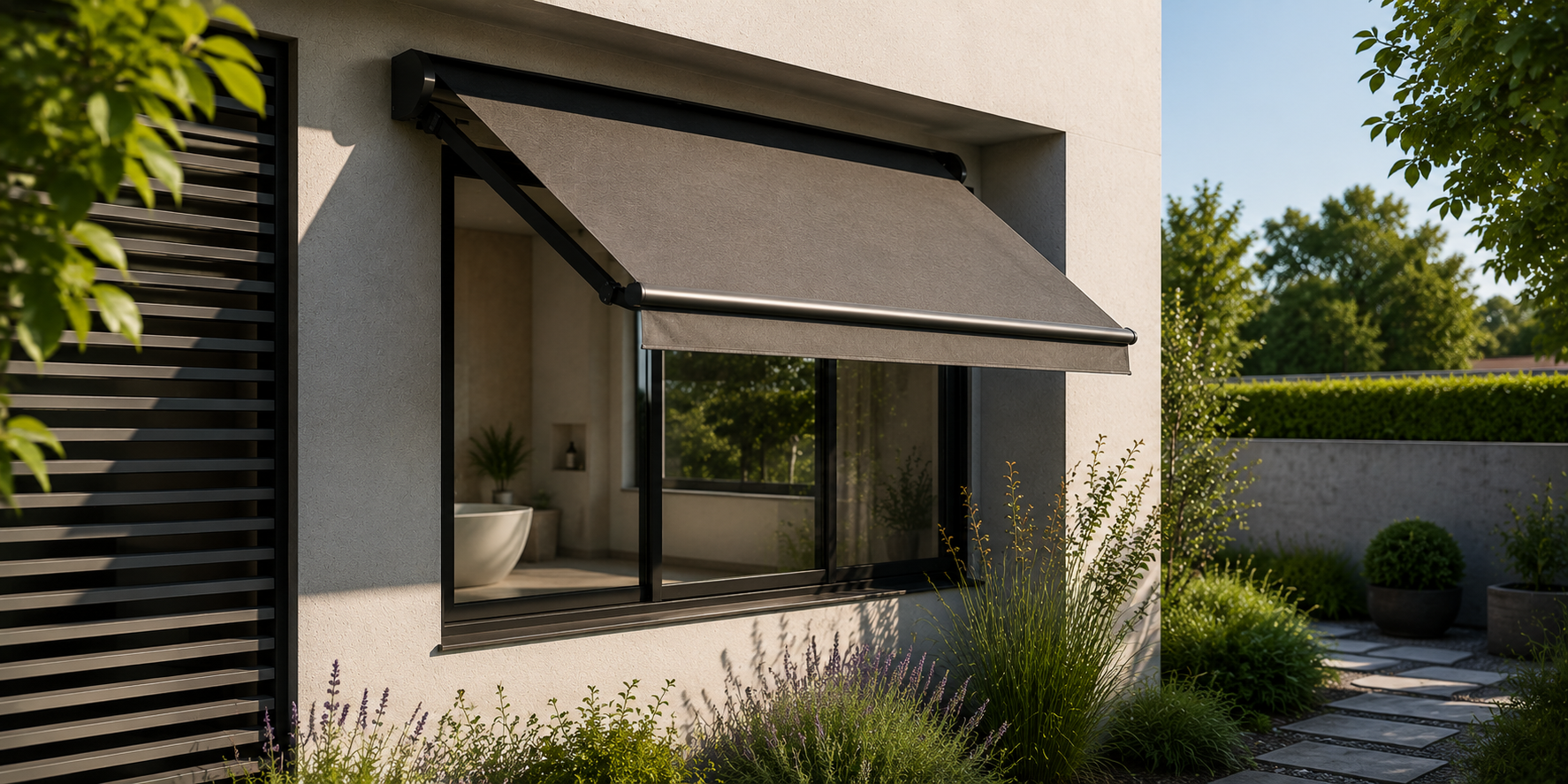
Of all the passive cooling techniques, external shading is one of the most effective. It means fitting something to the outside of a window - shutters, awnings, external blinds, brise-soleil, or even well-placed planting - to block the sun before it reaches the glass. That order matters: once sunlight passes through a window it becomes trapped heat, and heat is far harder to remove than it is to keep out in the first place. Stop the heat at the source, and the room stays noticeably cooler with far less effort than cooling it after it has already heated up.
2. Internal Shutters or Blinds
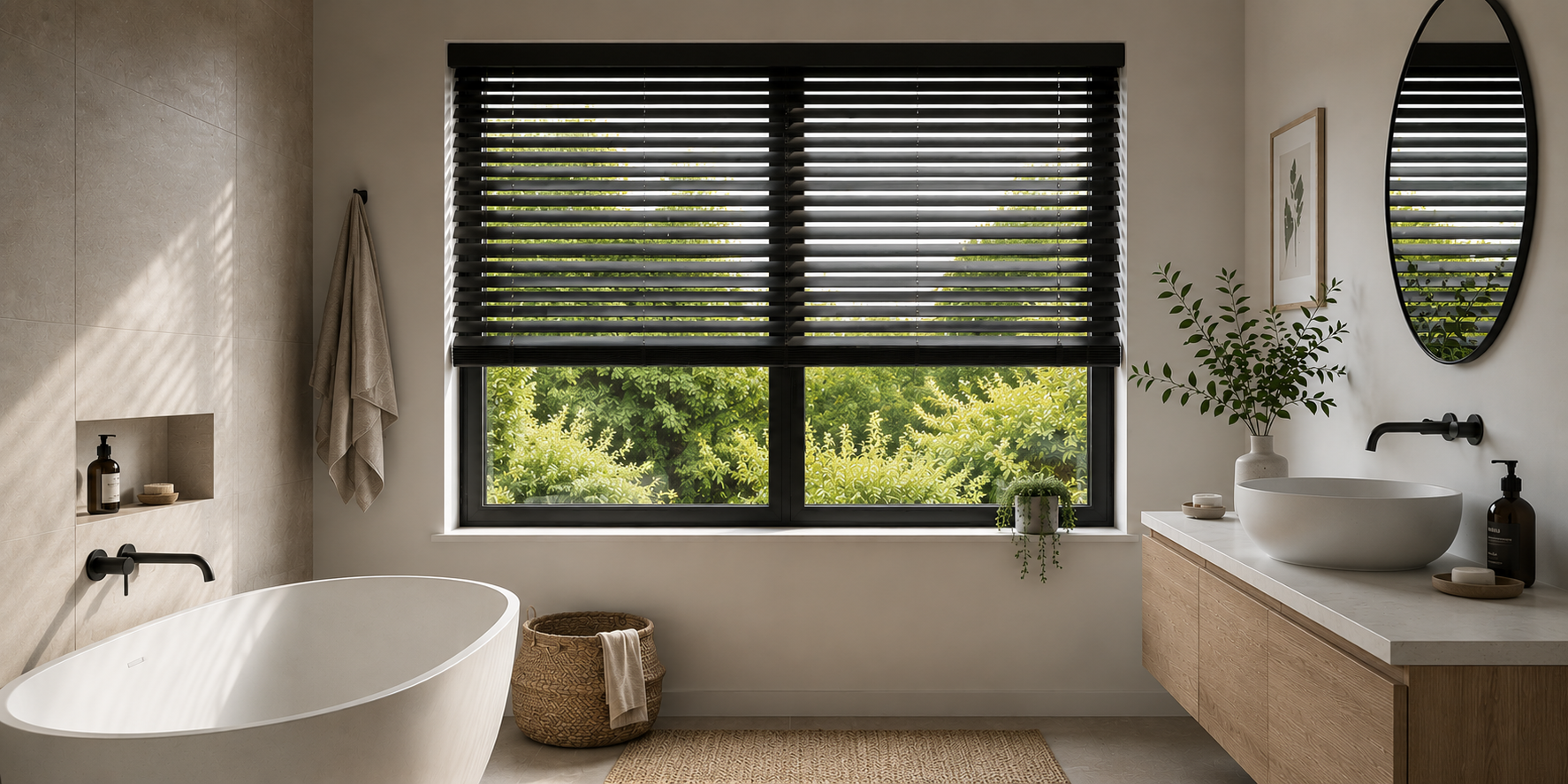
Fitted inside the window, internal shutters and blinds are the easier, lower-cost alternative when external shading is not feasible, for example, in a rented home, a flat, or a conservation area. Because they sit behind the glass, they intercept heat only after it is already in the room, so they are less effective than external shading; however, they still block direct sunlight and provide privacy control, which makes them a natural fit for bathrooms.
Ross Evans says he is seeing a “growing number of clients incorporate shutters into their bathroom designs as a practical way to manage indoor temperatures naturally”. He says shutters act as “an effective barrier against solar heat gain with their adjustable louvres allowing light and airflow to be controlled, helping to keep rooms cool, shaded and naturally ventilated."
3. Secure Night Ventilation
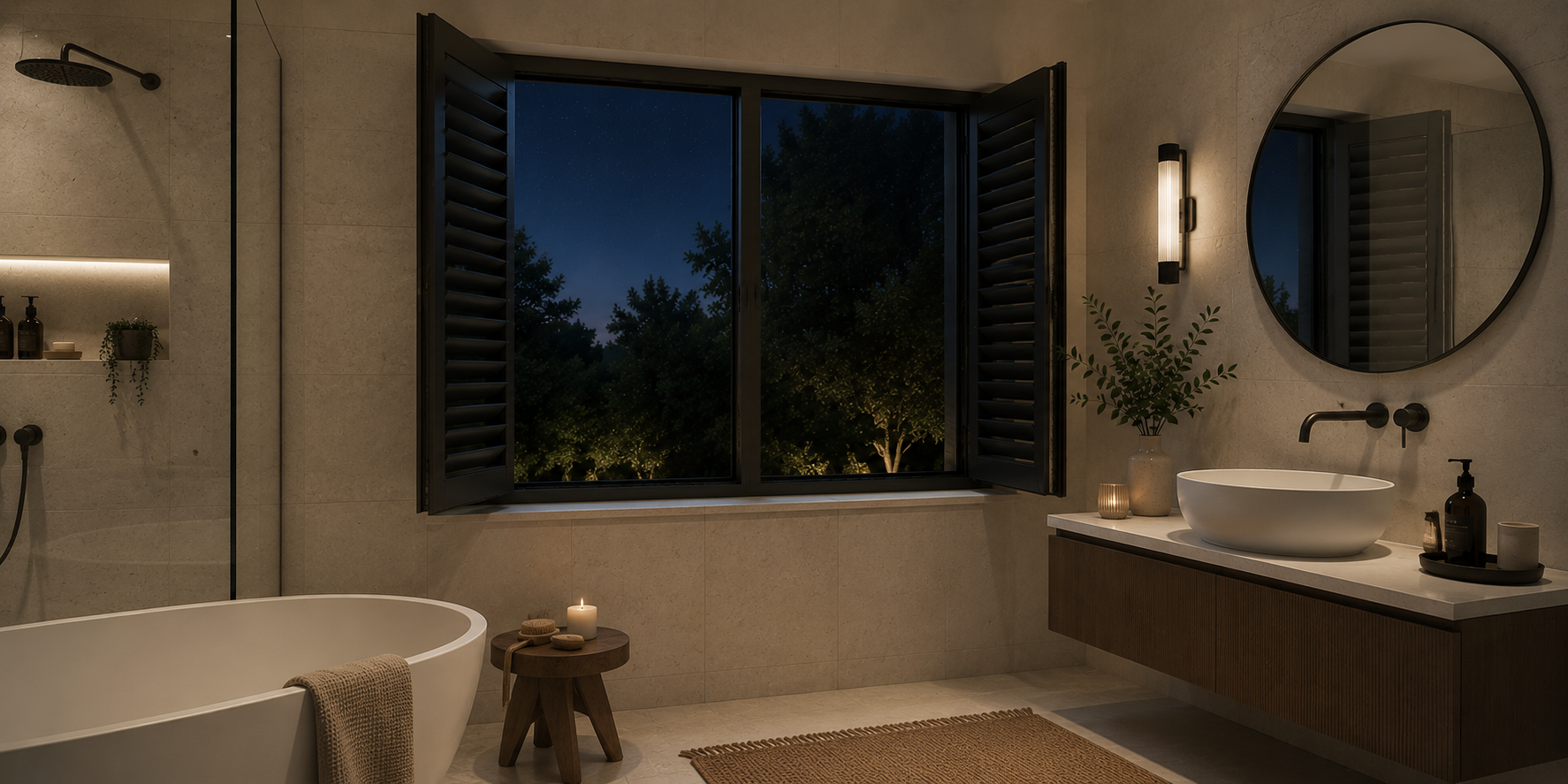
Night ventilation, sometimes called purge ventilation, means opening the room up when the air outside is cooler than the air inside - usually overnight or in the early morning - so it can flush out the heat that built up during the day. It costs nothing and works with the natural drop in temperature after dark, making it one of the most reliable ways to stop a bathroom from carrying its warmth through the night. The ‘secure’ part matters here: window restrictors, louvres, or shutters let you leave the room open safely without compromising privacy.
This echoes Dr Ben Roberts' earlier point: alongside external shading and keeping windows shut when it's hotter outside, opening windows at night is, in his words, one of "the primary ways we can deal with overheating."
4. Better Extract Ventilation
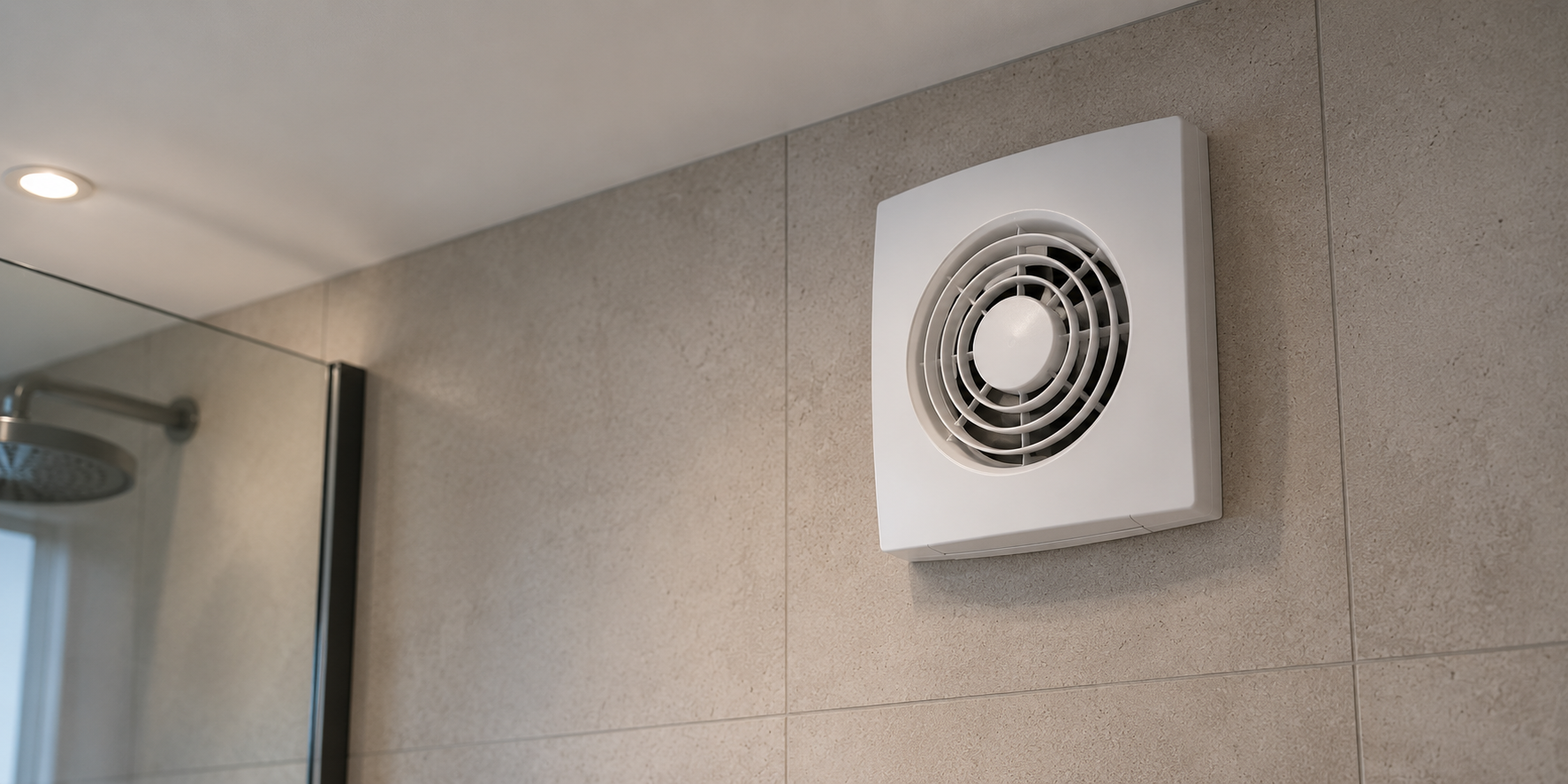
Extract ventilation is the job your extractor fan does: pulling warm, moist air out of the room and venting it outside. To work properly, it needs to be correctly specified, ducted to the outside rather than into a loft void, and supported by a clear air path such as a door undercut or transfer grille so replacement air can flow in behind it. Get this right, and it clears both post-shower steam and trapped summer heat, making it one of the hardest-working fixtures in a heat-resilient bathroom.
Ventilation matters most in a bathroom because of the room's size. Andy Marlow points out that because bathrooms are often the smallest rooms in the home, they "tend to be more susceptible to swings in temperature and humidity, making them easy to heat but harder to cool." His number-one piece of advice for climate-proofing a British bathroom is to implement a "reliable ventilation strategy to control moisture and prevent condensation and mould."
Marcus Pearson agrees that airflow is the priority and should never be an afterthought: "A well-positioned opening window is ideal, but where that isn't possible, an effective extractor fan is a must-have." The practical takeaway is to avoid layouts that block airflow and to invest in a fan that can actually do the job, rather than treating it as a box-ticking fixture.
5. Control Heat-Producing Fittings
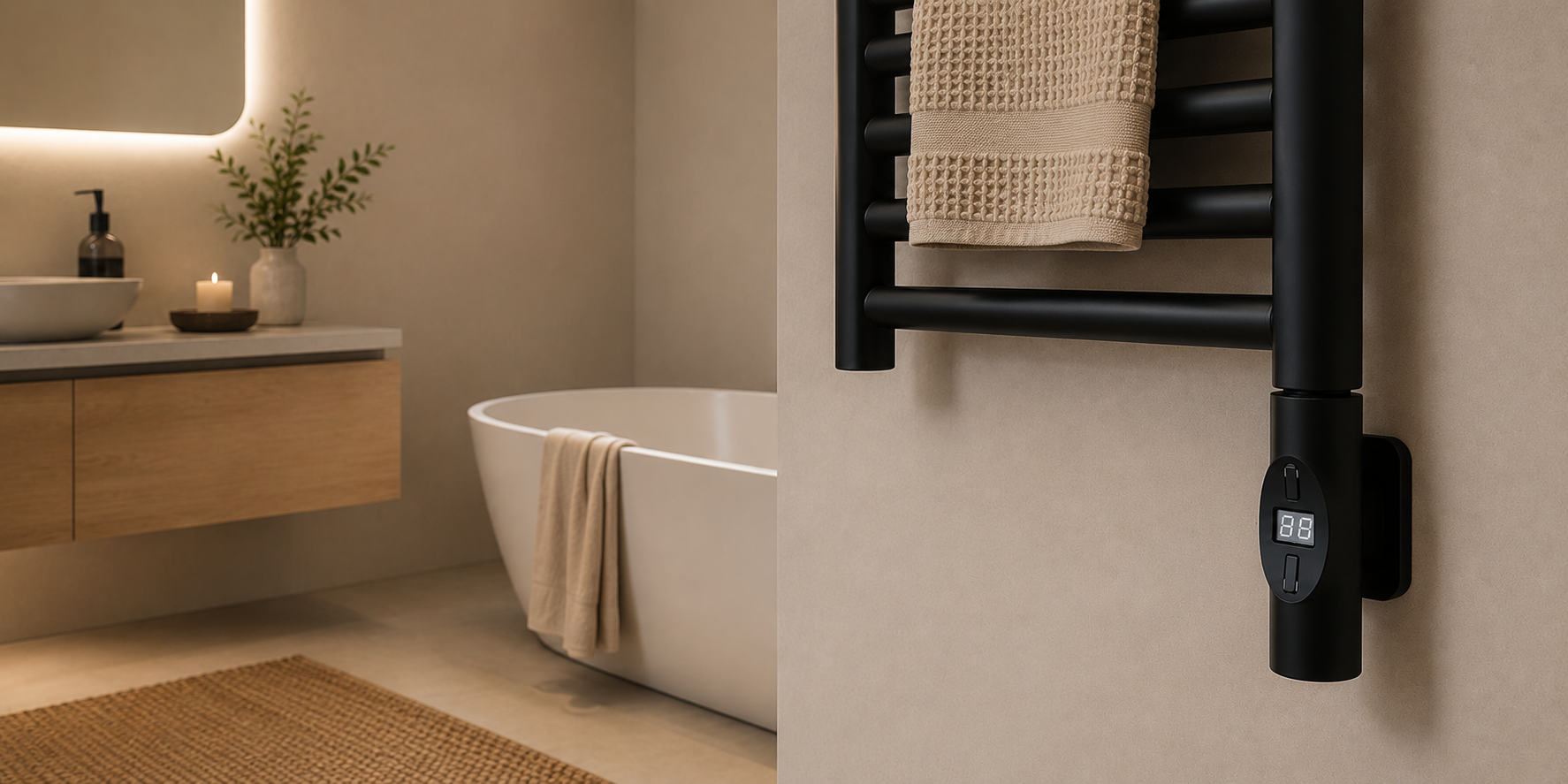
Many bathroom fittings generate heat of their own: heated towel rails, underfloor heating, heated mirrors, and even the lighting itself all quietly warm the room. Put them on separate controls or timers, rather than leaving everything tied to one circuit, so you can switch off what you do not need in hot weather while keeping it all for winter comfort. In a compact, poorly ventilated space especially, limiting this background warmth makes a real difference to how the room copes on a hot day.
6. MVHR With Summer Bypass
MVHR - mechanical ventilation with heat recovery - is a whole-home system that continuously extracts stale air from wet rooms, such as bathrooms, and supplies fresh air elsewhere, recovering heat from the outgoing air in winter. The summer bypass feature lets the air skip the heat-recovery stage when it is warm, drawing in cooler night air instead. It is genuinely useful for air quality and gentle overnight cooling, but it is worth being clear that it is not air conditioning: it moves and freshens air; it does not actively chill a room.
FAQ About Keeping Bathrooms Cool
How Much Does It Cost to Install Air Conditioning in a UK Home?
The cost of air conditioning installation varies with your property's size and the type of unit you choose. According to MoneySuperMarket, you can expect a standard one-room single-split system (one indoor and one outdoor unit) to cost around £1,800 to £4,500. Yet installing air conditioning in a bathroom may be more expensive than in other parts of the home due to the need for specialised units, equipment, and careful installation.
Is Air Conditioning Worth It in the UK?
For most homes, no - not as a first step. British summers, while warmer, rarely get hot enough for long enough to justify active cooling when passive measures such as shading and ventilation handle the problem. It becomes more worthwhile in genuinely heat-prone rooms, such as loft ensuites or poorly shaded west-facing rooms, or for households with vulnerable occupants. If a bathroom genuinely overheats and passive or ventilation measures cannot solve the problem, air conditioning may be worth discussing with a qualified specialist. Even then, installation is a specialist job - bathrooms bring electrical safety zones, moisture, IP ratings, RCD protection and Building Regulations into play, along with F-gas requirements for any refrigerant-based system.
Should I Open the Bathroom Window to Keep My Bathroom Cool?
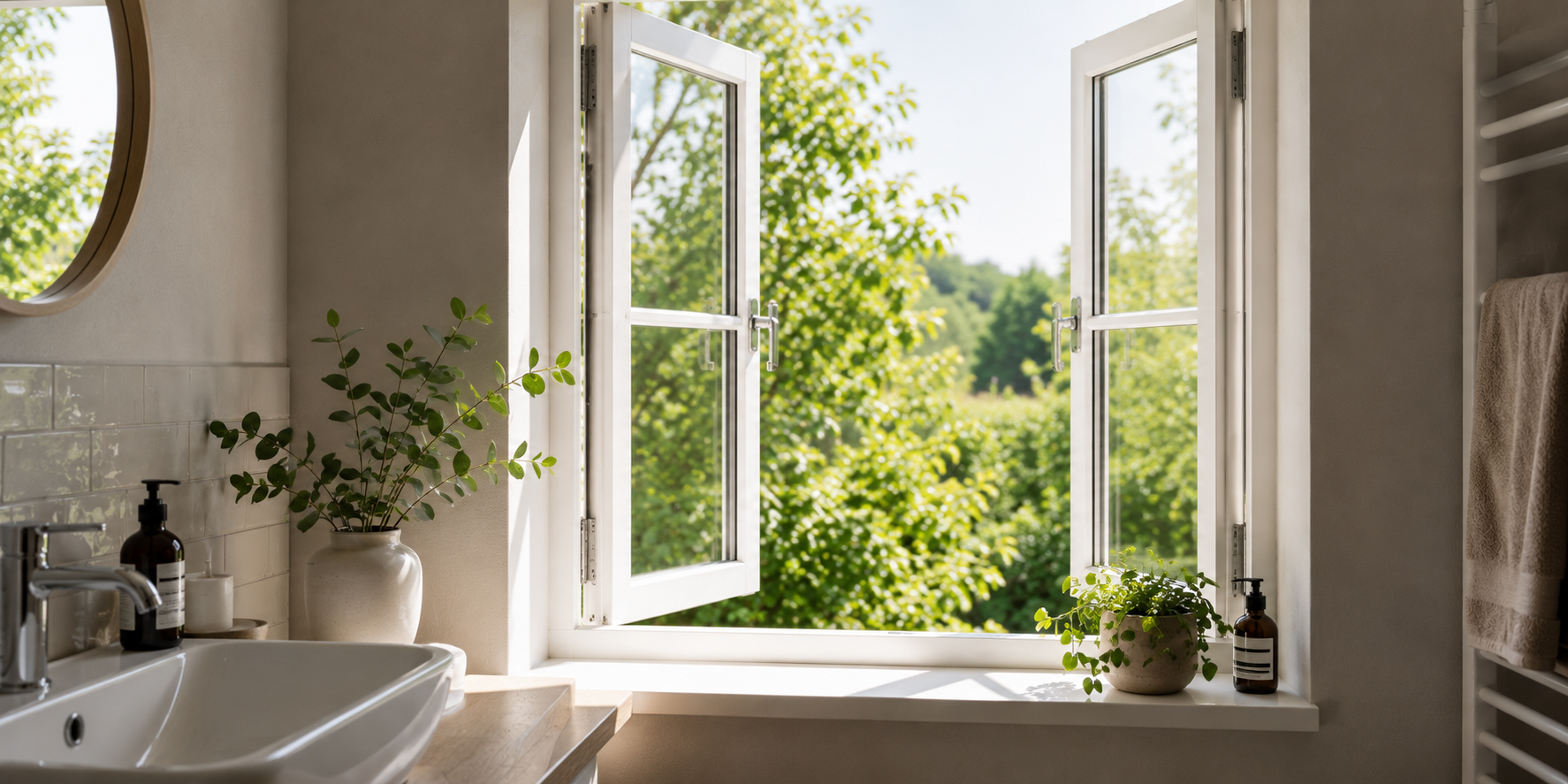
You should only open the bathroom window when the outside air is cooler than the air inside, typically overnight or early morning. During a heatwave especially, opening the window in the heat of the day does more harm than good, bringing warm air in rather than letting it out.
Is an Extractor Fan Enough to Keep My Bathroom Cool?
Not by itself. An extractor fan can be essential for moisture removal, but heatwave resilience also depends on shading, air pathways, purge ventilation, material choices, and control of heat-producing fixtures.
Building a Bathroom Ready for Hotter Summers
The takeaway is simple: keep the heat out, move air well, and a bathroom stays comfortable through a heatwave without a cooling unit. As summers continue to warm, heat resilience will become an even bigger part of how we design our homes.
If you are already planning a bathroom renovation, it is the ideal time to incorporate these measures from the start. To talk it through with our team, get in touch, and we will help you design a bathroom that stays as comfortable in July as it is in February.


