Every year, thousands of people globally search online to find out which is better: baths or showers? It is an age-old debate that rumbles on each year based on changing bathroom trends and personal preference, as well as changing perceptions about eco-friendliness and water saving.
In the UK, according to Google Keyword Planner, the average was 2,660 monthly searchers per month from UK users across the entire of 2025, while the peaks in March and October saw 3,930 average monthly searches when combining phrases like 'bath v shower', 'bath versus shower', and 'bath vs shower'. The average across the year did not increase in 2025, however, in terms of the peak, this was up 30% year on year from 3,020 searches in 2024's highest month of January. Historically, bathing has been the go-to choice for thousands of years. The shower, by comparison, is quite a recent invention, with the first one resembling our modern counterparts patented in 1767. But which do Brits actually prefer and why? Which is actually better for water consumption, hygiene and cleanliness? Our research surveyed the bathing habits of Brits, as well as looking at how these are changing in the 21st century.
Do People Prefer Baths or Showers?
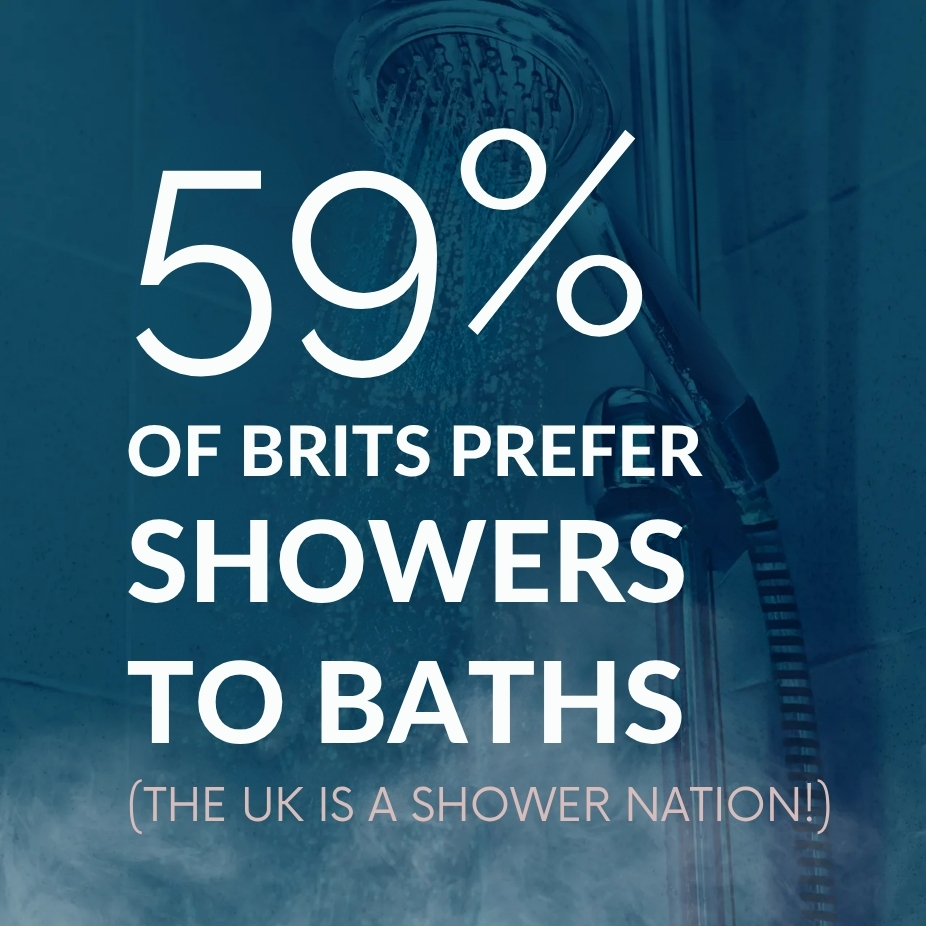
The UK overwhelmingly prefers showers, with the ratio clocking in at approximately 2:1. 59% of Brits aged 18+ actually prefer showering to bathing, with only 28% favouring the tub. Our research showed there was not one gender or generation that preferred bathing to showering, making the UK officially a shower country.
In fact, as many as 32 million Brits aged 18+ actually say they prefer showering to having a bath, when calculated based on Office for National Statistics (ONS) data. This contradicts previous research stating that baths were once more popular. Findings from the study also found that we are now defecting from using the bathtub: 28% of Brits - equivalent to 15.4 million people – say that they used to bath more but now prefer showering. Additionally, almost 2 in 5 (37%) say they have always liked showering more than bathing.
What Are The Reasons Behind Why People Prefer Showering to Bathing?
As part of the research, it was important to find out why Brits felt compelled to pick one over the other. When it came to showering, the reasons were perhaps not unexpected - but still illuminating, nonetheless.
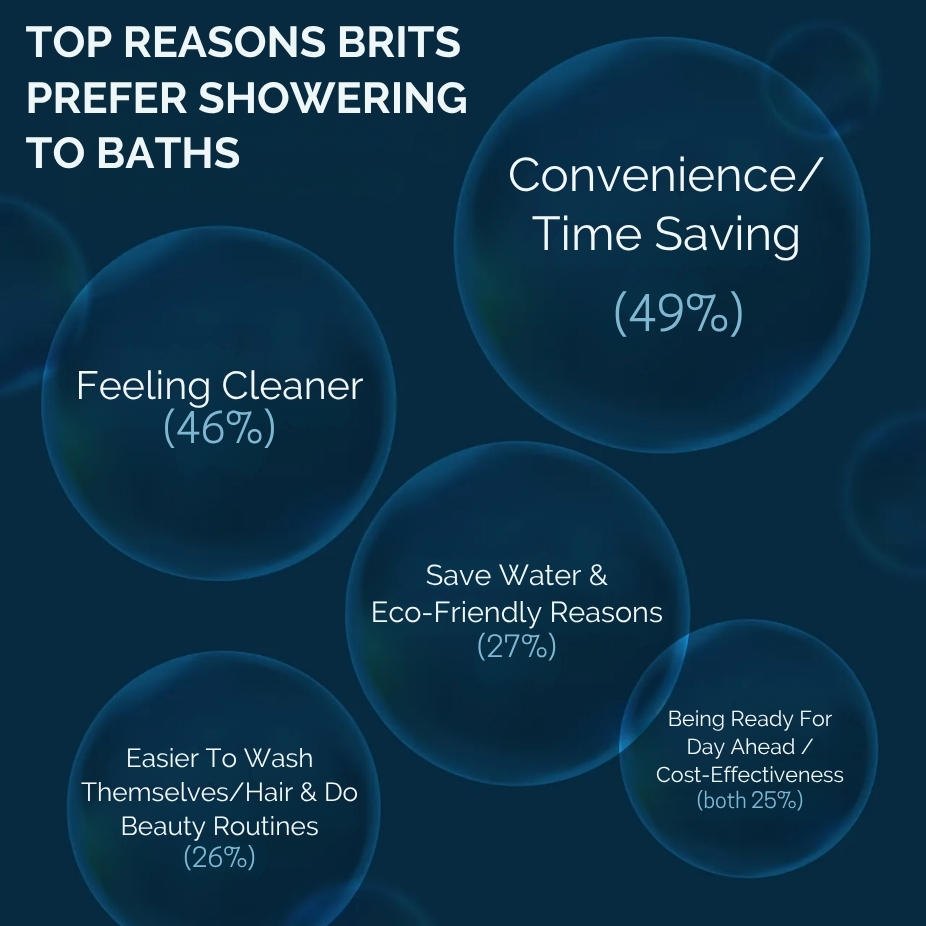
1. Convenience and Time Saving – 49%
Brits lead very busy lives stuffed with endless work, family, and social commitments. Unsurprisingly, the top reason people favour showering over bathing most prefer showering is due to convenience and time-saving. It takes approximately 5 to 10 minutes to fill a tub, and a 2016 YouGov study found that 65% of Brits spend 10 to 30 minutes in the bath. This means most of us will spend between 15-40 minutes just filling and soaking, not even including the time it takes to get ready afterwards. Comparatively, a University of Surrey study from last year found that the average shower amongst students was 6.7 minutes. That’s a time reduction of between 55% and 83% at its worst for showers when compared to baths.
2. Makes Me Feel Cleaner – 46%
The second reason is that people generally feel cleaner after a shower. 46% of those responding said that a shower made them feel cleaner, compared to just 27% that preferred the bath.
3. Save Water/Eco-Friendly Reasons – 27%
The third reason is that people feel that showering is more eco-friendly and helps them to save water. This guide will expand on the area of eco-friendliness and whether the bath or shower is better for water-saving later on. However, in the study, this particular reason was 23 percentage points higher for showers than for those who preferred baths, which sat at just 4% only. This difference is likely due to a combination of heightened awareness and news about water stress, climate change, and increasing energy costs, meaning people are both looking at ways to contribute to help the environment, as well as finding ways of reducing their own personal bills and costs.
4. Easier to Wash Myself/Wash Hair/Do Beauty Routines – 26%
Fourth it is that most people feel like it’s easier to wash themselves, wash their hair, and perform any beauty routines in the shower. Given that washing hair in the tub requires some kind of bowl or jug, a quick dunk, or even sticking one’s head under the tap, it probably makes sense that this is one of the more popular reasons.
5. Helps Me To Be Ready For the Day Ahead / They Are More Cost-Effective – both 25%
Coming in at joint fifth, most Brits feel that showers are more cost-effective than baths and help them feel fresher for the day ahead. According to a study by Utilita Energy, more people shower in the morning . It therefore makes sense that they feel better equipped for the coming day by doing so.
In terms of cost-effectiveness, along with environmental and water-saving reasons, the cost-of-living crisis is likely to be playing a part in this. With people’s bills going up, many are looking for ways to save money on water usage. This is particularly true if they are metered, or don’t want to use as much energy on heating water and the bathroom itself for longer periods of time.
Are There Any Age Demographics Driving the Baths vs Shower Debate?
As alluded to earlier, all generations prefer showering to bathing. From boomers to Gen Z, opinion was found to be fairly consistent.
However, there were still some subtle differences. For example, those in the age groups more likely to be homeowners, in the primes of their careers, and juggling busy family lives were more likely to prefer showering, especially when compared to those just starting out in adult life, people approaching retirement, and active retirees.
Younger Millennials and early Gen Zs aged 25-34 were the ones most likely to overwhelmingly prefer showering to baths. Almost 7 in 10 (69%) of this age group preferred showers to baths. This is notable due to the fact this is age-group is now the most likely to be making homebuying and home renovation decisions within the next five to ten years.
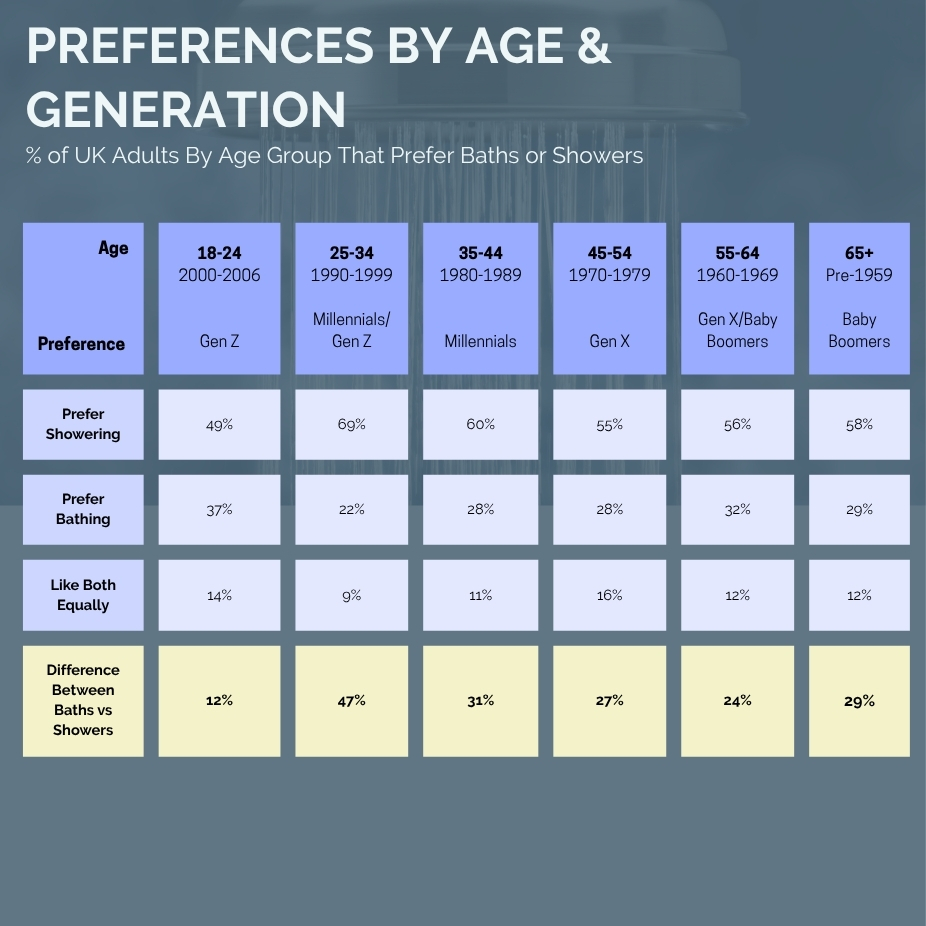
Older Millennials (aged 35-44) also preferred showers, coming in at 60%. Gen X and Baby Boomers showed similar trends, all registering in the mid-50s in terms of percentage points.
One anomaly is that later Gen Zs favour showering less than their forebears, meaning there’s hope for a bathtub resurgence yet. This is highlighted by the volume of this generation preferring baths, which is almost 2 in 5 (37%). Taking a sceptical view, it could simply be that this generation has not yet reached the milestones in their lives at which showering might become noticeably more convenient, such as climbing the career-ladder, buying a home and starting a family. When they are re-polled in future – say in another decade or so – opinions may change as their work-life balances alter. Nevertheless, these figures do suggest that this debate is likely to rumble on long into the future.
What About Gender Differences – Do Men or Women Prefer Showering More?
If not age, what about gender differences? Our study found that there is actually very little difference between the two, with 60% of men preferring bathing compared to 59% of women. The 2 transgender people who also responded did so in favour of bathing too.
However, it’s in the individual bathing and showering habits where subtle differences start to arise:
- Men were more likely to say they have always liked showering more than bathing. 2 in 5 men (42%) said this, compared to just a third of women (33%)
- Women were more likely to have switched allegiances, with 31% saying they used to have more baths but now prefer the shower (compared to 25% of men).
- Transgender respondents said they have always preferred bathing to showering
What Did Different Cities Say? Are House Hunters Willing to Pay More for Homes with Showers?
There were other elements that were looked at as part of the study. These included opinions in different locations, as well as whether a bath or shower would affect the amount people were willing to pay on the asking price of a house.
When it came to location, Edinburgh was the showering capital with 73% of respondents preferring showers to baths. This was followed by Bristol (72%) – which also had the biggest gap in preference of 57 percentage points - Glasgow (69%), Sheffield (66%), and Cardiff (65%). At the other end of the spectrum, Norwich was the city least favourable towards showers at just 42%.
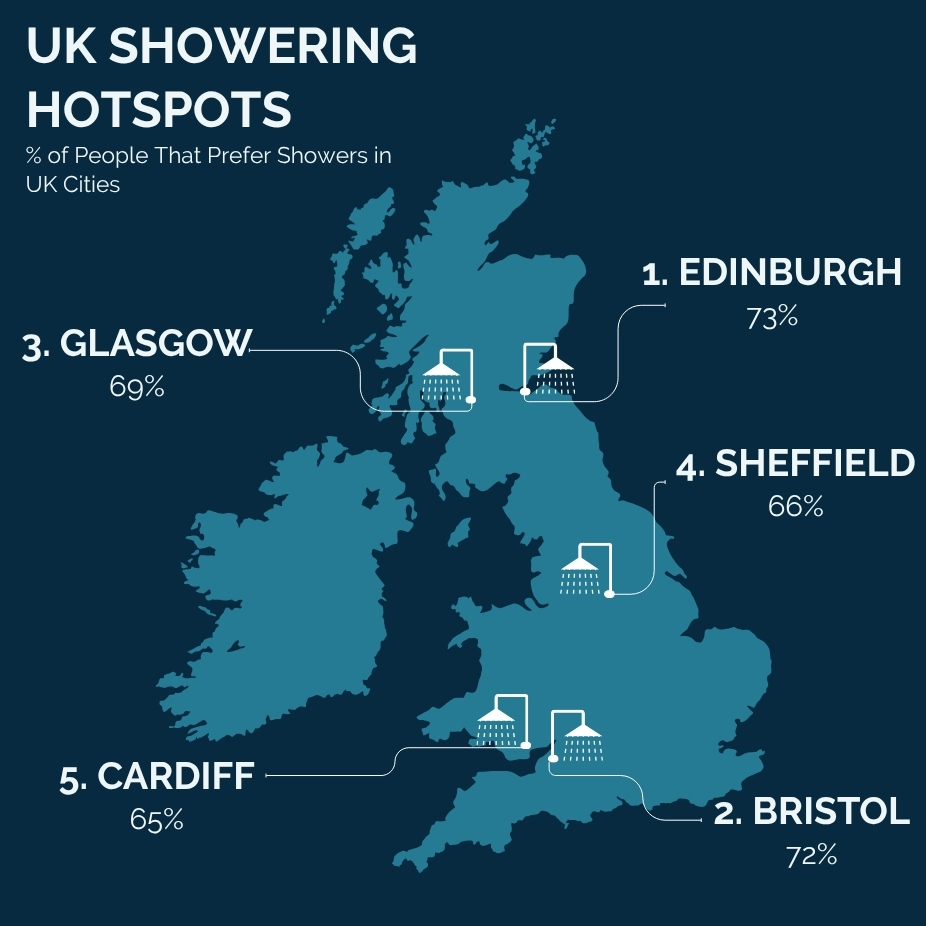
Norwich also proves to be the area where bathing is preferred more, and the gap between the two is the smallest. Over two-thirds (36%) said they preferred bathing, leaving just a gap of 7 percentage points. Newcastle was next with 34%, London 33%, Nottingham 30%, and Birmingham 29%.
When it came to the question about buying a house, and whether people would pay more for certain features, walk-in showers were in the top 5 factors for splashing out more. Wetrooms were just outside the top 5 in 6th place. It’s worth mentioning, however, that a wetroom doesn’t exclude the use of a bathtub. In fact, many people combine wetrooms with a bathtub if the space allows it.
In terms of how much people would be willing to pay on average, by taking the midpoints of each bracket (factoring in those who wouldn’t or would pay less), it worked out at £726 for a walk-in shower. Wetrooms were £675. Freestanding baths came in at £574, a fitted acrylic bath, steel bath or shower bath was £438, and a coloured or painted bath was £147. Furthermore, men were willing to pay 1.5x more for walk-in showers that of women, along with 2.5x more than women for a wetroom. Age demographics varied marginally across all brackets.
Are There Any Reasons Why People Feel Bathing is Better Than Showering?
Up to this point, this guide has been overwhelmingly pro-shower. However, it is worth stating that there were actually areas in which having a bath came out better than showering.
Relaxing, Destressing, Mental Health & Wellbeing
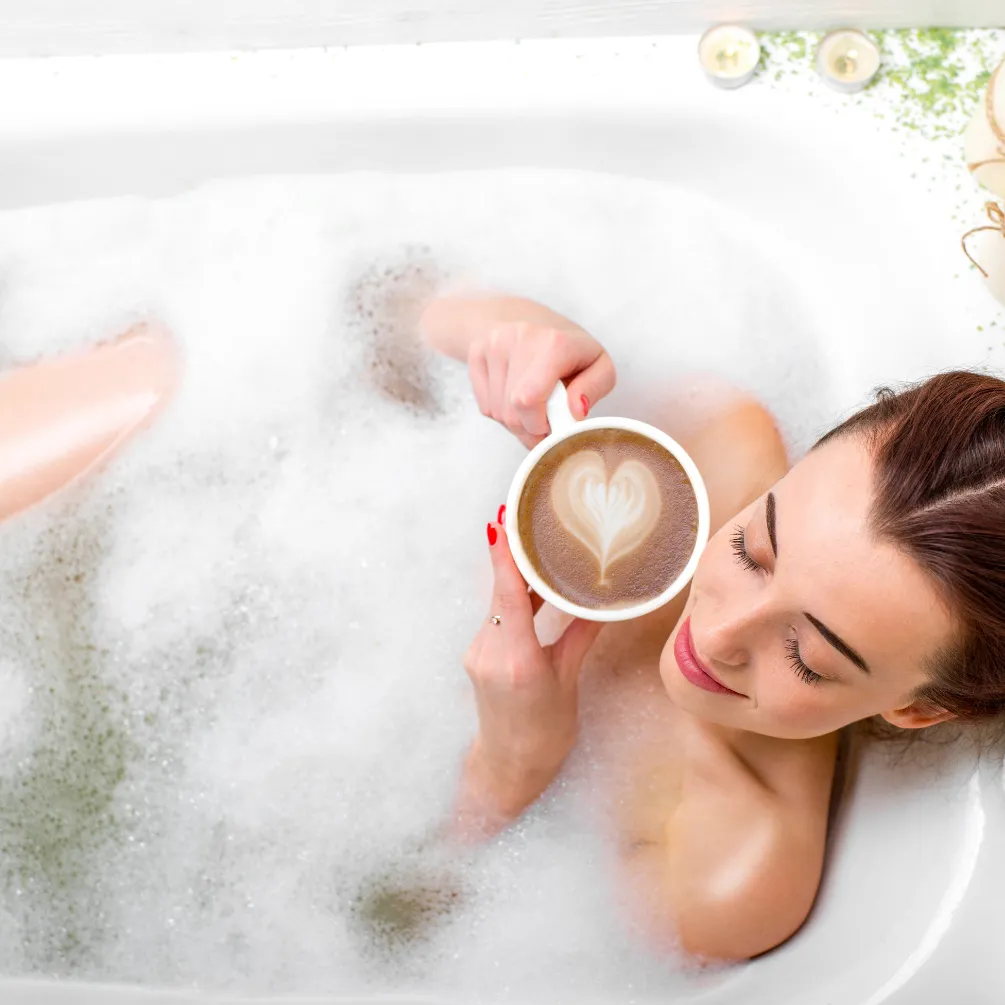
Brits that bathe believe it helps them relax, destress, and that it benefits their mental health and wellbeing too. Almost three times as many people said a bath helped them relax (57%), compared to just 1 in 5 of those preferring showering (20%). Almost four times as many people favoured baths in terms of mental health and wellbeing, with over a third (35%) saying this was a definite benefit. Conversely, less than 1 in 10 people (9%) feel that showers positively impact their mental health. Many people like to show off their bathtime routines with trends like bathscaping, having a relaxing soak, lighting some candles, and enjoying some much-needed chill time.
Getting Time Alone
In contrast to the quick, convenient shower, a bath allows people precious time to escape their daily hecticness and troubles. The second most popular reason for bathing was getting time alone. Almost half (47%) suggested this was why they preferred bathing to showering, compared to less than 1 in 5 of those picking showering (18%).
Variety In Products & Other Smaller Reasons
Whilst these were major two areas in which baths clearly won out, there were also a number of other smaller reasons. The ability to use different products for scents, aesthetics and beautification were a contributing factor, such as soaps, gels, bath bombs and scented oils. On the subject of beautification, some also felt that bathing was more beneficial for their skin.
Baths vs Showers: Which is Actually Better?
Having covered public opinion, it’s now time to look at what people really want to know when researching the bath/shower debate. The key things Brits are looking for are which uses more water, which is more cost-effective, and which is ultimately better for hygiene and cleanliness. Let’s evaluate these areas.
How Much Water Do Baths & Showers Use? Which is Better for Water Saving?
It’s worth noting that the amount of water a bath will use varies depending on its type, the size of the bath and how much of its capacity the average person uses when filling it.. Taking some real examples, a Crosswater Cerus Freestanding Bath measuring 1500mm x 800mm uses 173L of water when filled to the overflow position, which is near the top of the tub. Conversely, the 1700mm version of the same bath uses 218 litres.
A standard, fitted rectangular or straight bath, such as the Eastbrook Portland 1500mm x 700mm bath, has a maximum capacity of 192 litres. The 1700mm version, meanwhile, has a capacity of 264 litres. The biggest bath that Eastbrook offer in their Rockall Range at 1900mm x 900mm has a capacity of 374 litres. That’s between 38 and 82 gallons of water approximately at its fullest, meaning that a half full bath will be around 80 to 180 litres or 19-41 gallons.
In fact, based on these figures and using the average water costs across the UK for standard metered charges averaged from all water companies, a single person would be spending £65.04 per year on average per small bath, up from £60.55 on 2025/26 figures. For larger baths, this has grown to £146.35 per person annually, again an increased cost on last year when it was £136.25. The average shower on the other hand, based on a 6.7 minute shower using 10/L per minute, costs approximately £54.47, growing from £50.71. That is a 7.4% increase across the board regardless of preference due to increased water costs.
When it comes to the amounts saved, it means that switching from the bathtub to a short shower has now broken the £10 barrier per person at £10.57 per person per year for a smaller one, while for larger ones this has now slipped above the £90 bracket at £91.87. For a family of four, that would be between £42.28 and £367.48 per year. Cost savings could be made by filling baths slightly less or taking shorter showers. Calculations based on the same data show that for every 10L less used in the bath, or minute less spent in the shower, could save £8.13 per person annually.
A table of all the costs by each water company is provided below, along with the UK average.
Table: Cost of Bath and Showers charges based on 2026/27 Metered Charges by Water Companies
Costs | Water Charge (p) per 1000L | Water Charge (p) per L | Small Bath (80L) Water Cost | Large Bath (180L) Water Cost | Average Shower (67L) Cost | Annual Saving of Shower vs Small Bath | Annual Saving of Shower vs Large Bath |
|---|---|---|---|---|---|---|---|
Water Company | |||||||
| Affinity Central | 174.63 | 0.17463 | £50.99 | £114.73 | £42.71 | £8.29 | £72.03 |
| Affinity East | 247.00 | 0.24700 | £72.12 | £162.28 | £60.40 | £11.72 | £101.88 |
| Affinity South East | 247.00 | 0.24700 | £72.12 | £162.28 | £60.40 | £11.72 | £101.88 |
| Anglian | 295.38 | 0.29538 | £86.25 | £194.06 | £72.24 | £14.02 | £121.83 |
| Anglian - Northstowe | 143.73 | 0.14373 | £41.97 | £94.43 | £35.15 | £6.82 | £59.28 |
| Anglian - Woods Meadow | 206.70 | 0.20670 | £60.36 | £135.80 | £50.55 | £9.81 | £85.25 |
| Anglian - Hartlepool | 161.36 | 0.16136 | £47.12 | £106.01 | £39.46 | £7.66 | £66.55 |
| Bournemouth Water | 155.11 | 0.15511 | £45.29 | £101.91 | £37.93 | £7.36 | £63.98 |
| Bristol Water | 187.95 | 0.18795 | £54.88 | £123.48 | £45.96 | £8.92 | £77.52 |
| Cambridge Water | 143.73 | 0.14373 | £41.97 | £94.43 | £35.15 | £6.82 | £59.28 |
| Dwr Cymru Welsh Water | 195.27 | 0.19527 | £57.02 | £128.29 | £47.75 | £9.27 | £80.54 |
| Essex & Suffolk Water | 206.70 | 0.20670 | £60.36 | £135.80 | £50.55 | £9.81 | £85.25 |
| Hafren Dyfrdwy - Zone A | 242.47 | 0.24247 | £70.80 | £159.30 | £59.30 | £11.51 | £100.01 |
| Hafren Dyfrdwy - Zone B | 236.63 | 0.23663 | £69.10 | £155.47 | £57.87 | £11.23 | £97.60 |
| Hafren Dyfrdwy - Zone C | 232.74 | 0.23274 | £67.96 | £152.91 | £56.92 | £11.04 | £95.99 |
| Hafren Dyfrdwy - Zone D | 242.47 | 0.24247 | £70.80 | £159.30 | £59.30 | £11.51 | £100.01 |
| Northumbrian Water | 161.69 | 0.16169 | £47.21 | £106.23 | £39.54 | £7.67 | £66.69 |
| Portsmouth Water | 117.83 | 0.11783 | £34.41 | £77.41 | £28.82 | £5.59 | £48.60 |
| Severn Trent Water - Zones 1-8 | 255.03 | 0.25503 | £74.47 | £167.55 | £62.37 | £12.10 | £105.19 |
| Severn Trent Water - Zone 9 | 239.52 | 0.23952 | £69.94 | £157.36 | £58.57 | £11.37 | £98.79 |
| Severn Trent Water - Zone 10 | 246.11 | 0.24611 | £71.86 | £161.69 | £60.19 | £11.68 | £101.51 |
| SES Water - Southern | 181.10 | 0.1811 | £52.88 | £118.98 | £44.29 | £8.59 | £74.69 |
| SES Water - Northern 1 | 146.78 | 0.14678 | £42.86 | £96.43 | £35.90 | £6.96 | £60.54 |
| SES Water - Northern 2 | 146.78 | 0.14678 | £42.86 | £96.43 | £35.90 | £6.96 | £60.54 |
| South East Water - Sussex | 300.94 | 0.30094 | £87.87 | £197.72 | £73.59 | £14.28 | £124.12 |
| South East Water - Mid-Kent | 300.94 | 0.30094 | £87.87 | £197.72 | £73.59 | £14.28 | £124.12 |
| South East Water - West Kent | 300.94 | 0.30094 | £87.87 | £197.72 | £73.59 | £14.28 | £124.12 |
| South East Water - Mid-Southern | 227.97 | 0.22797 | £66.57 | £149.78 | £55.75 | £10.82 | £94.03 |
| South West Water | 301.58 | 0.30158 | £88.06 | £198.14 | £73.75 | £14.31 | £124.39 |
| South Staffordshire Water | 176.34 | 0.17634 | £51.49 | £115.86 | £43.12 | £8.37 | £72.73 |
| Southern Water | 351.80 | 0.35180 | £102.73 | £231.13 | £86.03 | £16.69 | £145.10 |
| Thames Water | 273.46 | 0.27346 | £79.85 | £179.66 | £66.87 | £12.98 | £112.79 |
| United Utilities | 323.50 | 0.32350 | £94.46 | £212.54 | £79.11 | £15.35 | £133.43 |
| Wessex Water | 305.73 | 0.30573 | £89.27 | £200.86 | £74.77 | £14.51 | £126.10 |
| Yorkshire Water | 218.38 | 0.21838 | £63.77 | £143.48 | £53.40 | £10.36 | £90.07 |
| York Waterworks | 123.70 | 0.12370 | £36.12 | £81.27 | £30.25 | £5.87 | £51.02 |
| UK AVERAGE | 222.75 | 0.22275 | £65.04 | £146.35 | £54.47 | £10.57 | £91.87 |
It is worth noting that these figures are based on a standard metered rate in areas served by these companies, and that each of the water companies offers alternative rates that could affect the figures and potential savings. Savings can also be affected by usage from each user such as how much water is used, time spent in the shower, whether a bath is refilled or not during use, as well as the showering fixtures in place and how much water they use. It also does not take into account wastewater, which may be charged at different rates and also has to be factored into the overall cost. However, using less water is likely to impact the amount charged and save money as well.
The most expensive area is now Southern Water, who are now charging over 35.1p per litre, overtaking Wessex Water from 2025/26, who are now the third most expensive in terms of standard rates. That means the cost of baths and showers is around 57% higher than the UK average, meaning that water usage here is more expensive, and the potential savings that could be made are higher. A typical Southern Water customer would save £16.69 against a small bath, and £145.10 against a large bath per user per year.
As part of the study conducted on bath vs shower habits, whether people had made changes due to cost of living was also explored. 1 in 13 (8%) of people used to prefer bathing, but hot water and energy costs mean they have reduced it. A similar amount (8%) also say they time their baths and showers to keep them to a minimum, while 1 in 14 (7%) have taken to bathing with partners or bathing children together to cut down on water usage and energy costs.
In terms of environmental issues, close to 1 in 6 Brits (16%) say they like to use less water now as they want to help the environment and climate. 1 in 33 – equivalent to approximately 1.65m British adults – don’t care about their water usage, as they don’t believe there is anything wrong with the environment or climate.
Are Baths or Showers Better for the Environment?
Similarly, one of the more common questions is whether baths or showers are better for the environment. Based on the above data and water usage, typical showers are more eco-friendly as they reduce water and energy consumption. There is less need to run heating longer to heat water during busy periods, and the hot water saved from a shower vs a bath can be banked and used elsewhere. This can be enhanced further by reducing the amount of showering team, and even showering at lower temperatures as it will require less hot water per usage. There will always be variances based on length of showering, types of shower head and water flow rates, but by and large showers are more eco-friendly than baths.
Which is Better For Keeping Clean: Showers or Baths?
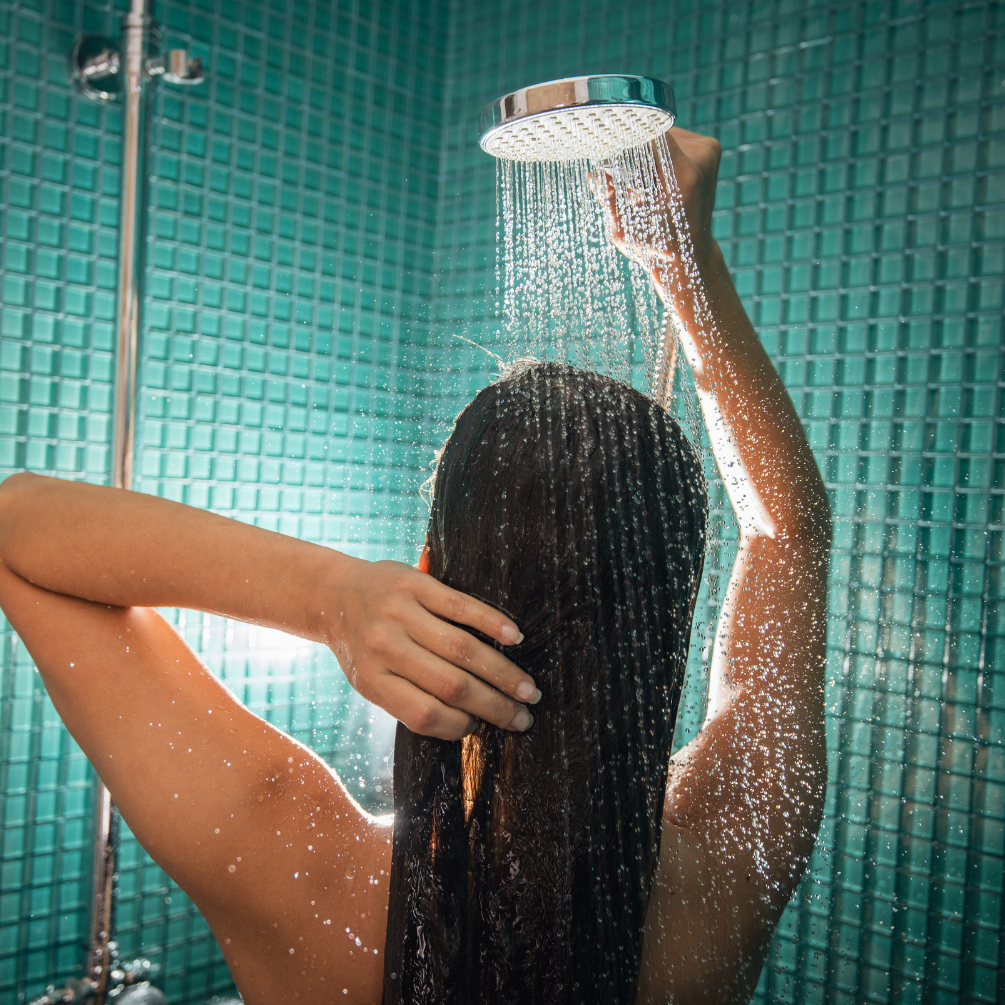
Showers are typically seen as better due to the fact that the water is clean and runs off the body directly into the drain. In addition, it’s easier to scrub more thoroughly to ensure that everything is squeaky clean.
In a bath, you inevitably soak in your own wastewater for a period of time. However, baths are also shown to benefit other areas, including muscle relaxation, blood flow and mental wellbeing. According to National Geographic, experts state that it ultimately doesn’t really matter and is more about personal choice. Self.com states that baths can be just as hygienic as showers, as long as the tub is cleaned regularly to avoid the buildup of dirt and microorganisms. This is especially important in a multi-person household.
In terms of hair washing, the shower is inarguably better than the bath – particularly if you’re a fan of bath bombs. Experts told the Daily Record that washing hair in the bath while using such products can dry hair out, discolour it, or even cause damage. More generally, there is also the unavoidable fact that the water being used to wash hair already contains dirt from the body.
The BBC also investigated whether it’s better to shower at night or first thing in the morning, chatting to experts from various universities. The conclusion was that if you shower daily, it probably doesn’t matter when you actually do so. Humans sweat overnight in bed so will always be dirty first thing in the morning. This can intensify if bedsheets are not washed frequently, which also affects allergies. A shower can remove nighttime germs and make you cleaner for the day ahead. On the flip side, a shower at the end of the day can remove all the grime and dirt accumulated throughout the day. Some some studies also find that evening showering can assist with falling asleep.
Are Baths or Showers Better for Eczema?
For those with skin conditions such as eczema, baths and showers each have the potential to help or hinder. The National Eczema Association states that bathing and showering are equally effective in ‘keeping the skin barrier healthy’. However, they also advise that too much contact with water or ‘improper bathing’ can cause irritation. According to our survey, 1 in 10 Brits (11%) feel that bathing is good for their skin.
Allergy UK advises that baths and showers should be kept to short timescales, and to avoid using harsh soaps, shower gels, bubble bath, and shampoos. Instead, allergen sufferers should use emollients or fragrant/dye-free substances designed for sensitive skin. When washing, people with eczema should also stick to using their hands instead of loofahs, cloths, or anything else that may be abrasive. Bathing at high temperatures can also be a trigger. Use lukewarm water instead, and always pat dry afterwards rather than rubbing.
What about Sickness Such as Colds and Flu?
When it comes to sickness such as colds and flu, both bathing methods have their benefits. For blocked sinuses, the NHS suggests that breathing in steam – particularly from hot showers – can help to loosen congestion and sinus pressures from colds. If you feel dizzy, even sitting in the room with the shower running can help. Healthline suggests that sitting in a warm bath with water over your chest could have similar benefits, including relaxing any soreness and even reducing fatigue.
This concludes our guide! If you need a hand finding the perfect shower or bath for your home, contact the Sanctuary Bathrooms team for expert help and advice.


