Anti-Slip vs Slip-Resistant vs Non-Slip Shower Trays Explained
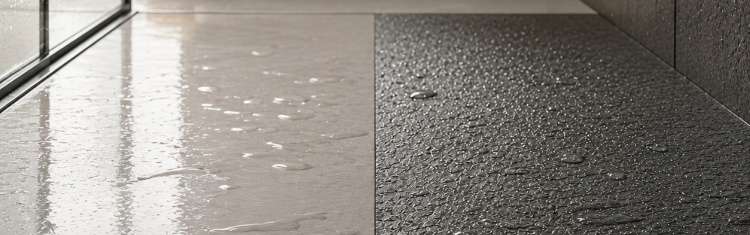
If you’ve been shopping for a safer shower tray, you’ll probably have noticed three different terms used across brands and products: ‘anti-slip’, ‘slip-resistant’, and ‘non-slip’. They sound similar and, in most cases, broadly describe the same intention. But they're not always applied in the same way, and some tell you more about a tray's actual performance than others.
This guide explains what each term really means, how the UK's leading brands achieve their grip, and why the labels matter less than the rating behind them, so you can make a confident, informed decision about your choice of shower tray.
- What Each Term Actually Means
- Why Shower Trays Can Still Become Slippery
- What Slip-Resistance Ratings Should You Look For?
- Which Shower Tray Do I Need for My Shower?
- Choosing the Right Shower Tray
What Each Term Actually Means
Rather than three fundamentally different products, these terms describe three ways of achieving the same goal. As shower tray manufacturer Crosswater put it: "Non-slip’, ‘anti-slip’ and ‘slip-resistant’ are interchangeable terms all meaning the same thing". It's ultimately about creating a shower tray that reduces the likelihood of slipping compared with a smooth, untreated option.
That may sound like we've already answered the question, but it's worth understanding how each term is used in practice, where you'll most commonly find them, and what they actually tell you about the tray.
Anti-Slip Shower Tray
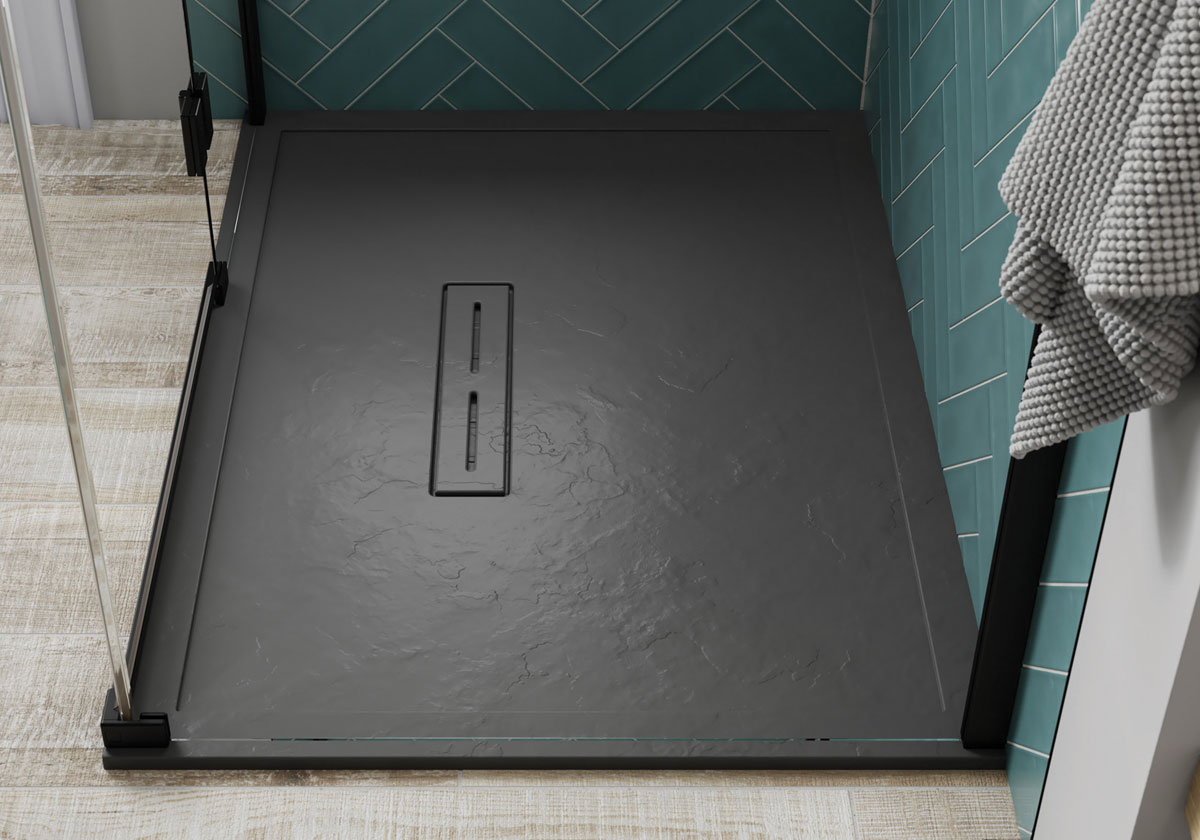
Anti-slip is perhaps the term you’ll encounter most often in product descriptions. This is because it’s a fair and useful label that instantly tells you the tray will counteract slipping. However, that's not a promise; anti-slip does not mean risk-free. The aim of an anti-slip shower tray is not to make slipping in the shower impossible, but to drastically reduce the likelihood of slipping compared with a smoother surface.
That said, brands that use the term anti-slip, most often do so when their product is designed with maximum traction in mind, more so than the other tray terms. This label is generally attached to trays that include a textured material, a surface treatment, or a combination of the two. This can take the form of material blends that give a surface an inherent gritty quality, or through surface patterns of raised dimples, ridges, or bumps moulded into the tray to create multiple contact edges and channels that break up water films, giving feet something to push against.
Richard Eaton, Product Manager of shower tray manufacturer, Tissino, describes anti-slip as “the term more commonly associated with shower trays, tiles and specialist flooring.” He explains that it refers to surfaces “specifically engineered to improve traction and reduce the likelihood of slips in wet conditions.”
Taking the material route and aptly applying the term anti-slip, Roca’s shower tray range, Terran-N, utilises Stonex®, an innovative, high-quality composite blend of resins and minerals. This textured surface has been specially engineered to meet the highest anti-slip standards, enhancing safety for all users. Kudos shower trays take a similar approach with their Connect2 range. These trays feature an exclusive pattern inspired by local slate, offering a tactile, uneven surface for superior traction.
Slip-Resistant Shower Tray
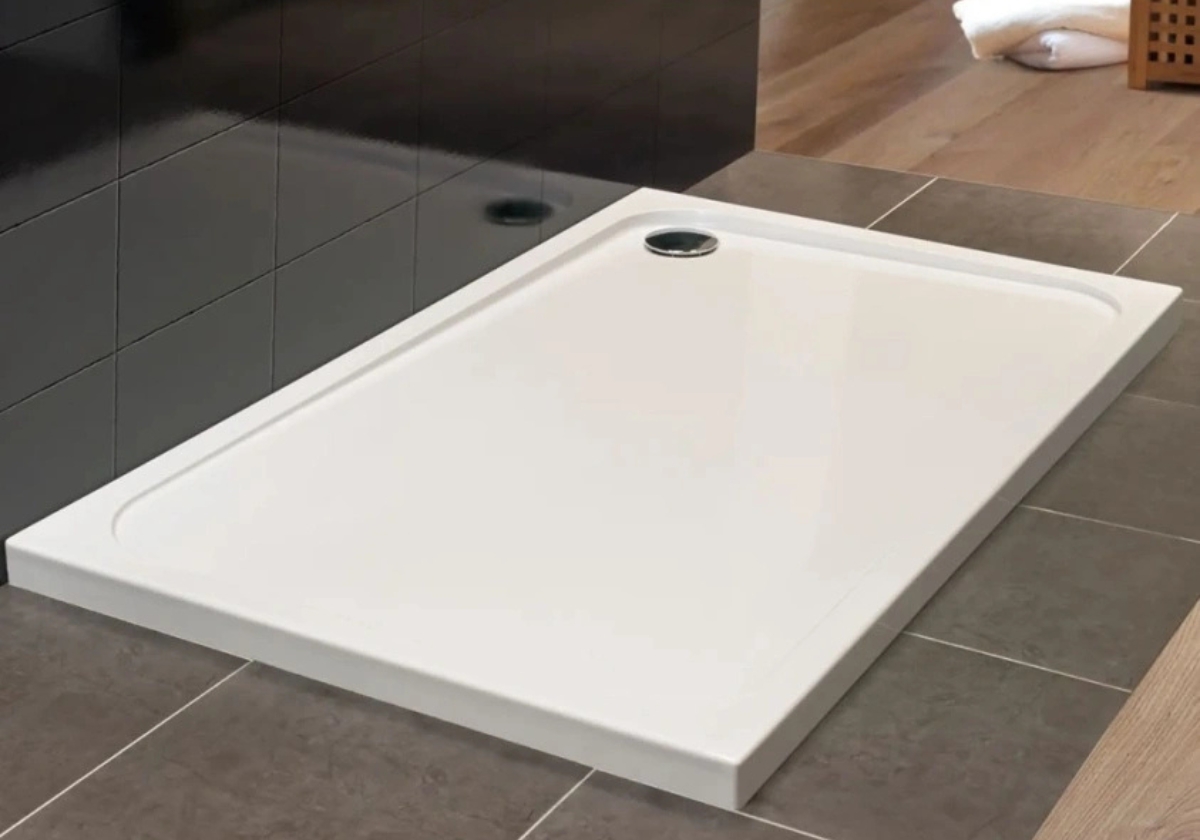
While not as commonly employed as anti-slip, slip-resistant is perhaps the most precise of the three terms. This is because it describes performance rather than making an absolute promise. The word ‘resistant’ acknowledges that the surface cannot guarantee against slipping and, like anti-slip, is not entirely risk-free.
It is, however, the term most closely aligned with formal testing (which we’ll cover in more detail later) and thus highly beneficial for brands to use. If you see slip-resistant on a product page backed by a specific rating or test reference, that's typically the most trustworthy combination of language and evidence you'll find
Yiota Toumba, Senior Designer at Ideal Standard, shares this view, noting that "slip-resistant is generally the most technically accurate term because no surface can completely eliminate the risk of slipping."
Like anti-slip, slip-resistant shower trays will comprise materials or treatments that reduce the likelihood of slipping. For example, Merlyn shower trays and their Touchstone range use the term slip-resistant and utilise an acrylic-capped ABS surface to provide high slip resistance.
Non-Slip Shower Tray
Of the three, non-slip should be recognised purely as a marketing term. When asked whether shower trays can ever be truly non-slip, Eaton's answer is: "In simple terms, no."
Why is this term used then? The primary reason is that it’s the label most shoppers instinctively search for, but it can be misleading if taken literally. The language implies something absolute, and that slipping cannot happen. This, of course, isn’t realistic in any showering environment. For this reason, you will most likely not find this term on manufacturer sites or product spec sheets.
It’s a view shared by manufacturers themselves. As Eaton puts it: "A shower tray can be designed to significantly reduce the likelihood of slipping, but no tray can realistically guarantee that slipping is impossible in every condition. The term 'non-slip' suggests a complete absence of risk, which is very difficult to achieve in practice."
Toumba agrees: "There is no such thing as a completely 'non-slip' shower tray, as any wet surface carries some level of slip risk..."
However, since it attracts shoppers, you will find the term non-slip used on retailers' sites as a means of advertising the tray's purpose. At Sanctuary Bathrooms, we're no different - we use the term across our own non-slip shower tray category because it's what most customers search for.
It must be noted that this doesn’t mean you should avoid trays labelled non-slip entirely. But it's worth treating non-slip as a description of intent rather than a guarantee of outcome.
Why Shower Trays Can Still Become Slippery
We've mentioned several times now that no shower tray - whether it's labelled anti-slip, slip-resistant or non-slip - can eliminate the risk of slipping entirely. But it's worth understanding why that's the case, because the factors involved are largely within your control.
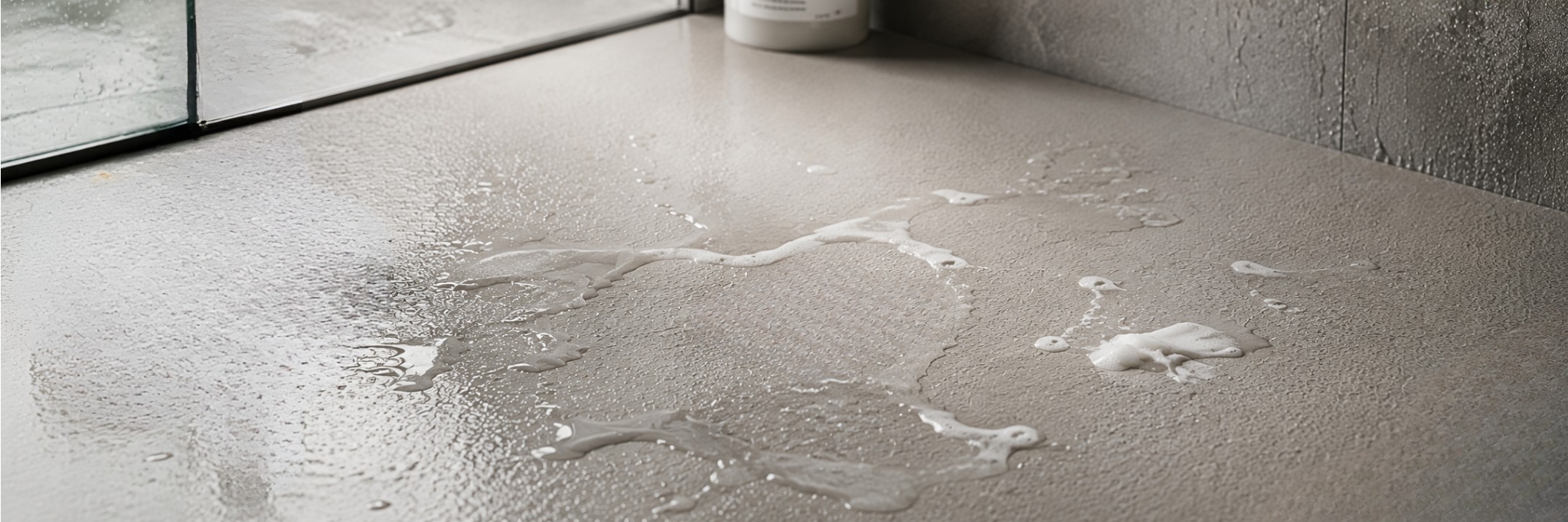
Even a tray with a high slip-resistance rating can underperform under the wrong conditions. Ratings are tested in controlled laboratory settings with clean surfaces, standardised contaminants and consistent temperatures. Real bathrooms are less predictable. Soap and shampoo residue, conditioner, bath oils, limescale and leftover cleaning products can all create a film on the surface that reduces grip. Crosswater makes the same point, noting that “no shower tray can ever be completely slip-proof in every condition, particularly where soap and shampoo are involved.”
Over time, particularly with applied coatings rather than built-in textures, general wear can have a similar effect. None of this is a reason to avoid these shower trays. Regular cleaning with a non-abrasive bathroom cleaner, proper rinsing and occasional limescale removal will keep the surface performing as it should. A slip-resistance rating describes the tray at its best, and it's your job to keep it there. Which brings us on to our next section.
What Slip-Resistance Ratings Should You Look For?
So, the real question isn't what the tray is called, but what the rating it's been tested to, and how it achieves its grip.
As Crosswater advises, shoppers should use the rating behind the product to tell different trays apart, adding: "Industry standards provide a class system which allows you to see the level of slip resistance for each shower tray. We’d advise that you use this rating to distinguish between different trays.”
In the UK and Europe, unlike for shower tray standards (EN 14527), slip resistance is demonstrated through recognised slip resistance test methods rather than a dedicated regulatory clause. There's no legal requirement for a specific slip-resistance rating in domestic bathrooms, which means a shower tray doesn't need a formal rating to be described as anti-slip, slip-resistant or non-slip. That's precisely why a recognised rating is worth looking for - it's voluntary, so the brands that have one are going out of their way to prove the claim.
Ideal Standard is one such brand. As Toumba puts it: "We believe it is important to support our claims with recognised independent testing and transparent performance ratings."
If a tray has been tested, you'll see terms like 'Class C,' 'PTV 36+' and 'barefoot ramp test' in product descriptions. While often given without much context, these ratings are far more useful than a simple label, but they should be read with an understanding of what's actually being tested.
BS EN 16165
Superseding DIN 51097 and BS 7976 2, BS EN 16165 is the current British and European unified standard for measuring slip resistance on pedestrian surfaces (yes, that includes shower trays), as recognised by the UK Slip Resistance Group.
It is the primary standard for the UK market, the most frequently referenced by bathroom brands, and the one most directly relevant to shower trays. This is because it specifically tests how a surface performs under bare, wet feet, which is exactly the scenario you're dealing with in a shower.
BS EN 16165 is achieved through two main tests:
a) Barefoot Ramp Test
The rather simple test involves a person walking barefoot across a surface coated with a soapy water solution as the ramp angle is gradually increased. The steeper the angle before the person loses traction, the higher the rating.
The results are grouped into three classes, from low slip resistance (Class A) through to high (Class C). Understanding what low slip resistance means in practice is important here - it's the difference between a surface adequate for a dry changing room floor and one engineered for a shower where you're standing barefoot in running water.
Rating | Level of Slip-Resistance |
|---|---|
Class A | Tested at angles up to 12 degrees. This rating is enough for dry-ish changing areas and bathroom floors. |
Class B | Tested at angles between 12 and 18 degrees. This rating is suitable for shower areas with standing water. |
Class C | Tested at angles of 18 degrees and above. This rating is the gold standard and the target for leading manufacturers' non-slip shower tray ranges. |
b) Pendulum Floor Test
The pendulum test is used to measure how slippery a wet surface is under controlled conditions, and is the method most commonly referenced in UK building regulations and forensic slip investigations. It works by swinging a weighted arm fitted with a rubber slider across the wet surface and measuring how much the surface slows it down. The result is expressed as a Pendulum Test Value (PTV) or a Slip Resistance Value (SRV), and the higher the number, the greater the slip resistance. The results are presented in the following values:
PTV | Slip Potential |
|---|---|
0-24 | High |
25-35 | Moderate |
36+ | Low |
Tissino, for example, tests their shower trays using the recognised pendulum test method under BS EN 16165. Eaton explains that the pendulum method “measures how much grip a surface provides under wet conditions,” adding that this testing “helps determine the effectiveness of a tray’s anti-slip properties and allows products to be classified according to their performance.”
It is exactly this kind of transparency that makes a rating meaningful. A product description can say anti-slip, slip-resistant or non-slip, but a recognised test result gives you something more concrete to compare.
Which Shower Tray Do I Need for My Shower?
Ultimately, the terminology is a branding decision, not a technical one. What separates one tray from another is the material, the manufacturing method, and above all, the rating. When you're comparing products, that's where your attention should be.
When it comes to the actual rating, a BS EN 16165 Class C rating is the strongest classification you’ll see, making it a reassuring benchmark where available. This makes it the safest option for any shower tray, particularly in households with older family members, young children, or anyone with reduced mobility. And given that most leading brands now offer it as standard across their ranges, there's little reason to settle for less.
It's also worth considering how the grip is achieved, not just the rating itself. Tissino's anti-slip shower trays, for instance, have the slip-resistant properties built into the surface pattern rather than applied as a coating. As Eaton explains: "This means the anti-slip performance is designed to remain effective over time and will not wear away through normal use or cleaning." A built-in texture that maintains its rating over the tray's lifetime is a different proposition from an applied treatment that may degrade - even if both start with the same Class C on the spec sheet.
If you're choosing between two otherwise similar trays, go with the higher-rated one. The cost difference is usually marginal, the feel underfoot is minimal, and the safety difference can be significant. And once you're comparing like-for-like on the rating, the real decision comes down to material preference, budget and bathroom aesthetic.
FAQs About Slip-Resistant Shower Trays
Can You Make a Shower Tray Non-Slip?
If your current tray doesn't have built-in slip resistance, there are aftermarket options: anti-slip stickers, spray-on coatings, and adhesive mats. However, these are temporary fixes that can peel, discolour or lose effectiveness over time. A factory-tested, purpose-built anti-slip tray is a more reliable long-term solution, and the cost difference between a standard tray and an anti-slip version from the same brand typically ranges from £20 to £60.
What is an R10 and R11 Anti-Slip Rating?
R-ratings (R9-R11) are classifications from DIN 51130, the ramp rest for shod (shoe) use on surfaces where footwear is typically worn. These ratings are often used for surfaces such as tiles, flooring and other domestic or commercial areas where moisture may be present. However, R ratings should not be the primary measure for shower trays, as showering involves bare feet, standing water, soap, and shampoo. As discussed, if you're choosing a shower tray, look for one of the barefoot test ratings of BS EN 16165.
Choosing the Right Shower Tray
The key takeaway from this guide is simple: look past the label and check the rating. The terminology might be inconsistent, with different brands using it to broadly describe the same intention, but a verified rating tells you more about a tray's safety than any combination of marketing terms.
Non-slip is the phrase many shoppers search for, anti-slip is the term most commonly used for shower trays, and slip-resistant is arguably the most technically accurate description. But none of these terms should be taken as a guarantee that slipping will not happen.
If you're unsure which tray is the right fit for your bathroom, our shower tray size guide is a good starting point. For advice on installation options or which slip-resistance rating suits your household, get in touch with us, and we'll point you in the right direction.

