The end of 2025 is fast-approaching, and it is time to start looking at what the year 2026 may hold in store for bathroom renovators, DIYers, and those looking to give their bathroom a much-needed reinvigoration. 2025 has brought more considerations for homeowners with a continued rising cost of living, economic issues, and price squeezes, meaning that every pound invested into existing or new homes must deliver value for money. As a result, choosing the right bathroom trend for 2026 has become essential, with a greater emphasis placed on long-lasting, comfortable, and practical designs than ever before. To help make an informed decision, this comprehensive guide will highlight everything from colour, material, and tile trends to future innovations, sustainability, pop culture, and social media sensations, along with addressing those burning questions regarding what to expect in 2026.
As with previous years, unpicking all of these elements and partnering alongside Sanctuary Bathrooms’ own Director, James Roberts, are experts from various sectors of the bathroom industry. Interestingly, while previous years have shown a consensus in many trends, the outlook for 2026 is much more varied. Changing consumer demands, individuality, international influences, and the extensive use of social media mean brands are pivoting more.
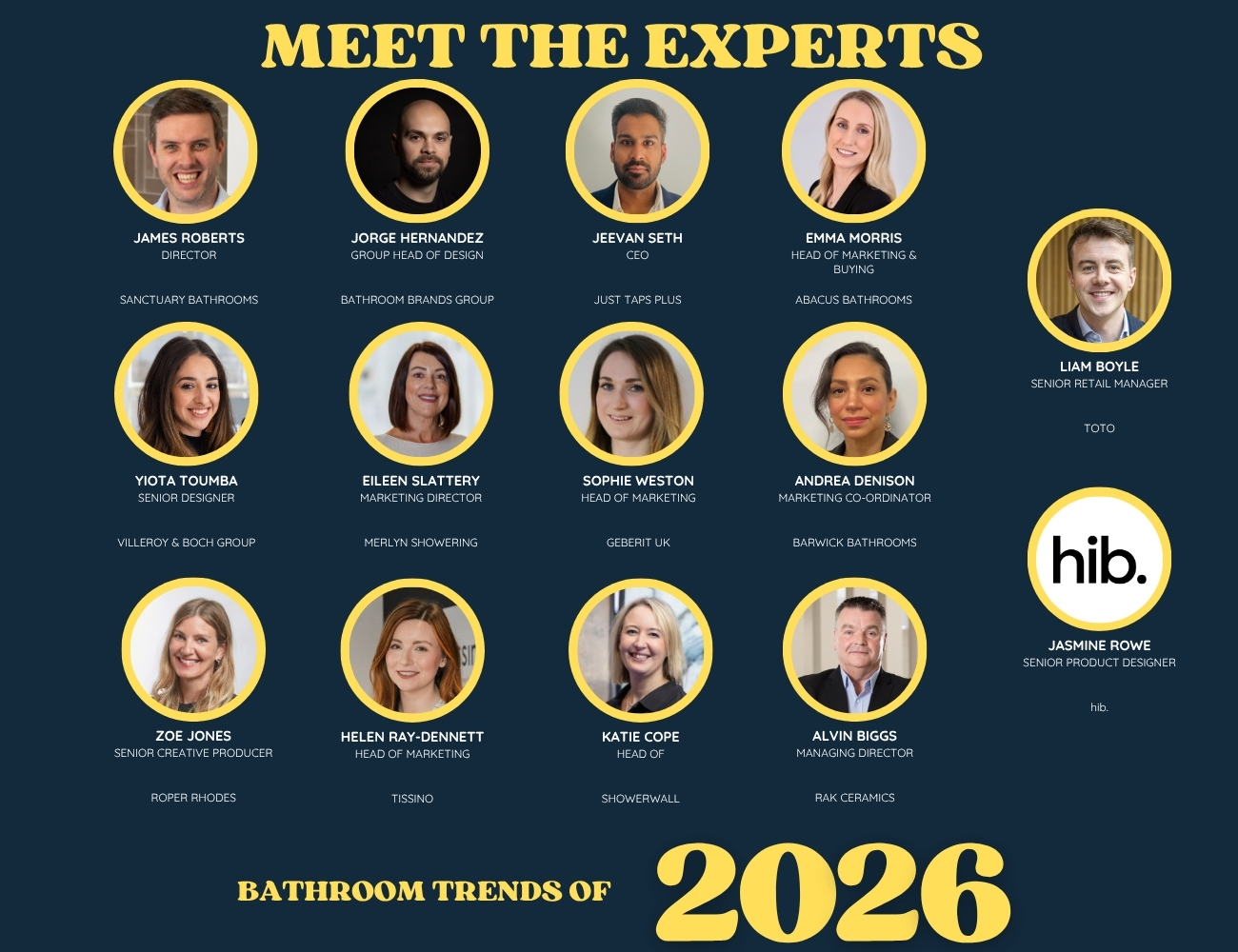
Experts that are featured in the 2026 guide are as follows:
- James Roberts, Director, Sanctuary Bathrooms
- Jorge Hernandez, Group Head of Design, Bathroom Brands (Crosswater, Burlington, Britton)
- Yiota Toumba, Senior Designer, Villeroy & Boch Group (including Ideal Standard)
- Jeevan Seth, CEO, Just Taps Plus UK (JTPUK)
- Eileen Slattery, Marketing Director, MERLYN Showering
- Emma Morris, Head of Marketing, Abacus
- Helen Ray-Dennett, Head of Marketing, Tissino
- Jasmine Rowe, Senior Product Designer, hib.
- Liam Boyle, Senior Retail Manager, TOTO
- Sophie Weston, Head of Marketing, Geberit
- Zoe Jones, Senior Creative Producer, Roper Rhodes
- Katie Cope, Head of Showerwall
- Alvin Biggs, Managing Director, RAK Ceramics
- Andrea Denison, Marketing Co-ordinator, Barwick Bathrooms Distribution
Jump ahead to a section if interest here:
- Key 2026 Bathroom Design Trends
- 2026 Wellness Bathrooms Trends
- What About 2026 Product Trends and Features?
- Colour Trends To Look Out For In 2026
- Colour Trends To Avoid or be Wary of
- What Materials Trends Will There Be in Bathrooms in 2026?
- Are There Any Other Ongoing Trends To Look Out For?
- What about Bathroom Tile Trends for 2026?
- What Do Experts Think Renovators Main Consideration Should be in 2026?
What Are The Key 2026 Bathroom Design Trends?
The starting point on our trends journey is to explore the key bathroom themes mentioned by experts as picks for the year, as well as looking at historic ones that are likely to continue.
1. Quiet Luxury
Quiet luxury, also called ‘stealth wealth’, is a pop culture trend that evolved from four-season Golden Globe, Emmy & Grammy award-winning HBO TV show Succession (aired on Sky Atlantic/Now TV in the UK). It centres around a wealthy family involved in a power struggle over the company owned by their father, who suffers a decline in health. The costuming of the TV show was noted for the use of unbranded, luxury, and designer clothing in fairly modest or neutral colouring, demonstrating how the generationally wealthy do not need to shout about their wealth; instead, they just quietly live it.
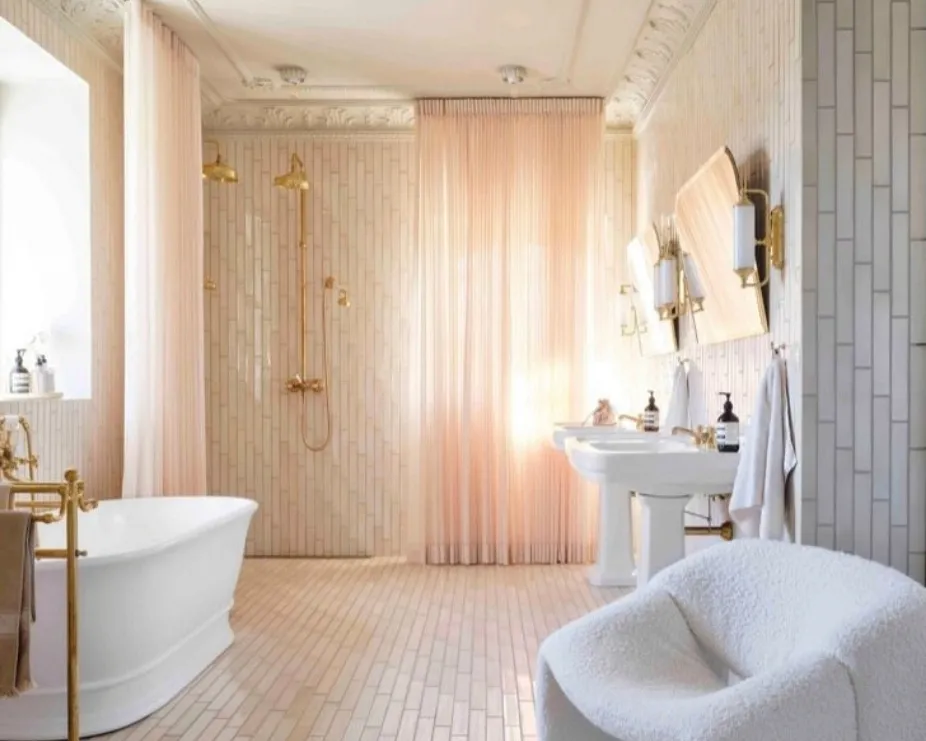
This understated trend – already making inroads into fashion – is tipped to make its presence known in bathrooms. Exuberant branded items with premium brand names will be replaced by simple, elegant, yet still luxurious and quality fixtures that maintain an air of affluence.
James Roberts, Director of Sanctuary Bathrooms states that quiet luxury will “transition into bathroom spaces in the same way [as fashion] – people will look for luxurious designs without the branding”. Colour schemes, he feels, that benefit this particular scheme are things like “caramel, biscuit and warm taupe”.
Andrea Denison, Marketing Co-ordinator at Barwick Bathrooms, agrees: “Quiet luxury is a pop trend that may impact bathroom design in 2026. Consumers are moving away from fashion with big logos and opting for quiet elegance instead”.
The trend is also one that Jorge Hernandez, Group Head of Design at Bathroom Brands – which includes Crosswater, Burlington and Britton – feels that customers will seek “the pursuit of quiet luxury” over the next year, adding they will be “creating spaces that feel refined and timeless without compromising practicality or investment”.
2. Biophilic Design
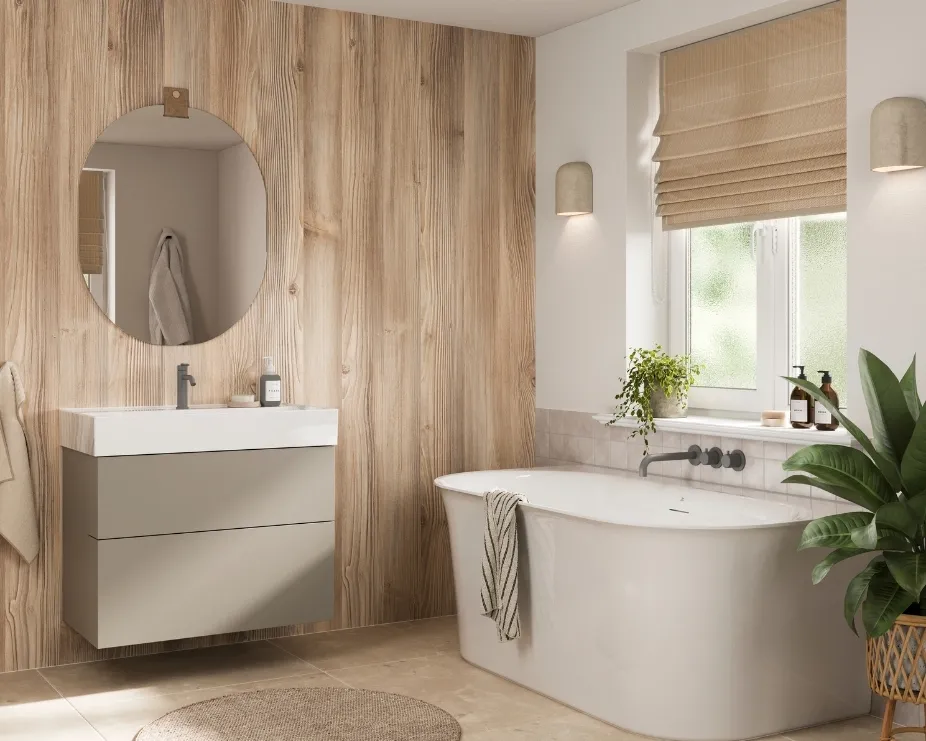
A staple every year, biophilia - or biophilic design - refers to the use of natural greenery, plants, and the outdoors, bringing them into indoor environments. This approach adds more of a living touch to spaces, make them feel homely, as well as enriching experiences and mental wellbeing.
Katie Cope, the Head of wall panel company Showerwall, believes this is set to continue in 2026: "It’s definitely here to stay," Cope says. “There’s so much room for experimentation within biophilic design that creates a calming and relaxing bathroom space; we don’t think we’re yet at its peak in popularity."
3. Bathscaping
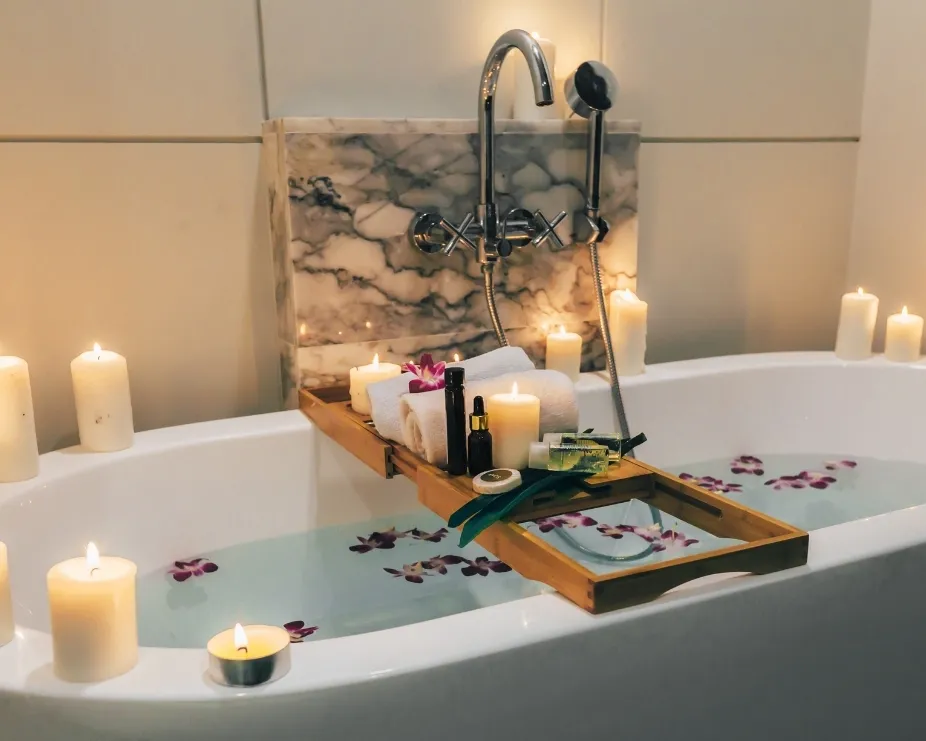
Bathscaping is a portmanteau word combining ‘bath’ and ‘landscaping’. It first appeared as a trend in 2023 and is a way of styling a bathtub to create a luxurious haven of solitude. Think of every way to prioritise self-care: candles, bath racks, plants, decorative items, lighting, and scents - anything to boost your mood and show off that perfectly styled bath setup on social media.
MERLYN Showers’ Marketing Director, Eileen Slattery, believes that social media will continue to drive the younger end of the market: “Streaming interiors content and TikTok ‘bathscaping’ trends continue to influence younger buyers who want bathrooms to be shareable, practical and aesthetic”.
4. Mediterranean Wellness
The coastal grandmother trend started in 2022, inspired by the Nancy Meyer movie ‘Something’s Gotta Give’, attributed to TikTok influencer Lex Nicoleta. This style focuses on the fashion trend of an older woman by the sea: simple clothing, light-coloured and toned colour palettes like creams and blues, straw hats, and a sweater strewn around the shoulders. When applied to interiors, think coastal designs with wooden tones, simplistic features, and clean lines like New England style.
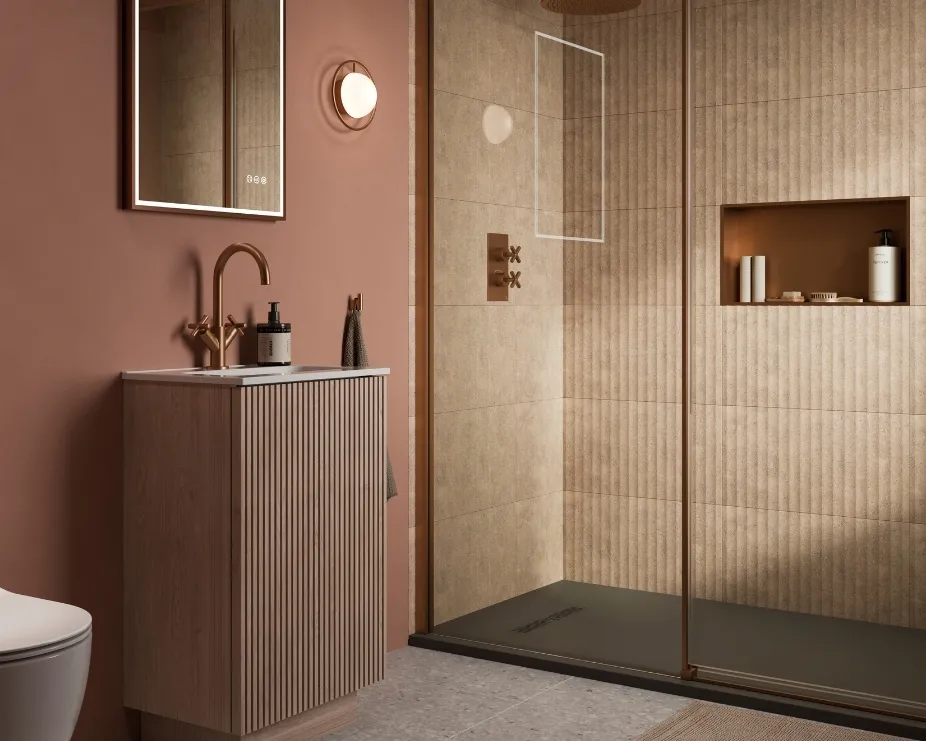
Sanctuary Director, James Roberts, believes this trend is likely to "evolve into a ‘Mediterranean wellness’ style", merging the coastal style with southern Europe. This means a warmer colour palette of browns, terracottas, greens and darker blues, combined with natural materials such as ceramics, rugged tiles, earthy touches, and luxury wooden features.
5. The Bathroom Reset
Roberts also thinks that 2026 will lead to the ‘bathroom reset’, particularly for those whom the cost of bathroom renovations, are out of reach.
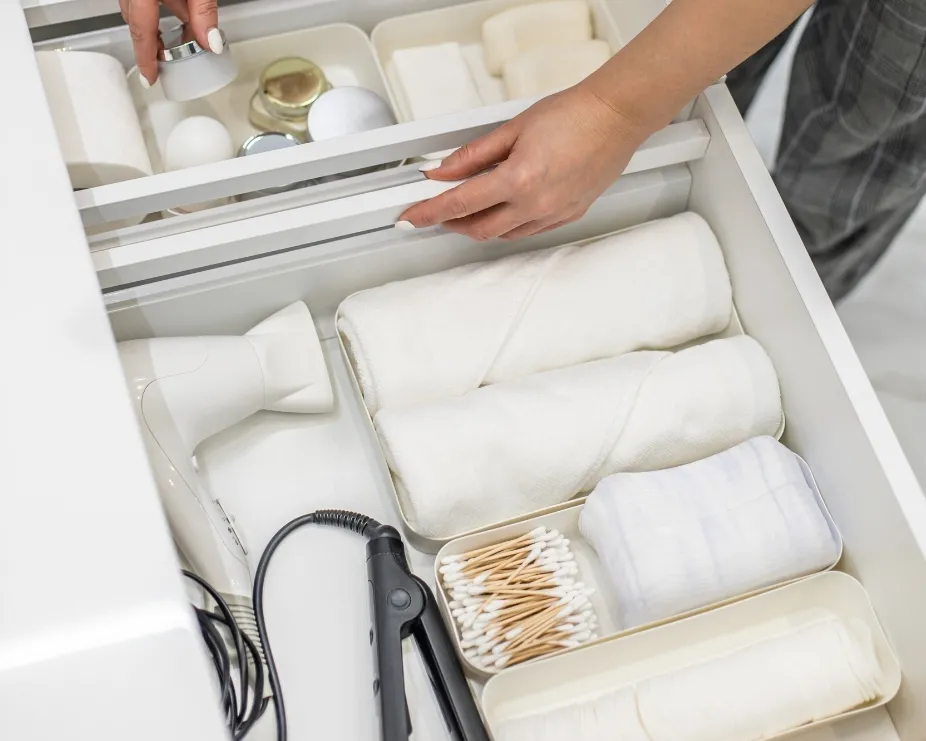
Again with roots in social media, it involves individuals giving their bathroom a refresh by intensely cleaning their space, as well as making minor improvements. The aim is a lease of life and making it new-looking without incurring the expense and time of a new bathroom. “[This] targeted refreshing a space by decluttering, deep cleaning, and giving it a fresh look”, he states. “This was not only used for quick, aesthetic improvements, but also maximising pre-existing storage spaces and solutions”.
6. Retro
Always a contentious area, yet one that likes to make a comeback occasionally, are retro bathrooms. In the past few years, there has been a rekindling of the avocado colour-scheme driven by younger generations. Some brands have tried to tap into this – particularly with furniture – with modern takes on green finishes without the garishness of 1970s and 1980s avocado suites.
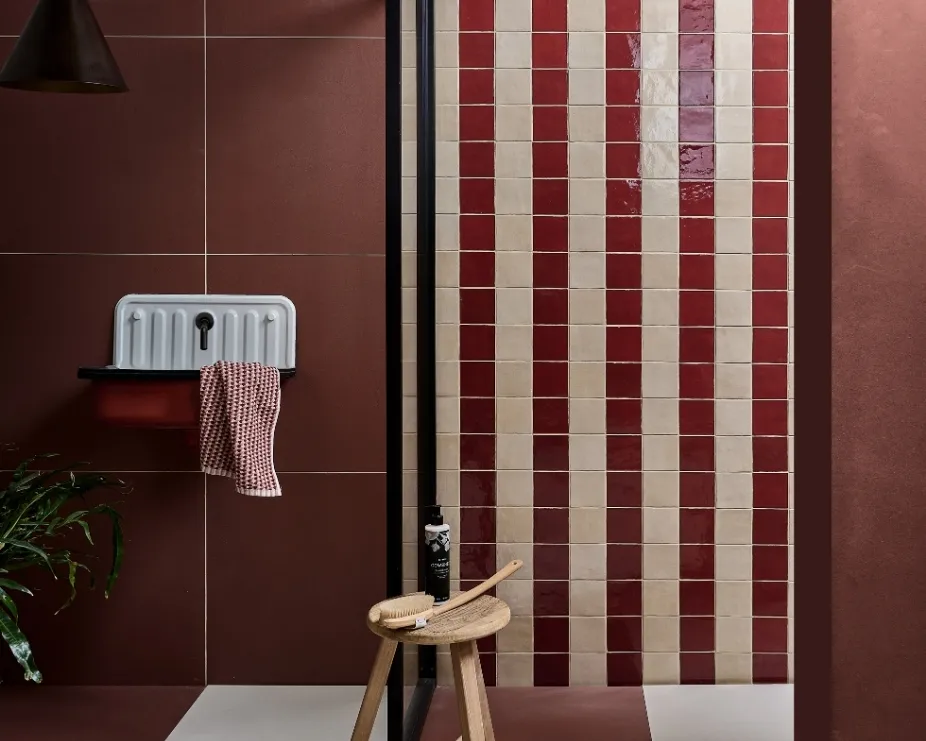
Yet Emma Morris, Head of Marketing at Abacus Bathrooms, believes that this may be the first of other revivals. “Apricot and maroon bathrooms may be poised for a comeback”, she advises. “If avocado green has enjoyed a revival, it's likely that other retro trends will soon follow. From vanities and sanitaryware to flooring and wall colours, there are plenty of ways to incorporate these nostalgic shades into modern bathroom design”.
7. The Home Spa
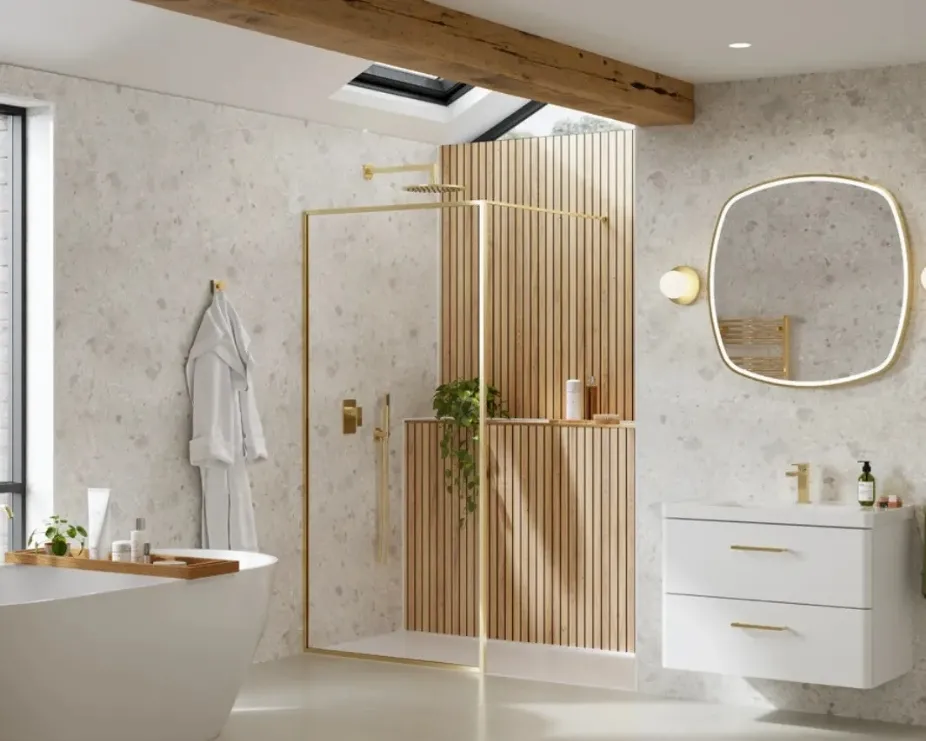
Spa-style is another trend that has been around for a while as renovators wanted to bring the style of luxurious country hotel stays - or bougie urban and city hotels with wellness retreats and spas - back into personal homes. Think wooden tones, light blue and green hues, natural touches such as plants, modern elements, and good lighting.
Alvin Biggs, Managing Director at RAK Ceramics, believes it has the potential to evolve again. “The spa bathroom trend will likely evolve with more personalised touches and advanced tech”, he advises. “Natural and sustainable materials will gain popularity, and the focus will continue on blending luxury with practicality to create relaxing, unique spaces”.
James Roberts agrees, adding: “Spa-like bathrooms have evolved into something deeper and more meaningful” with people “looking to create personalised retreat spaces”. He continues: “This means a space that works harder to prove a more relaxing environment that people want to – and are - actively looking to spend more time in. They are becoming multi-functional wellness hubs”.
Eileen Slattery of MERLYN, and Helen Ray-Dennett, Head of Marketing at Tissino, believe that the emphasis on self-care and wellness, especially influenced by social media, has significantly impacted this trend.
“Although we knew bathrooms were getting bigger, this year there has been a growing emphasis among consumers for creating bathroom environments that serve as personal sanctuaries, spaces dedicated to comfort, wellness, and relaxation”, Slattery says.
Ray-Dennett adds that: “Self-care features prominently on sites such as TikTok and [in] the continuation of home spa-inspired setups”.
8. Dopamine Décor or Muted Tones?
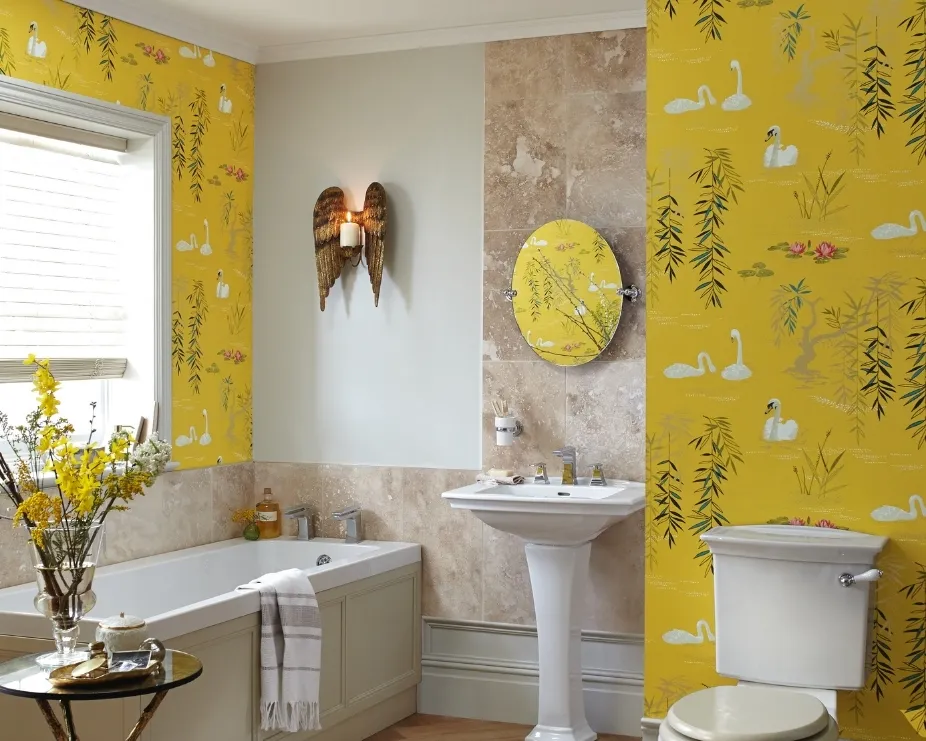
One of the biggest debates ahead of 2026 will be whether British bathrooms will continue the trend of ‘Dopamine décor’, or whether this will be toned down. Dopamine décor is a design trend that uses vibrant colours, playful patterns, and engaging features to imbue positive thoughts and lift moods, inspired by the dopamine hit the brain gets from pleasure and stimulation. As a key trend, experts were asked whether it would remain or shift towards muted colours. Many believe that it still has a relevant place as we enter the new year.
Alvin Biggs of RAK Ceramics states that “muted colours will be more mainstream,” but that “there will still be a segment of the market that embraces dopamine décor” as the trend of personalisation grows.
Andrea Denison agrees: “Although recent forecasts say that the trend of warm neutral tones and nature greens will dominate 2026, there is plenty of room for ‘dopamine décor’”.
And Emma Morris believes that many people still favour the light and airy style spaces over bold and bright ones, although social media is certainly empowering more people to play around with themes and styles:
“Many consumers continue to favour light, bright, and neutral spaces that feel open and airy; there’s a growing number who are embracing more expressive and individual styles”, she says. “The rise of upcycling and DIY renovations—largely driven by the wealth of inspiring content on social media—is empowering more consumers to experiment and personalise their interiors. So, while muted tones will always have their place, the desire for vibrant, mood-boosting 'dopamine décor' isn’t going away any time soon”.
Jorge Hernandez, Group Head of Design at Bathroom Brands, believes that “muted and warm palettes will take the lead, underpinning the rise of quiet luxury in bathroom design,” and that “saturated, dopamine-inspired colours will continue to hold its place…in smaller spaces like cloakrooms”.
Katie Cope, Head of Showerwall, accepts that muted colours are a staple choice, while dopamine décor is still in its infancy: ”Muted colours are a classic and timeless design choice – they will always be in demand. It’s more a case of the look evolving over time, which right now is about the shift from cool to warmer tones. Dopamine décor is a fascinating trend, and we’re excited to see it grow and develop over the coming years”.
And Yiota Toumba, Senior Designer at Villeroy & Boch Group (Villeroy & Boch and Ideal Standard), thinks that muted colours are the way forward, with dopamine décor reduced to a niche trend: “Relaxing and muted colours are the way forward, but that doesn’t mean dopamine décor is disappearing completely”, she says. “There’s space for statement, colour-block features alongside softer, tactile palettes. Bold for accent spaces, muted for main bath sanctuaries”.
But not everyone acknowledges that dopamine décor is going to be reduced to a niche trend; instead, many believe it will continue to have a significant impact. According to Jeevan Seth, CEO of Just Taps Plus, “Dopamine décor will continue to influence bathroom design but in a more considered way”. He notes that “Bright, playful colours and pattern features aren’t disappearing, instead, they’ll be balanced with muted, earthy tones to create spaces that feel joyful yet calming” before citing “cocooning shades like terracotta, clay and ochre paired with sleek, complementing fittings” as an example.
Zoe Jones, Senior Creative Producer at Roper Rhodes, agrees on this advising that the trend will have more ‘grown up appeal’: “The enduring appeal of dopamine décor will continue to evolve .There's a shift towards incorporating neutral backgrounds and earthy tones, such as ochres, mossy greens, and deep rusts, alongside vibrant accents to help anchor this look and give it a more grown up appeal”.
And James Roberts, Director of Sanctuary Bathrooms, believes that dopamine décor will end up reverting to more of an accented touch: “Think jewel tones in smaller doses, statement tiles as a feature and in specific zones rather than everywhere in a bathroom, and more focus on the look and texture of items than relying solely on large splashes of colour”.
He adds: “There will be a more selective attitude to colour and its usage. It may be a small pop of colour inside a shower area, or a bold pattern on a tile behind a vanity unit and basin”.
What about Wellness Bathrooms?
Building on the spa trend will see the evolution of the wellness bathroom. This trend does not just include the fundamentals of the spa-style trend but sees the bathroom space becoming a holistic space for mental and physical wellbeing. This concept emerged during Covid and has grown as people have realised that the bathroom is more than just a functional room; it is a space for relaxation, recuperation, and personal beautification. This not only means make-up and grooming but a place for wellness activities, surroundings that elevate mood and health, and even sensual elements to enrich the experience.
According to Yiota Zoumba from Villeroy & Boch, this trend has been further fueled by social media influencers, alongside an increasing demand for wellness: “Meanwhile, the desire for personal wellness bathrooms is being driven by the zeitgeist for wellness retreats, wellness influencers and wellness apps”, she says.
Aivin Biggs agrees, adding the trend is “big news in bathrooms,” and that people are “looking beyond functionality to create spaces in which they can relax and unwind”.
And MERLYN's Eileen Slattery believes that the drive toward bigger bathrooms and more luxurious showering spaces is now the essential must-have: “Personalised wellness will become mainstream with a calm luxury and uncluttered feel in increasingly bigger bathrooms. Beautiful, relaxing showering spaces are seen as essential investments in everyday wellbeing”.
Due to the extensive nature of this trend, some experts have also honed in on specific elements about wellness bathrooms, and also areas that may be a consideration for those looking to pursue wellness.
Lighting
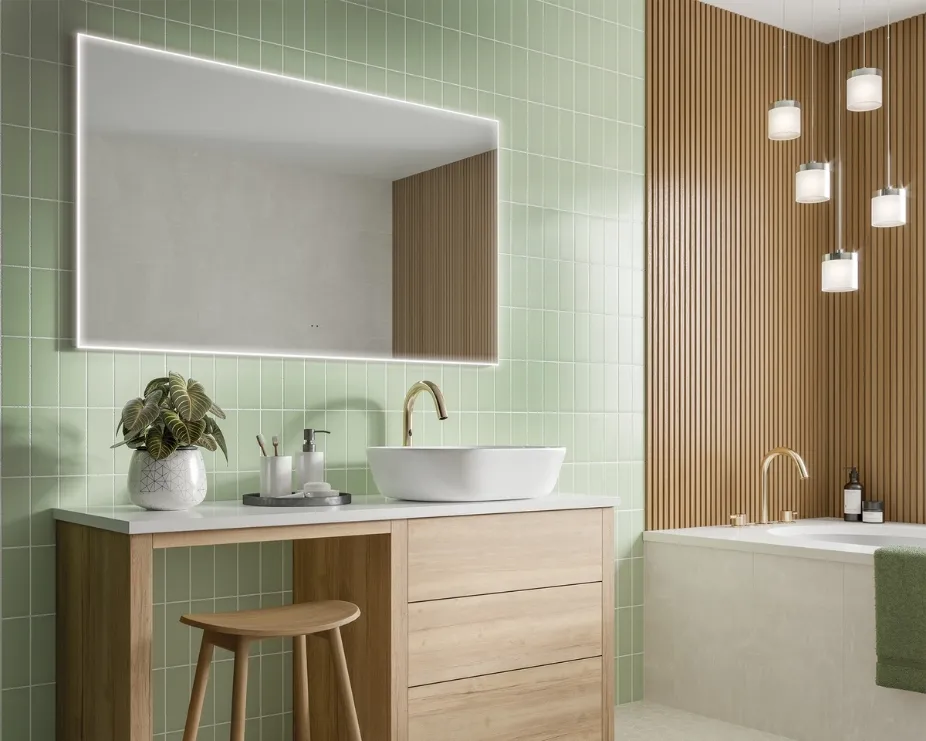
Lighting is now a fundamental part of any bathroom. As well as adding brightness and creating a more spacious feel, it can be adjusted, dimmed, and even the colour temperature changed to suit the mood.
The impact of lighting in wellness bathrooms, especially for individuals looking to create an environment for relaxation, is expertly highlighted by Andrea Denison, who advises: “Lighting is a great way of building a calming and relaxing ambience,” and, in particular, that “illuminated mirrors are...a great and easy way” to do this.
Yiota Toumba believes that lighting is less likely to be an afterthought in bathroom design, instead being prioritised more: “Mood lighting in bathrooms will filter into mainstream bathroom design". Similarly, Jasmine Rowe from the bathroom manufacturer hib. concurs, claiming that they have seen demand shifts on this front. She says: “the popularity of wall lighting has been rising”.
Rowe also mentions that a feature of hib. mirrors now is that some “feature ambient lighting that pairs seamlessly with wall lights to create a sophisticated layered effect”.
According to James Roberts, upcoming advancements in lighting are expected to promote health benefits, especially regarding body clocks. He anticipates that lighting systems will be introduced “that help reduce and minimise the effect on the Circadian rhythm, allowing for better relaxation and sleep benefits, as well as adjusting throughout the day” to help support this.
He also believes that social media trends, such as ‘Get Ready With Me’ (GRWM) content from lifestyle and fashion content creators, will lead to more focus placed on lighting. “The ‘GRWM’ or ‘get ready with me’ trend that lifestyle and fashion content creators do will drive more of a demand for better lighting and mirror placement, as more people use their spaces to do their daily routines, and enhance their beauty processes”.
Showers
There has been a shift in demand toward showers. A study conducted by Sanctuary Bathrooms in 2024 found that 59% of Brits prefer showers to baths, with over a quarter (27%) of those who had a shower only in their home saying it helped them to destress or relax. The same study also found that almost two-thirds (62%) would be willing to pay more for a home they were buying if it had a walk-in shower.
Emma Morris of Abacus believes that the configuration of showers helps improve the wellness aspect: “Lighting, shower seats, rainfall head showers - there is definitely a focus on creating a space that is not only practical but improves wellbeing and daily rituals”, she says.
When asked about social media trends, Emma Cope of Showerwall, says that they “closely follow design trends” and “often see a spike in demand for specific decors”. One of these has been the growth of shower niches - shower shelves that appear to be recessed into walls, which she says have been “trending” and “driven sales”.
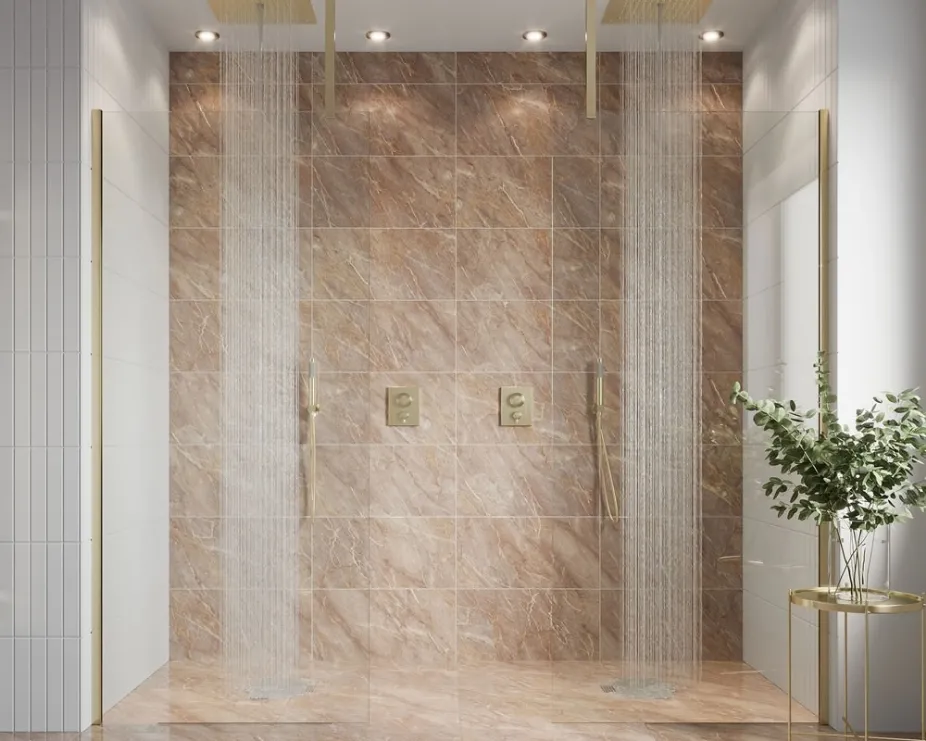
There has also been a growing trend of ‘double showers,’ with an average of 1,000 online searches per month. This is a spa and wellness trend in which people are looking to build large showering spaces suitable for a separate showering area for each person, building on the ‘double basin’ design. This has been noted by James Roberts, who advises: “people are opting or even designing shower spaces for convenience of showering at the same time”. Not only does this potentially open the door to speedier showering for both people together, but it also means that people can personalise the settings to suit themselves, create their own unique space, and eliminate a crossover of personal hygiene.
Uncluttered Spaces
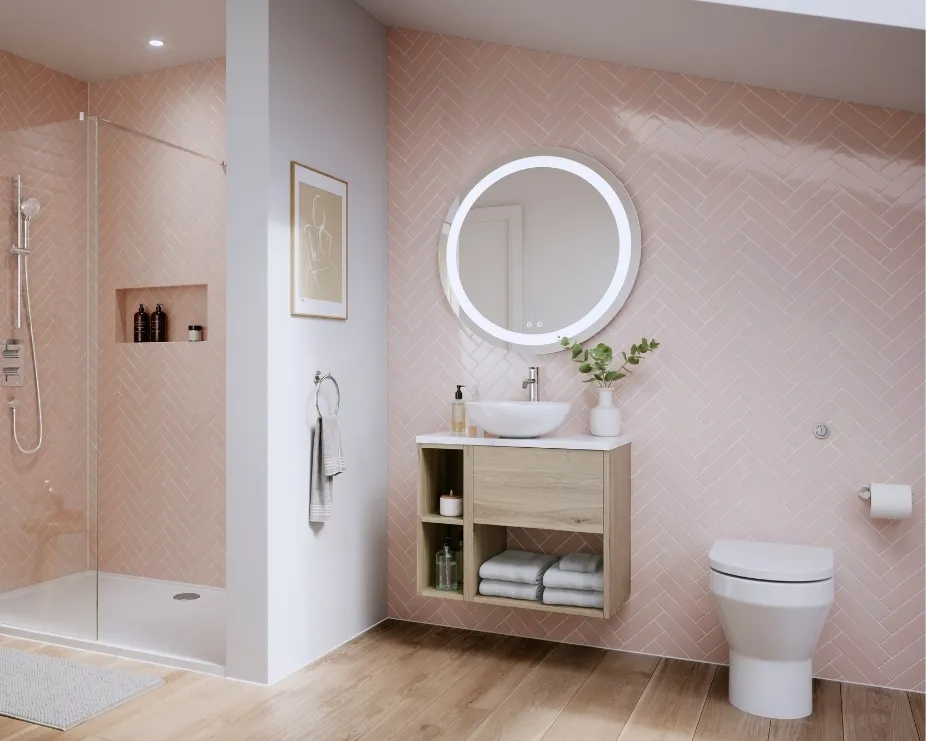
One of the main pursuits of any new bathroom design is to create plenty of storage space, keep things tucked away, and ultimately form an uncluttered haven. One element that Alvin Biggs, of RAK Ceramics, has seen is that people are looking for many convenient options that can help with this, reducing daily stress in the process: “The majority of homeowners recognise the role that cleanliness and lack of clutter can play in promoting relaxation and wellness”, he says. “As a result, they are prioritising easy-clean bathroom solutions and plenty of storage space”.
Easy clean solutions are products that require minimal fuss and maintenance. Some products are coated in special finishes that protect against common bugbears such as limescale, encourage easy water run-off, or promote less cleaning than usual.
Acoustic Wall Panels
Many elements of bathroom design focus on visual and touch elements. And whilst there is some focus on sound (think soft-close seats), very little is devoted to the room itself and how it best promotes a relaxing atmosphere.
Acoustic wall panels were one of the fixtures mentioned. These have a special type of backing that helps to absorb and soften sound, whilst some can even enhance sound quality. Bathrooms are notorious for echoing, which can unfortunately lead to privacy intrusions, where reverberating sounds can affect other household members.
Yiota Toumba believes that these will be used alongside other materials “to control echo and create a quieter, more meditative space”. Adding, “this will be layered with sound systems for guided breathing and sound baths”.
James Roberts notes that acoustic wall panels will benefit those who enjoy relaxing to podcasts; he says that bathrooms will have: “waterproof sound features for meditation apps or to enjoy some ‘bathroom podcasting’, where they can switch off and listen to a favourite podcast whilst getting ready”.
Chromotherapy & Sunshowers
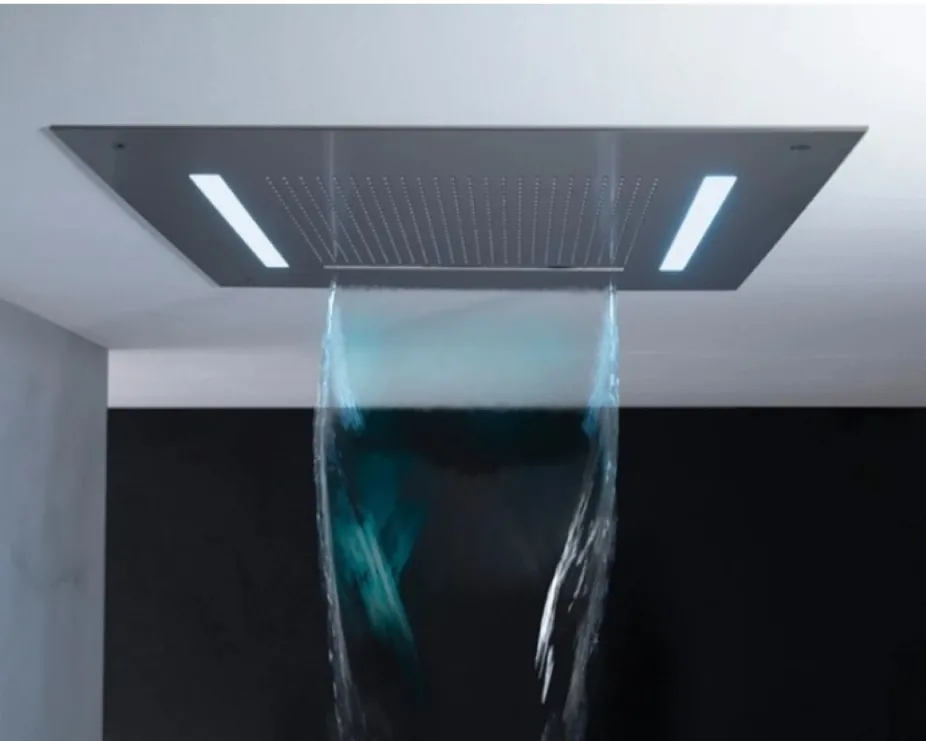
Chromotherapy, the use of coloured light to help with physical and mental wellbeing, is not necessarily new to bathrooms. Many showering systems feature mood-boosting coloured lighting, alongside different shower modes (think wavy flows or different spray functions) to provide a reinvigorating and restful shower. Bathroom Brands’ Jorge Hernandes reckons that we will see “chromotherapy in smaller spaces” as part of a 2026 wellness trend and growing interest.
Yiota Toumba of Villeroy & Boch also adds that colour-changing lighting is “becoming increasingly mainstream”.
One product that Liam Boyle, TOTO’s Senior Retail Manager, thinks will grow is that of the sunshower. These items combine a shower with an infrared or low-dose UV light to allegedly stimulate vitamin D levels. A Dutch company by the same name, Sunshower.eu, is already in this market.
Explaining, Boyle says: “Another wellness trend set to grow is the integration of products like the Sunshower, which uses infrared and UV light to offer both relaxation and measurable health benefits. These technologies bring spa-like functionality into the home, supporting not just comfort, but overall wellbeing”.
Shower Toilets
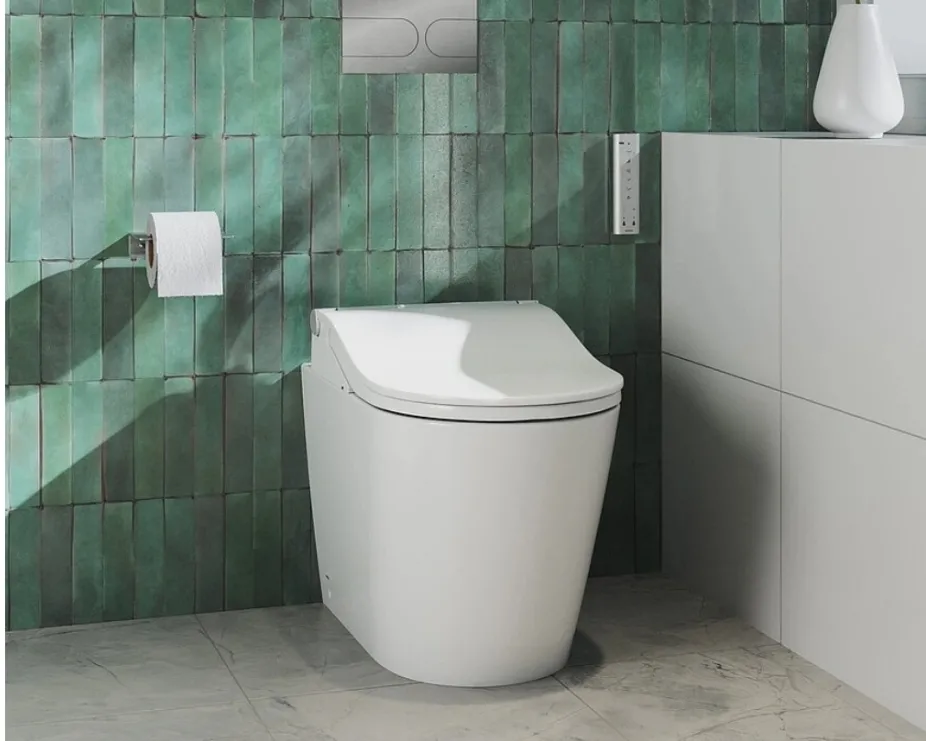
Another long-standing element that has steadily grown in popularity significantly is smart toilets (otherwise known as shower toilets, bidet toilets or Japanese toilets). These are essentially toilets that incorporate a bidet function that allows users to wash private areas after; more expensive versions offer additional features such as heated seats, differing spray functions, self-cleaning modes, and more. Price points vary, but top models such as TOTO’s Neorest can be upwards of £12,000. Yet, as well as being popularised in pop culture, as people experience this technology in hotels internationally and in the UK, there is greater demand to have these installed at home, primarily because they can also save on the cost of toilet paper and, ergo, be better for the environment.
Liam Boyle explains how TOTO, the luxury brand synonymous with the Japanese toilet and its introduction to the European market, is further developing its wellness technology.
“We’re taking this to the next level with the launch of our Wellness Toilet, a groundbreaking product that can analyse your waste and, through app connectivity, offer personalised dietary advice. The integration of health-focused smart features in bathroom design represents a major step forward in how we think about personal wellness at home”, he explains.
Continuing, he adds that he believes the popularity of shower toilets will grow over the next 12 months. “I believe we’ll see a significant rise in the use of shower toilets in the UK next year. As people travel more and encounter shower toilets in hotels and public spaces both abroad and increasingly within the UK, awareness and interest is growing”.
Sophie Weston, Head of Marketing of Geberit, who are also in the shower toilet market, insists it will hit the mainstream this year. She said: “Shower toilets are only rising in popularity and can possibly hit its mainstream stride in 2026. The consumer interest is unsurprising. It’s a product that combines comfort, hygiene and technology all in one, and it’s only becoming more accessible from a price perspective”.
She adds that the benefit of combining two features and space saving is one primary benefit: “Shower toilets are an effective choice when wanting to optimise space in smaller bathrooms, achieved through its wall-hung element. Space is, unsurprisingly, becoming a bigger priority in our shrinking modern homes. They combine the functionality of two appliances (toilet and separate bidet), becoming a multifunctional solution in one product”.
Integrated Aroma Infusion and Shower Aromatherapy
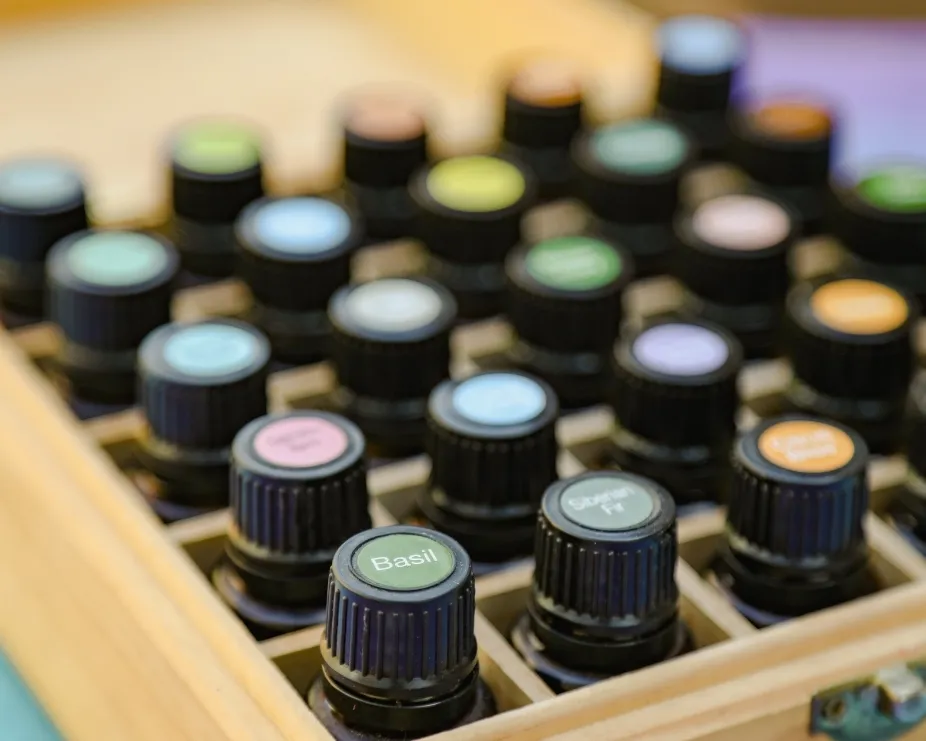
We've already covered senses such as visual and touch, but what about the others? Well, experts also believe that sense of smell in bathrooms may be used to further enhance relaxation and moods. Candles, diffusers, incense, and plants area already used to add natural scents and enhance bathroom enjoyment.
But James Roberts believes that this will grow due to social media trends around shower aromatherapy. “People are using essential oils to add relaxing scents, such as eucalyptus, into their spaces with the steam enhancing the experience”, he explains. He also adds that many people are searching for equivalents to bath bombs, with some brands such as Lush, offering ‘shower steamers’. “These can be left on the floor to fizz and provide scents”, he says.
“We can see a movement towards a multi-sensory experience by incorporating products that compete with the air freshener and candle market. Think gadgets or fixtures that provide different and properly designed scents in different areas catering to the individuals and that benefits the showering or bathing experience, not the standard ‘pine fresh’ kind of scent associated with bathrooms.”
And Jorge Hernandez of Bathroom Brands adds that he also sees “integrated aroma infusion” being a growth area next year.
Meditative Spaces
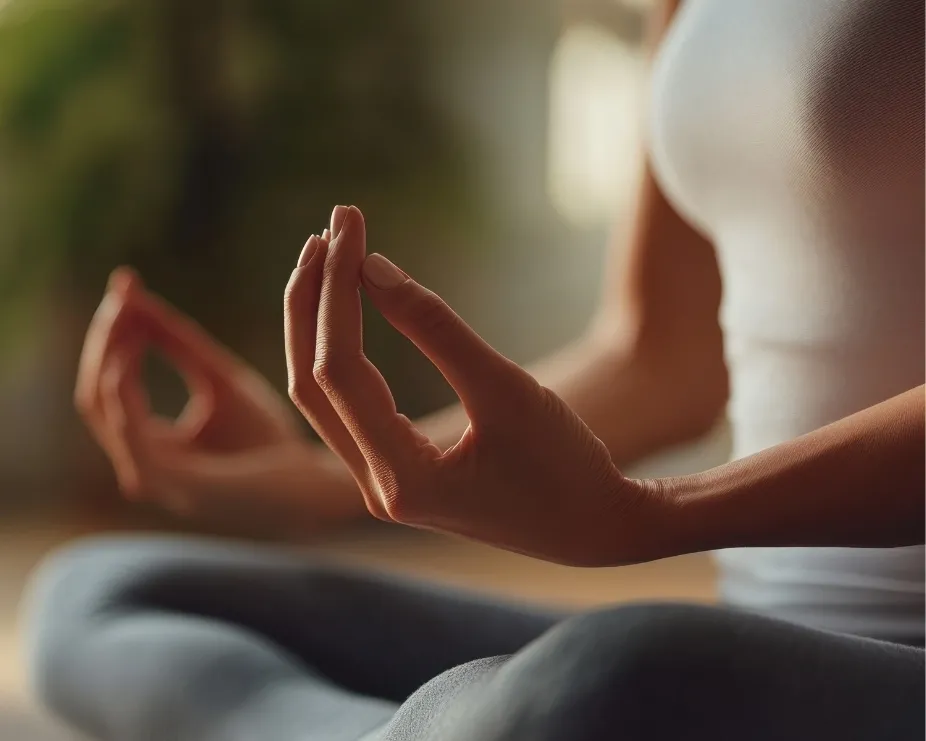
James Roberts suggests that many people will also adapt their bathroom spaces into places of meditation. A 2018 poll by Deltapoll revealed that nearly 1 in 10 Brits (9%) engage in mindfulness practices, with projections indicating this number rose to 16% by 2021, according to another study. There is a growing appetite for daily rituals that use techniques to boost and improve mental wellbeing. This trend is also being promoted by the NHS, along with breathing and anxiety reduction techniques.
He states: “A future trend that I think will appear this year is more thought and demand for meditative spaces. More people are being encouraged to participate in mental health supporting activities such as mindfulness, deep breathing, and relaxation techniques, so we can see people looking to create spaces where they can shut the door, close off, and undertake these in a nice, relaxing environment”.
What About 2026 Product Trends and Features?
That covers the key bathroom themes and main trend considerations, so now it is time to delve into product specifics - which will see a growth trend in 2026?
1. Large Showers Replacing Baths?
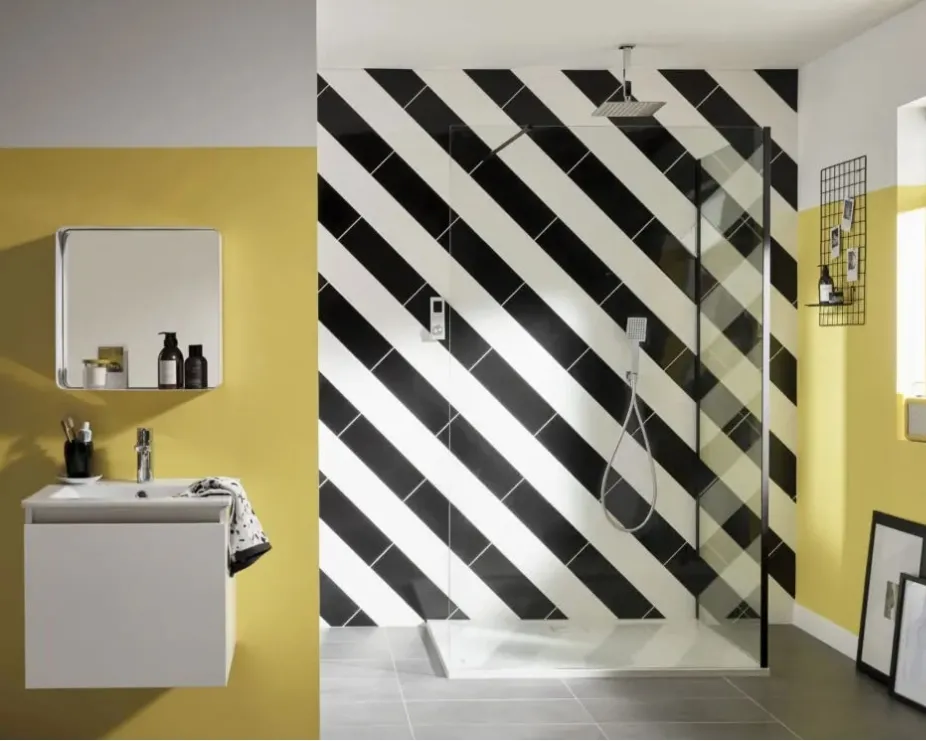
Further to previous comments, one common area identified is people opting for large showering spaces over bathtubs. Early shoots were seen as far back as 2023 by experts featured in previous trend pieces.
Eileen Slattery, MERLYN's Marketing Director, believes the market is being driven by people renovating spaces to increase bathroom footprints: “This trend [personal sanctuary spaces] is reflected in the increasing number of consumers who are extending their bathroom areas or converting previously unused rooms to achieve these aims. Within these enlarged spaces, walk-in showers and versatile wetrooms have grown in popularity”.
This is more about the long-term with “homeowners continu[ing] to future-proof their properties for later life”, according to Emma Morris at Abacus.
And Jorge Hernandez of Bathroom Brands adds: “[these are] becoming expected elements in mid-market bathroom design”. He also ancipates a move “toward more open, seamless layouts will only accelerate in 2026, making these once-niche choices firmly mainstream”.
Helen Ray-Dennett also explains that Tissino have seen a surge in demand for shower trays of a larger size. She says: “Trays measuring 1.8m+ have been more popular than ever as people opt for showers over baths and more generous showering areas”.
2. Storage Space
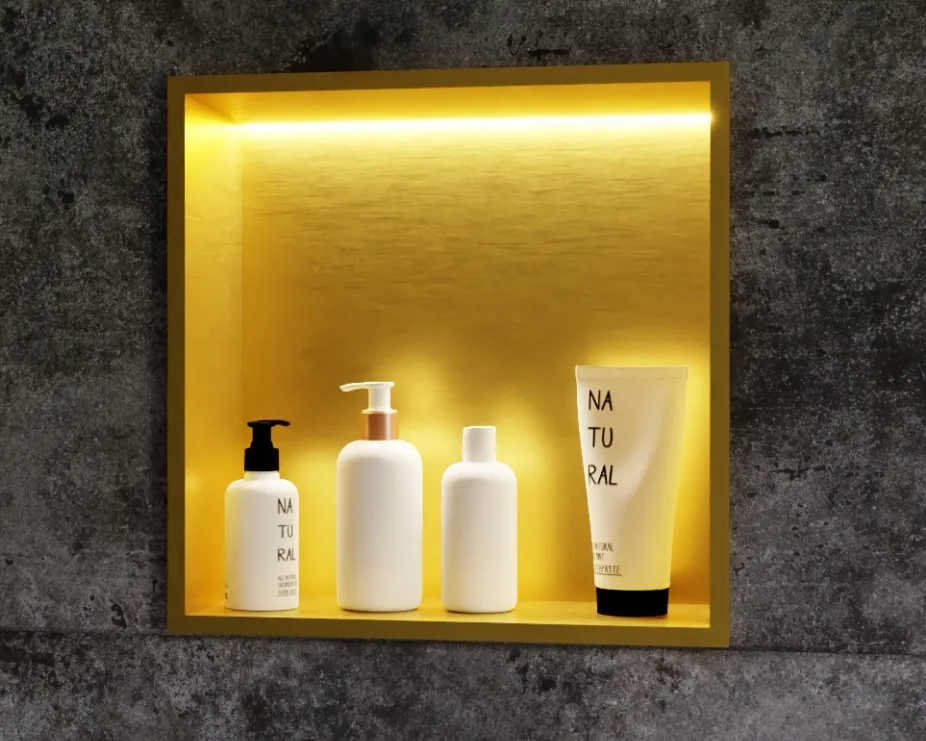
Unsurprisingly, storage returns again in the annual trends. Aside from staples of vanity units, furniture, or cabinet storage, experts believe that people will be looking for additional storage extras.
Yiota Toumba of Villeroy & Boch believes that “hard-working storage will always be priority must-haves”, whilst Helen Ray-Dennett thinks that people will look to be creative with storage. She says she sees more people looking at: “Storage solutions other than the furniture, whether it being space on baths or cleverly designed shower niches”.
3. Fluted and Ribbed Features
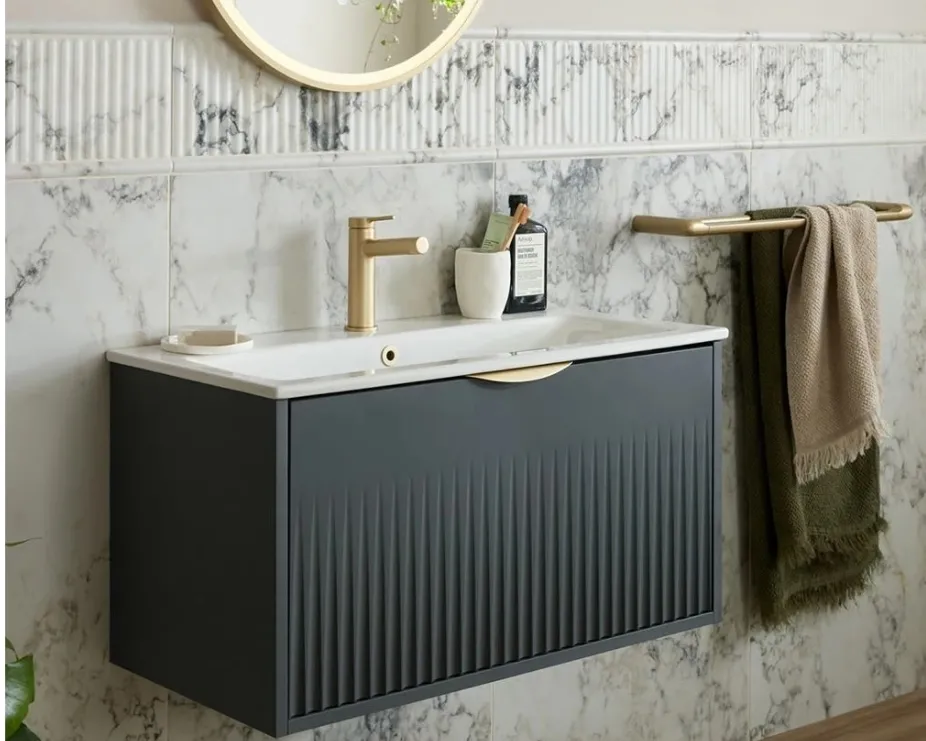
Fluted and ribbed looks have been popular in showering for a while with glass having it for privacy reasons. This styling has now been adopted across spaces, such as in furniture. As well as a natural touch, it adds an element of tactility and eye-catching visual elements.
Jasmine Rowe of hib. says they launched ranges with this as a feature, believing “fluting and ribbed furniture would be a major trend,” and that “it will certainly continue into 2026, with linear textures and rounded edges gaining momentum”.
Agreeing, Jorge Hernandez adds: “textural details like reeded and fluted surfaces will add depth” to redesigns in 2026.
4. Smart Technology
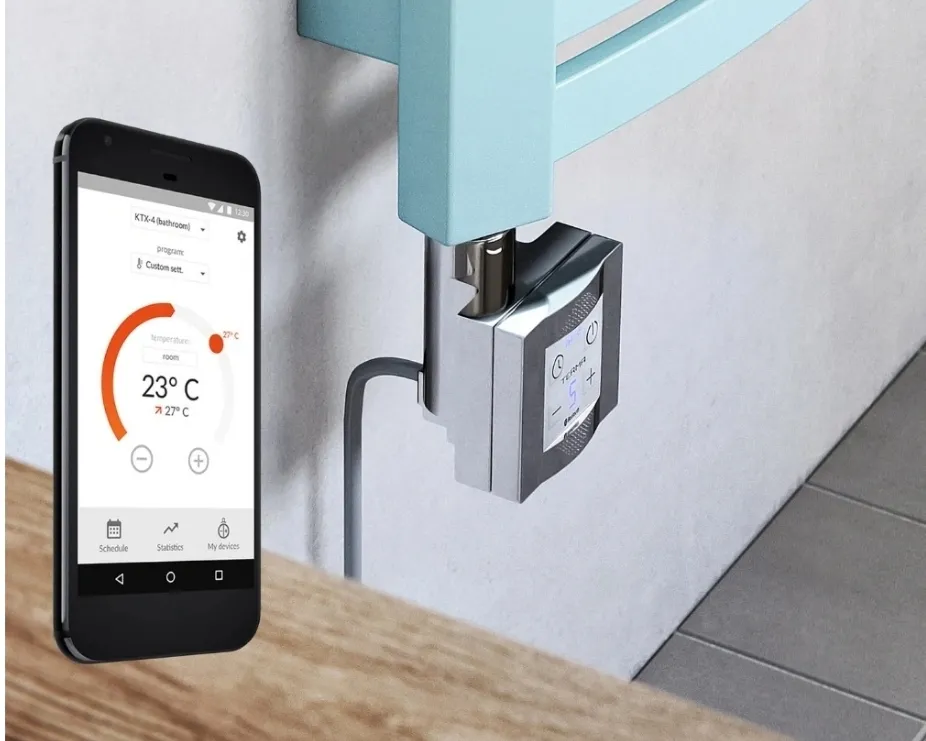
Globally, everyone is currently in the midst of an artificial intelligence (AI) and smart tech boom led by tools like ChatGPT. Certainly, there is an appetite for homeowners to incorporate practical, beneficial and time-saving features into homes to help them to enjoy their spaces more. So, will there be a swing towards more features in 2026?
Jorge Hernandez of Bathroom Brands believes that “smart bathroom technology will continue to rise in relevance,” citing “growing curiosity around features such as smart toilets and other connected innovations” as examples.
Many experts, like Eileen Slattery, identify key features they think will appear in 2026 like “smart thermostatic controls, app-linked showers, and lighting presets will move from the elite to an everyday essential”.
Emma Morris Abacus agrees, adding, “we can expect continued innovation in smart technology, with more bathroom products integrating app-based support for everyday use,” and that she sees “smart features such as heated toilet seats becoming the norm”. Helen Ray-Dennett at Tissino sees more people adopting “integrated technology such as charging points in mirrors and lighting adjustments”.
And Jasmine Rowe at hib. believes smart has extra meaning: “To us, smart means purposeful design that is functional, practical, and adds value for the user”. She adds examples of increased heated pad sizes “for greater steam-reducing coverage” and “incorporating USB-C alongside USB-A ports”.
5. Panelled Bathrooms
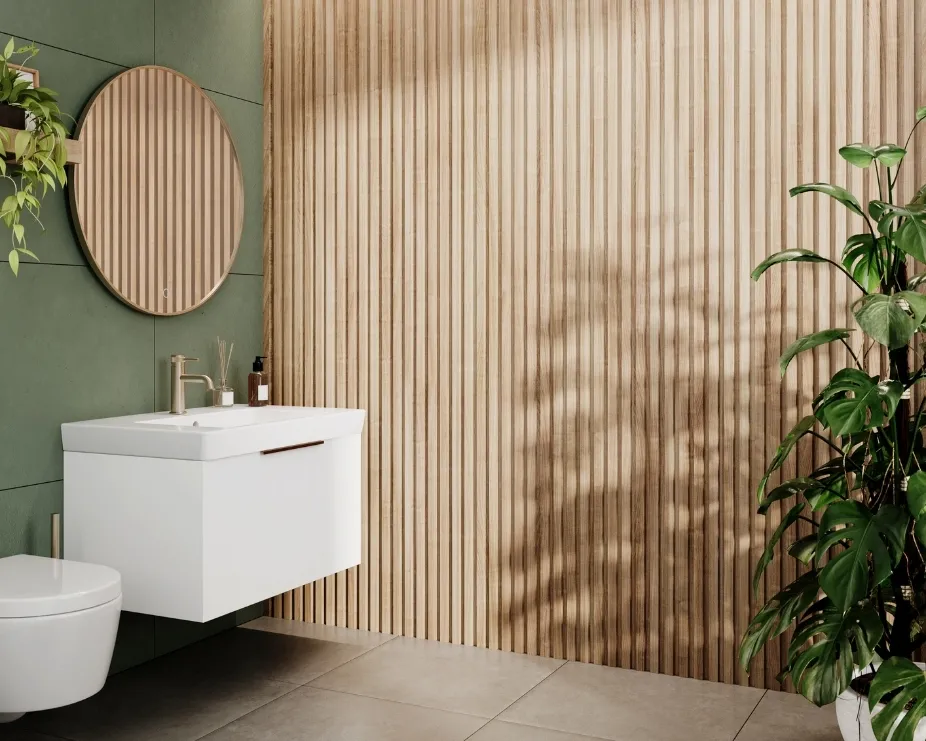
Emma Morris suspects that 2026 will see the trend of more panelled bathrooms. When asked about which social media trend she has seen an uptake from, she said: “Panelling. PVC Panels, slatwall and waterproof acoustic panels – panelling has taken the world of interiors by storm – with many consumers experimenting across the whole home, including bathrooms."
6. Sunken Baths
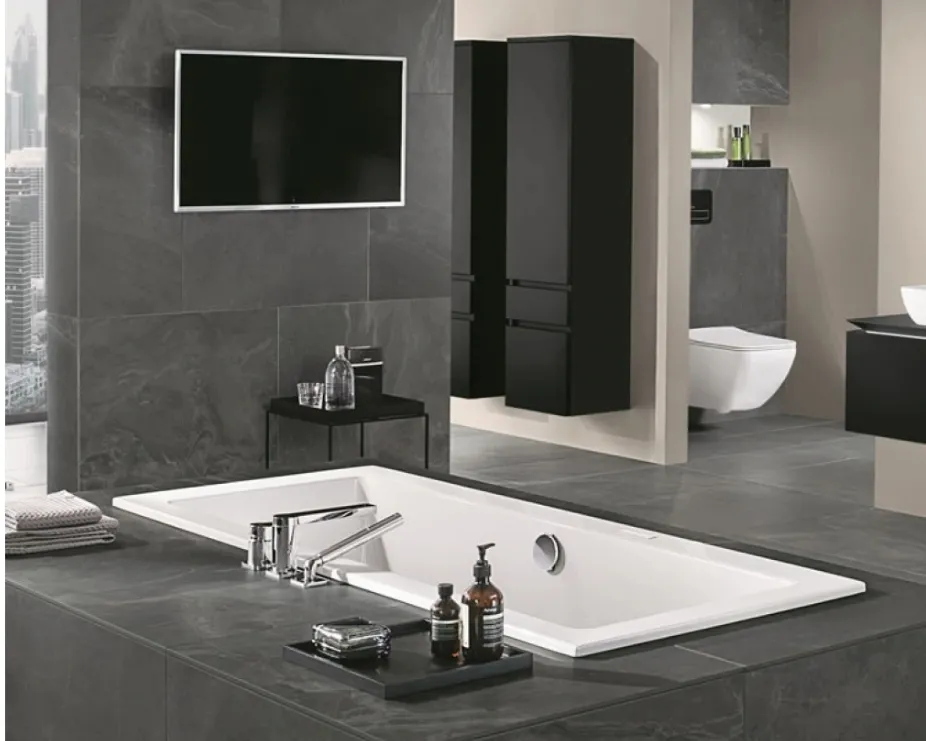
Zoe Jones, Roper Rhodes Senior Creative Producer, also sees there being a niche trend of people adopting sunken baths. These are inset baths recessed into a floor for people to step into.
“Sunken baths are looking like a breakout trend for 2026”, she explains. “It’s the new status symbol and it is niche, but I don’t think it will become mainstream as only certain layouts will allow for this type of installation”.
Colour Trends To Look Out For In 2026
When it comes to refreshing a bathroom, often the main starting point is a colour-scheme and finding the products that either fit in or complement it. Let’s delve into what the experts believe the main colour schemes will be in 2026.
1. Earthy Colours
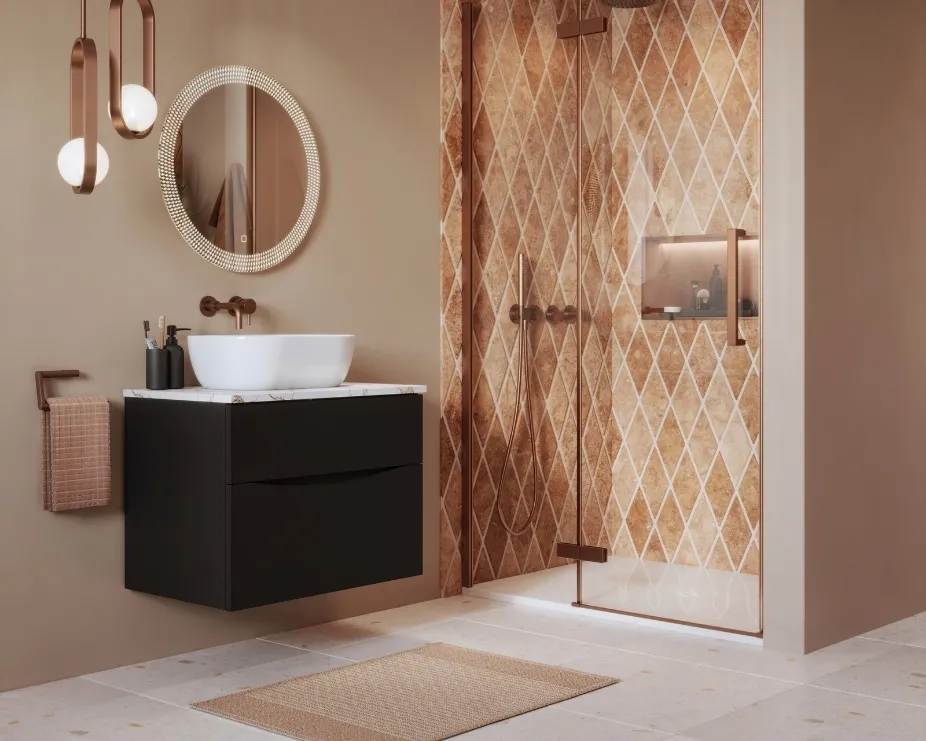
Earthy colours led the predictions. This is about bringing warmer tones of Mediterranean and North African climes to UK bathroom spaces, enhancing and embracing natural looks, such as wood effects and natural stones. As Alvin Biggs from RAK Ceramics highlights, this is about “tying in with the trend for biophilic and nature-inspired design” as well as adding elements of comfort, as many experts mentioned.
Andrea Denison from Barwick believes that such colours “bring comfort and tranquillity to the bathroom,” as well as “adding warmth, comfort, and making the bathroom a restful place where consumers can relax after a long, hard-working day”.
Geberit’s Sophie Weston agrees on this point and states that “the recent resurgence of warm and aged tones has been a welcome surprise”, whilst Biggs also believes that this is likely to be the number one area this year, stating that “rich earthy shades will dominate in 2026”.
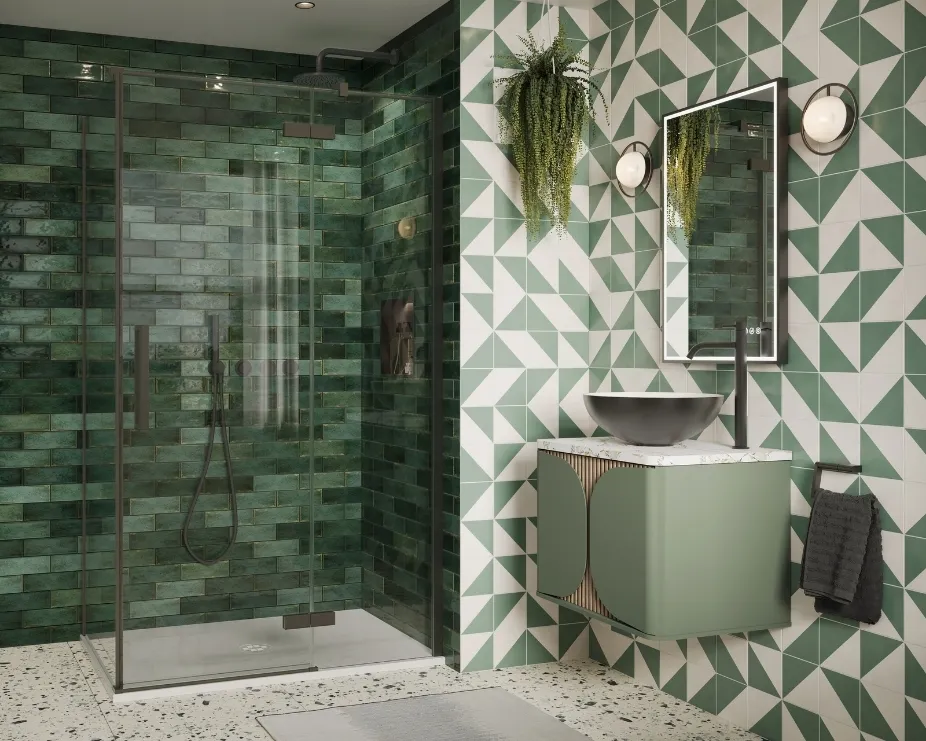
When it comes to colours associated in this bracket, Denison cites “earthy browns as well as green tones”, hib.’s Jasmine Rowe highlights “earthy greens and warm terracotta tones”, while Roper Rhodes’ Zoe Jones suggests “chocolate, terracotta, and greens”. James Roberts considers “earthy ochre-like colours such as burnt orange, umbers, and deep browns, as well as deep forest greens” will also be popular. Yiota Toumba from Villeroy & Boch Group states, meanwhile: “earth tones are being redefined with shades such as sand, almond, beige, brick, clay taking centre stage in sensual interior design”.
Toumba also adds that these colours “also convey a natural depth that is further enhanced by carefully selected textures and materials”.
Alvin Biggs from RAK Ceramics adds: “The terracotta tones that have made their mark in 2025 will also have a place in bathroom design over the coming months as consumers embrace colours inspired by stone”.
Rowe also sums up the trend for earthy colours as an area where “designers are reimagining the bathroom as a place for self-expression and style”.
So, if adding a touch of brown, terracotta, or moody reds are on the agenda, 2026 could be the perfect time!
2. Blues & Greens
Many also believe that this will be supplemented by colours of blue and green, as some experts alluded to in the previous section. Both colours are reflective of nature, as well as invoking a sense of relaxation, whether it is blues of the sky or sea, or the greenery of flora. Dulux have also named their colour of the year as three different shades of blue too.
When it comes to blues, Jasmine Rowe believes this is in response to the spa trend: “blues reflect calm, energy and balance, providing opportunities to create spa-like, restful spaces or dramatic, sophisticated statements”, she says. “Lighter tones make compact bathrooms feel open and bright, while deeper shades add richness”.
Tissino’s Helen Ray-Dennett agrees: “We believe lighter blues will be popular as a versatile colour that can co-ordinate with a range of styles”.
And Showerwall’s Katie Cope thinks “deep navy hues” will be “big news in 2026”. Geberit’s Sophie Weston also considers that “dark blues will be complementary” to other colours.
On green, Villeroy & Boch’s Yiota Toumba explains that shades of this are reflective of different locations: “natural green tones go beyond mere colour – they make a statement”, she enthuses. “From deep forest hues reminiscent of a lush urban jungle to soft teals reflecting the meditative tranquillity of a Zen garden, this colour palette offers endless possibilities to transform the bathroom”.
She continues: “When paired with organic shapes and sustainable materials, the result is a space that invites you to relax and breathe deeply”. She then goes on to state that “natural greens and soft pastels that are currently transforming bathroom spaces reflect the historical palettes being revived on popular period dramas".
Other shades cited include Sophie Weston, saying “aquatic greens”, and Katie Cope with “bold botanical greens and classic sage”.
But Jorge Hernandez of Bathroom Brands isn't as convinced: “Green - so dominant in recent years – has begun to plateau as consumers look toward fresher alternatives”, he states.
3. Brushed Bronzes & Golds
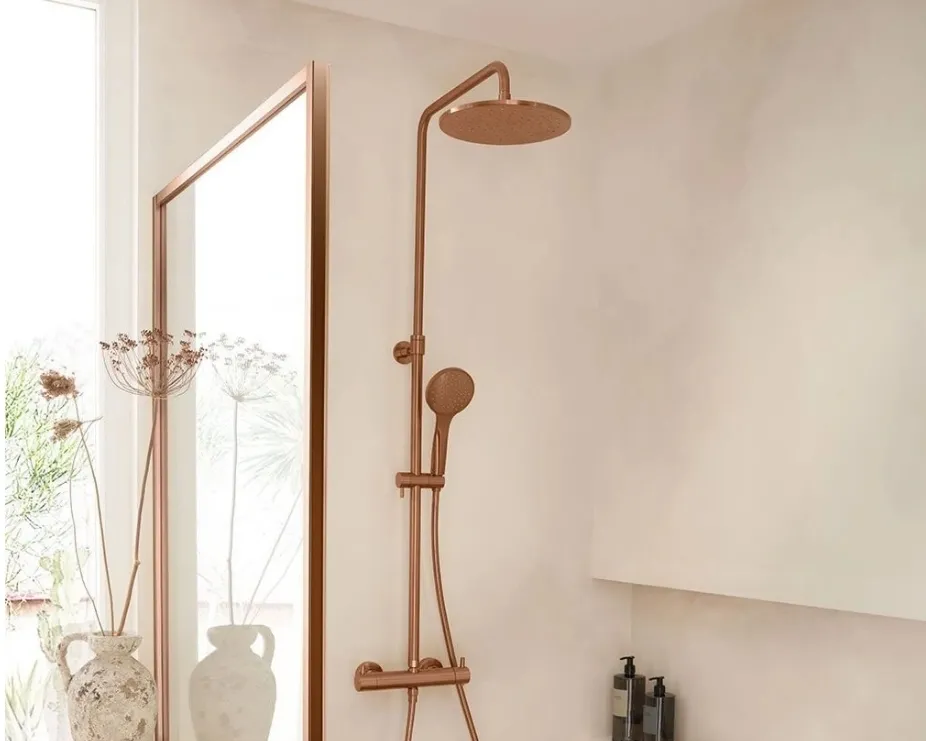
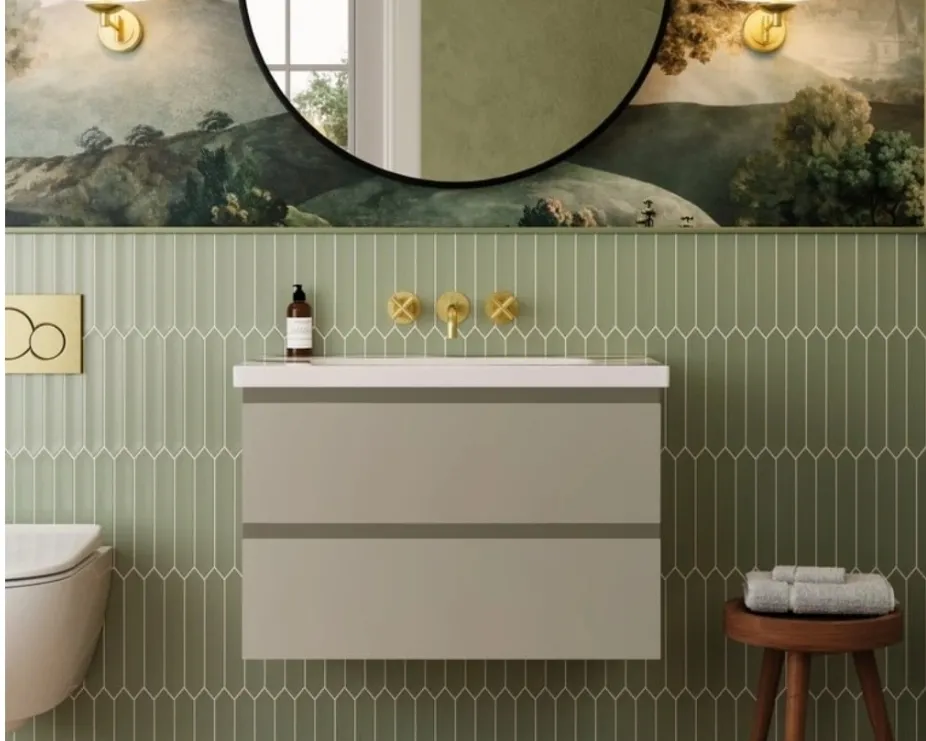
When it comes to brassware, there always tends to be one or two standout colours, with others having varying success. In terms of popularity, experts believe that gold trends – particularly matted options – along with bronzes will be popular, especially as complementary colours alongside the aforementioned earth colours, blues and greens.
Alvin Biggs from RAK Ceramics has seen a trend of ‘luxury finishes” grow in 2025, and he adds: “It’s a trend that is set to gain further momentum in 2026, with metallic accents such as brushed brass and gold leading the way”.
Eileen Slattery of MERLYN agrees that they also expect to see more of these, alongside gunmetal: “Think brushed brass, brushed gun metal and brushed bronze. For 2026, we expect to see more of these accents”. Sophie Weston from Geberit also agrees, adding: “warm metallics such as gold, brass and copper, will also see an increase in interest”.
And Emma Morris from Abacus believes that these colours will supersede the demand for other popular colours – including ones that are currently new in trend at the moment: “brushed brass [and] golden tones seem to be preferred over matt blacks and anthracites”, she says.
4. Matt Finishes
Gloss bathroom finishes have historically been preferred due to their reflective surfaces, shiny appeal, and, in some cases, more premium look. However, many people are opting to switch to matt finishes, with toilets, baths, and shower trays all imbuing a duller finish alongside brassware.
In relation to the company's recent investment in new matt-finished smart toilets, TOTO's Liam Boyle states: “There’s a growing preference for subtle finishes like matt surfaces, which complement modern bathroom styles without drawing too much attention to the toilet”. He also adds that “matt colours, in particular, are gaining momentum especially in earthy, natural tones like sand, clay, stone, and olive”.
5. Avocado
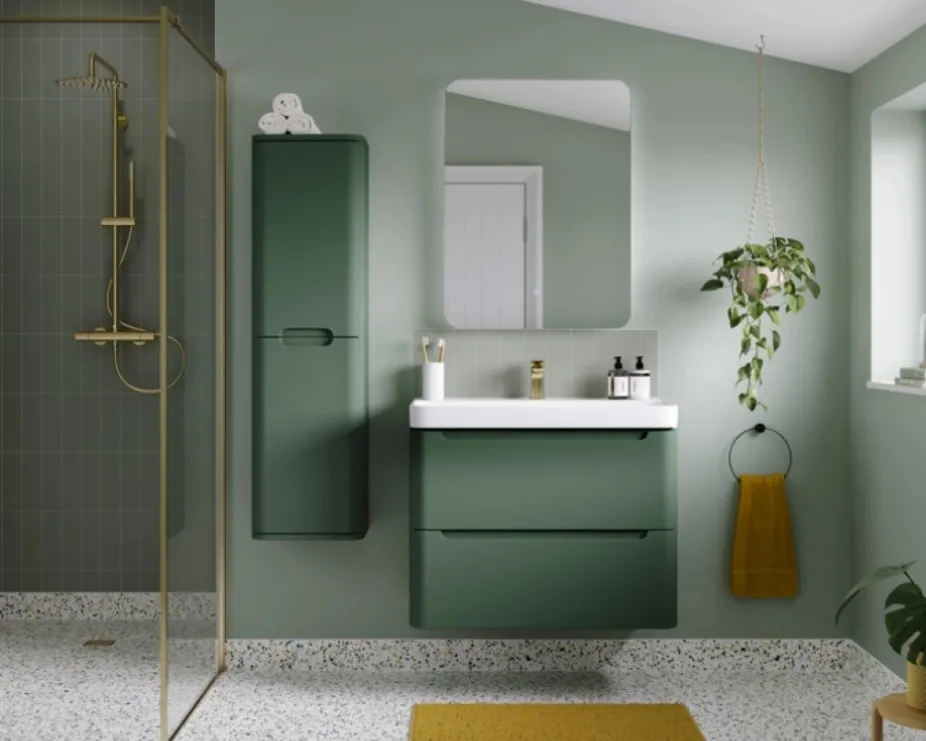
Avocado bathrooms were a like-it or loathe-it trend in the 1970s and 1980s that many baby boomers and those growing up in Gen X households will have enjoyed. A study in 2024 found that 27% of millennials would pick avocado green as a colour they would use in a bathroom upgrade. And Emma Morris from Abacus believes that this could indeed turn into a full resurgence.
“The 70s classic has had a revival!” she enthuses. “Greens seem to be a popular choice for vanity units, walls and floors, particularly as many consumers want to create a space that is either bold or vibrant or one that lends itself to a retreat that evokes feelings of calm and serenity”.
6. Neutrals
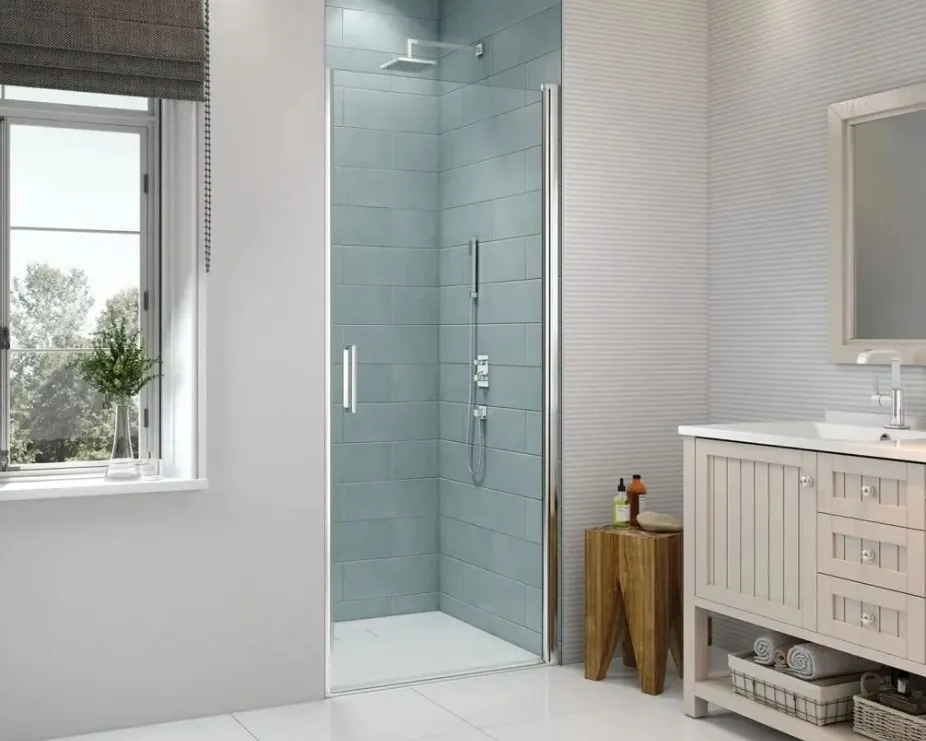
Morris also predicts that neutrals will remain popular next year: “Neutrals are always very popular as they create the perfect backdrop for any chosen colour scheme or design”.
7. Richer Dramatic Tones
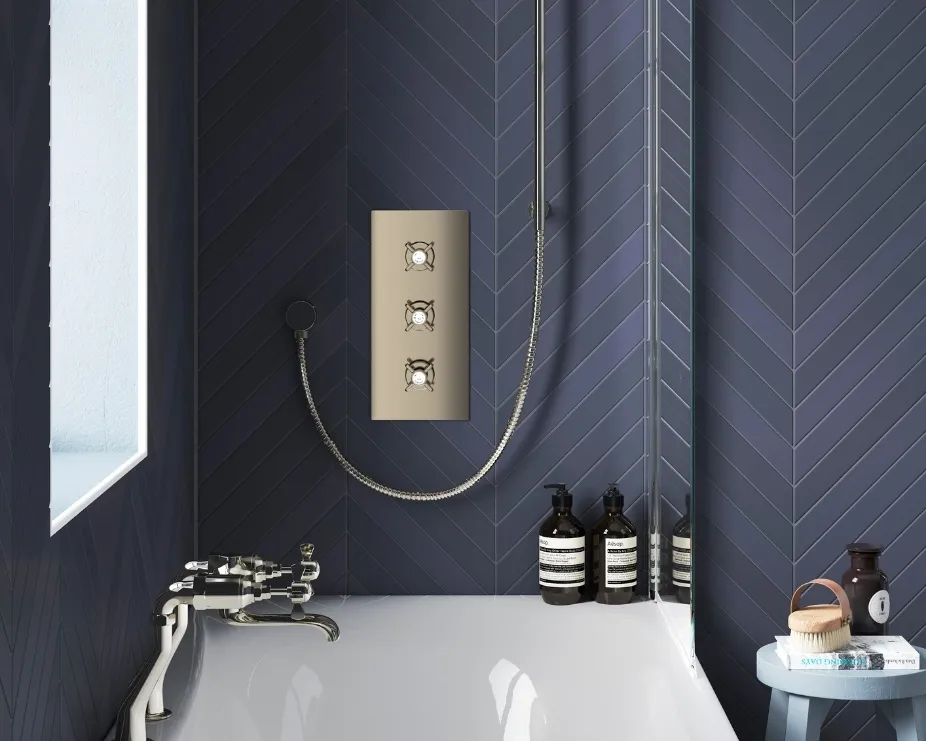
As people have experimented with colour, many are now embracing bolder shades as part of the bathroom space. Jorge Hernandez from Bathroom Brands sees this as something that will only grow in 2026, evolving from little touches.
“One of the more unexpected shifts in 2025 has been the emergence of richer, more dramatic tones – from deep purples to oxblood reds”, he says. “While these colours are currently appearing mainly as small accents, they signal a bolder direction in bathroom design that I believe will continue gaining momentum into 2026”.
8. Pastel Shades
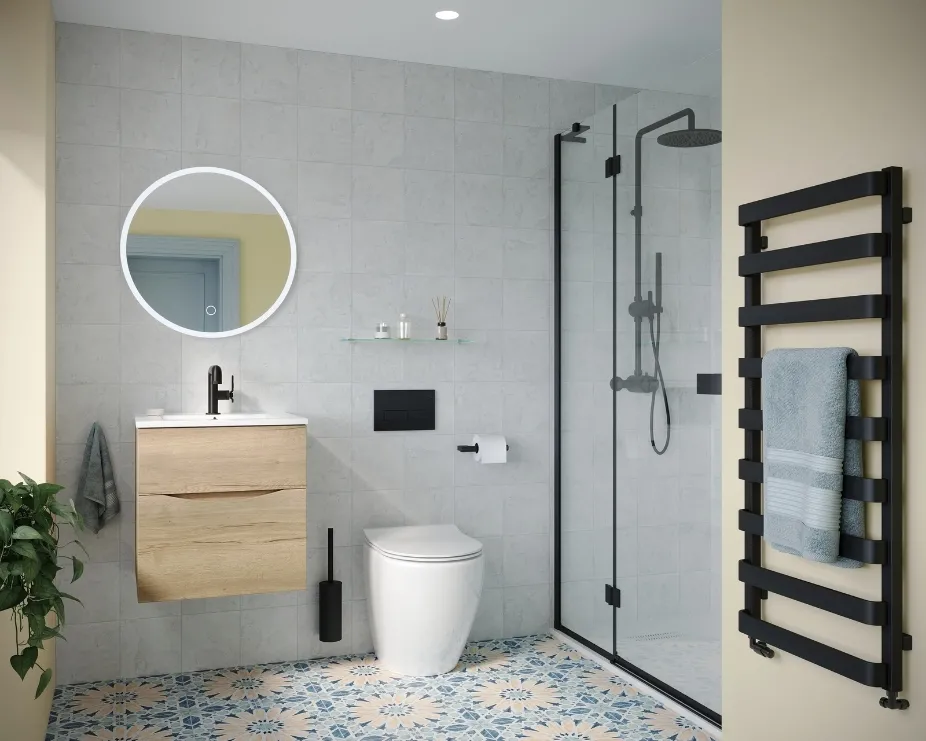
Contrasting with this – at the other end of the colour scale – are pastel shades. These are colours that are more muted, lighter, or just softer than their bold, brash counterparts. And Yiota Toumba from Villeroy & Boch believes that they will have a resurgence in 2026.
“Pastel shades are making a sophisticated comeback - not as naive splashes of colour, but as an expression of subtle elegance and creative experimentation. Rosé, mint and sky blue set soft accents, while unexpected combinations with bold colours or metallic elements add dynamic contrast.
“Whether applied to walls, furniture or textiles, pastel shades give the bathroom a personal touch and highlight the individual style of its occupant”.
Colour Trends To Avoid or be Wary of
On the flip side, which colours should homeowners be wary of in 2026 – or avoid completely - if following the latest trends?
1. All White Bathrooms and Fixtures
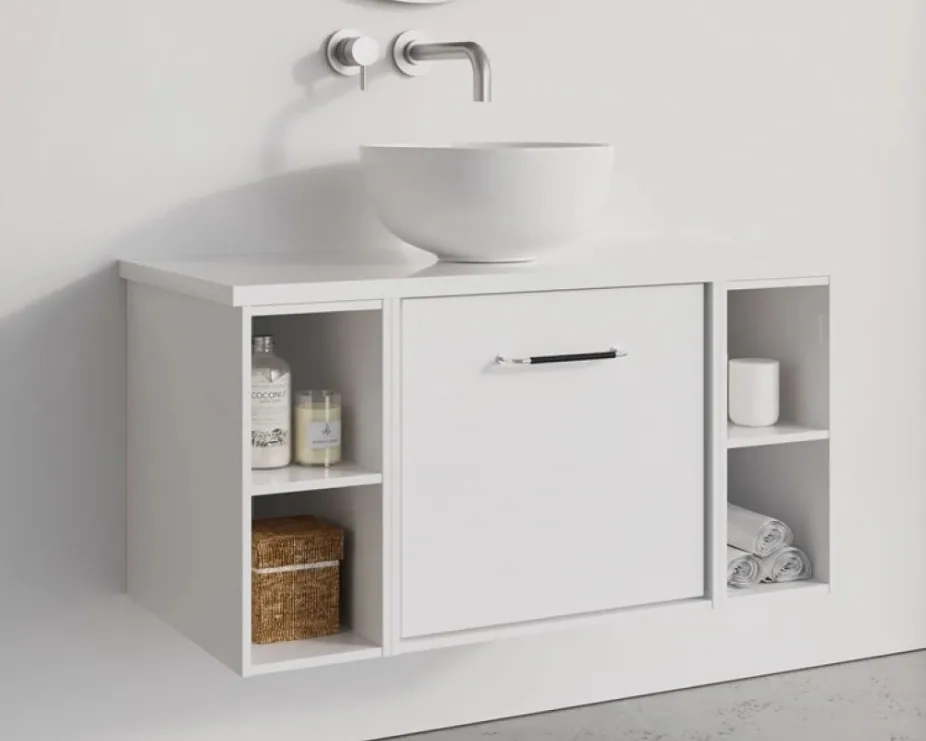
The first stop is for white bathroom fixtures and fittings, particularly those all white bathroom schemes.
hib.’s Jasmine Rowe proclaims that the “era of all-white bathrooms is fading”. The main reason for this, explains Zoe Jones of Roper Rhodes, is that “all-white and ultra-minimal bathrooms have seen a decline as they are deemed too clinical and cold”.
Rowe adds that “homeowners are embracing colour to transform these once-clinical spaces into inviting and personalised retreats”, while Villeroy & Boch’s Yiota Toumba cites the “[move] to earthier tones” as one of the reasons for the transition away from the humble, white colour scheme. Sanctuary Bathrooms’ Director, James Roberts, mentions that homeowners are “seeking colour, warmth, and personality instead”.
And it isn’t just the colour scheme itself that is on the precipice of going out of fashion. Tissino’s Helen Ray-Dennett notes that from their perspective “white furniture, which used to be a consistent choice, has been overtaken by other colours as people are becoming more adventurous with their choices”. She adds that whilst this was once their go-to colour, they “are really seeing consumers go for bold colours and statement bathrooms” now instead.
2. Greys, Light Greys & Cool Colours
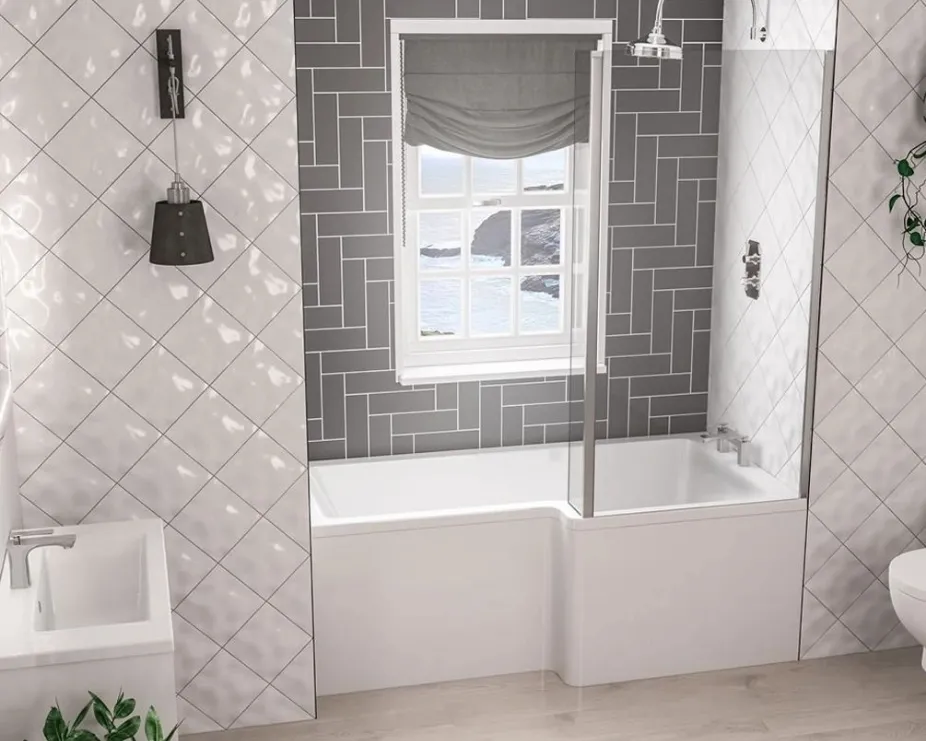
Grey bathrooms were a popular a few years ago, but now many are tipping this colour to also be a thing of the past, along with white.
Bathroom Brands’ Jorge Hernandez believes that grey “continues to feel dated” while others, such as Sanctuary’s James Roberts, have seen “a noticeable shift in darker colours such as cool greys and stark blacks”, and hib.’s Jasmine Rowe says that “cool tones, particularly grey, have declined”.
Like with white bathrooms, Abacus’ Emma Morris reckons that this lack of popularity is due to more consumers opting for “warm neutrals or pops of colour in chosen designs”.
But not everyone is ready to give up on grey as a colour, with Katie Cope, Head of Showerwall, stating “greys and earthy neutrals continue to have enduring appeal”.
3. Black and White Contrasts
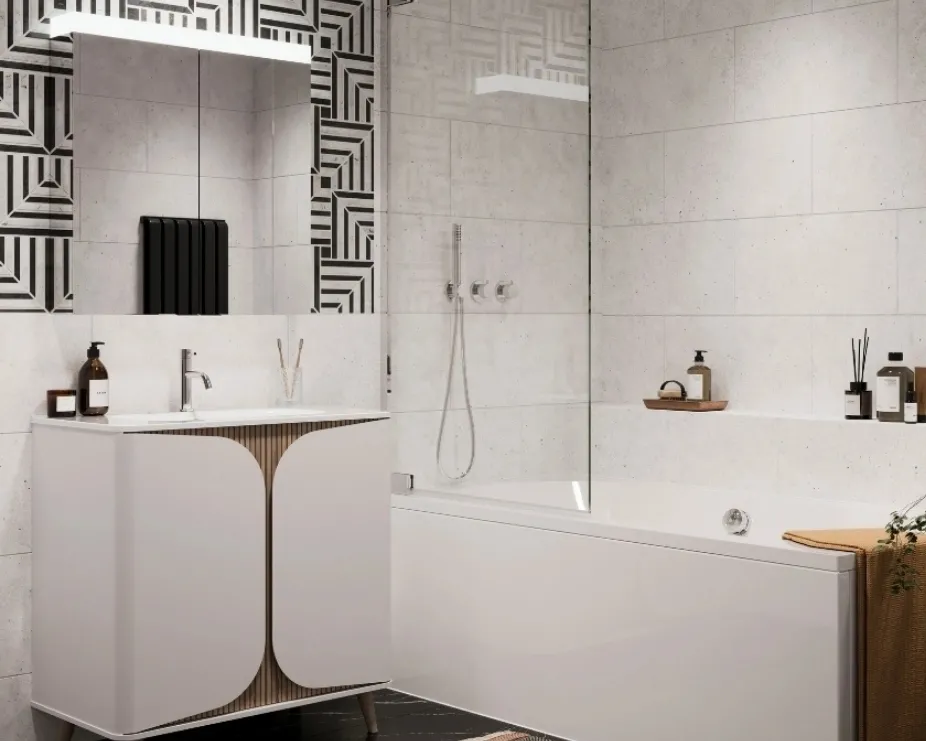
Along the same lines, Eileen Slattery from MERLYN understands that the popularity of monochromatic colour schemes and achromatic colours will also lose their appeal in colour schemes, particularly black and white bathrooms.
Explaining this, she says: “In 2025, harsh monochrome lost much of its popularity and black-and-white contrasts moderated into softer tones”.
4. Bright Colours
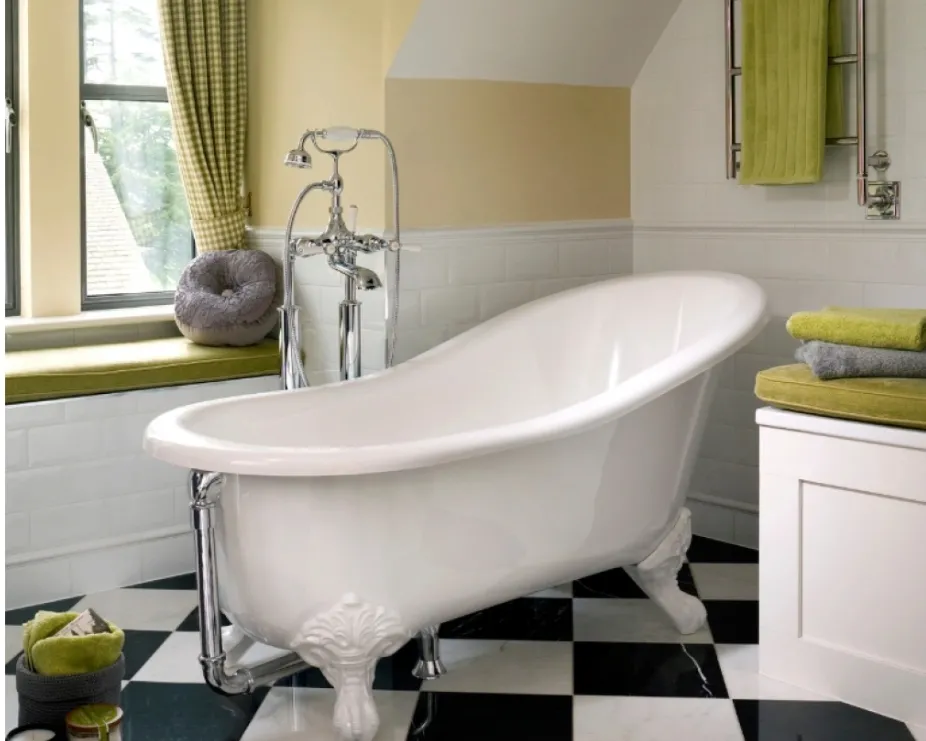
Slattery also adds that one other area she has seen decline more quickly than expected is bright colours. With the likes of Barbiecore and the dopamine trend, many people looked towards bright colours as a way of adding a touch of personality.
She states: “We’ve noticed a subtle move away from ultra bright colours; instead, consumers are choosing calming, sophisticated palettes that offer a more timeless look”.
Also commenting, Sanctuary’s James Roberts believes that people will step away from social media and pop culture as primary influences, opting instead for colours with greater longevity. He states: “the colour choices we make up will be less Instagram or pop-culture led, such as bright pinks and yellows, and moving towards more longer-term colours that we are more emotionally durable and can live with, and love, over a prolonged period”.
5. Colour Drenching
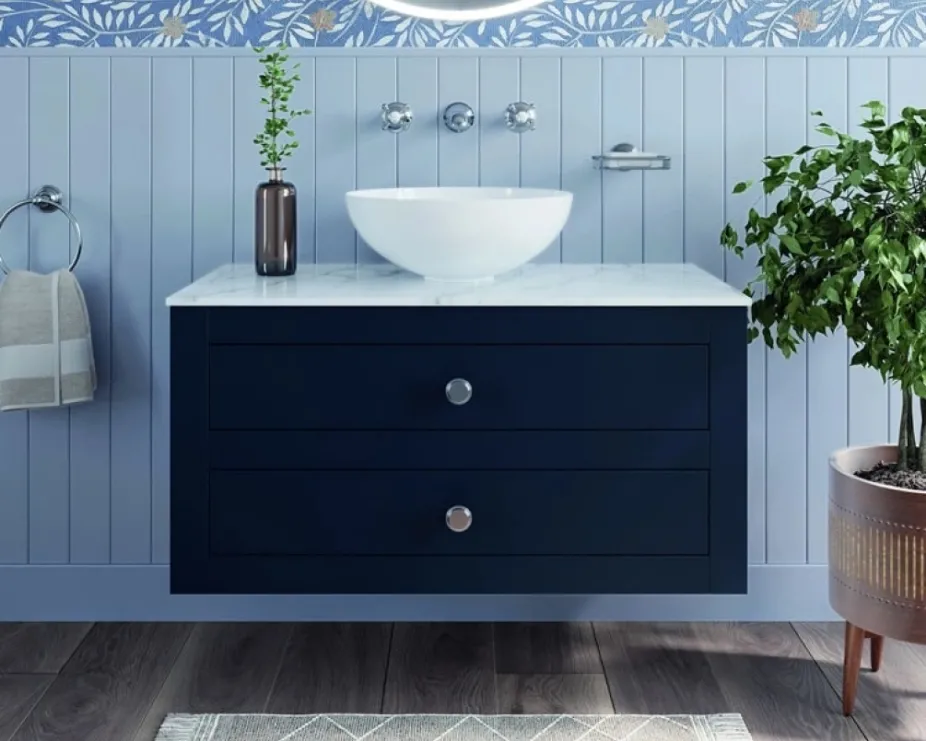
Another colour trend that has people in both the for and against camps in 2026 is ‘colour drenching’. This is a trend that involves using a dominant colour across an entire space, or variations of the same colour in different shades - for example, three shades of blue.
Katie Cope, Head of Showerwall, explains that they “were expecting colour drenching to be a prominent trend”, explaining that its use in other spaces led to a similar trend in bathroom. However, she says, “We haven’t seen the high level of carry-over we expected”.
But Roper Rhodes’ Zoe Jones deduces this is premature: “colour drenching…isn’t going anywhere as a trend, and is extending to include ceiling and floors to create a cocooning scheme using a palette of tonal complementary colours”.
She also adds that she feels that this has seen another trend of ‘material drenching’ – a similar use of the same materials across a space.
“Material drenching has evolved from this trend and will continue into 2026 – using materials such as marble, plaster or wood to cover the surfaces of a room to provide a cohesive and immersive environment”, she states.
6. Bright Golds
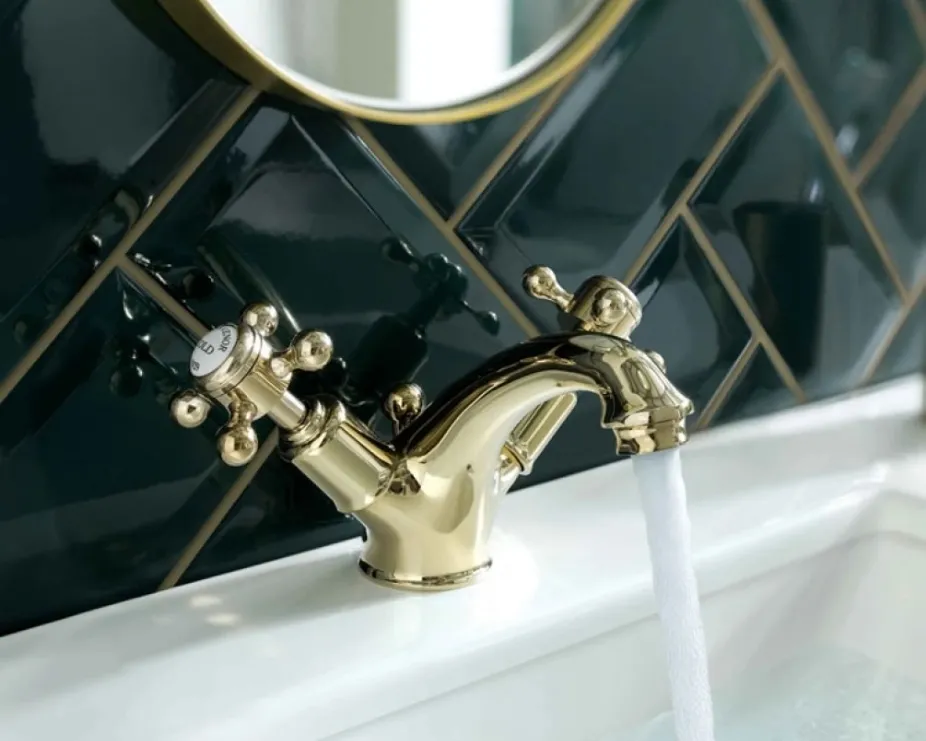
Whilst brushed and matted finishes are predicted to remain popular, bright counterparts in golds are likely to see a decline, according to Sanctuary Bathrooms’ Director, James Roberts.
“Rose gold and more polished golds are another colour that has seen a shift. The comments we have experienced is that it may not look as premium as it once did, and so people are opting for softer, matted alternatives”, he explains.
7. Chrome
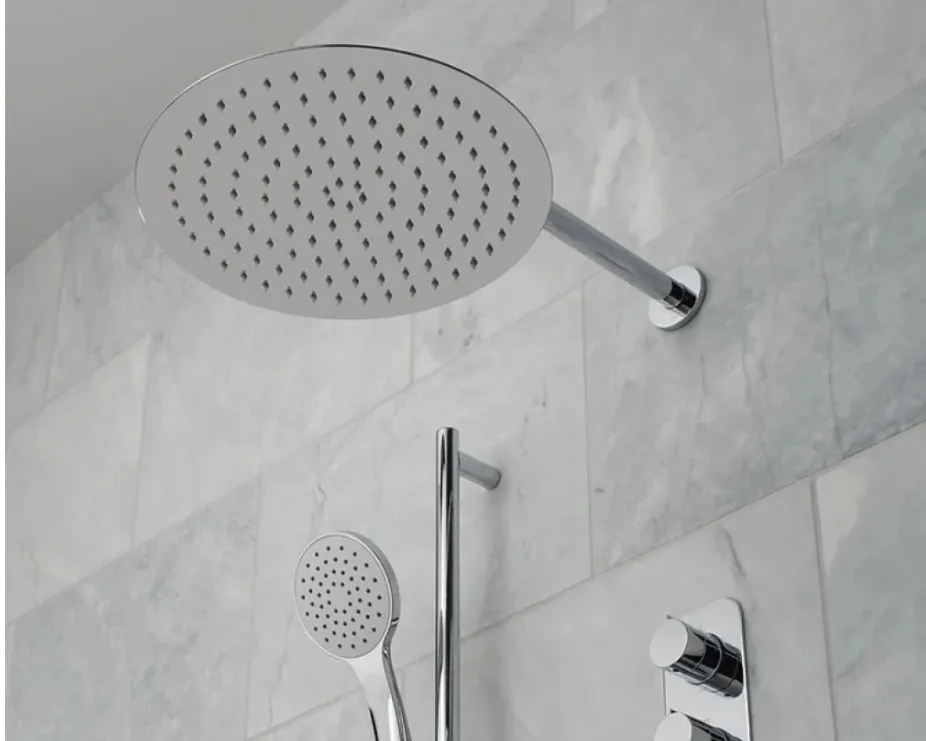
It feels like the death of chrome as a colour has been predicted by many for a number of years now. Certainly, in interior design, it feels like chrome is becoming a niche colour as opposed to mainstream, as people choose bolder, brighter, or more natural-looking alternatives. Yet there are some that hold on to it, and some even see variations of ordinary polished chrome having some hold yet.
Abacus’ Emma Morris says the colour surprised her the most in terms of demand or decline. “Consumers seem to be opting for a more luxury feel of warm metallics”, she expresses.
Yet Liam Boyle from TOTO says that he was caught off guard by a demand for black chrome: “The emergence of black chrome took me by surprise — and it’s a strong reminder that classic chrome will always have a place in bathroom design. While trends come and go, finishes like chrome continue to evolve and remain relevant”, he says.
What Materials Trends Will There Be in Bathrooms in 2026?
Materials have already been discussed, along with colour trends and general bathroom themes. But can the panel of experts see any more standing out in 2026?
1. Nature Inspired Materials
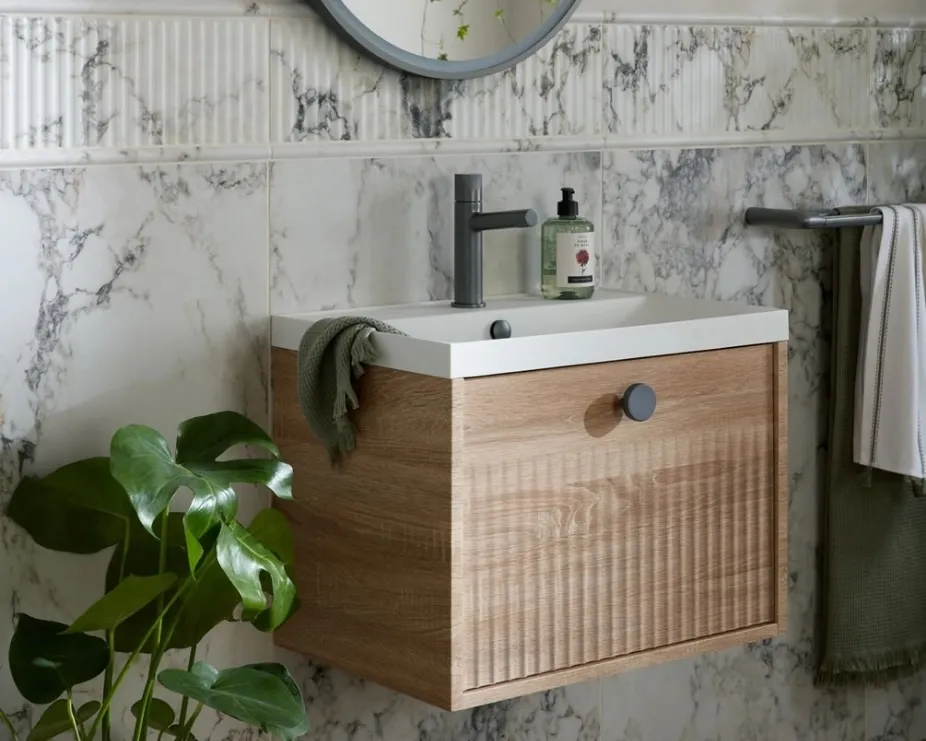
Unsurprisingly, the first area is natural materials. Think natural stone, or faux natural stone effects, ruggedness of brick or more artisan tiling, and even elements like wood. As Emma Morris from Abacus summarises, she sees a “continuation of natural materials for a ‘nature-inspired’ look” being big in 2026, certainly driven by pop culture.
JTP’s Jeevan Seth believes that what is driving this appeal is the influence of Scandi living trends. He explains that this trend combines “natural materials with clean, sleek silhouettes and light-filled simplicity, creating a tranquil, effortlessly modern bathroom."
Continuing, the scheme he states: “When complemented by smooth metallic accessories, the style achieves a perfect balance of understated elegance and contemporary sophistication."
Adding to this, RAK Ceramics’ Alvin Biggs states that they are seeing such touches being reimagined differently all the time: “We’re also seeing colour and texture being embraced in fresh ways with nature-inspired materials such as marble or marble-effect surfaces and wood, for example, creating a sense of calm and relaxation”, he explains.
2. Woods & Dark Woods
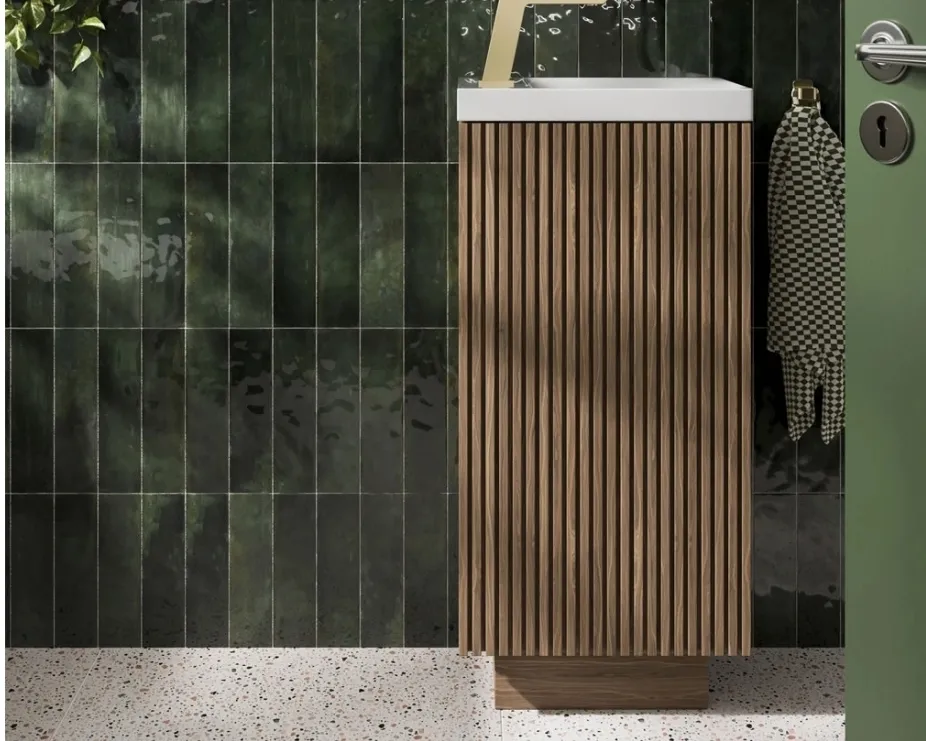
In terms of the woods that people are using, hib.’s Jasmine Rowe says that it is being led by “warm, darker woods such as walnut, teak, and dark oak” due to a “growing…popularity due to the mid-century revival influencing bathroom design”.
Bathroom Brands Jorge Hernandez believes that “rich wood grains and natural surfaces such as walnut and travertine” will be “leading the way”.
And Zoe Jones from Roper Rhodes considers that this will truly come to the forefront in 2026, saying it is a “welcome return of wood finishes,” adding that “they bring warmth and character into the scheme and can be paired with stone, marble for added texture and layering”.
3. Stainless Steel
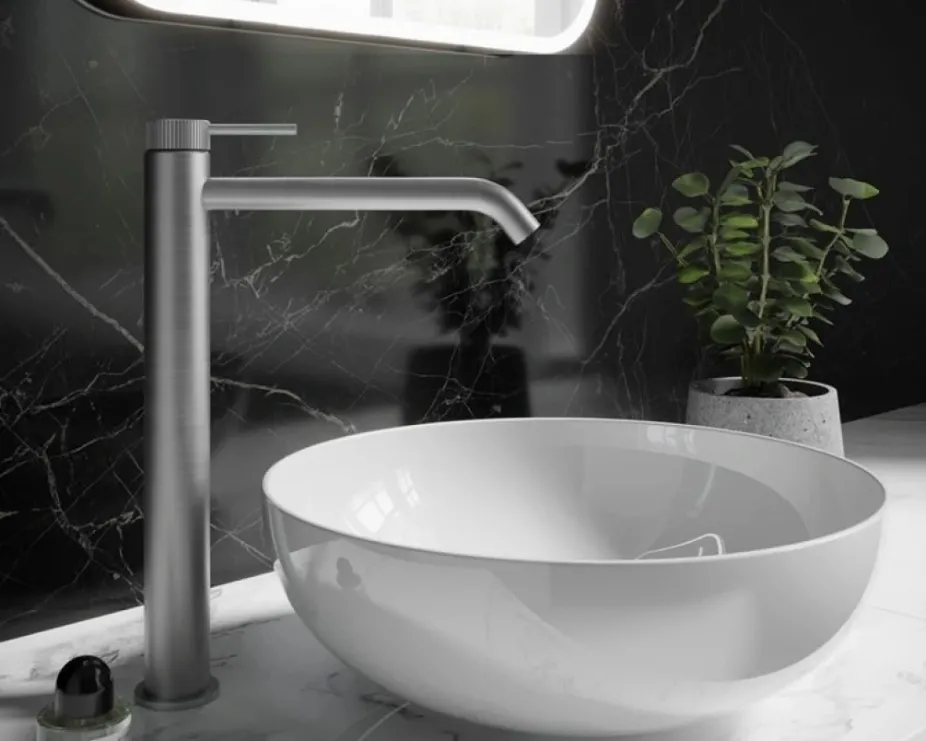
Some brassware ranges are now manufactured from stainless steel rather than conventional brass models finished in a chosen colour – an example being the 3ONE6 range from Crosswater. This builds on the use of steel as a material in baths and radiators, such as those from The Sussex Range by JIS.
And Tissino’s Helen Ray-Dennett believes that these versions of taps and brassware will come to the forefront in 2026. “They are durable, sustainable, and an excellent base for PVD coatings, which means longer-lasting, better-quality finishes for the end user”, she explains.
4. Coarse Plaster & Mineral Finishes
Another area that came up amongst some experts was the use of more tactile finishes, such as using plasterwork or natural mineral finishes.
Villeroy & Boch’s Yiota Toumba believes that coarse plaster – a finish with a rugged, stone-like appearance – “provides the perfect foundation for a timeless bathroom that fosters well-being".
And Sanctuary’s James Roberts considers that this could become mainstream in 2026, appealing to more people. “Think organic stone-like surfaces that are both waterproof and provide a natural look and could move from places like boutique hotels to more residential bathrooms. This is – in part – down to the benefits of seamless, joint-free surfaces and aesthetic appeal”, he explains.

5. Recycled Ocean Plastic
A more niche one that could appear in the not-too-distant future, both as part of a circular economy and a way to be more eco-considerate, is recycled ocean plastic. Already, the material and salvaged plastic are used to make other products, such as bags and even some clothing items.
James Roberts believes it has a chance to be used in bathroom products in 2026: “I think next year will see the use of recycled ocean plastic in bathrooms, in particular, premium fixtures. This has been bubbling in terms of lifestyle for a number of years, and there have been a number of initiatives to use and recycle plastic to help environmentally. This has already transitioned into premium fashion elements, and we can see this happening in bathroom spaces where plastic or plastic resins are used, and as a potential alternative to other polymers such as acrylic”.
6. Fabrics
Jasmine Rowe from hib. believes that the use of fabric could see an emergence in 2026, although not a return to carpeted bathrooms.
“I wouldn’t be surprised to see fabrics or fabric-like textures emerging in bathroom spaces, adding softness and complementing the mid-century style”, she says. “Though hopefully carpets stay out”, she professes.
Are There Any Other Ongoing Trends To Look Out For?
This guide has already covered a lot of ground, but are there any other niche trends that may appear, or that people believe that home renovators can take inspiration from? Showerwall’s Katie Cope best explains this, stating that “people are taking far more enjoyment and control over bathroom design than ever before. This relates to wider pop culture influences, such as finding inspiration on social media, where home renovator influencers are having a big impact on product and design choices”.
So, let’s delve into what experts have thrown out there as to what may come up.
1. Grounding
Sanctuary Bathrooms’ Director James Roberts jumps on a niche wellness trend doing the rounds called ‘grounding’ or ‘earthing’. This is a wellness technique that believes that standing barefoot on natural materials, such as grass, dirt, or sand, connects people to the Earth’s electrical charge which counteracts the positive charge of the human body to create a ‘grounding effect’. The belief is that this can benefit health, particularly inflammation, although it is worth noting that this is still in its infancy of research. There are already grounding products on the market, such as grounding mats that can be used during sleep or indoors.
Whilst not necessarily forecasting a trend of outdoor showering or bathroom spaces – though there are a minority who have indeed done that - Roberts believes that elements of this will be incorporated into interiors and bathrooms, plus future product design.
“Another trend alongside these will be more use of ‘grounding’ materials around shower areas and basins”, he states. “This may mean the use of natural materials around the space, as we seek to reconnect with the outdoors and nature”.
2. Brat Summer
Roper Rhodes’ Zoe Jones thinks that we will still see an element of pop culture coming into bathroom spaces. Honing in on Charlie XCX’s-inspired ‘Brat Summer’ trend of 2024, inspired by their ‘Brat’ album with a lime green cover, Jones states that this is “still having an effect” on interior design. Adding “music and cinema will always influence and impact our interior choices”.
3. Wes Anderson
Wes Anderson is an American filmmaker whose movies have inspired social media-led interior design trends due to his deliberate use of bold colour palettes, symmetry, and nostalgic looks.
Jones goes on to say that “Wes Anderson colour palettes still resonate with designers today”.
4. Dept. Q
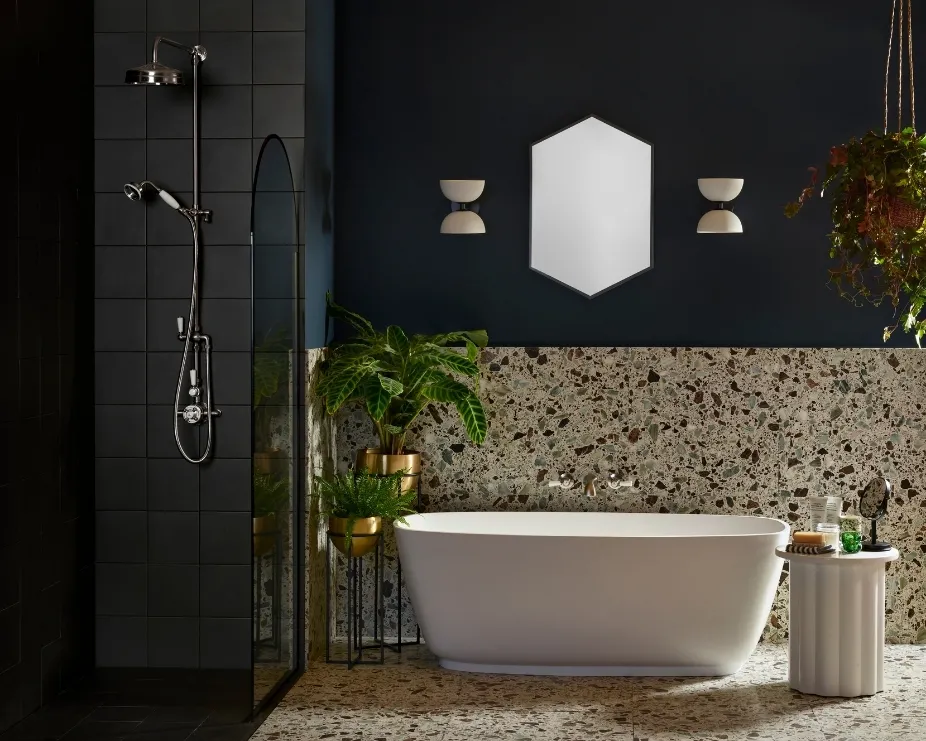
As a pop culture aficionado, Jones also has a third area up her sleeve based on personal viewing. Dept. Q is a 2025 British crime thriller based on the book of the same name, which has been renewed for a second season. In it, the main character is based in a semi-derelict basement office that uses a dark colour scheme, which Elle Magazine’s Hannah Nathanson describes as “stylised” and “atmospheric”.
Commenting on this, Jones says: “Personally, I loved the office in Netflix's Department Q – the dark and atmospheric colours would create a bold and immersive bathroom scheme”.
5. K-pop and K-Beauty
Rounding off this section is Sanctuary’s very own James Roberts again, who is now focusing on the Korean export market, which he feels could influence current and future bathroom design. K-pop has grown significantly in the UK, with artists such as girl group Red Velvet now featuring heavily in Spotify streams (dare we also drop in the Rosé/Bruno Mars collab with APT of 2024?), whilst K-beauty is predicted to reach £13.7bn in terms of industry value by 2030. A Mintel study also found that 21% of those aged 13-28 use K-beauty products, inspired by social media (34% saying they have bought a product off the back of social media). K-beauty refers to Korean beauty, which embraces a gender-neutral approach and emphasises a holistic skincare routine - from make-up to moisturising - using high-quality ingredients.
Roberts believes that this intense focus on detail may lead to greater demand for bathroom designs and products that support such routines, particularly from the next generation who are entering the property market now or in the next decade. Roberts says: “Studies show that around 1 in 5 teenagers and young adults are accessing K-beauty products. As such, bathrooms may need to be adaptive to pursuing these beauty and make-up routines with clearly divided and dedicated areas purely for skincare, as well as being inspired by similar fashionable elements in terms of retro patterns, colours, and styling”.
What about Bathroom Tile Trends for 2026?
Colours, materials, trends, and pop culture have all been covered, so that means one last area to focus on. Tiles can be used as a backdrop, a decorative touch, or to decorate a full bathroom for a luxurious look. There is also added competition from bathroom wall panels, which are larger, easier to install, and offer the benefit of no grout lines. So, what do the experts believe will stand out in this area in 2026, and which of these will win?
1. Marble Tiles
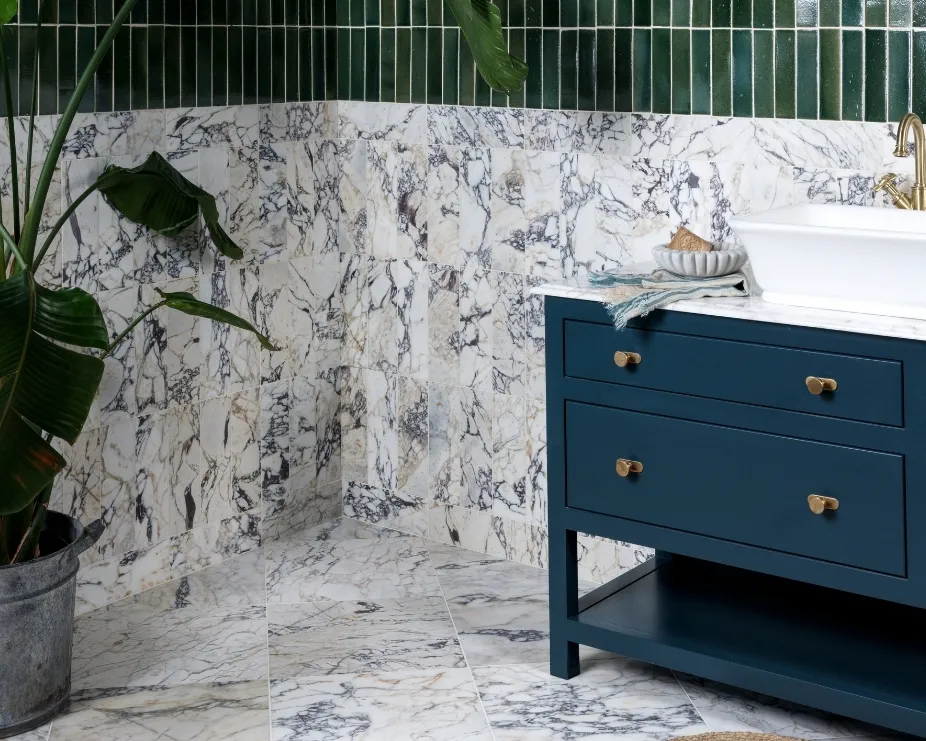
Starting off with a classic, marble is tipped to remain big in 2026. Emma Morris of Abacus believes this will be “marble-effect finishes with bold, deep veining”, and she is supported by Katie Cope of Showerwall, who shares a similar opinion on marble effects.
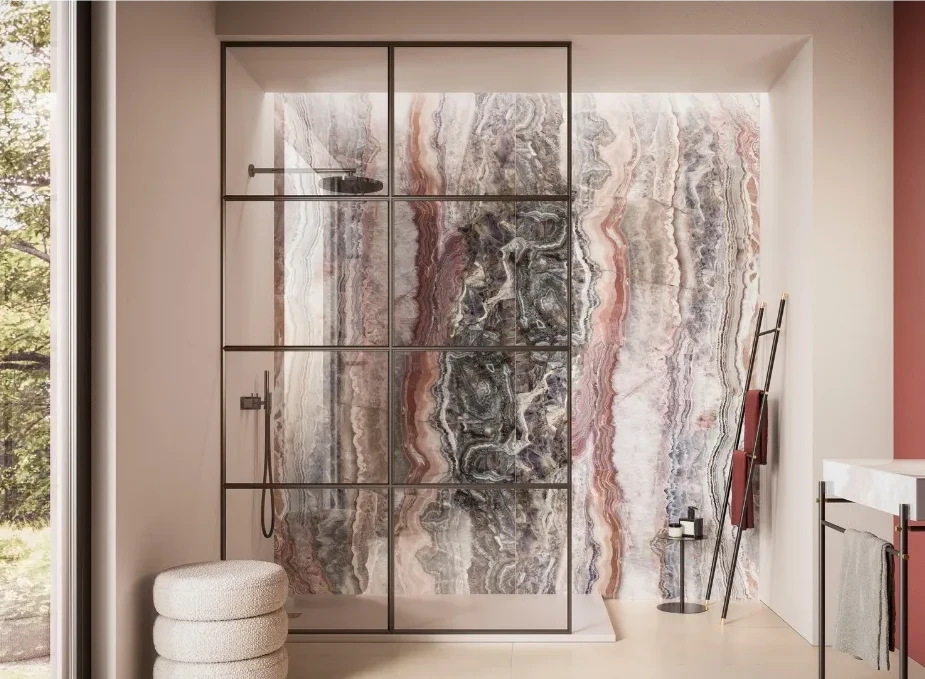
Jorge Hernandez of Bathroom Brands believes that it will be more “statement stones, such as onyx marble” that are “set to feature more prominently,” aiming to “create a striking focal point”. Roper Rhodes’ Zoe Jones also adds that there will be more “dark and moody bathrooms using dark marbles,” as well as “modern marble tiles”.
From a retail perspective, Sanctuary’s James Roberts also states that from what he has seen, “customers are currently choosing large-format stone tiles with dramatic veining. Think elaborate marbles and faux marbles with grey or even gold veins running across them".
And it won’t just be tiles; it will also apply to wall panels, as Andrea Denison from Barwick noted. “Patterns similar to Calacatta Marble are a firm favourite”, she says.
2. Large Format Sized Tiles
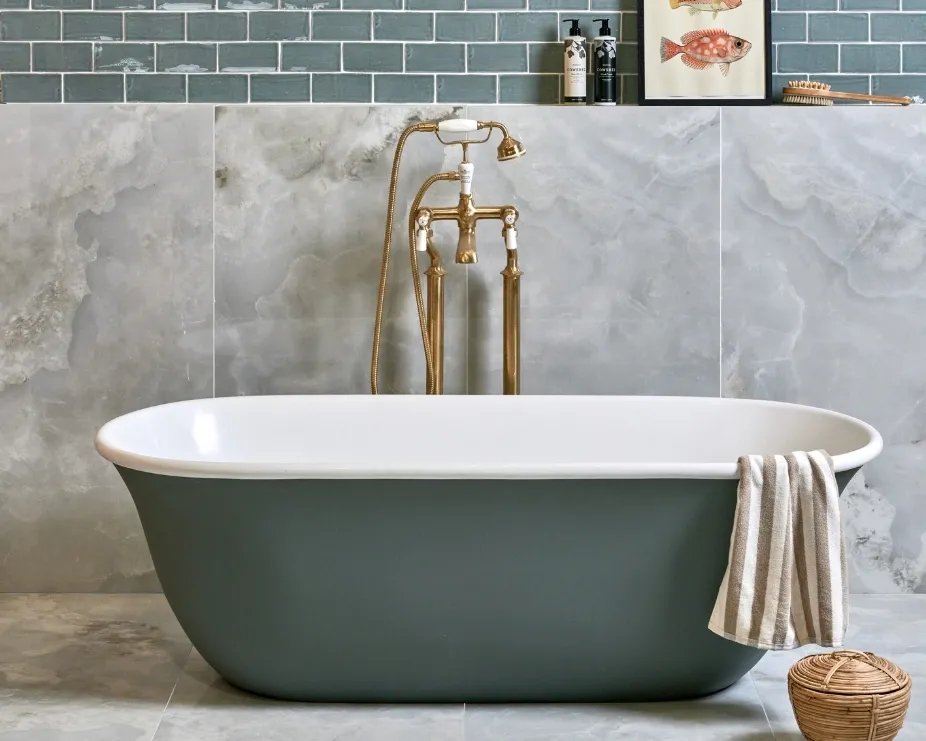
Adding to what Roberts said previously, large format tiles also seem to be more popular over smaller pieces.
Abacus’ Emma Morris explains: “We're seeing a strong preference for feature walls using XXL tiles. These large-format tiles create a dramatic and luxurious look, especially when installed with minimal grout lines to maintain an uninterrupted, seamless surface”.
She adds: “They're especially popular in wetroom areas or as a backdrop behind freestanding bathtubs, where they make a real design statement and elevate the overall aesthetic of the space”.
Tissino’s Helen Ray Dennett and Showerwall’s Katie Cope also agree on this with, Ray-Dennett saying: “Large format tiles seem to be growing in popularity, no doubt due to the reduced grout meaning easier cleaning”, whilst Cope states they are “becoming increasingly popular as a design choice”.
3. Tiles vs Wall Panelling
One of the bigger debates ahead of 2026 is whether more of the market will shift to wall panels – primarily due to the amount of varying designs - rather than tiles, particularly with more brand heavyweights entering this particular market.
Unsurprisingly, Showerwall’s Katie Cope believes that the wall panelling will see increased adoption this year: “In the past, wall panelling might have been considered a niche, but it’s becoming increasingly mainstream each year, with 2025 being no different. We expect further increased adoption in 2026”.
But RAK Ceramics’ Alvin Biggs, a brand that suppy tiles including large format mega-slabs, assumes that tiles will be the winner. “Tiles will remain the most popular type of bathroom wall covering in 2026 and will play an ever-bigger role in tying design schemes together. Porcelain and ceramic tiles will be firm favourites across walls and floors as underfloor heating becomes more prevalent in bathrooms”, he states.
Bathroom Brands’ Jorge Hernandez, whose Crosswater brand has just incorporated wall panels to its product range, also believes “large-format panels will dominate for their seamless, contemporary look”. He adds that: “honed travertine and limestone finishes bring a natural softness”.
4. Natural Stone, Terrazzo & Limestone
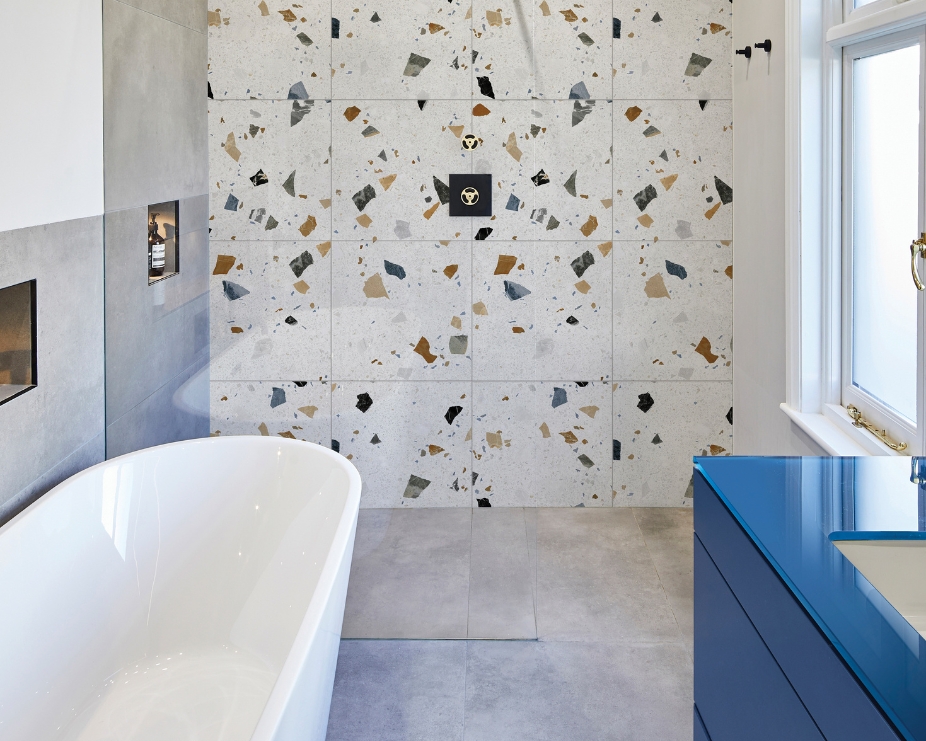
MERLYN’s Eileen Slattery tips “natural stone looks and tactile finishes” to be top of her tile trends for 2026. “Think terrazzo, limestone, and subtle textured tiles”, she adds.
5. Zellige & Handmade Tiles
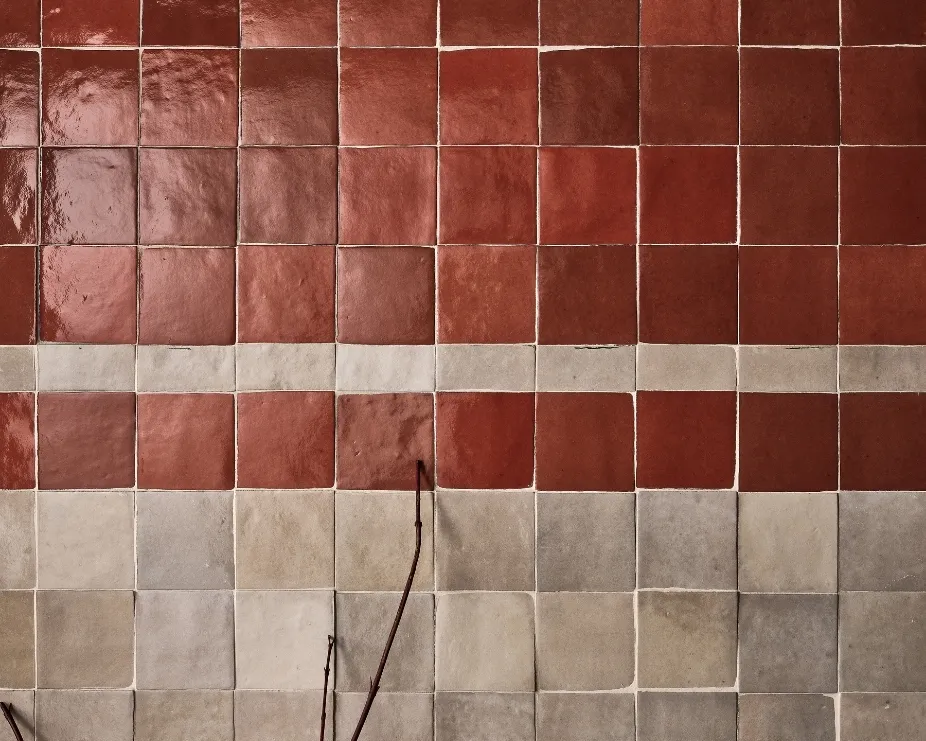
Zeliige (also zellij) is a type of Moroccan tile that is handmade using glazed clay and then formed into intricate mosaic patterns. Each tile is individual due to its handcrafted nature. In interior design trends, this style is not necessarily used for elaborate patterns, but also for simple, one-colour mosaic walls with a natural feel to them.
Bathroom Brands’ Jorge Hernandez believes that “handmade-look field tiles, including zellige, will remain popular for their artisanal character”.
Roper Rhodes’ Zoe Jones also picked out zellige as one of her standout pieces. And Sanctuary’s James Roberts accepts that this style – along with other handmade designs – is “the perfect complement to a bathroom scheme encompassing those warmer tones of terracotta and browns. They also offer a great tactile touch for anyone wanting to create a more natural space”.
6. Herringbone/Chevron
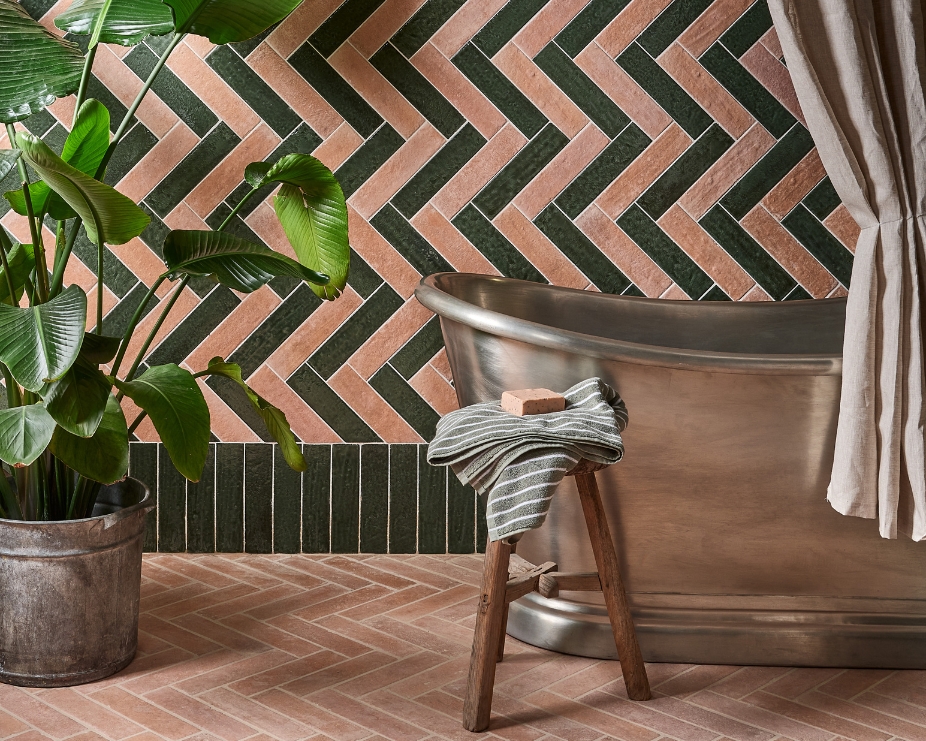
Herringbone and chevron patterns are brick tiles positioned in a diagonal pattern to create a distinct V-shaped look and have been a popular style choice for years.
Showerwall’s Katie Cope believes that “the popularity of Herringbone and Chevron patterns is enduring” and also adds that this look can now be achieved with wall panels instead of tiles, with the same decorative pattern. “Ours even include a realistic grout line”, she enthuses.
7. Chequerboard Patterns
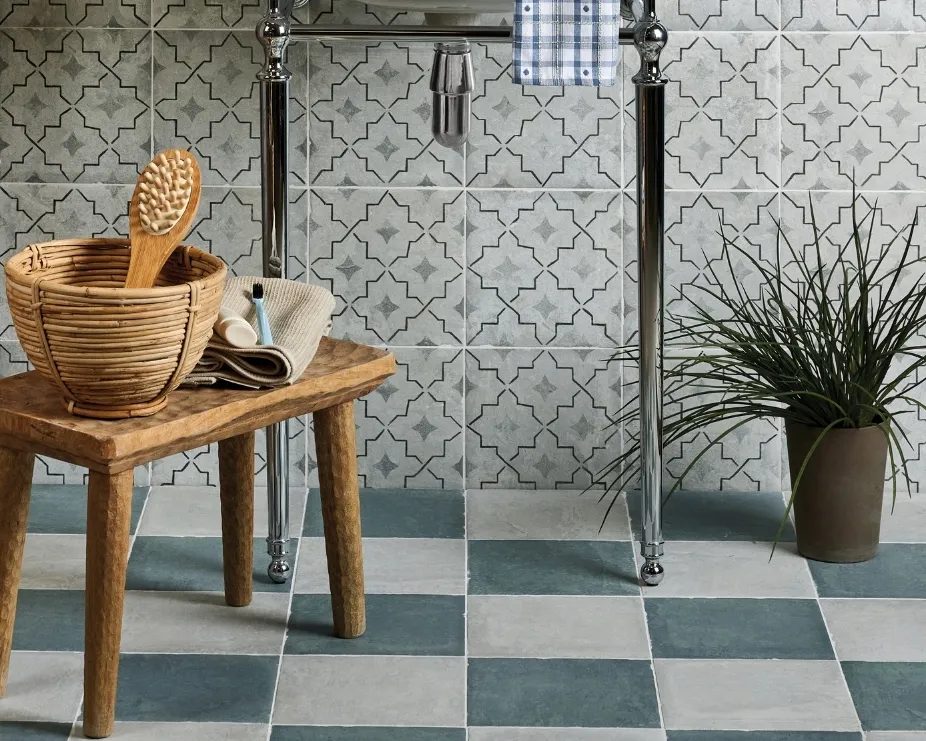
Roper Rhodes’ Zoe Jones also picks out chequerboard as one of her ones to watch, and that customers are picking out as part of their bathroom schemes. This includes a pattern of black and white alternating squares, much like checkers or chessboard.
And this is supported by Sanctuary’s own James Roberts, who understands this is due to people focusing more on decorative flooring. “We are seeing people look for more elaborately designed flooring and patterns, and combining with this more understated, subtle and simply designed walls”, he states.
Jeevan Seth, CEO of JTP, also believes that decorative patterns are on the agenda: “Decorative tiling, patterned floors and statement shower walls are no longer just backdrops, they are becoming key design features that define a bathroom space”.
What Do Experts Think Renovators Main Consideration Should be in 2026?
Phew! That concludes a lot of the main elements of trends and styles. However, one final question posed to the panel of experts was: what should be the main consideration for a bathroom renovator in 2026 be, particularly given current trends and styles? The aim of this, as one of the leading UK bathroom retailers, is to use our expertise to arm DIYers, renovators, and those refurbishing their space with food for thought before proceeding to create their perfect sanctuary
1. Longevity
Conclusively, the two major points – broken out but that many linked together – was longevity and value for money.
In terms of longevity, much of the panel decided that renovators should pursue schemes and designs that will both stand the test of time, and that they can love for a long time, over the pursuit of short-term fads that may end up being hated.
RAK Ceramics’ Alvin Biggs sums it up by stating: “Designing for longevity is going to be one of the biggest considerations for bathroom renovators and homeowners over the course of the next 12 months and beyond. Taking a more considered, sustainable approach to design means investing in quality fixtures that are built to last and also ensure that the renovation has a positive impact on the overall resale value of the property”.
Eileen Slattery adds that this has affected demand when shopping in their market for showering products: “We’re seeing consumers prioritise longevity investing in showering solutions that promise quality for life, rather than chasing cheaper short-term upgrades”. She adds that “longevity will become a consumer expectation”.
And Emma Morris from Abacus believes that, for retailers, this will impact the renovation cycle. With bathrooms typically expected to last between 7 and 10 years before people renovate again (although some products offer 25-year warranties), she feels this timeline is likely to grow.
She states: “The renovation cycle is likely to extend, with consumers placing greater emphasis on product longevity and designs that deliver a professional finish over time, given the investment required for bathroom renovations”.
2. Value For Money
Tying into this is value for money. That means getting sufficient use from products and durability to withstand daily usage over a prolonged period of time, delivering quality for every pound invested. This is particularly prudent given ongoing economic and cost-of-living issues affecting the everyday UK-based homeowner.
Showerwall’s Katie Cope says that this will always be a major conversation point in 2026. “Affordability will always be a hot topic, increasingly so in the current economic climate. Homeowners want to create stylish bathrooms without breaking the bank”.
She adds: “Stylish affordability is the key – people are being careful with spending, but don’t want to compromise on style and aesthetics. This is where the creativity of the homeowner and bathroom designer comes into its own
And Barwick’s Andrea Denison believes that customers will be “looking for products that deliver the style they are looking for at an attractive price point” more than ever.
3. Easy Installation & Maintenance
Another area that came up from experts was easy installation and maintenance, as well as more renovators engaging in upgrading existing spaces with repairs, quick fixes, and simple updates as opposed to full-blown renovations.
“Easy-fit solutions are emerging as a key focus for homeowners, designers, and retailers alike," explains hib.'s Jasmine Rowe.“Products that reduce installation complexity while maintaining high design standards are gaining attention, particularly those that improve reliability, minimise mess, and speed up fitting times."
Andrea Denison believes that the cost-of-living situation will affect confidence levels, and that consumers will opt for “repairs, refreshes and maintenance as opposed to luxuries that can wait until they regain buying confidence."
Geberit’s Sophie Weston adds that “the longer-term cost of products” will be a factor, and “whether they will need expensive maintenance or repairs,” as well as “what materials and fittings can stand the test of time."
James Roberts, Sanctuary Bathrooms Director, also advises customers to focus on more longer-term protections, such as warranties, guarantees, and brands with good after-sales support. “Those that can combine premium looks with good warranties and long-lasting guarantees will be more likely to win over customers, as well as pricing."
Weston also endorses this view, adding that in 2026, “manufacturers should focus on building reassurance and confidence in every purchase."
5. Smaller Updates & Quick Wins
If you are a renovator with a budget, it may be worth looking at quick wins and smaller updates rather than stretching yourself or ploughing it into a full-blown renovation, according to some experts.
Abacus’ Emma Morris states, “reduced disposable income is likely to lower demand for non-essential purchases, with many consumers opting for smaller updates and tweaks rather than full renovations. We may also see a rise in DIY activity, as people gain confidence and inspiration from the growing number of home-improvement projects shared on social media."
Alternatively, Villeroy & Boch’s Yiota Toumba suggested that renovators consider opting for one significant upgrade instead of several minor improvements.
“Select one statement element rather than making multiple small upgrades”, she says. “Customers may save for longer to get a freestanding tub, for example, or swap a full renovation with one or two upgrades to make it more affordable."
Roper Rhodes’ Zoe Jones also picks out some elements that homeowners could do easily to reinvigorate a space: “Easy wins and those which don’t require a complete overhaul – so mirrors, lighting upgrades, brassware and then accessories & artwork to inject colour and interest”, she says.
6. Futureproofing
TOTO’s Liam Boyle suggested that futureproofing may be one aspect homeowners should also consider when purchasing. This means not just thinking about the here and now, but also considering how bathroom requirements change as people get older and planning ahead to factor this in.
“I believe futureproofing will become an increasingly important consideration for homeowners when renovating," he expresses. “As people become more aware of how their needs may change, especially as they age, they're beginning to understand the long-term benefits of planning ahead. Making thoughtful design and infrastructure choices now can help avoid costly modifications later."
7. Sustainability
One final point the experts tackled was the ongoing question around sustainability, eco-friendliness, and energy efficiency. With many areas across the UK experiencing drought, a risk of water stress, and general increases in temperature and warmer summers, what should homeowners factor in?
Bathroom Brands’ Jorge Hernandez explains that “sustainable bathroom design will continue to be a key consideration, but the industry is still balancing sustainability with perceived value." He adds that this means consumers will not pay solely for sustainable products, but also for the actual product quality and performance, too. “As a result, the focus will remain on integrating sustainability as a seamless feature or unique selling point, delivering eco-friendly solutions without adding extra cost to the consumer."
Barwick’s Andrea Denison suggests that “consumers will be looking for water saving features when designing their bathroom”, citing Water UK’s statistic that bills have risen 26% on average in 2025. And Jeevan Seth, CEO of JTP, says that “consumers are increasingly aware of their environmental footprint and are expecting manufacturers to offer solutions that reduce water consumption without compromising on the experience."
Closing off this, Director James Roberts from Sanctuary believes there will be a few that will affect customers: “Customers will be looking for transparency in supply chains: where products are from, what they are made of, future recyclability, and environmental benefits. Consumers are keen to support homegrown manufactured products, especially those local to them."
Smart technology will be a major consideration for both renovators and manufacturers in the coming years. “There will be voice-controlled temperature settings, and elements like smart ventilation that will be able to switch on when humidity reaches a certain level”, he says. For homeowners, he says, “key considerations are going to be about helping to have a space that runs efficiently and affordably as possible, with things like efficient and practical heating space, water-efficient and saving fixtures, ambient, energy-efficient and low energy lighting, as well as good ventilation.
That covers our guide to 2026's themes, colours, materials, products and pop-culture trends that may influence your next bathroom project. If you are in the process of a bathroom redesign and have been inspired, get advice by contacting Sanctuary Bathrooms experts here.


