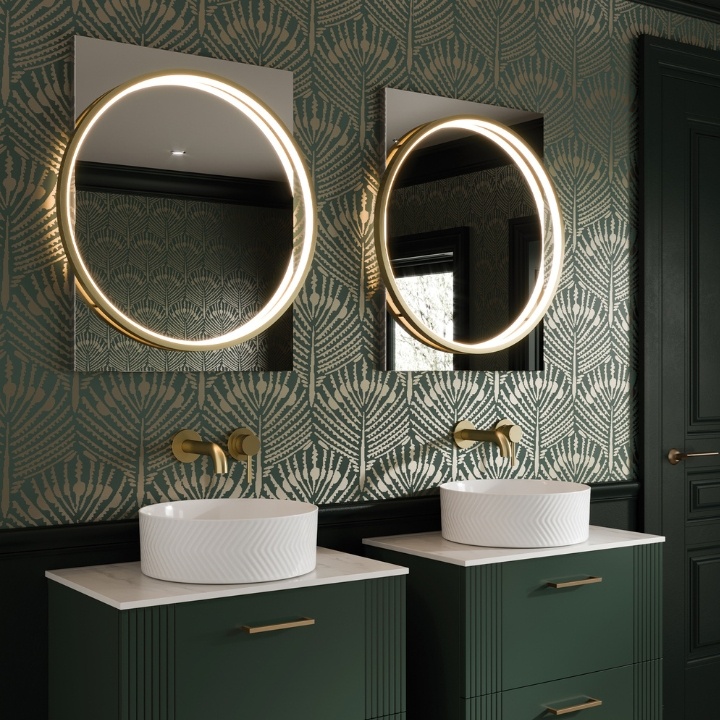
Art Deco is a renowned interior design style that balances geometric precision with unashamed glamour - bold lines, high-contrast colour, and materials that eschew the purely functional in favour of the deliberately luxurious. While many may not associate this interior design scheme with the bathroom, it certainly has a place when implemented cleverly.
Whether you're working towards a faithful recreation of this period scheme, or simply want to borrow a few choice elements, this style guide covers everything you need to know. From colour and tiles to fittings and finishing touches, we’ll transform your bathroom into a lavish haven of early 20th century elegance.
- What Is Art Deco Style?
- How to Create an Art Deco Bathroom
- Colour and Palette
- Tiles and Surfaces
- Fixtures and Fittings
- Finishing Touches, Details, and Accessories
- Can You Do Art Deco in a Small Bathroom?
- Bringing an Art Deco Bathroom Together
What Is Art Deco Style?
Art Deco is a design movement that emerged in France in the 1910s and thrived throughout the Roaring Twenties, spreading rapidly across the realms of architecture, interiors, fashion, and product design. The name comes from the 1925 Paris Exposition Internationale des Arts Décoratifs et Industriels Modernes - the international exhibition that first drew wide attention to the style.
While earlier movements such as Art Nouveau and Arts and Crafts favoured flowing, organic forms and handcrafted ornamentation, Art Deco was forged in the blazing furnaces of mass industrialisation. It embraced the aesthetic of machines: geometric forms, mathematical symmetry, repeating patterns, and the visual language of speed and modernity.
As a result, Art Deco’s most recognisable motifs include sunburst fans, stepped arches, chevrons, zigzags, and trapezoids. Nature was not abandoned entirely, however. Art Deco inherited Art Nouveau's vocabulary of florals, foliage, fountains, and sun rays, rebuilding this visual language under the steel gaze of rapid technological progress. Where Nouveau allowed its stems to languidly curve and trail, Deco pulled the same subject firmly into a more angular and symmetrical form.
Of course, materials mattered just as much as style. Art Deco interiors favoured chrome, steel, marble, and glass - anything that combined harsh precision with silken luxury. Colour, meanwhile, was bold and deliberate, with black and gold serving as the flagship pairing.
The style peaked in the late 1920s and 1930s, and its influence shows up everywhere from the Chrysler Building in New York to cinema foyers, ocean liners, and the domestic interiors of interwar British housing. Art Deco was always meant to feel special and expressive, even in everyday spaces like the bathroom.
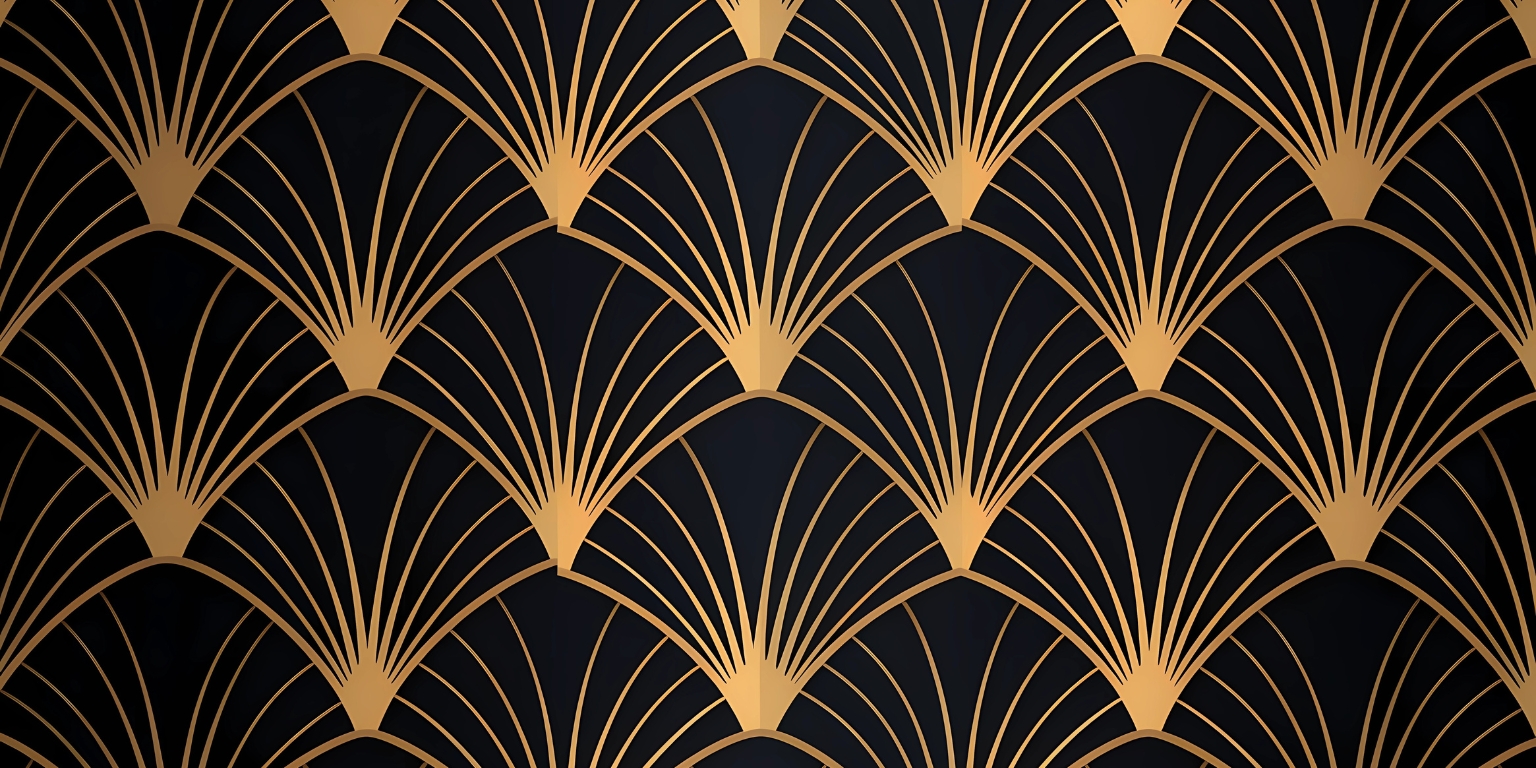
How Does Art Deco Translate to the Bathroom?
The main Art Deco characteristics to bring into the home bathroom setting are as follows:
- Repeating geometric patterns, particularly in floor and wall tiles, brassware, and metallic accessories.
- High-contrast colour, such as black against gold or green against white.
- Opulent materials like marble, chrome, coloured vitreous enamel, and glazed ceramic tile.
- Symmetry in the placement of fittings, mirrors, and lighting, all arranged with impeccably deliberate balance.
How to Create an Art Deco Bathroom
Nearly a century on, Art Deco still turns up in brand-new bathrooms; sometimes as a full period recreation, but more often in the form of a few borrowed details. Faithful reproductions of most Art Deco-era bathroom products certainly exist, but many people choose to craftily wink in the Deco direction without fully committing.
Every choice in a modern Art Deco bathroom leans on the one before. Palette informs tiles, tiles dictate metallic finishes, and metallic finishes carry straight through to the accessories and accents. To make things simple, the sections below follow this chain from start to finish.
Art Deco Colour Schemes
Deco colour is bold and deliberate, with four palettes that genuinely claim period-accurate authenticity.
Black and Gold
Black and gold is the colour pairing most associated with the Art Deco movement, referencing the lacquerwork and gilded detailing of the grandest 1920s interiors. Use glossy black, charcoal, or ebony as the dominant tone across your walls or floors, then introduce brass or antique-gold finishes through taps, mirror frames, and accessories.
Emerald and Jade Green
Richly jewelled greens evoke the luxury of 20s & 30s interiors more than almost any other colour. These are enveloping tones that require confidence to implement, but they certainly reward it after the fact. Lush greens are well suited to walls, furniture fronts, and countertop surfaces. To avoid overwhelming the space, balance them with white, black, brass, or chrome across decorative motifs, tiling, ceramics, and brassware. While coloured sanitaryware, particularly green, became increasingly popular from the late 1920s onwards, we strongly advise giving that a swerve. After all, bright green taps are less ‘classy Art Deco retreat’ and more ‘1970s avocado hell’. This kind of thing feels dated rather than timeless, relegating your bathroom to the interior design equivalent of an ironic costume party.
Burgundy and Ruby Red
Deep red tones are warm, theatrical, and entirely period-appropriate. However, we’d recommend using them sparingly. These shades work best as an accent rather than the dominant wall colour, particularly in smaller bathrooms. Implement them at dado height only if opting for red walls, or use them in feature splashbacks or shower enclosures. For optimal results, pair them with ivory or warm-white surfaces to keep the palette balanced. You can then add black detailing and brass or antique-gold fittings for a dash of striking contrast.
Teal and Turquoise
Teal and turquoise offer a fresher, more streamlined interpretation of modern Art Deco. They suit the Miami Beach Art Deco-inspired look, a sunnier seaside offshoot of the primary style. Here, chrome accents and pale, tropical-toned colour take priority over heavy ornamentation. If you opt for this variation, use teal for depth or turquoise for a lighter lift, pairing either with crisp white, soft ivory, pale grey, and polished chrome.
Art Deco Tiles and Surfaces
Whichever colour scheme you lean towards, tiles are the common thread. They are the backbone of the bathroom; the element that either pulls everything together or terminally undermines it. The good news is that most period-style tile formats are still widely available today, and several have never really gone out of fashion.
Geometric Tiles
Fan motifs, chevrons, zigzags, stepped patterns, and hexagons all suit the Art Deco-inspired bathroom, creating a strong focal point underfoot or on a feature wall. Fans and chevrons are particularly recognisable Deco references, while hexagonal mosaics offer a more broadly period-appropriate base for an interwar scheme.
With these tiles, use one dominant pattern at a time and keep surrounding surfaces plain. Combining heavily patterned tiled floors and walls can feel overwhelming, especially with such rich colours involved. This is especially true in smaller bathroom settings.
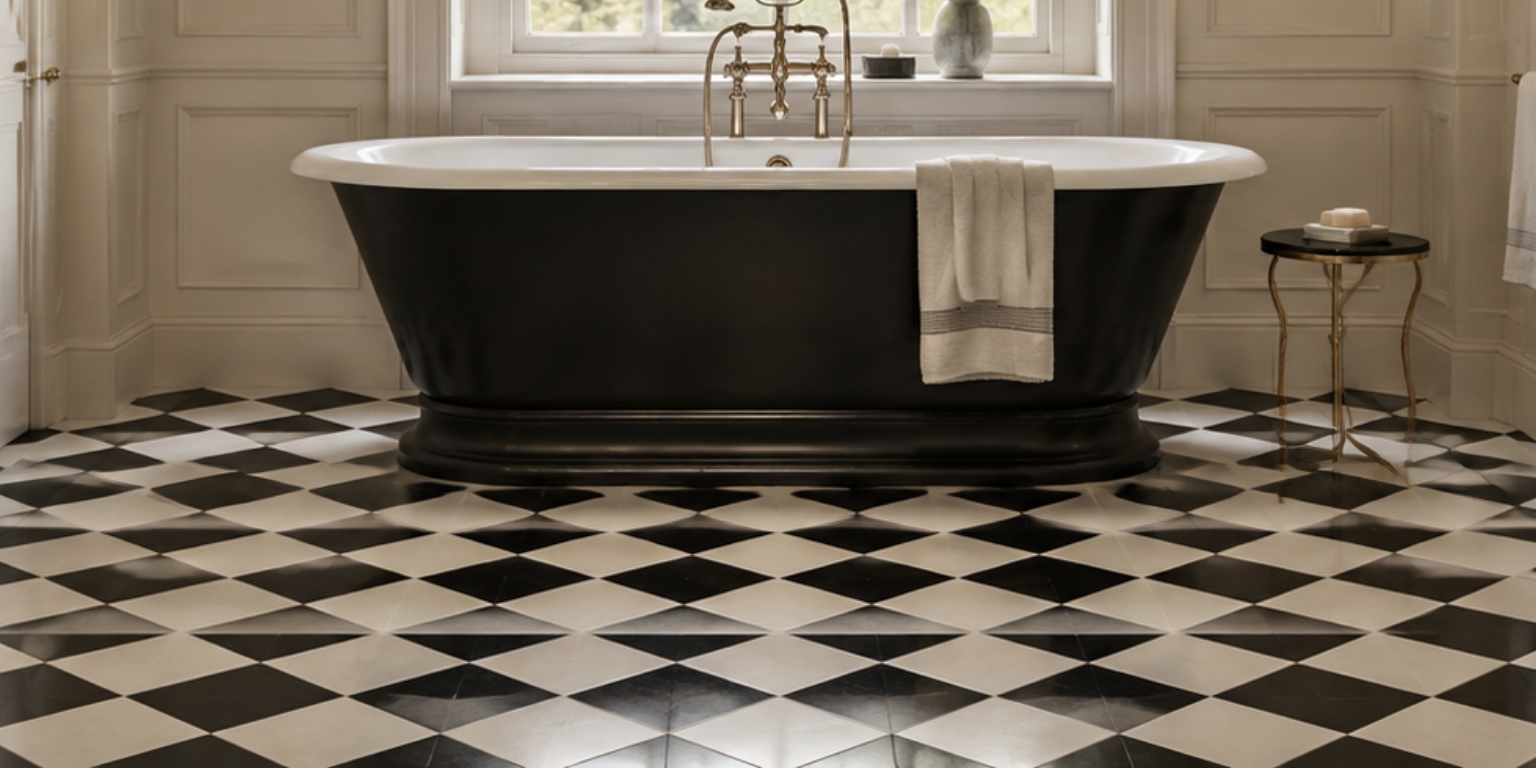
Black-and-White Chequerboard
A black-and-white chequerboard is one of the most recognisable Art Deco floor treatments, bringing instant legitimacy to an interwar-style bathroom. The pattern predates Art Deco, but it remained popular during the period alongside other graphic geometric designs.
Choose small-format square or mosaic tiles for added authenticity, as oversized squares tend to feel more contemporary. For a softer finish, use a narrow grout line in a warm white or soft grey.
Marble-Effect Large Format
Veined marble and marble-effect porcelain bring a luxurious modern Art Deco touch to any bathroom. Better still, the veining itself pulls double duty. White stone threaded with black or gold ties straight back to the flagship palette, while green-veined or deep emerald marble-effect tiles do likewise for jewel-toned schemes. While large-format tiles (generally 600mm x 600mm and above) are a current interpretation rather than a period feature, their reduced grout lines still create a sleek, high-end backdrop.
In most bathrooms, marble-effect tiles work best on one statement surface. For instance, you can place them behind a freestanding bath, around a vanity unit or within a shower enclosure. Balance the veining with majority plain tiles, simple painted walls, and carefully chosen brass, or chrome fittings. This keeps things looking elegant instead of overworked.
Art Deco Taps, Toilets, and Fittings
Fixtures and fittings are where Art Deco inspiration meets modern bathroom practicality. 1920s and 1930s bathrooms varied widely, but the most successful Deco schemes share a considered mix of clean geometry, elegant proportions, and polished finishes.
In terms of specific items, period originals varied widely. No single “correct” Deco fitting truly exists. Instead, choose modern products that echo the movement’s design language while delivering the comfort, water efficiency, and easy maintenance expected in today’s technology.
Sanitaryware
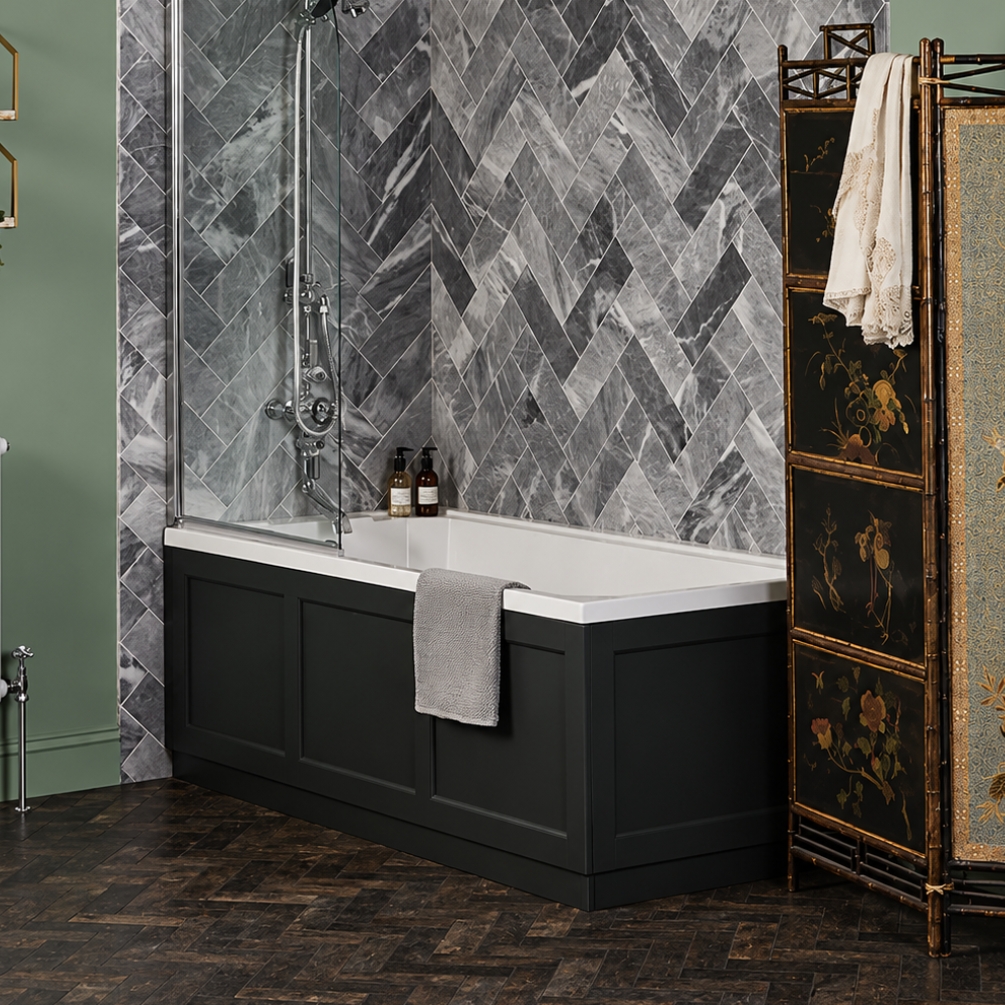
In many period-style interiors, a roll-top bathtub makes a natural focal point with a glamorous silhouette. For Art Deco, however, you should focus more on even, streamlined forms. A straight bath - fitted or freestanding - with fluted side panels perfectly matches Deco’s design cues. It also creates an opportunity to introduce painted panelling that blends the bath into the space’s wider colour palette.
For the basin, a ceramic pedestal sink with a square or straight-edged profile is always a reliable choice. The pedestal conceals the waste and supply pipes, while the basin’s angular shape, stepped detailing, and sculpted plinth strengthen the Deco credentials. Alternatively, a console basin - mounted on two or four legs with visible pipework - also suits the aesthetic well. This creates a more tailored, hotel-style look and introduces metallic elements that tie into the rest of the room.
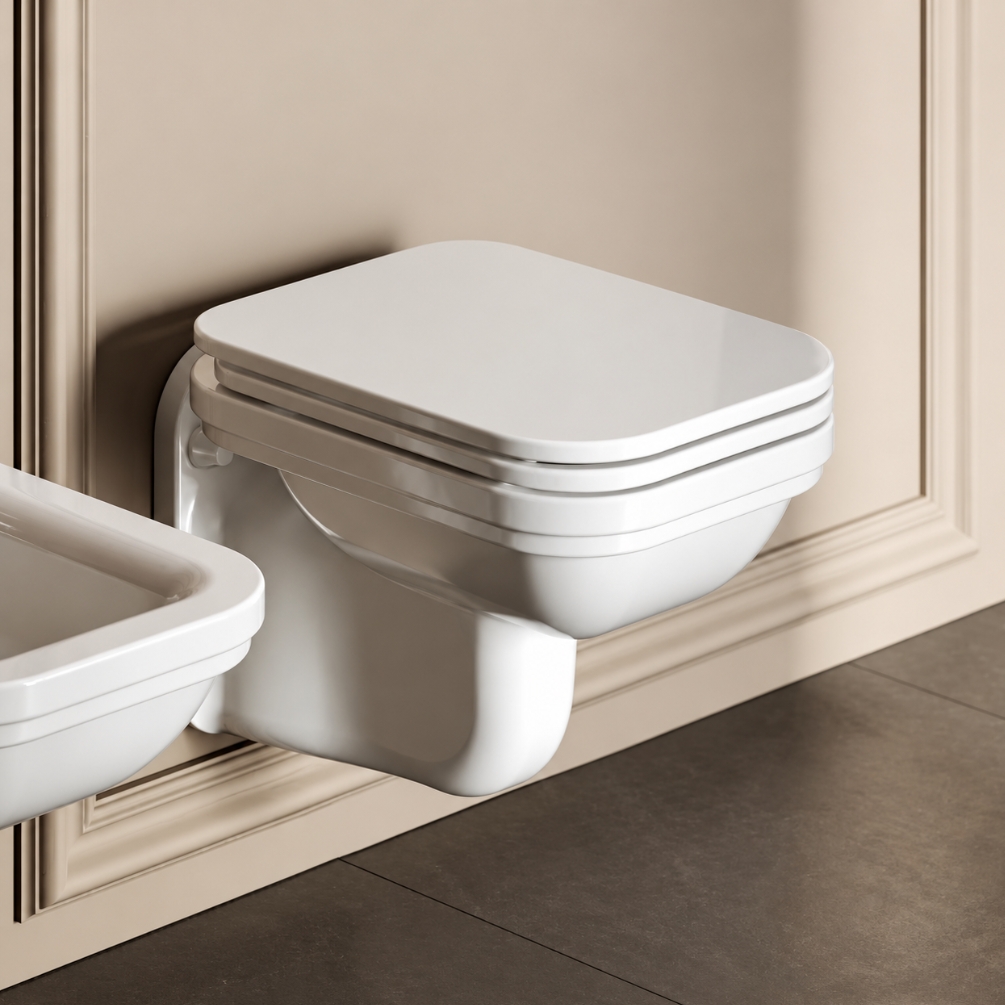
Lastly, a close-coupled, low-level, or high-level cistern toilet is usually the most convincing choice for a 1930s-inspired bathroom. Unfortunately, these designs align more closely with the visual landscape of Victorian and Edwardian-era bathrooms, not quite meshing with Art Deco's retro-futuristic vision. As such, a more modern wall-hung or back-to-wall toilet is perhaps the better choice, with various geometric shapes available.
Brassware
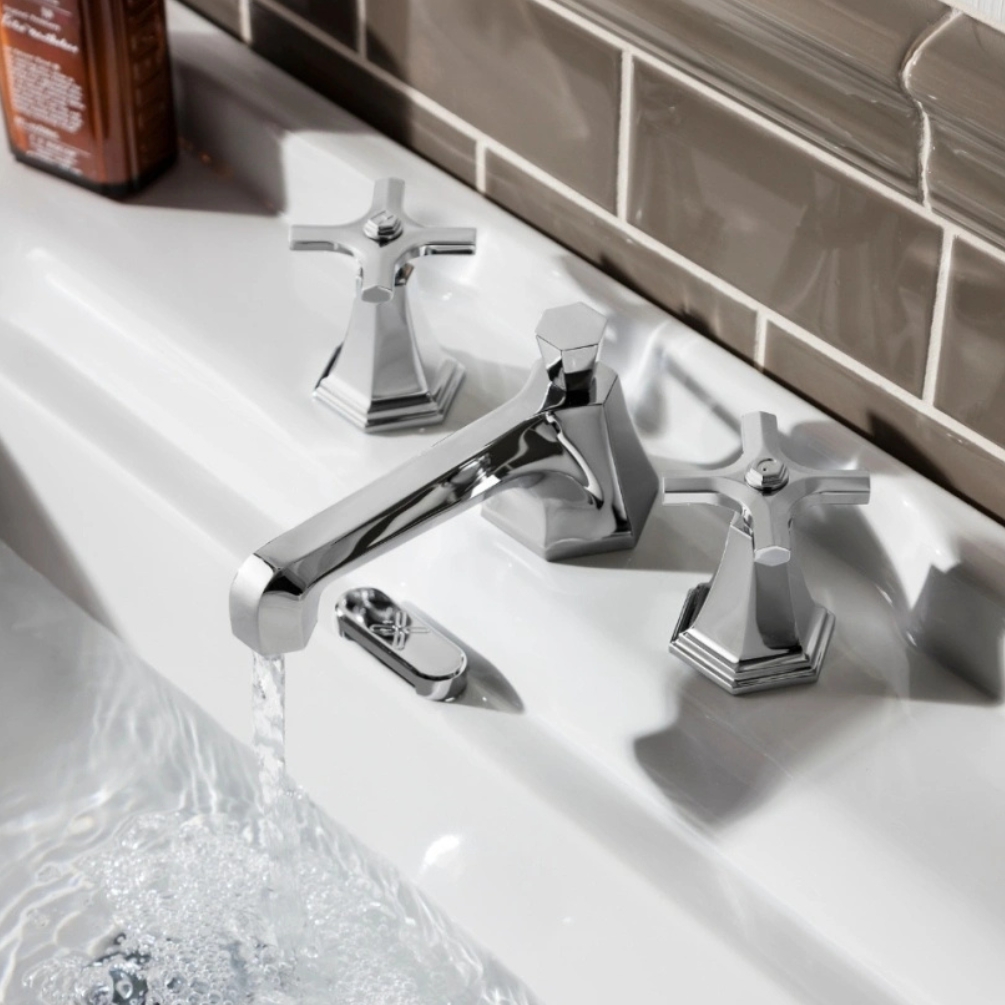
Art Deco brassware is most convincingly expressed through clean geometry, separate hot and cold controls, and highly polished finishes. Tapware best captures this through deck-mounted pillar taps or three-tap-hole mixers, preferably with crosshead handles. However, if you prefer a more streamlined lever handle, look out for stylised faceted models to maintain the Deco directive.
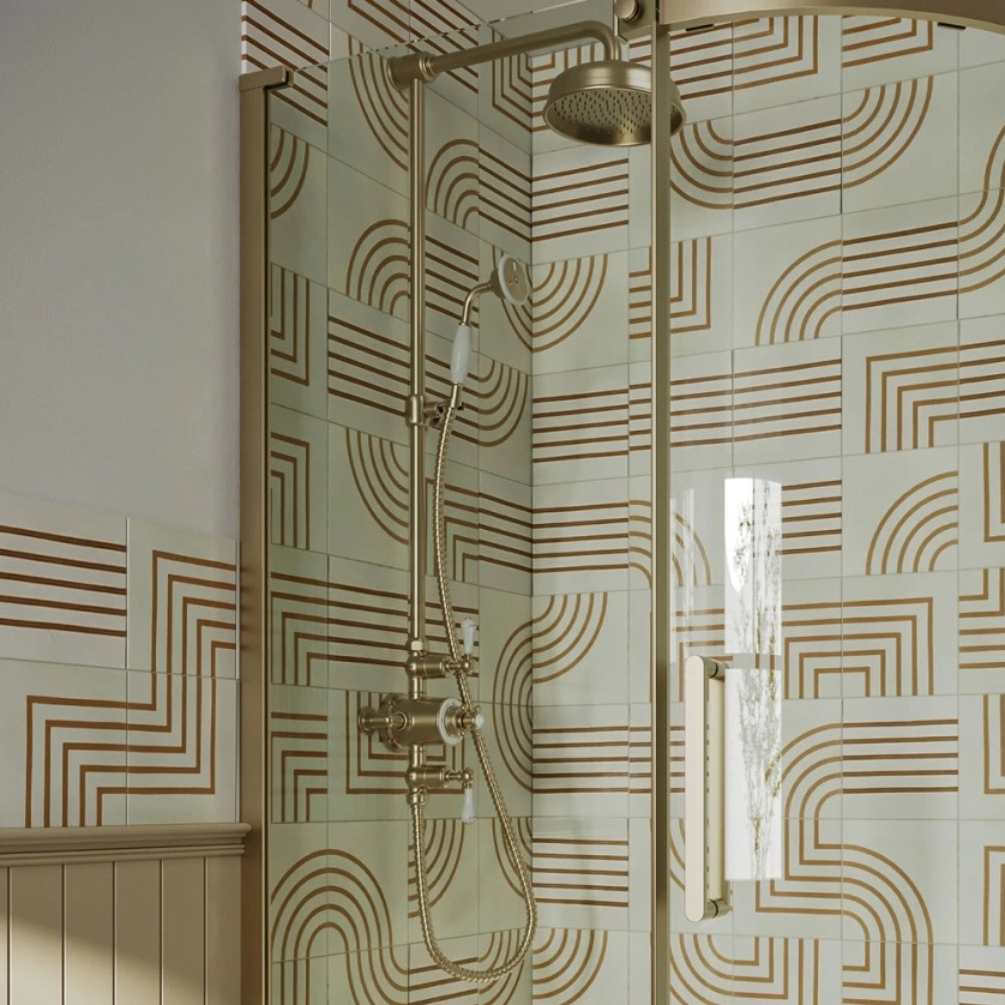
Now, onto shower systems. A shower column (i.e. a floor-to-ceiling piece with an integrated fixed head, hand shower, and control valve) suits the scale and symmetry of Art Deco well. Look for crisp, angular details, such as square or octagonal controls, faceted handles, stepped backplates, and crosshead shower valves with ceramic indices. Avoid overly ornate Victorian-style pipework and highly curved fittings, and keep the finish consistent with your taps.
Speaking of bathroom finishes, brushed brass offers a warmer, contemporary take on Art Deco, working well alongside deep green, burgundy, black, and ivory palettes. Polished chrome gives cooler, sharper results, favouring monochrome, white-and-black, and blue-toned schemes. Whichever finish you choose, ensure that you repeat it consistently across any other forms of metalwork present in your bathroom. These include mirror frames, lighting, and accessories.
Furniture
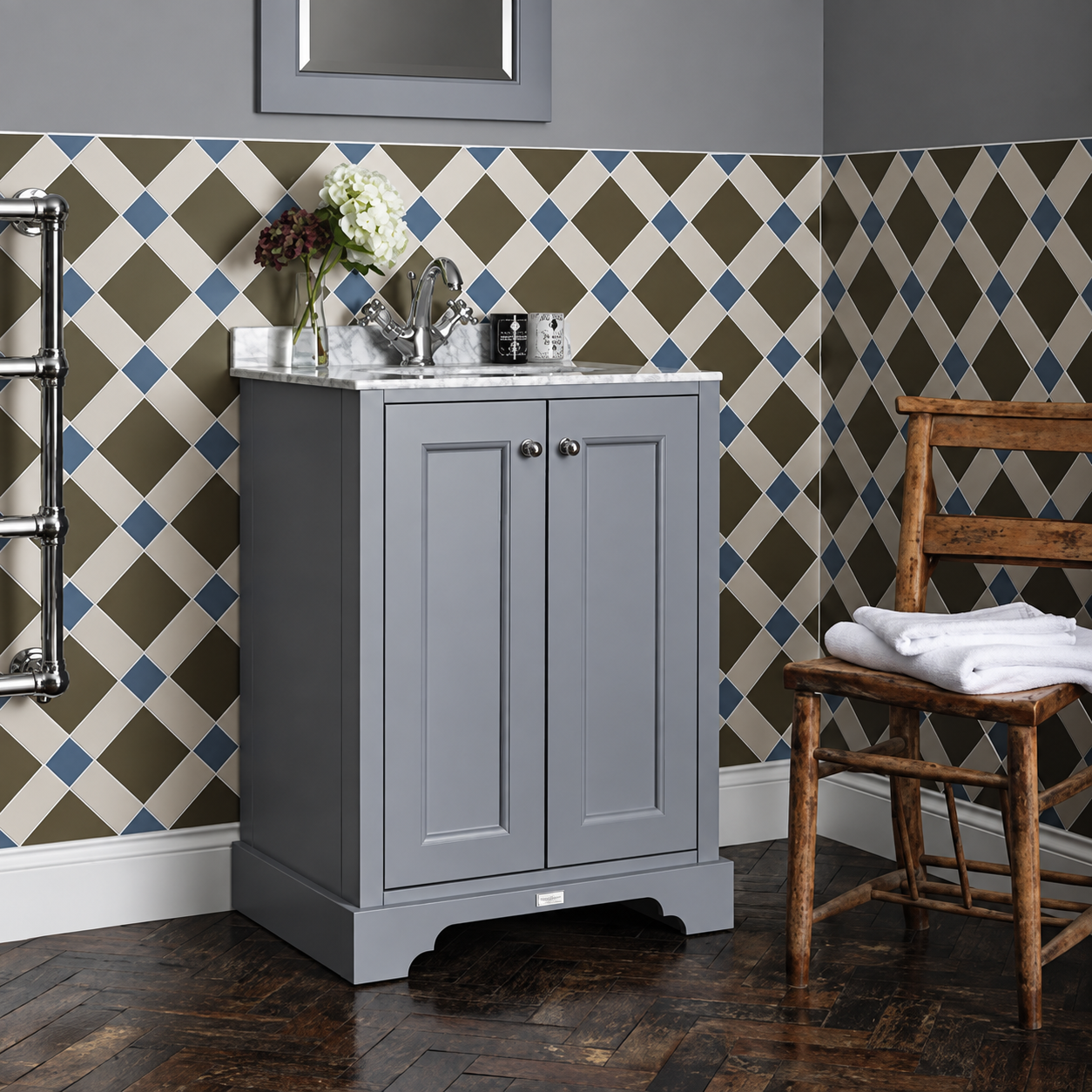
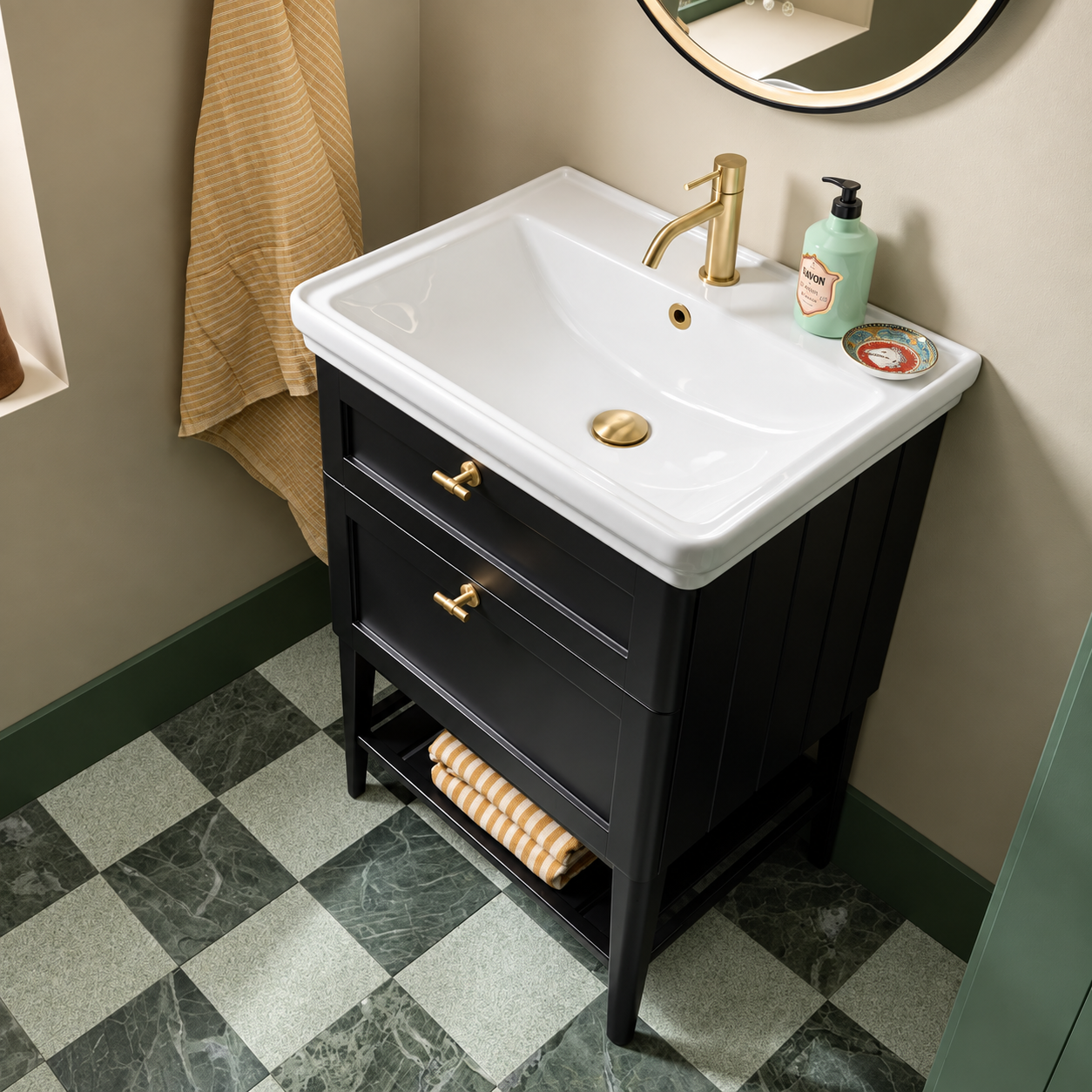
Choose a freestanding vanity unit with a symmetrical, furniture-like silhouette, and clearly defined geometric detailing. Vertical fluting, stepped drawer fronts, framed panels, chamfered edges, and subtle faceting each infuse your cabinet with convincing Art Deco character, as opposed to plain shaker-style or rattan designs. Additionally, raised legs (tapered or angular) help the unit feel lighter and more period inspired, while a plinth base creates a contemporary, built-in look.
As for materials, opt for walnut or other dark timbers. Choose high-gloss lacquered or lacquer-look fronts, tying them into your chosen colour palette to either complement or deliberately contrast your walls and fixtures. Finish the unit with handles and pulls that match the other metalwork.
Mirrors
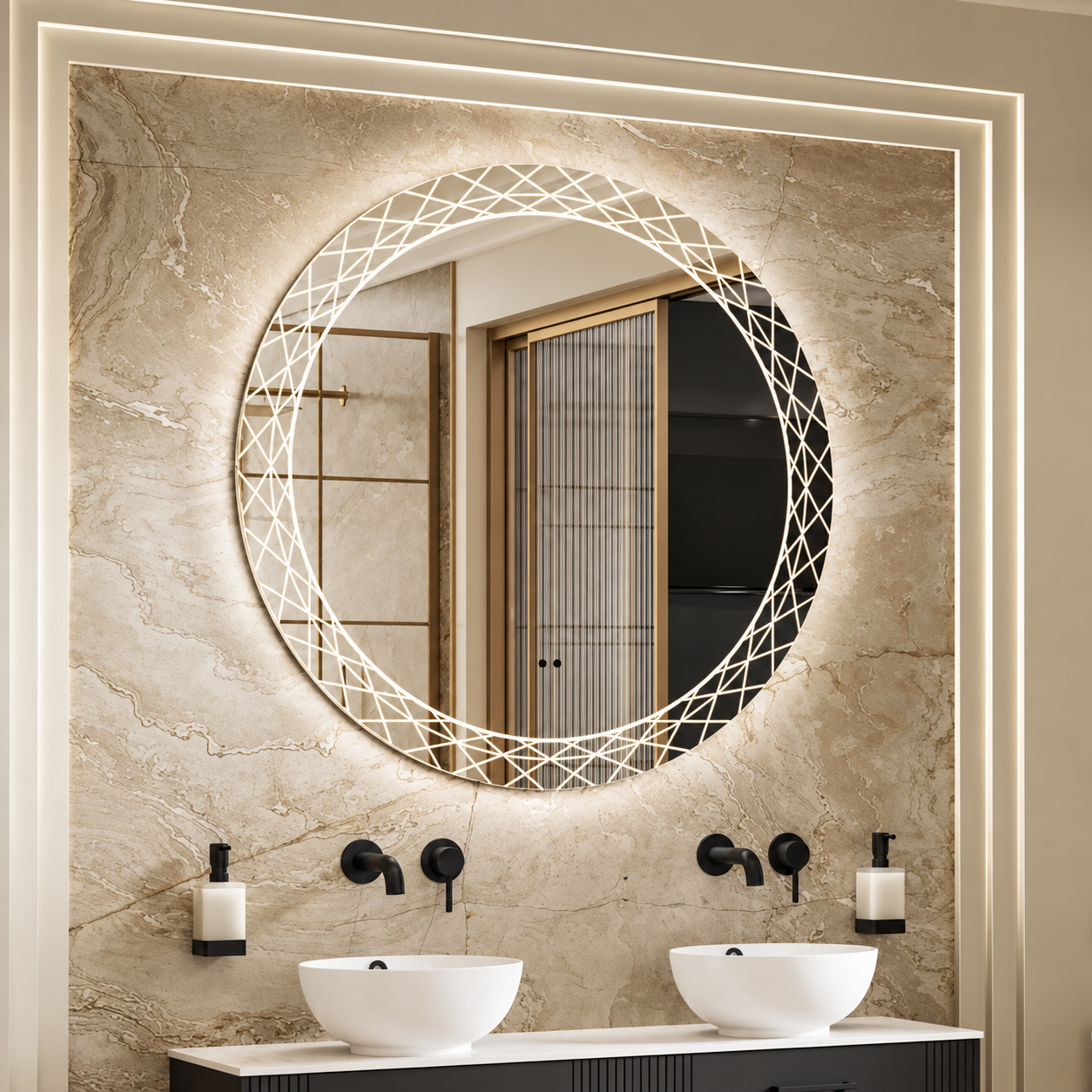
Art Deco bathroom mirror choices remain largely flexible here, but proportion and framing definitely matter. Arched, rectangular, octagonal, pill-shaped, and stepped designs all work well, while a sunburst mirror offers the most immediately recognisable Deco reference. Whatever you go for, just make sure the frame matches your other metallic accents.
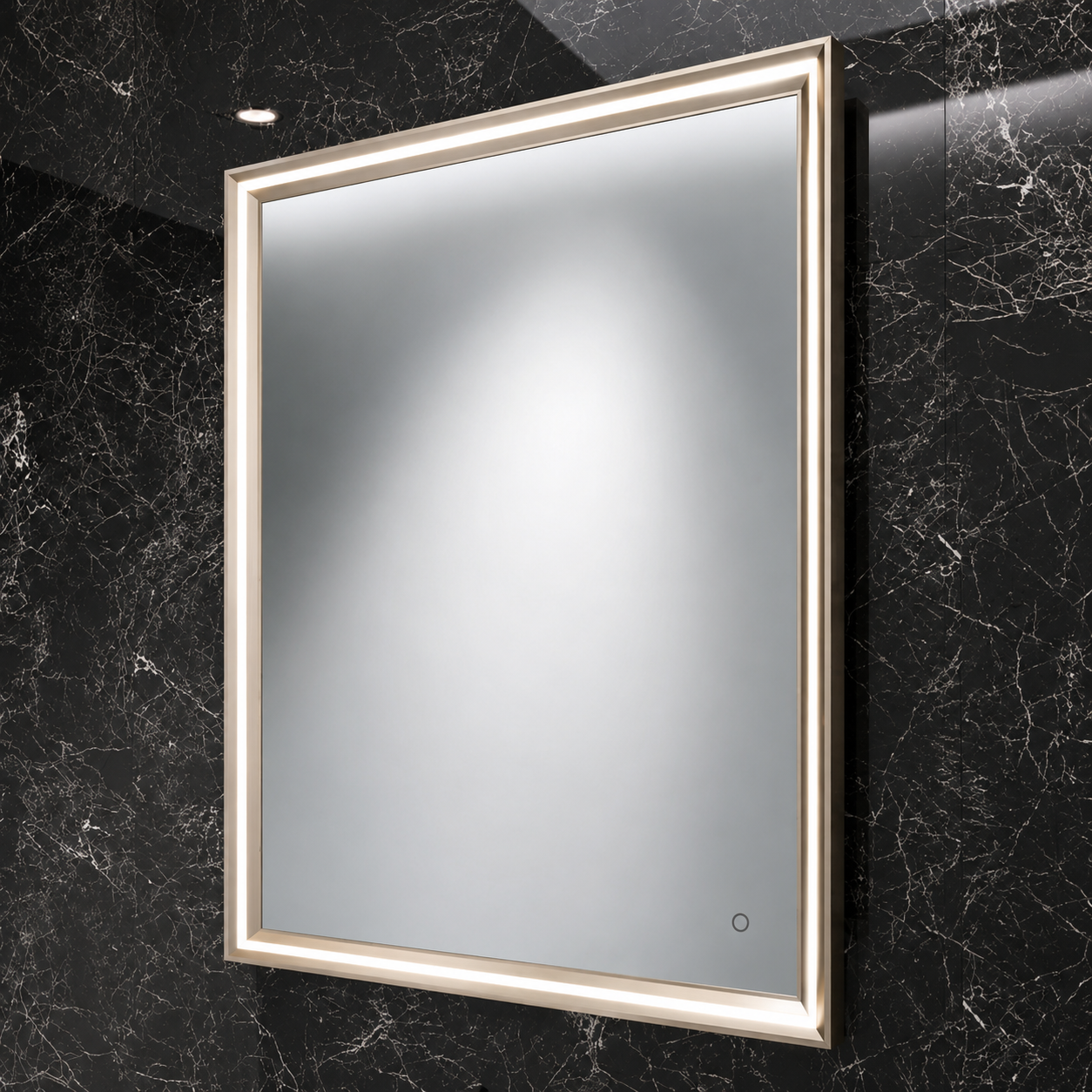
Size the mirror in relation to the basin or vanity unit below it. As a rough guide, the mirror should stretch no wider than the basin and no taller than the space between the basin top and the ceiling, with room for a light fitting above if needed. An undersized mirror seems tentative, while an oversized one unnecessarily crowds the wall.
An illuminated mirror might seem contemporary, but it can still suit a Deco-inspired bathroom. Choose a backlit or edge-lit model with a dimmer function, as well as adjustable colour temperature LEDs. Regarding the latter, LEDs with a colour temperature range of 3000–4000K provide the perfect warm-to-neutral spectrum. This will also produce a soft, alluring glow that accentuates your bathroom’s metal elements.
Art Deco Bathroom Accessories and Finishing Touches
Colours, tiles, and fixtures may lay the foundation, but architectural details and decorative touches are what really give a modern Art Deco bathroom its refined, opulent atmosphere. While some may require a partial bathroom renovation, many others are easily achievable through quick, low-budget DIY projects.
Chandeliers and Statement Lighting
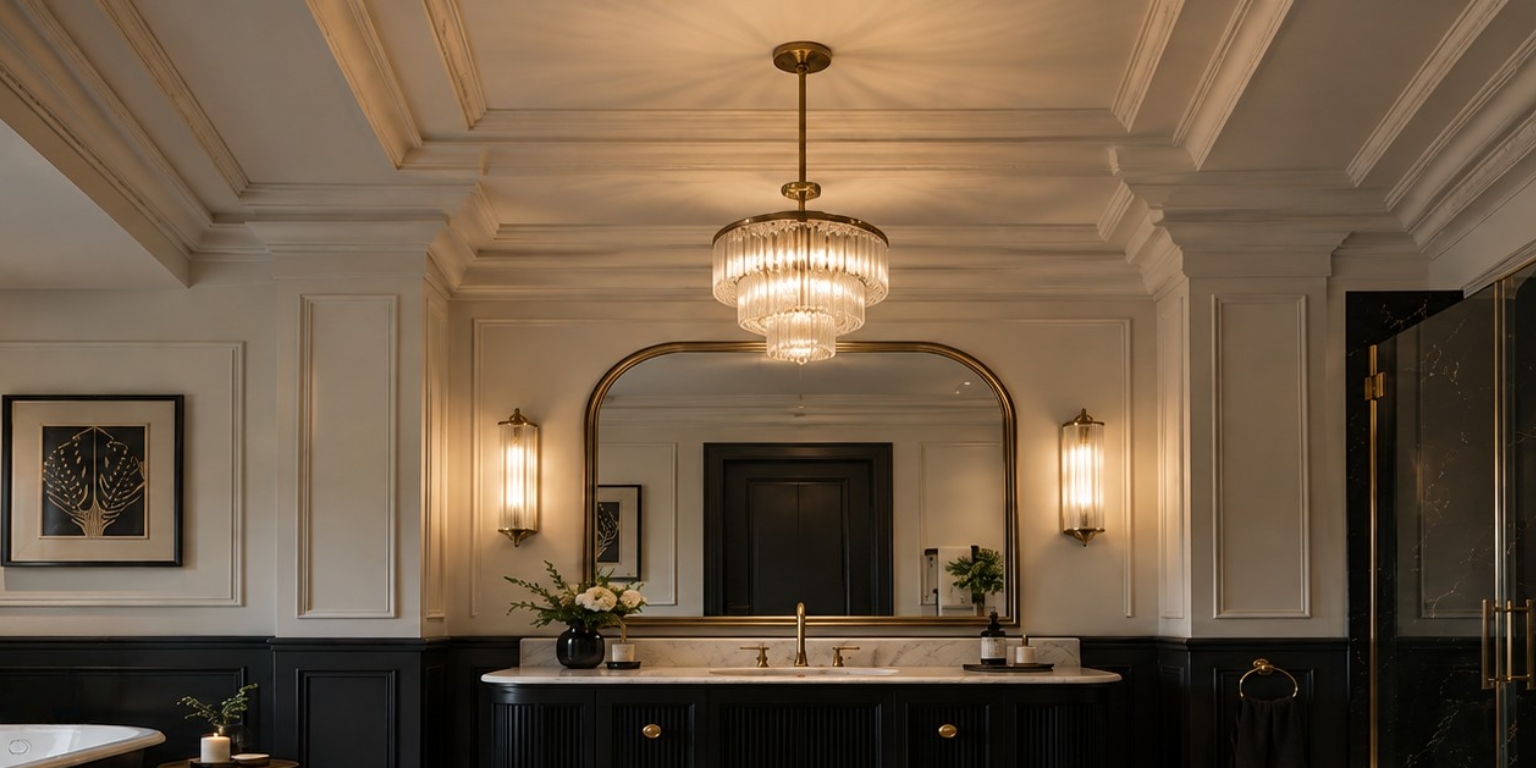
A compact chandelier or statement ceiling light forms an immediate focal point, especially in a larger bathroom with extra ceiling height. Look for bathroom lighting fixtures with stepped tiers, geometric glass shades, angular arms, fluted details, and faceted glass, instead of overly ornate traditional forms. Position them where they will not compete with the mirror or obstruct sightlines, and use them as an ambient feature rather than the only source of task lighting.
Arched Doorways and Openings
A stepped or rounded arch on your doorway or niche is one of the most recognisable Art Deco architectural details. If the room already has an original period opening, do everything you can to preserve it. Otherwise, you can work one into any renovation work you might be planning. A shallow recessed niche - framed with a stepped, square-edged, or arched profile - creates a natural focal point without requiring any major structural alteration.
Stepped Cornicing and Ceiling Roses
Stepped cornicing and straight-edged plaster mouldings strongly reinforce the Art Deco look. Choose clean, angular profiles or restrained stepped detailing over ornate floral mouldings, as these tend to suggest Victorian or Edwardian interiors.
If you do opt for a central pendant or chandelier, a ceiling rose can also help to frame it. Use this as a supporting detail, and coordinate its form with other wall- or ceiling-based elements.
Artwork and Prints
Simple, affordable, and widely available, period-style prints are another great way to bolster your Art Deco theme. Choose stylised travel posters, architectural illustrations, or even fashion prints, ideally with clean typography, strong symmetry, and a limited, high-contrast colour palette.
Remember, always frame your prints in the room's chosen metal tone. This helps the artwork feel integrated rather than incidental. In a more compact bathroom, one well-scaled print (or at most, a classy symmetrical pair) will have much more positive impact than a cluttered gallery wall.
Can You Do Art Deco in a Small Bathroom?
Absolutely! Art Deco is a natural fit for grand hotels and picture palaces, but it was never exclusively confined to them. Many 1930s bathrooms dealt with compact footprints and limited natural light, but such factors didn’t hinder their Art Deco ambitions. The key, as ever, is to use the style selectively.
For instance, give pattern a single job and stick with it. Put it underfoot with a geometric mosaic or use it to frame one specific wall spot, keeping the remaining surfaces plain. This creates the graphic contrast Art Deco is known for without making the room feel overly busy.
For your main backdrop, keep it light. Warm white, ivory, and soft grey reflect more light and give the darker Deco accents room to stand out. Introduce darker tones through a floor border, furniture, or a decorative motif rather than covering the walls; if you want to go further and commit fully to a single bold tone throughout, our colour drenching guide is a good place to start.
For more detailed advice on bijou layouts, storage, fittings, lighting, and ventilation, see our small bathroom ideas guide.
Bringing an Art Deco Bathroom Together
Art Deco is a style that rewards steadfast commitment and careful planning. The more harmoniously each element combines, the more convincing the final result. Just remember, not everything needs to be an eye-catching statement. Measured restraint elsewhere makes the boldest elements more impactful.
If you're ready to start planning your modern Art Deco bathroom, the team at Sanctuary Bathrooms is happy to help. Whether you're working from scratch or looking to introduce a few well-chosen period details, contact us to make it happen.


