Types of Shower Heads: A Complete Buying Guide
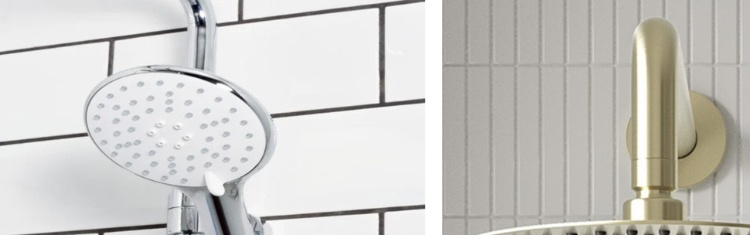
Is your shower not quite what it used to be? Maybe the spray feels weak, the nozzles are clogged, or it simply doesn’t feel as relaxing anymore. Whatever the reason, a new shower head is one of the easiest ways to improve your shower without replacing the whole thing. But with so many shower head types available, it's not always obvious which one to choose.
In this guide, we’ll sift through the jargon and explain the main shower head types, along with the pros and cons of each. By the end, you'll know which head best suits your shower.
- Key Considerations Before Choosing a Shower Head
- What Are the Different Types of Shower Heads?
- What Shower Head Features Should You Look Out For?
- Low-Pressure vs High-Pressure Shower Head: What’s the Difference?
- Are Shower Heads Universal?
- Choosing the Right Shower Head for Your Home
Key Considerations Before Choosing a Shower Head
To narrow down the right shower head for you, start with these five checks.
a) Will It Be Fixed or Handheld?
This is usually the first decision. A fixed shower head is mounted on the wall or ceiling and stays in one place, giving you a steady, hands-free spray for everyday showering. Conversely, a handheld shower, or handset, lifts off its holder on a flexible hose, so you can point the water exactly where you need it. That makes it much easier to rinse off without getting your hair wet, clean the enclosure, or bathe children and pets. Most sit on a riser rail or wall bracket, so you can still use them hands-free when they’re in their holder. If you'd like both, a 2-way shower valve lets you run a fixed head and a handheld from the same shower, with a diverter to switch between them.
b) How Good Is Your Water Pressure?
A shower head’s performance largely depends on your household water pressure. Your pressure mostly comes down to your water system and the type of shower you have, which we explain in our guide to the different types of showers. As a general rule of thumb, the larger the head, the more water pressure it requires. However, this varies by product, so check the head's minimum operating pressure on the product page. If you’re unsure of your water pressure, check our water pressure guide for a simple way to test it.
c) Can It Fit Your Existing Shower?
Of course, not all shower heads are made the same; the same goes for their connection threads. The last thing you want to experience post-purchase is a shower head that doesn’t fit. The good news is that most UK shower heads and hoses use a standard ½-inch BSP (British Standard Pipe) thread. Again, check the item's product page before ordering.
d) How Much Space Do You Have?
Space is often overlooked when choosing a shower head, as not all shower heads are the same size. Larger heads spread water over a wider area, so they're generally best kept for the roomier walk-in or wet room showers. That doesn't mean you're out of options in a compact enclosure, though, as a smaller head can still give you a great shower.
Check your ceiling height too, especially in loft conversions and ensuites with lower or sloping ceilings. An overhead head sprays from above, so you need a large enough shower area to keep water off walls and surfaces that aren't tiled. A well-fitted screen or door helps too, and our guide to the types of shower doors can help you choose one.
e) Which Style and Finish Suits You?
Lastly, think about the look you want, from modern or traditional designs to round, square, or rectangular heads. Then choose a finish that matches your valve, taps, and other brassware.
Chrome is the classic choice and the easiest to match, though it shows water marks and fingerprints more readily. However, coloured types of finishes are very popular and are an easy way to add personality, including matt black, brushed brass, gold, brushed bronze, brushed nickel, gunmetal, and anthracite. Take care when cleaning, though. Coloured and brushed finishes can need a little extra care, and many household cleaners contain abrasives and chemicals that can damage chrome-plated and plastic fittings, so check the care instructions first.
It’s also worth considering what the head is made from. Metal heads, such as brass or stainless steel, are generally more durable than lightweight plastic ones, so they’re a good choice for a shower that gets used every day.
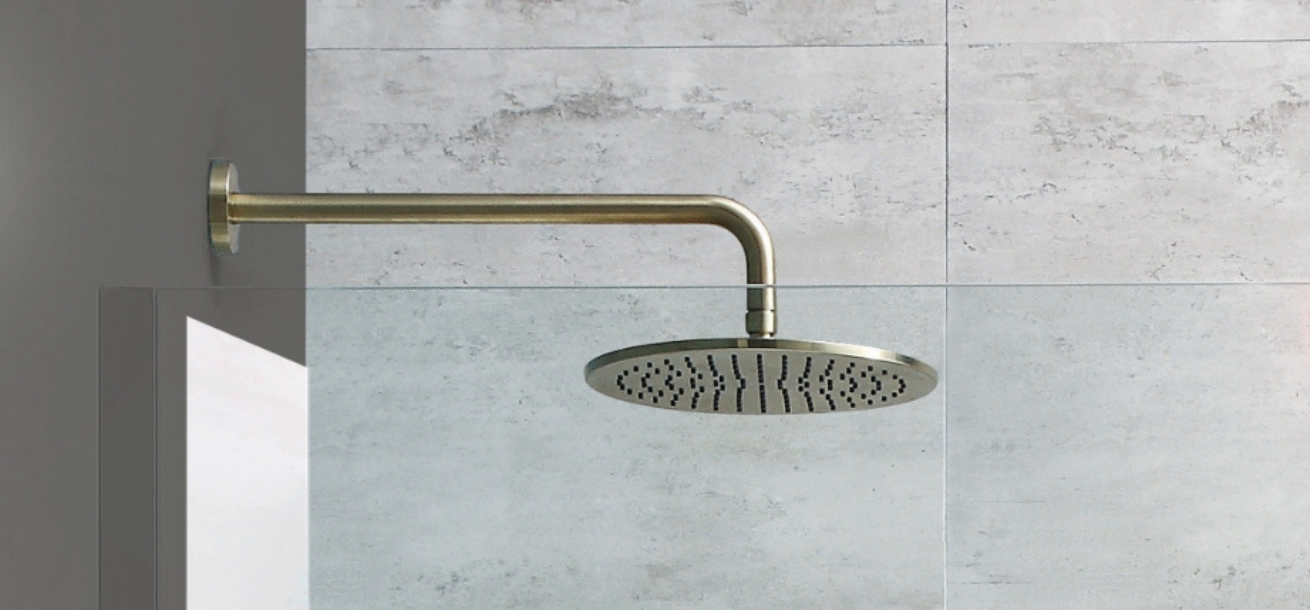
What Are the Different Types of Shower Heads?
Below, we look at each type. For each one, we explain how it works, what to look out for, and the main pros and cons. Once you’ve found a type that suits you, our features section that follows will help you narrow it down further.
1) Fixed Shower Heads
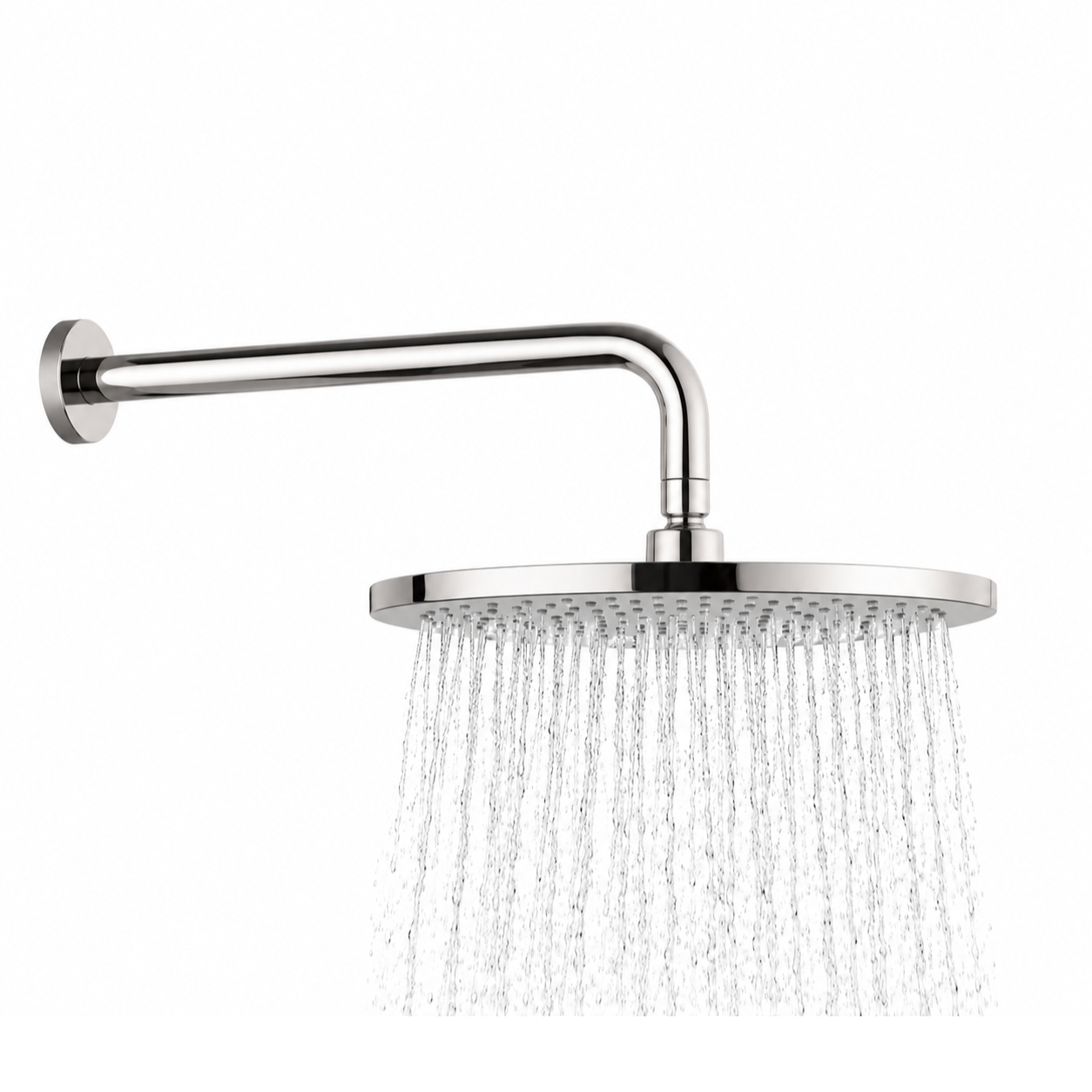
A popular choice in most shower systems, fixed shower heads keep things simple, with no hose on show and the spray always coming from the same spot.
How Does a Fixed Shower Head Work?
A fixed head delivers water from a set overhead position, with two common installation arrangements. In a concealed shower system, where the valve and pipework are hidden in the wall, a wall- or ceiling-mounted shower arm supports the head. Alternatively, it can be part of a shower column, where a rigid pipe runs up the wall from an exposed valve to the head, so there's no need to hide any pipework.
You'll find fixed heads in a wide range of styles, with round, square, and rectangular profiles across both modern and traditional designs.
What Shower Arm Do You Need?
If you're fitting a fixed head to a concealed system, you'll need a shower arm. Some heads come with one, but you can also buy them separately. Arms come in different lengths and shapes, including straight, curved, square, and round. As a rule of thumb, a larger head needs a longer arm, so it sits further into the shower rather than close to the wall. It's also worth matching the arm's shape and finish to your head. Shower columns have their own built-in arm, so you won't need to buy one separately.
Pros
- Hands-free, so you can step in and enjoy the spray.
- A wide choice of shapes, sizes, and finishes to suit both modern and traditional bathrooms.
- Can be paired with a handheld for a dual shower.
Cons
- Harder to target rinsing your hair, children, or the shower itself.
- Often has just one spray setting.
- It stays at one height, which may not suit everyone.
- In a concealed system, the pipework is in the wall, so moving the head later means calling a plumber.
2) Rainfall Shower Heads
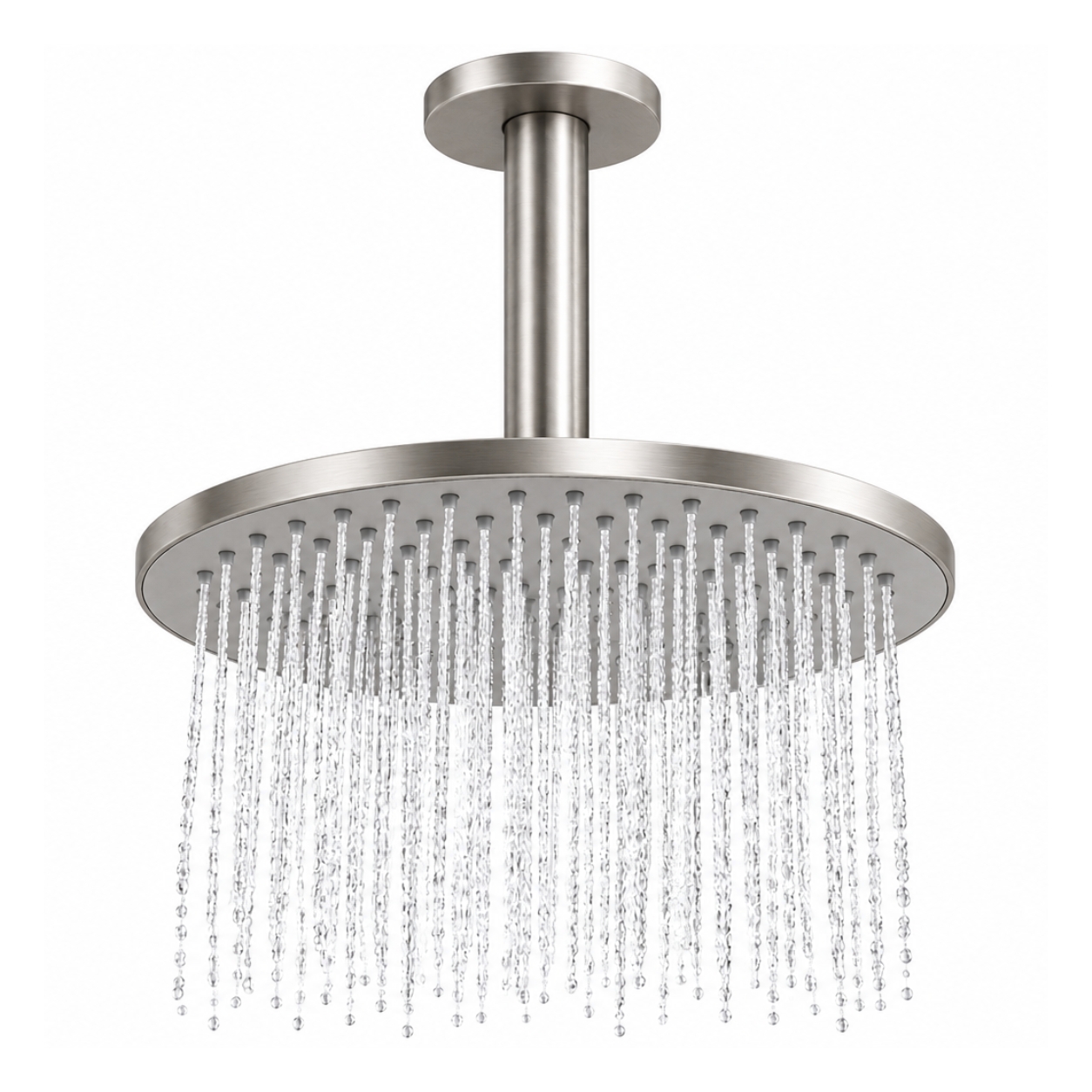
If you want that spa-hotel feel in your own bathroom, a rainfall shower head is the go-to choice, giving you a luxurious drench that mimics falling rain.
How Does a Rainfall Shower Head Work?
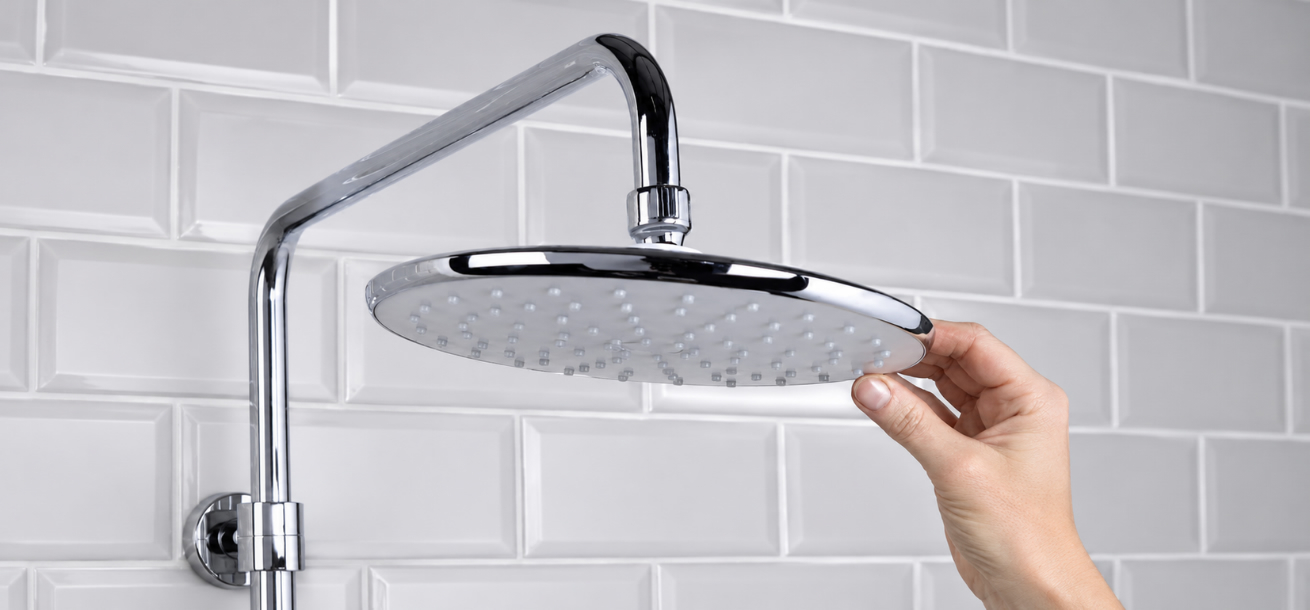
Rainfall heads, also called deluge heads, have a large spray plate that spreads the water, creating a broad, rain-like spray that gently covers you, rather than aiming it at you in a narrow jet.
They're a type of fixed head, positioned overhead on a wall- or ceiling-mounted arm or as part of a shower column. Some are also recessed into the ceiling, which we cover next. Like other fixed heads, you'll find them in round, square, and rectangular shapes, in both modern and traditional designs, and some let you switch between a gentle rainfall spray and a stronger waterfall flow.
What Size Rainfall Shower Head Do You Need?
Rainfall heads come in a range of sizes, and the key is matching the head to your enclosure. Too large, and water can splash outside the shower. Too small, and it can feel underwhelming in a big space.
As a rough guide:
- 200mm: suits a standard 800mm or 900mm enclosure.
- 250mm: suits a walk-in of around 1,000mm to 1,200mm wide.
- 300mm or larger: best kept for bigger walk-ins and wet rooms.
The bigger the head, the more water it needs to spray evenly. If your pressure is on the low side, a large rainfall head can feel disappointing, with water trickling from the nozzles rather than falling in a full, even shower. So, before you buy, check the minimum water pressure on the product page against what your system can deliver.
Pros
- Wide, even coverage that feels soothing rather than sharp.
- Turns an everyday shower into something that feels a bit more luxurious.
Cons
- Usually needs good water pressure, especially the larger sizes.
- Larger heads need a roomy shower to work well.
- It's harder to shower without wetting your hair, so it's often paired with a handheld.
3) Recessed Shower Heads
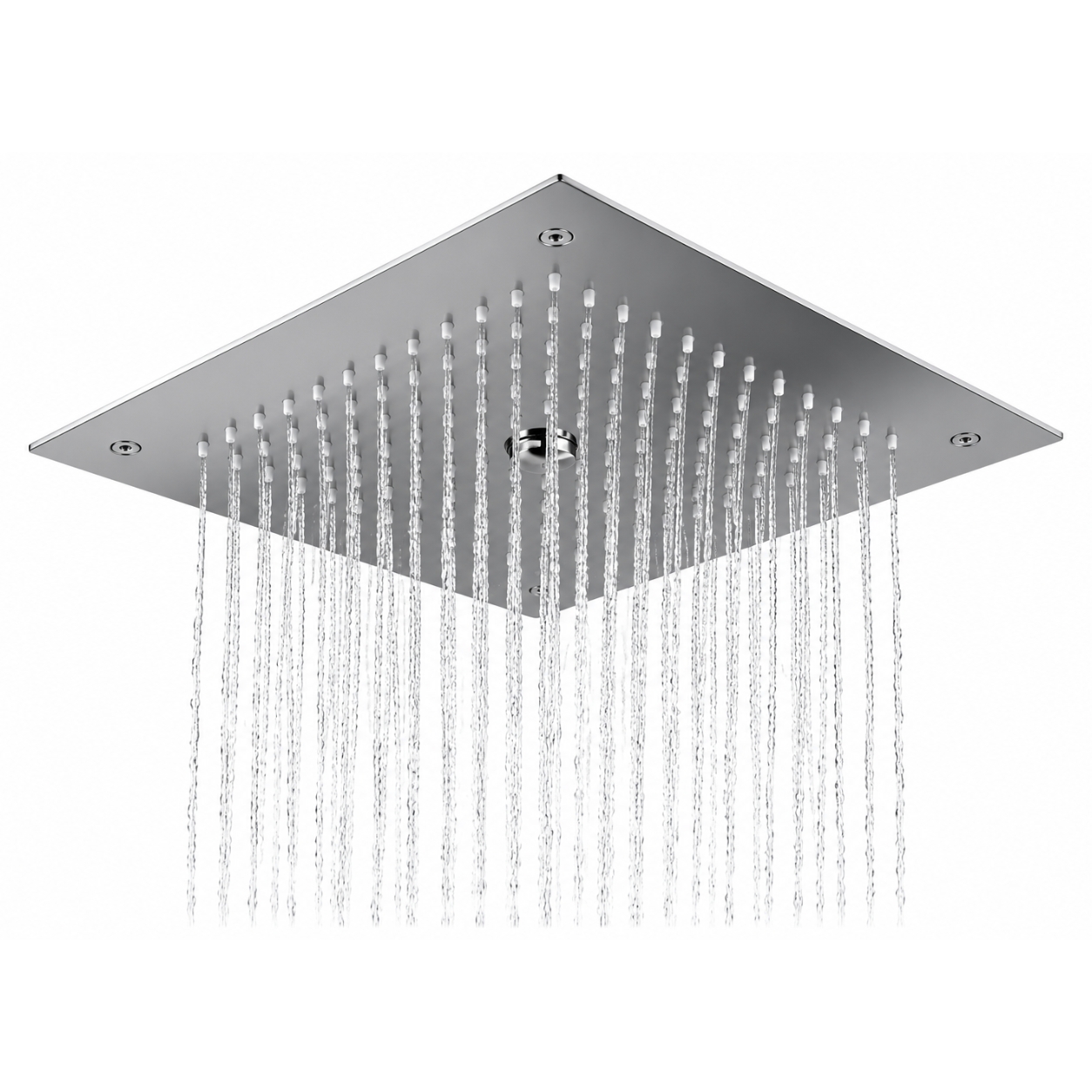
If you’re planning a showpiece walk-in shower or wet room, a recessed shower head gives you the sleekest look.
How Does a Recessed Shower Head Work?
A recessed head is built into the ceiling, with its faceplate sitting flush or nearly flush with the surface, so there's no exposed pipework and the water appears to fall directly from above. Behind the faceplate, the head sits in a housing set into the ceiling void, with the water supply running to it from above.
With only the faceplate on show, the head itself becomes the feature. As such, most are large, statement sizes designed to cover the whole showering area, and some even have built-in LED lighting.
What Should You Check Before Choosing One?
Recessed heads take a bit more planning than other types, so it’s worth checking a few things first:
- Positioning: Choose a head that’s a little smaller than your enclosure so the spray stays off the glass.
- Water Pressure: Like a rainfall head, a large recessed head needs a strong, steady flow to feel its best.
- The Right Valve: A recessed head is fed by a concealed valve hidden in the wall, so you’ll need one to match.
- Access and Cleaning: The connections are hidden in the ceiling, so ask your installer how they’d reach them for future maintenance.
Pros
- A minimalist, high-end finish that’s ideal for modern bathrooms.
- With no arm, it can sit right in the centre of the shower for even coverage from directly above.
- Keeps the walls clear, which can make a shower feel more spacious.
Cons
- Takes more work to install than a head on an arm, as the pipework runs through the ceiling.
- Best planned as part of a renovation, rather than added to an existing shower.
- Harder to reach for cleaning or servicing than a wall-mounted head.
- Like rainfall heads, larger recessed heads usually need good water pressure.
4) Handset Shower Heads
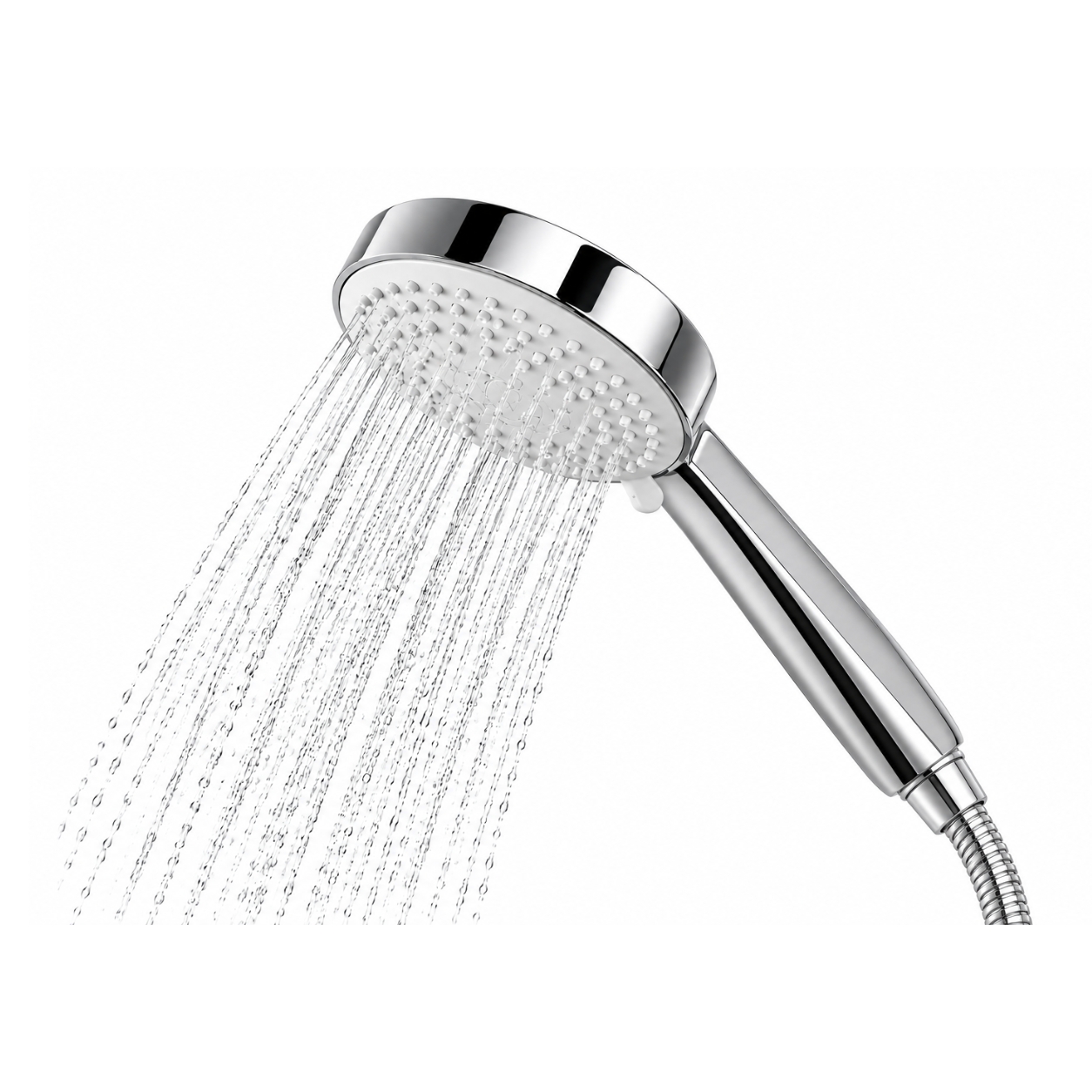
Handset shower heads are the practical all-rounder, easiest to upgrade, and especially handy in family bathrooms and shower baths.
How Does a Handset Shower Head Work?
A handset shower head, or handheld, is a shower head attached to a flexible hose that you can hold in your hand, rather than one fixed in place. The hose connects the handset to your water supply, either through an outlet elbow on the wall, a shower valve, or a bath shower mixer. When it's not in your hand, the handset rests in a wall-mounted holder or on a riser rail, where the holder slides up and down so you can set the height. Some kits include the handset, hose, and outlet elbow, but you can also buy a replacement handset separately if you want to upgrade the head.
With this manoeuvrability, you can aim the water wherever you need it, making it ideal for rinsing your hair, bathing children, or washing the dog. It can be your only shower head, for example, over a bath, or work alongside a fixed or recessed head as part of a dual shower.
What Hose Length Do You Need?
Shower hoses come in a range of lengths, usually from around 1.2m to 2m, and 1.5m is the most common. As a rough guide:
- 1.2m to 1.5m: Suits most showers where the handset sits on a holder or riser rail and you're standing up.
- 1.5m to 2m: Better over a bath, where you'll want to reach down to rinse the tub or bathe children, or if someone at home prefers to sit while they shower.
Too short, and the handset won't reach where you need it. Too long, and the hose can trail on the shower tray or get in the way. When you're replacing a hose, it's also worth checking that both ends match your handset and outlet, although, as we discussed earlier, most use the standard ½-inch thread fitting.
Pros
- Flexible, so you can aim the water exactly where you need it, including when rinsing the enclosure.
- Easy to swap, as most handsets screw straight onto a standard hose.
- A good choice if anyone at home has limited mobility, especially with a longer hose and a lightweight handset.
Cons
- Doesn’t give the same all-over coverage as an overhead shower.
What Shower Head Features Should You Look Out For?
Once you've picked a type, these features set one shower head apart from another. Many of them appear as filters and in the product details on our shower head pages, so it helps to know what they mean.
Rub Clean Nozzles
Rub-clean nozzles are made from soft, flexible silicone or rubber. They’re designed to rub away limescale or mineral deposits when you run your hand or a cloth over them, not only simplifying cleaning, but also helping keep the head unblocked and the spray maintained.
Flow Regulator
A flow regulator, as you get in basin taps, is a small device inside the shower head that limits how much water comes out, regardless of your pressure. That cuts your water use and the amount of energy needed to heat it.
Aerator
Another device commonly found in basin taps, an aerator mixes air into the water for a softer, fuller spray. Find out more about these useful devices in our guide to tap aerators.
Tiltable
A ball or swivel joint lets you angle the head, so you can aim the spray where you want it rather than straight down. It's especially handy on fixed heads, where the shower head's direction is limited.
Multiple Spray Functions
Most shower heads have a single spray, giving one steady flow every time you use them. Multi-spray heads, however, let you switch between two or more patterns, so you can choose what feels best on the day. The most common patterns are:
- Rain: A soft, even spray that covers you all over.
- Massage: A stronger, pulsing jet for easing tired muscles.
- Mist: A fine, gentle spray.
- Waterfall or Jet: A heavier stream, usually from the centre or edge of a large overhead head.
Anti-Bacterial
Some heads are described as anti-bacterial, usually because of the material they're made from, such as stainless steel, or a surface designed to stop limescale and grime from building up. It's a nice extra, but it doesn't replace regular cleaning.
Easy-Clean and Protective Coatings
Some heads have a smooth, easy-clean surface that makes limescale harder to stick, so they wipe clean. You should still follow the care instructions, as harsh or abrasive cleaners can damage any finish, as we mentioned in our style and finish section.
Low-Pressure vs High-Pressure Shower Head: What’s the Difference?
On product pages, you'll sometimes see shower heads labelled as low- or high-pressure. That label tells you the manufacturer’s minimum operating water pressure for the head, measured in bar. This is not how powerful the spray will be. For example, a low-pressure shower head isn't a weaker head; it's simply designed to work with less pressure. Some heads work from as little as 0.2 bar, while others require 1 or more.
- Lower-Pressure Shower Heads: Designed to work with lower-pressure supplies. They may suit gravity-fed showers without a pump, provided the available pressure meets the head’s stated minimum.
- Higher-Pressure Shower Heads: Need a higher-pressure supply to work properly. They may suit combi boilers, unvented cylinders, or pumped systems.
Ultimately, match the head's pressure requirements to your system rather than treating its label as a promise of spray strength.
What Is the Best Shower Head for Low Water Pressure?
Let’s start with the honest bit. No shower head can increase the pressure coming into your home. A well-chosen head can make better use of the available supply, potentially giving you a stronger-feeling spray. If your household faces low water pressure, consider:
- A head specifically designed for low-pressure supplies, with a minimum operating pressure your system can meet.
- A head with a concentrated spray, rather than a large rainfall plate.
- An aerated head, which can make the flow feel fuller.
What Is the Best Shower Head for High Water Pressure?
A higher-pressure supply can give you more choice, but it doesn’t guarantee every shower head will perform well. Yet again, check the head’s pressure and flow requirements against what your system can deliver, and then consider:
- A head specifically designed for high-pressure supplies.
- Going bigger. Large rainfall and recessed heads spread water over a wide area, and good pressure helps them deliver an even, drenching spray.
- A dual shower head if you want an overhead shower for everyday use and a handheld for rinsing.
Are Shower Heads Universal?
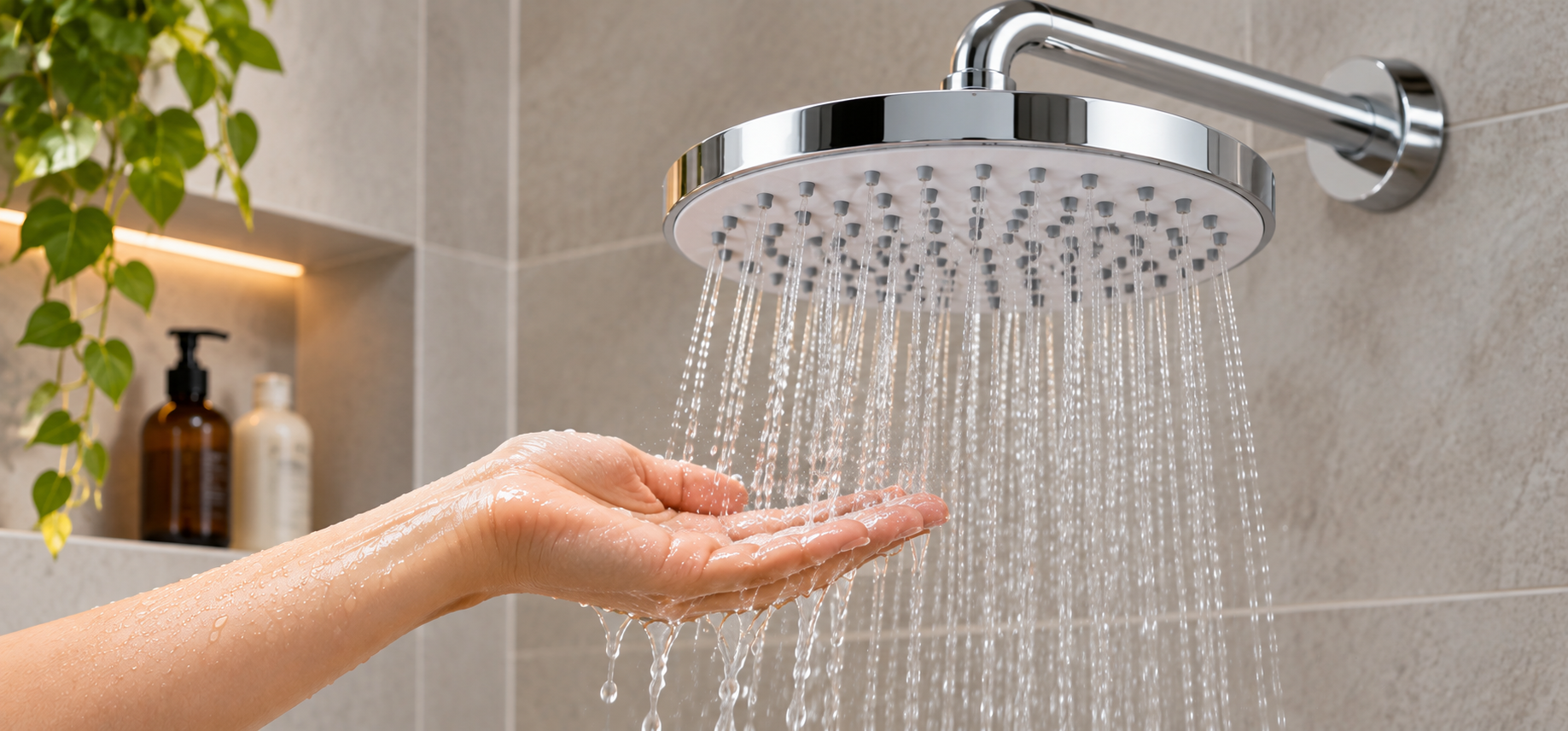
Mostly, yes – at least when it comes to the connection. Most UK shower heads, along with handset hoses, use the standard ½-inch BSP thread we mentioned in our key considerations. So, if you're after a universal shower head, a new head will usually screw straight onto your existing hose.
For fixed heads, however, check that the new head is compatible with your shower arm. Some require a particular arm or mounting kit, which may be sold separately. Older or imported fittings don't always use the standard thread either.
How Easy Are They to Install?
How to change a shower head depends on the type you're fitting. As a rough guide:
- Handheld heads are the easiest swap. With the water off, you unscrew the old head anticlockwise, keep the hose washer in place, and screw the new one on by hand.
- Fixed and rainfall heads on an existing arm are usually a simple swap too, as long as the new head fits your arm, but if you need a new arm or want the head in a different position, it's a job for a plumber.
- Recessed heads need pipework in the ceiling, so they're a job for a plumber and best planned as part of a renovation.
Choosing the Right Shower Head for Your Home
Now you know how the main types of shower heads work and which ones suit your shower; you can shop with a clear idea of what you need. If you'd like a hand choosing, our expert team is always happy to help, so just get in touch.

