Types of Showers: A Complete Buying Guide
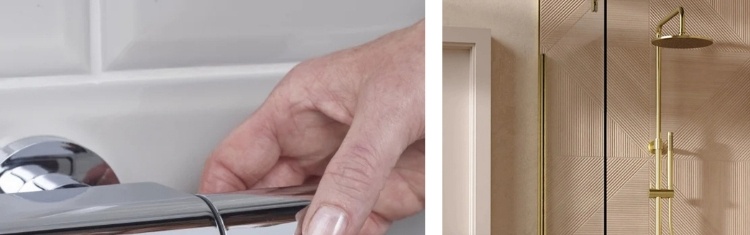
Looking for a shiny new shower but not sure what's best for your home? Several types of showers are available, and the right one largely depends on how your home receives its hot and cold water. Picking the wrong one could leave you with weak and unfulfilling flow, or even a shower that simply won't work at all.
In this guide, we'll start with the two things to check about your home: your water pressure and your hot water supply. Then we'll walk you through the four main shower types, explaining how each one works along with the pros and cons. By the end, you'll know exactly which shower suits your home.
- Key Considerations Before Choosing a Shower
- What Types of Showers Are There?
- What Shower Styles Can You Choose From?
- Which Type of Shower Is Right For You?
- Choosing the Right Shower for Your Home
Key Considerations Before Choosing a Shower
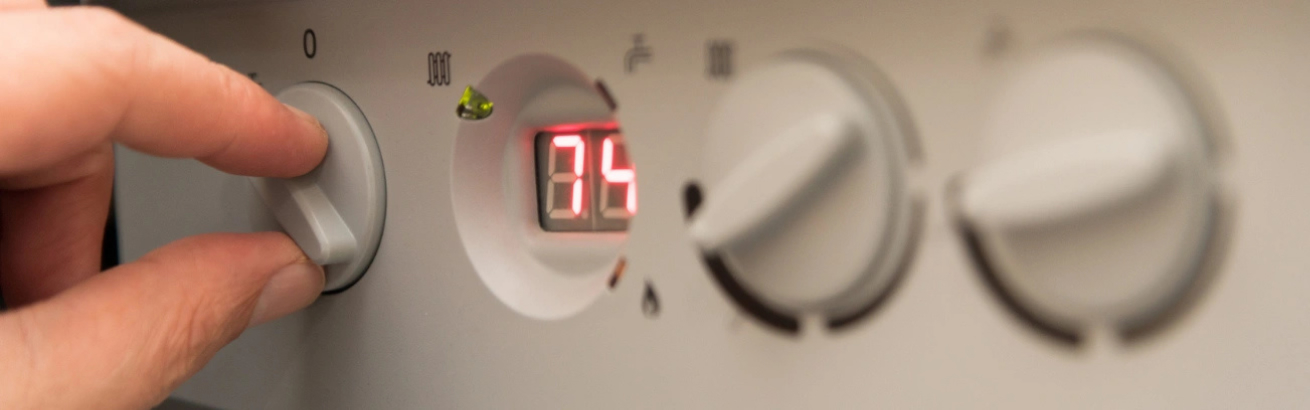
Before you start comparing shower systems, check two things about your home. Together, they affect how well each shower will work for you.
a) Your Water Pressure
Water pressure affects how strong your shower feels, and some showers need a minimum pressure and flow to work properly. Your pressure mostly comes down to your water system.
Combi boilers and unvented hot water cylinders run at mains pressure, while a gravity-fed system, where a cold water tank in the loft feeds a hot water cylinder, relies on the height of the tank, so the pressure is often lower. The best shower for low water pressure depends on your system, so our guide to water pressure is a good place to start, as it covers how to test and improve your pressure.
Once you know your pressure, check the specifications before you buy. Most showers list a minimum working pressure, usually in bar, so you can make sure the one you like will work in your home.
Do You Need a Shower Pump?
A shower pump boosts the flow to a mixer or digital shower on a gravity-fed system. There are two types. A positive head pump is for when your water tank sits higher than the shower head; a negative head pump is for when it sits lower.
You won't need one in every home. Shower pumps aren't compatible with combi boilers or unvented systems, although a mains booster pump may be feasible if a combi's pressure is low. Electric showers don't need a pump, and power showers already have one built in.
b) Your Hot Water Supply
How much hot water you have to work with matters too. An electric shower heats its own water, so it won't use up what's in your tank. Mixer, digital, and power showers, on the other hand, all rely on your boiler or cylinder for hot water.
With a combi boiler, hot water is heated as you use it, so it won't run out, but the flow can drop if more than one tap is running at once. With a hot water cylinder, make sure it's big enough for the shower you choose, or the water could run cold if a few people shower one after another. That's especially true with power showers, which get through hot water faster than the other types.
What Types of Showers Are There?
Most showers fall into one of four groups. What sets the different types of showers apart is where the hot water comes from, and that determines which ones will work in your home.
Below, we’ll look at each shower type, explain what it does and what you should be aware of, and list its pros and cons to help you decide whether it’s the right choice for you.
1) Electric Shower
An electric shower is a self-contained shower system that, as the name implies, runs on an electrical supply. Since it doesn't rely on your boiler, it's an ideal choice for households with small hot water tanks or ensuite bathrooms. Here's how they work and what to check before you buy.
How Does an Electric Shower Work?
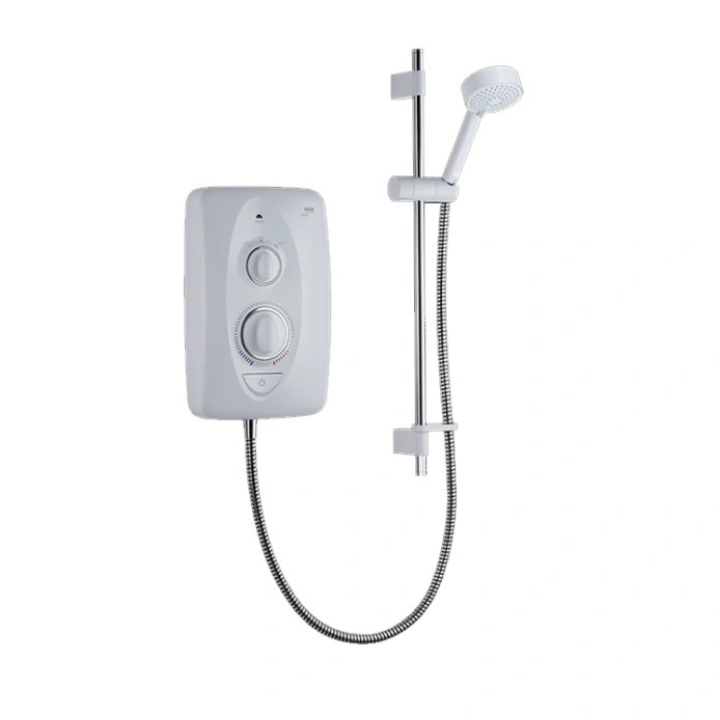
An electric shower heats its own water as you use it. It's connected to your cold mains supply, and a heating element inside the unit warms the water as it flows through. You control the temperature with a dial on the unit itself, and on most models that's the only control you'll need, along with a button that turns the shower on and off.
What Do kW Ratings Mean?
Electric showers are sold by their power rating, shown in kilowatts (kW), usually ranging from 7.5kW to 10.5kW; the higher the rating, the stronger the flow, because the shower can heat more water at once. However, a higher kW shower may need a higher-rated circuit breaker in your fuse box, so you can't always swap a lower rating for a higher one. Have an electrician check first.
Electric showers also need a minimum mains water pressure to work properly. If it's too low, the shower may not heat the water properly, or may not switch on at all. The minimum varies by model, so check the manufacturer's instructions before you buy. If you're not sure about your home's water pressure, our guide to water pressure explains how to check it.
Who Can Fit One?
Fitting an electric shower isn't a DIY job. Showers draw a lot of power, and bathrooms are a high-risk place for electrics, so the electrical work needs a qualified electrician. What you can do yourself is choose the shower, decide where it'll go, and get the space ready.
Before recommending a shower, your installer will check whether you've got a dedicated circuit from your consumer unit (fuse box) that can handle its kW rating, and whether it has RCD protection, a safety device that cuts the power if it detects a fault (Mira lists both as essentials). They'll also check your cold water pressure and flow, and make sure the spot you've chosen meets the rules on bathroom electrical zones. If you need a new circuit, the job will take longer and cost more.
Pros
- Heats its own water so it won't use up the hot water in your tank.
- There's no waiting for a tank to heat up.
- Keeps working if your boiler's off or being serviced.
- Simple to use, usually with just a temperature dial and an on/off button.
Cons
- The flow is usually gentler than with a mixer shower.
- It won't work during a power cut.
- A higher-kW model may require a new electrical circuit.
2) Mixer Shower
Mixer showers are the classic choice, and they're probably the type most people picture when they think of a shower. If you want stronger flow and have a good supply of hot water, it's usually the one to go for, and there's plenty of choice in how it looks and functions, from thermostatic bar valves to 3-way concealed setups. In this section, we’ll discuss those choices, but first, let’s answer how they work.
How Does a Mixer Shower Work?
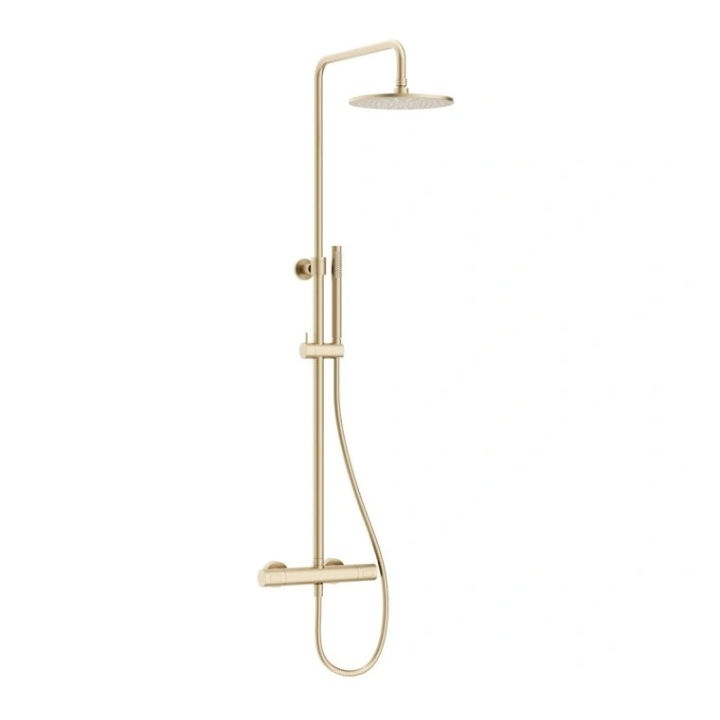
A mixer shower takes water from your hot and cold supplies and mixes it to your desired temperature. The hot water comes from your boiler or hot water cylinder, so the shower doesn't need to heat anything itself; you simply control how much hot or cold water comes through. That usually means a stronger flow than an electric shower, and a mixer can work with tank-fed (gravity) systems as well as mains-pressure ones.
Manual or Thermostatic?
Regardless of style choice or the required number of outlets, every mixer shower has a shower valve that combines the water and houses the controls. There are two main kinds:
- Manual Valves: The simpler of the two. Showers with manual valves are controlled by hand, so you set the temperature yourself, with either a lever or dial. The catch is that the valve doesn’t automatically compensate for changes to the incoming water supply, so if someone runs a tap or flushes a toilet while you’re showering, the temperature may fluctuate.
- Thermostatic Valves: These valves automatically adjust the mix of hot and cold water to help keep your chosen temperature steady when the incoming supplies change. This reduces the risk of sudden temperature changes, making them a safer choice for families.
Manual valves can still work well in a second bathroom or a smaller household, where sudden temperature changes are less likely. However, if you’re buying for a family home main bathroom, it’s worth looking for a thermostatic valve, preferably one with TMV2 approval, which shows it’s been tested for scald protection in homes (Rada explains how the scheme works). WRAS approval is also worth checking for, as it shows a product meets UK water regulations.
Exposed, Bar, or Concealed Valve?
Mixer shower valves also come in different styles. The choice is not solely about looks; it also affects how the shower is fitted and used.
- Exposed Valves: These sit on the surface of the wall, so they're usually quicker to fit and easier to reach if they ever need servicing. There's plenty of choice in design, from sleek modern controls to traditional crossheads, so they can suit almost any bathroom.
- Bar Valves: An exposed valve shaped like a square or cylindrical bar, with controls at either end. They’re a popular choice for modern showers and for replacing an old shower.
- Concealed Valves: These are built into the wall, sitting flush against it, so only the controls show. They give the neatest, most minimal finish, but because the valve and pipework sit behind the tiles, they're best to fit during a full bathroom renovation. The catch is that they're harder to access if they ever need repairing, which can mean removing tiles, so ask your installer about maintenance access.
How Many Outlets Do You Need?
Shower valves are also sold by how many outlets they control. You'll see them described as anything from 1-way up to 3-way. An outlet is anything the water comes out of, such as a fixed shower head, a handset, or body jets. A diverter lets you switch between them.
- 1-Way Valve: Suits a simple setup with a single outlet, whether a fixed shower head or a handset shower.
- 2-Way Valve: Lets you pair a fixed shower head with a handset, which is useful for rinsing hair or bathing children.
- 3-Way Valve: Alongside a standard shower head and handset, these let you add extras, such as a bath spout.
Pros
- Works with combi, gravity-fed, and unvented systems.
- Doesn't need an electrical supply, unless you add a pump.
- Plenty of choice in valves, shower heads, and finishes.
Cons
- Works best with good water pressure and a reliable hot water supply.
- The flow can drop if someone's using water elsewhere at the same time.
- With a manual valve, the temperature can change suddenly when someone runs a tap or flushes the toilet.
3) Digital Shower
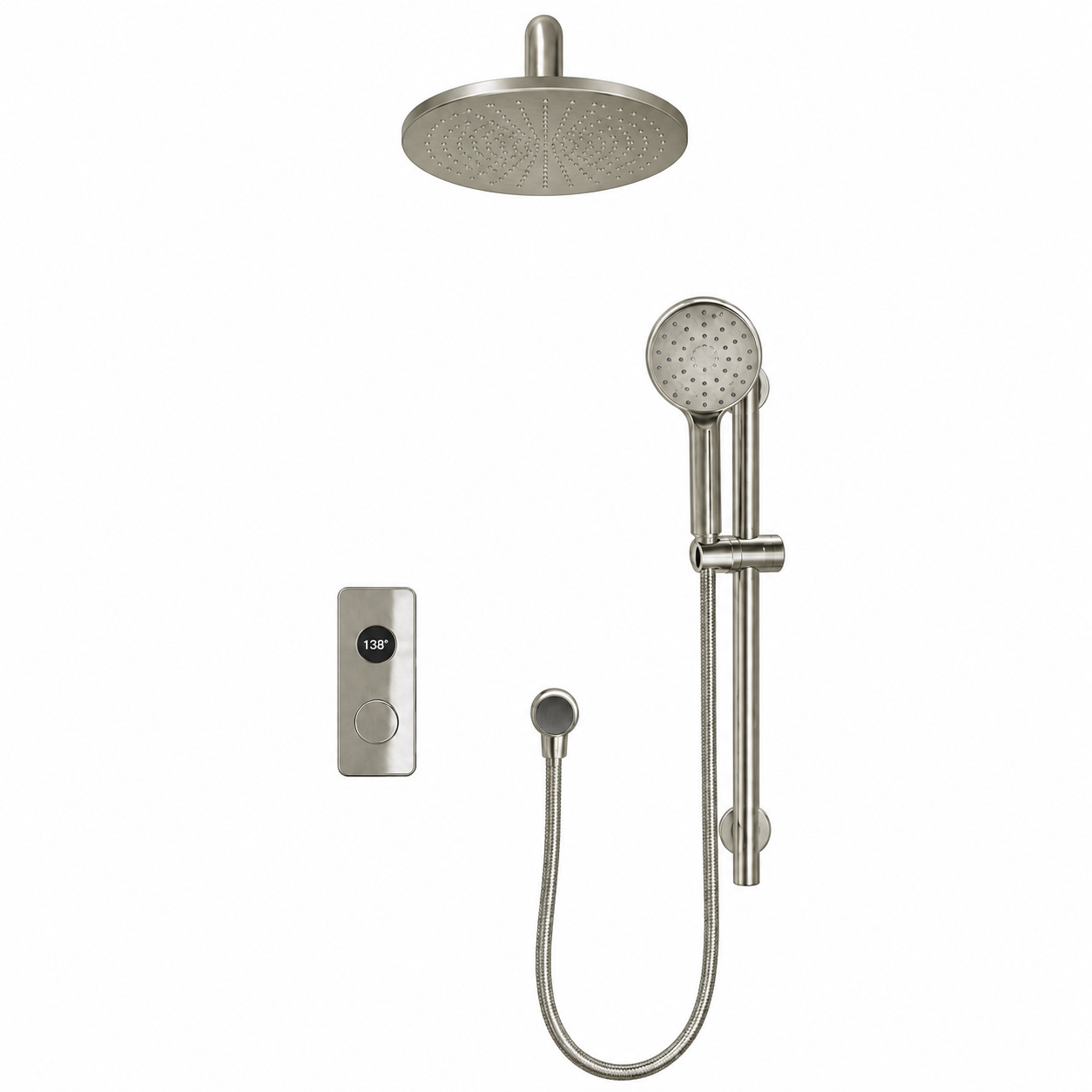
Sometimes called smart showers, digital showers are the high-tech option that takes the mixer shower a step further. These cutting-edge models give you precise control over temperature and flow from a wall controller, along with extra features such app control, display screens, and LED lighting.
How Do Digital Showers Work?
Rather than a mechanical valve, a digital shower uses an electronic one, enhanced with computer processing power, and operated via a digital controller. Because the valve is electronic, a digital shower needs an electrical supply as well as hot and cold pipework, so you may need both a plumber and an electrician to fit one.
What Features Do Digital Showers Have?
Digital showers vary from model to model, but these are the main features to look out for:
- Precise Temperature Control: Most digital showers are thermostatic, so the valve holds the exact temperature you set, with no sudden bursts of hot or cold water.
- Warm-Up Mode: The shower heats up, then pauses until you step in, so less water goes down the drain while you wait.
- Presets for Each Person: Everyone in the house can save their favourite temperature and flow, and some models store up to ten presets.
- Wireless or Wired Controllers: The controller doesn't have to sit right next to the valve, and some wireless models can be placed up to 10 metres away.
- App and Voice Control: Smart models let you start the shower or change the settings from your phone, and some work with voice assistants such as Amazon Alexa and Google Home.
- Timers and Eco Settings: These help you keep showers shorter and use less water and energy.
High-Pressure or Pumped?
Digital showers come in two versions, and you'll need the one that matches your water system. High-pressure models are made for combi boilers and mains-pressure systems. Pumped models are for gravity-fed systems with tanks and include a pump built into the digital valve. They aren't interchangeable, as shower pumps don't work with combi boilers, and a high-pressure model won't get enough pressure from tanks.
Pros
- Holds the exact temperature you set, with no sudden bursts of hot or cold water.
- Smart extras such as app control, saved settings, and a warm-up mode.
- Comes in versions to suit combi, unvented, and gravity-fed systems.
Cons
- Installation is more complex and usually costs more than a standard mixer, as the valve, controller, and power supply all need fitting, so you may need both a plumber and an electrician.
- Pumped models boost the flow, so they may use more water and hot water than a mixer without a pump.
4) Power Shower
Power showers are designed for homes where the flow can feel a bit weak, particularly in those with tanks in the loft. It's easy to mix them up with electric showers, because both often take the form of a box on the wall. The difference is what happens inside.
How Do Power Showers Work?
A power shower is essentially a mixer shower with a built-in electric pump, designed to boost a weak flow. It uses gravity-fed hot and cold water supplies, with the pump providing a stronger flow than the system could deliver on its own.
Inside the unit, a valve mixes hot water from your cylinder and cold water from your cold-water storage tank, usually in the loft, to achieve the temperature you’ve set. The built-in pump then takes over, boosting the flow to the shower head.
Will a Power Shower Work in Your Home?
A power shower only works with a gravity-fed system, comprising both a cold-water tank in the loft and a hot-water cylinder. That means power showers aren't suitable for combi boilers or unvented systems, so if you've got a combi, check out our guide to the best showers for combi boilers. Additionally, because the pump runs on electricity, a power shower also needs an electrical supply alongside the hot and cold pipework, so you'll usually need both a plumber and an electrician to fit one.
How Much Water Does a Power Shower use?
The other thing to weigh up is water use, as you're trading a stronger flow for more water. Which? says, "High-volume power showers can use more water in less than five minutes than running a bath." For comparison, the Energy Saving Trust typically uses figures of about 13 litres a minute for a power shower, compared with 8 for a mixer and 5 for an electric shower.
Because a power shower uses hot water faster, make sure your hot water cylinder is big enough to handle the demands of your household. If water use is a concern, some models have an eco-setting that reduces the flow.
Pros
- Gives a much stronger flow than a mixer without a pump on the same system.
- The pump is built in, so there's no separate shower pump to fit.
Cons
- Only works with gravity-fed systems.
- Uses more water than other showers.
- Needs a hot water cylinder that's big enough to keep up.
- Needs an electrical supply in addition to plumbing.
Electric Shower vs Mixer Shower: Which Is Better?
In most cases, homeowners will have narrowed it down to an electric or a mixer shower. If that sounds like you, you're probably wondering which is actually better. The honest answer is that neither wins in every home; as we’ve discussed, the right one depends on your hot water supply, your water pressure, and what you want from your shower.
As a rule of thumb, if you've got plenty of hot water and good pressure, go for a thermostatic mixer or a digital shower. If you don't have a combi boiler or hot water cylinder, or you're adding an ensuite, an electric shower is often the more suitable choice.
What Shower Styles Can You Choose From?
Once you've picked a type, the next step is choosing a style. This decides how your shower looks and how it feels to use day-to-day. Electric and power showers usually come with their own handset and rail, so most of these choices apply to mixer and digital showers.
Modern Showers vs Traditional Showers
Modern showers are all about clean lines and a pared-back look. Think slim, minimal controls, square or round shower heads, and setups that keep the workings out of sight, like concealed valves and ceiling-mounted rainfall heads. Chrome is the common choice for this design, but matt black, brushed brass, and brushed bronze are equally popular nowadays, and let you add a bit more personality.
Conversely, traditional showers bring a touch of period charm, taking their cues from Victorian and Edwardian bathrooms. Here you'll find crosshead or lever handles, exposed valves with decorative detailing, and large, round shower heads on a gracefully curved arm. You don't have to miss out on modern performance, though, as many traditional showers have a thermostatic valve behind the classic styling.
Shower Columns
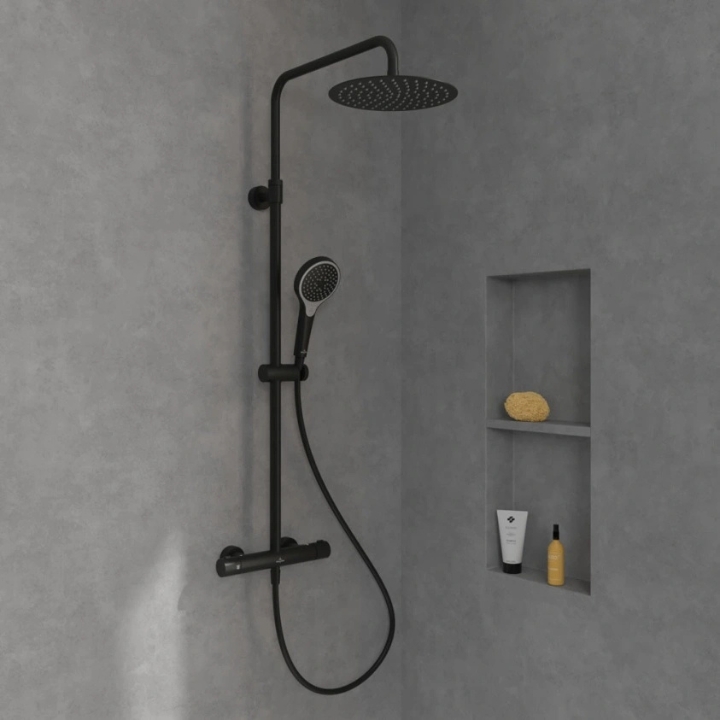
A shower column uses a rigid pipe that runs up the wall from the valve to a fixed overhead shower head, usually with a handset on a hose as well. A diverter on the valve lets you switch between the overhead for a soak and the handset for a quick rinse. Some also come with a riser rail for the handset, so you can slide it up or down to whatever height suits you.
Riser Rails
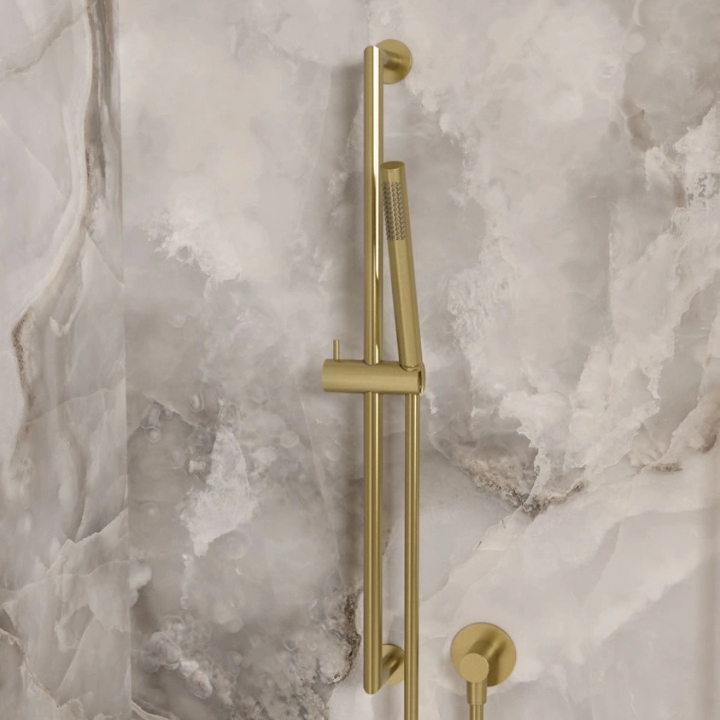
A riser rail kit is one of the simplest and most practical shower setups. It consists of a handset, a hose, and a rail fixed to the wall, with a holder that slides up and down so everyone in the house can set the handset to the right height. This makes it handy for rinsing hair or bathing children. Also known as slider rail kits, they're the setup most electric and power showers use, and they work with mixer and digital showers too.
Concealed Showers
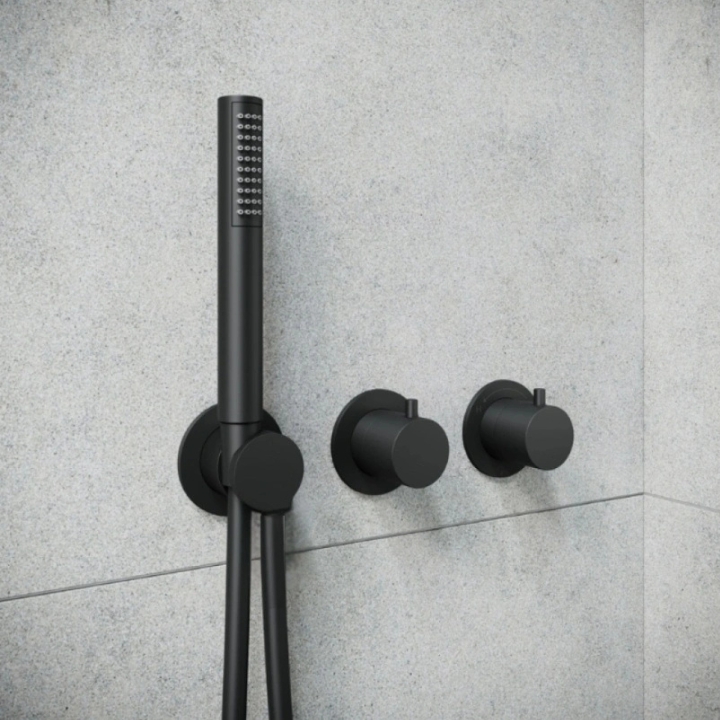
With a concealed shower, the valve and pipework are hidden in the wall, so only the controls and outlets show. It's the neatest, most minimal look you can get, especially paired with a ceiling-mounted rainfall head. As we covered in the mixer section, concealed setups are best fitted during a full renovation, and it's worth asking your installer about access for future repairs.
Which Type of Shower Is Right For You?
Electric showers usually make the most sense when:
- You don’t have a combi boiler or hot water cylinder, as it’s the only type that will work.
- You'd rather your shower didn't rely on your boiler.
- You're adding a second shower and don't want it competing with the main bathroom for hot water.
- You want something simple to use, with just a dial and a button.
Mixer showers usually make the most sense when:
- You've got good water pressure and a good supply of hot water.
- You want a stronger flow than an electric shower can give.
- You'd like plenty of choice in how your shower looks, from exposed and bar valves to concealed setups.
- You want a thermostatic valve to keep the temperature steady for everyone in the house.
Digital showers usually make the most sense when:
- You want precise, steady temperature control.
- You'd like smart features such as app or voice control, saved settings, or a warm-up mode.
- You like a minimal look, with just a controller on the wall.
Power showers usually make the most sense when:
- You've got a gravity-fed system with tanks in the loft.
- Your shower feels weak and you want a stronger flow.
- Your hot water cylinder is big enough to keep up.
- You'd rather have the pump built in than fit a separate shower pump.
Choosing the Right Shower for Your Home
Now you know how the main types of showers work and which one will best suit your water system. If you'd like a hand narrowing things down from there, our expert team is always happy to help. Whether you're replacing an old shower or planning a whole new bathroom, simply get in touch and we'll talk you through the options.

